Best ATV Salt Spreaders in 2026: Which Type Is Right for You?
Disclosure: We may earn a commission when you buy through links on this page, at no extra cost to you. As an Amazon Associate I earn from qualifying purchases. Learn more

Compare ATV salt spreader types by mount, hopper size, spread width and flow control, with setup and care tips for driveways, lanes and small lots.
Spreading salt by hand is slow work on a long driveway, and it leaves thick and thin patches that melt unevenly. The best atv salt spreaders turn a machine you already own into a fast ice control tool, laying an even band as you ride. The product table below lists spreaders by mount, capacity and price.
Your choice turns on three facts: how much surface you treat, what material you spread, and how your ATV carries weight. A small rack unit suits a short drive, while a tow behind hopper suits long lanes.




Who Should Buy Which ATV Salt Spreader?
Start with the route you ride most often in winter. Length and surface point each group below toward a different size and mount.
Homeowners With a Short Driveway and Walkway
You treat a drive of one or two car lengths plus a path to the door, in a few passes. A compact rack mount spreader with a hopper of about 50 to 80 pounds keeps the ATV easy to steer and simple to store. Choose a gate control you can reach from the seat, because you open and close it often near beds.
Acreage Owners With Long Private Lanes
You treat hundreds of feet of gravel or paved lane, and refilling in the cold is the part you want to cut down. A tow behind hopper of about 100 to 150 pounds lets you finish the full route on one load. Look for wide tires that roll over rutted snow without bouncing the gate setting out of place.
Small Business and Rental Property Owners
You clear a small parking lot or several short drives before tenants and customers arrive. Capacity matters, but so does a clean edge, because salt wasted on grass adds cost and mess. Choose a midsize hopper with a deflector shield you can lower on one side, and keep a spare fuse on the ATV.
Types of ATV Salt Spreaders Compared
All three types below spread dry material with a spinning plate or a controlled drop, but they carry the load in different ways. Prices run from about $120 to $250 for small rack units and about $400 to $800 for large tow behind units.
Rear Rack Broadcast Spreaders
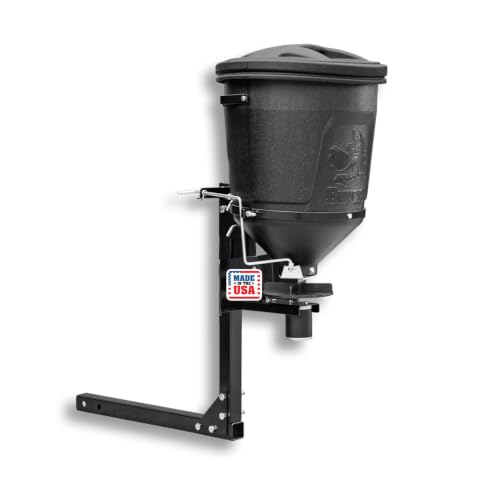
A rack mount unit bolts to the rear rack and throws material in a wide fan behind you as a spinner plate turns. It keeps your turning circle tight and needs no trailer, which helps in small yards. Its limit is weight, since a full hopper sits high and can make the ATV feel unsteady on slopes. This type suits short routes best.
Tow Behind Broadcast Spreaders
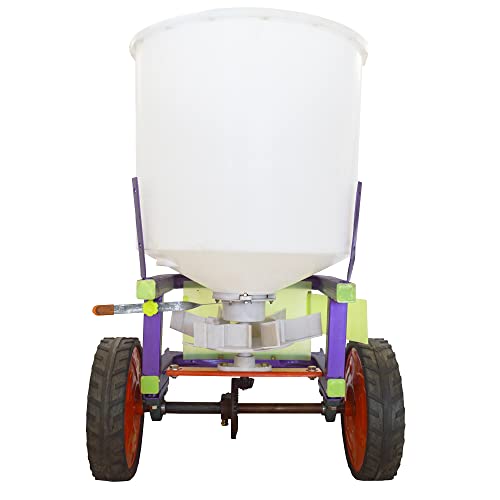
A tow behind unit rides on its own wheels and pulls from a pin hitch, so the ground carries the load instead of your rack. Larger hoppers and a lower center of gravity make this the calmest choice on long or uneven lanes. The trade off is length, since backing up takes practice and the unit needs shed space.
Drop Spreaders for Precise Edges
A drop spreader releases material straight down through openings along its width instead of throwing it outward. That gives you a sharp edge along lawns and garage doors, and it wastes less salt. The band it treats is only as wide as the hopper, so a broad drive takes many more passes. If you mainly spread seed and fertilizer in warmer months, see our guide to the best yard spreaders.
Key Features to Compare
Compare these factors in order, because a low price means little if the hopper is too small or the mount overloads your rack.
Hopper Capacity and Loaded Weight
Capacity is listed in pounds of material, and common sizes run from about 50 to 150 pounds. Salt is heavy, so a full 100 pound hopper plus the spreader itself can pass the rack limit of a small ATV even though the empty unit feels light. A hopper that empties halfway forces a refill trip. Check the rack or hitch rating in your ATV manual first.
Mounting and ATV Compatibility
Rack units need flat mounting points and bolts that stay tight over bumps, hitch units need a receiver or a solid draw bar, and tow behind units need a pin hitch at the right height so the hopper rides level. A tilted hopper changes the flow rate as you ride. If you already carry rear gear, such as the tanks covered in our guide to the best atv sprayers, measure the rack space left.
Motor, Power Draw and Wiring
Most powered spreaders use a 12 volt motor wired to the ATV battery, often with an inline fuse and a switch at the handlebar. A stronger motor spins the plate faster and throws material farther, but it drains a small battery sooner on a long route. Look for sealed motor housings and protected cable runs, because salt spray corrodes bare connectors in a single season. Run the spinner empty before the first storm to check the wiring.
Spread Width and Flow Control
Broadcast models commonly throw material about 5 to 12 feet wide, and you narrow that band with spinner speed, driving speed and the gate opening. A controller you can adjust from the seat helps you thin the flow near a doorway and widen it on open pavement without stopping. Fine ice melt flows faster than coarse rock salt through the same gate setting, so set the gate for the material in the hopper each time.
Hopper Material, Lids and Agitators
Most hoppers are molded plastic that will not rust, paired with a steel frame that needs its coating intact to resist salt. A fitted lid keeps spray and snow out of the load, because damp salt clumps and bridges over the outlet until nothing flows. Inside, an agitator keeps material moving toward the gate on bumpy ground. A mesh screen catches hard lumps before they jam the spinner plate.
How to Set Up and Spread Evenly on Your Route
Mount the spreader, load it on level ground, and make a short test pass on clear pavement before a storm arrives. Adjust the gate until the band looks even, with no bare stripe in the middle. Ride at a steady, modest speed, because doubling your speed roughly halves the amount landing on each foot of ground.
Lower a deflector shield where thrown salt could strike doors, plants or fresh concrete. Always switch the motor off and let the spinner stop before you clear a jam, since a powered plate can injure fingers. If an ATV feels slow for your property, see our guide to the best salt spreaders for trucks. Using best atv salt spreaders well is mostly about this calm setup.
Common Mistakes to Avoid
- Loading the hopper past your rack rating makes the ATV light at the front and hard to steer on ice.
- Leaving damp salt in the hopper between storms lets it harden into a solid block that jams the gate.
- Spreading with the gate set for fine melt while using coarse rock salt leaves bare patches that refreeze.
- Riding too fast on each pass lays so little material that ice bonds to the pavement underneath.
- Throwing salt onto planted beds and lawn edges without a deflector burns plants and wastes material.
- Parking the spreader without rinsing lets salt crust corrode the frame, motor and wiring over one winter.
Care and Maintenance for ATV Salt Spreaders
Empty the hopper after every use and rinse the hopper, spinner plate and frame with plain water, then let every part dry before storage. Salt left on metal draws moisture from the air, so a unit put away damp can rust while it sits unused. Store leftover material in a sealed bin indoors.
Once a month in season, check mounting bolts, gate movement and cable insulation, and spin the plate by hand with the power off to feel for grit. Touch up chipped paint on steel parts, and keep connectors clean. At the end of winter, wash and dry the unit fully and store it under cover.
Frequently Asked Questions
Can an ATV salt spreader handle sand or a salt and sand mix?
Some models can, but many are built for dry salt and ice melt only. Sand is heavier and often damp, so it clogs small gates and strains compact motors. Check the maker guidance for your model, and expect a narrower spread pattern than with dry rock salt.
How much area can one hopper load of salt cover?
Coverage depends on your application rate, which varies with material and ice thickness. As a rough guide, about 50 pounds of rock salt can treat a few thousand square feet at a light rate for thin ice. Thick ice raises the amount used, so carry extra material on long routes.
Will a salt spreader damage grass or concrete near a driveway?
Salt can harm grass and planted beds where it collects, and repeated heavy use can worsen surface scaling on weak or new concrete. A deflector shield, a narrower gate setting near edges and prompt sweeping of leftover granules after the ice melts all reduce that harm.
Can I leave an ATV salt spreader mounted all winter?
You can, provided the mount stays tight and the empty hopper adds no strain to the rack. Leaving it mounted saves setup time before a storm, but the unit collects road spray that speeds corrosion. Recheck bolts weekly, keep the lid closed, and remove it for riding where its weight would affect balance.
What should I do if salt stops flowing from the hopper mid route?
Stop, switch the motor off, and wait for the spinner to halt before you touch anything. Most stoppages come from a clump bridging over the outlet or a lump caught at the gate. Break the clump up with a wooden stick, then restart with a slightly wider gate setting.
The Bottom Line
Choose by route first: a rack mount unit for short drives, a tow behind hopper for long lanes, and a drop model where clean edges matter most. Then confirm the loaded weight suits your ATV. Check sizes and prices in the product table above before you order.
With those points settled, the best atv salt spreaders for your property lay an even band at a steady pace and rinse clean in minutes.