Best Antimicrobial Bath Towels for 2026: Everything to Know Before Your First Purchase
Disclosure: We may earn a commission when you buy through links on this page, at no extra cost to you. As an Amazon Associate I earn from qualifying purchases. Learn more
Shopping for the best antimicrobial bath towels for the first time? Learn the terms, compare options, and avoid rookie mistakes with this easy guide.
A bath towel that still smells musty a day after laundry day is a common frustration, especially in humid bathrooms with little airflow. The best antimicrobial bath towels are treated during manufacturing to help the fabric stay fresher between washes, and this guide explains what that treatment does and does not do.
If this is your first set, you will learn the basic terms, the specs that change how a towel feels and dries, and the habits that matter more than any label. Use it to compare materials, weights, and sizes before you shop.
Best Antimicrobial Bath Towels 101: The Basics
An antimicrobial bath towel is a normal bath towel with an added treatment, or with fibers chosen so the fabric itself resists the buildup that causes stale odors. Makers apply agents such as silver based treatments to the yarn, or weave in fibers like bamboo charcoal that are sold for the same purpose. The goal is a towel that smells fresher for longer between washes, even in a steamy bathroom.
Set honest expectations before you buy. The treatment works on the towel fabric only; it does not clean your skin, sanitize the bathroom, or replace washing. A treated towel that stays damp in a heap will still develop odor over time, because moisture is what lets odor causing microbes grow. Good drying habits do most of the work, and the treatment is a helpful extra. Shoppers who want the same idea across a full linen closet can see our guide to the best antimicrobial towels for hand towels and washcloths as well.
Key Specs Explained in Plain English
Six specs decide whether a treated towel feels plush, dries fast, and holds up in the wash. Learn these first and the product pages become much easier to read.
Material and Construction
Most treated towels start with cotton. Turkish cotton has long fibers that spin into smooth, absorbent loops, while Egyptian cotton feels similar but costs more. Cotton and polyester blends dry faster and weigh less, which suits humid homes. Weight is listed as GSM, grams per square meter: about 300 to 400 GSM feels light, 400 to 600 GSM is the everyday middle, and 600 GSM and up feels thick and plush. Our guide to the best material for bath towels compares fiber choices in more depth.
Durability and Care
Look for double turned edges and tight stitching, because frayed hems are the most common way towels fail. Dense, upright loops keep absorbing after many washes, while loose loops snag on hooks and jewelry. Color should stay even after repeated warm washes; check that the towel is listed as colorfast, and wash dark colors separately at first. A towel whose treatment is built into the fiber usually keeps working longer than a surface coating, so read how the maker says the treatment is applied, and follow the wash guidance in the Getting Started section below.
Certifications and Labels
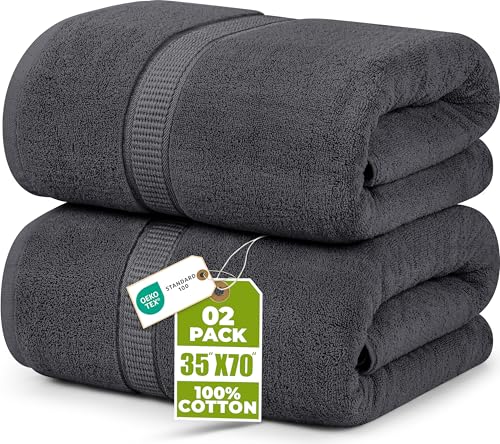
OEKO TEX Standard 100 is the label that matters most here: it means the finished towel was checked against set limits for harmful substances. It says nothing about germ killing, and neither does any towel label, so be skeptical of listings that promise medical sounding results. WaterSense, by contrast, belongs to faucets and showerheads that save water, so ignore it if a towel listing uses it; it is a sign the seller copied text from a plumbing product. Plain, verifiable labels beat long lists of badges.
Comfort and Feel
Comfort is about loop height and weight together. Long loops feel plush and hold more water, which is lovely after a shower but slow to dry on the rack. Short, tight loops feel lighter and dry quickly, which many people prefer in summer or at the gym. Absorbency also depends on fiber quality, not just thickness, so a mid weight towel from good cotton can outperform a heavy one. Our roundup of the best absorbent bath towels explains how absorbency is measured and what to look for on labels.
Size and Fit
A standard bath towel is about 27 by 52 inches, which wraps most adults adequately but can feel short on taller frames. A bath sheet, about 35 by 60 inches or larger, gives full coverage and doubles as a light wrap after a bath. Hand towels run about 16 by 28 inches, and washcloths about 12 by 12 inches. Measure your towel bar before buying oversized sheets, because a folded sheet on a short bar dries slowly where it bunches, and slow drying works against the whole point of the treatment.
Style and Color Options
Most treated towels come in the same color ranges as regular lines, from white to deep charcoal, often with a woven dobby border for a finished look. White towels tolerate hot washes best and show when they need replacing, while colors hide minor staining and suit guest bathrooms. If matching an existing set matters, buy all pieces in one order, because dye lots shift slightly between batches. Sets that bundle bath towels, hand towels, and washcloths in one treatment line keep the whole shelf consistent.
Rookie Mistakes to Avoid
- Choosing the heaviest GSM in a humid bathroom, which leaves the towel damp for hours and invites the very odor you paid to avoid.
- Expecting the treatment to replace washing, which leads to longer gaps between washes and ground in odor that no finish can fix.
- Judging softness only in the store, because many new towels carry a soft coating that washes out within the first few laundry cycles.
- Ignoring towel size, so a standard towel feels skimpy on a tall user who would have been happier with a bath sheet.
- Mixing treated and untreated towels in one damp pile, where the untreated ones sour first and share the smell with the rest.
Getting Started: First Wash and Daily Habits
Wash new towels before first use, on their own, in warm water. This first wash removes loose lint and factory finishes, opens the loops, and can shed a surprising amount of fluff, so clean the dryer lint trap partway through the first dry. Skip fabric softener and dryer sheets from the start, because they coat the fibers, cut absorbency, and can dull the treatment you paid for; a cup of white vinegar in the rinse now and then clears detergent buildup instead.
Day to day, hang each towel spread flat over a bar rather than bunched on a hook, so air reaches both sides and it dries fully between showers. In a windowless bathroom, leaving the door open or running the fan for about twenty minutes after a shower speeds drying a lot. Wash bath towels after about three to four uses, sooner in hot weather or after illness in the house, and make sure towels are completely dry before folding them into a closed cabinet.
Antimicrobial Bath Towels: Your Questions Answered
Are luxury antimicrobial bath towels worth the extra cost?
Sometimes, but the gain is in the cotton and construction, not in a stronger treatment. Luxury options usually use longer fibers, denser loops, and better hems, so they feel plush and last longer before thinning. The freshness benefit is broadly similar across price levels. If your budget is tight, a mid priced treated towel with good drying habits beats a luxury one left damp. Spend extra for feel and durability, not for bigger hygiene promises.
How often should bath towels be replaced?
Replace bath towels when they stop absorbing, feel rough even after washing, or pick up a sour smell soon after laundry day despite good habits. For most households that point arrives after about two to three years of regular use, sooner for thin towels in hard water areas. Loops that lie flat and edges that start to fray are visible warnings. Check a suspect towel by timing how fast it soaks up a splash of water on the counter.
What GSM is best for bath towels?
For most homes, about 400 to 600 GSM is the best balance of absorbency, softness, and drying speed. Go lighter, about 300 to 400 GSM, for a steamy bathroom, a small washer, or a household that launders often. Go heavier only if your bathroom is well ventilated and you love a thick, hotel style feel. Households with kids may prefer mid weight towels because heavy ones are hard for small hands to hang up properly.
How do I keep bath towels fresh for longer?
Rotate two sets per person so each towel gets a full rest day to dry out and air between uses, which matters as much as washing. Run the bathroom fan during and after showers, or crack a window, to pull moist air out of the room. Every few months, wash towels with hot water where the care label allows, and clear detergent residue with a plain rinse cycle. Never leave a used towel in a gym bag or laundry basket while it is still damp.
Does an antimicrobial treatment mean bath towels need less washing?
No, treated towels need the same washing rhythm as regular ones, roughly every three to four uses. The treatment only slows odor buildup on the fabric itself, so the towel smells fresher between those washes; it does not remove body oils, skin cells, or soap residue. Skipping washes because a towel smells fine lets that buildup grow and shortens the towel's life. Treat the finish as a bonus on top of normal laundry, never as a substitute for it.
Our Verdict
For a first purchase, choose a mid weight cotton towel, about 400 to 600 GSM, with the treatment built into the fiber, an OEKO TEX label you can verify, and a size that matches your height and towel bar. Then let habits do the heavy lifting: wash before first use, skip softener, and dry every towel fully after each shower. With those basics covered, the best antimicrobial bath towels stay fresher between washes without any change to your laundry routine. Compare the listed fiber, weight, and size details to find the fit and price that suit your bathroom.