
Best Anolon Cookware Set (2026): Materials, Size and Induction
Disclosure: We may earn a commission when you buy through links on this page, at no extra cost to you. As an Amazon Associate I earn from qualifying purchases. Learn more

Best Anolon Cookware Set guide: compare hard anodized, stainless and ceramic sets by piece count, induction support and storage space.
Picture a weekday evening in a small kitchen. Dinner is for four, cabinet space is tight, and one saucepan is already in the sink. The best anolon cookware set for that home looks very different from the best set for a large family kitchen with deep drawers and a six burner range. This guide helps you choose by household size, storage space, cooking routine, and budget, rather than by piece count alone.
Anolon is known mainly for hard anodized nonstick cookware, with some stainless steel options in the wider lineup. Use the product table below to line up set sizes and materials, then read the sections that match your home.

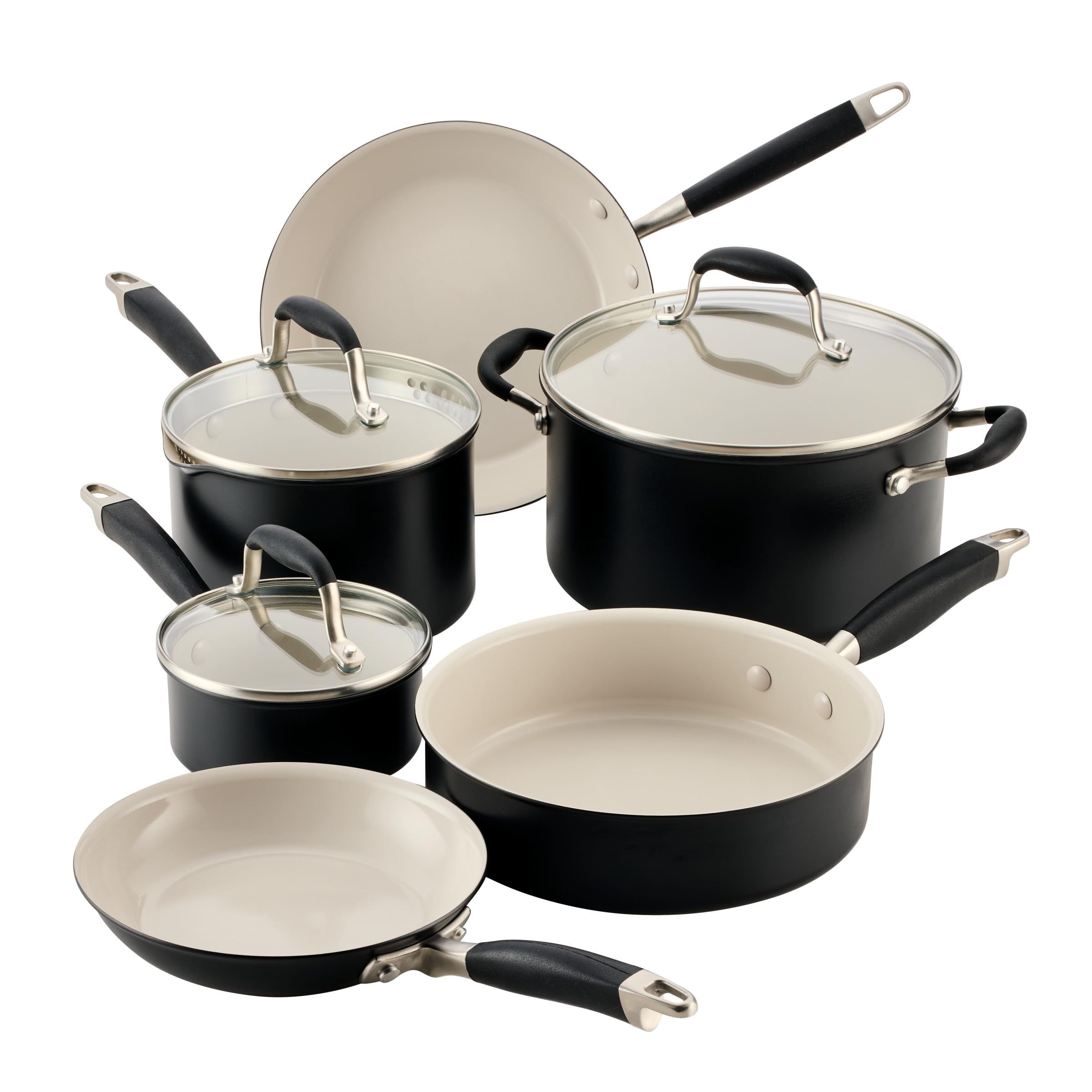


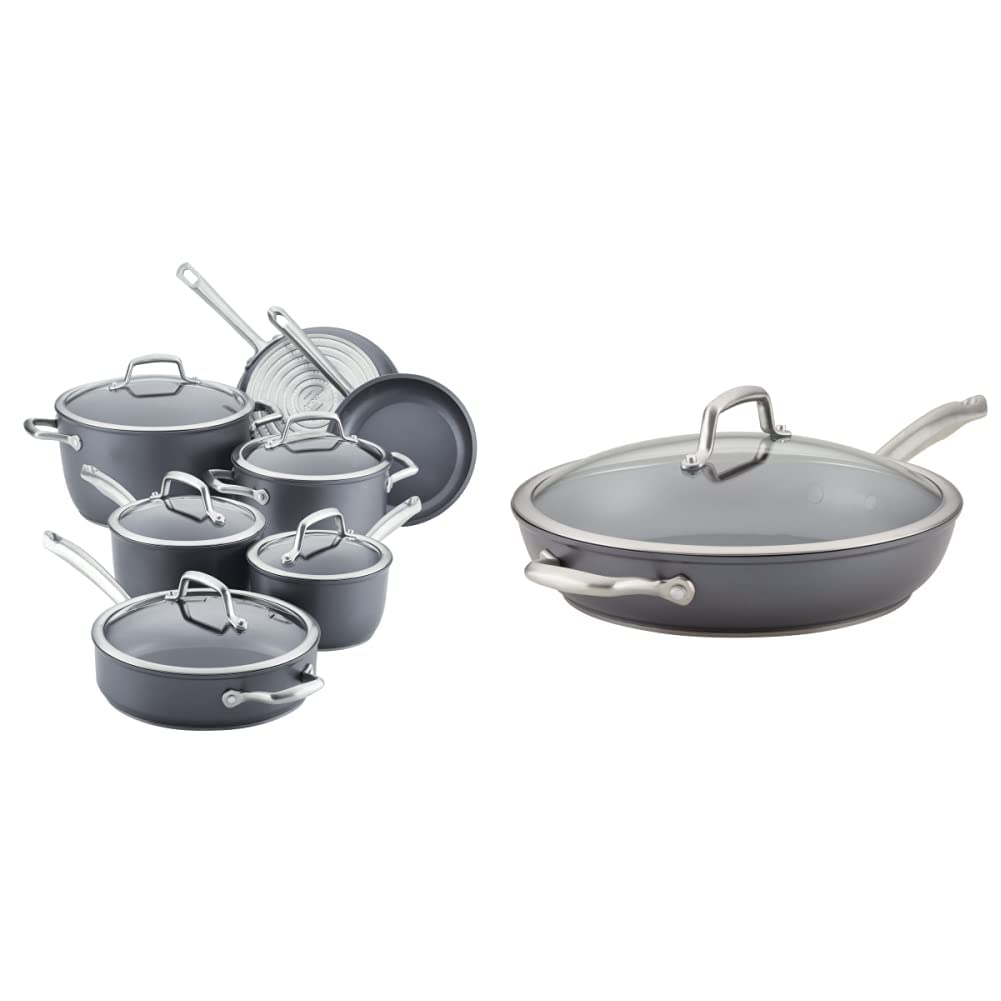
Quick Answer: How to Choose in 30 Seconds
If you cook for one or two people, a smaller set built around one skillet, one saucepan, and one stockpot usually covers daily meals. If you cook for three to five people most nights, a midsize set with two skillets and a Dutch oven style pot lets you cook a main dish and a side at once. For most homes, hard anodized nonstick is the practical starting point because it heats evenly and releases food with little fuss. Choose stainless steel instead if you sear often.
Before You Buy: A Quick Checklist for Choosing a Cookware Set
Size: Match It to Your Space
Count the pieces you will store, not just the pieces you will cook with, because lids take space too. A 3 piece or 5 piece set suits a studio where meals stay simple. A 7 piece or 10 piece set fits most family kitchens and adds a larger pot plus a second skillet. A 12 piece set only makes sense if you have a deep cabinet for nesting, since tall stockpots rarely fit on a shallow shelf. Measure cabinet height and depth before you buy.
Which Type Fits Your Routine
Hard anodized aluminum is the core Anolon style, pairing a strong base with a nonstick surface that suits eggs, fish, and sauces. Stainless steel handles high heat searing well, though food sticks more and cleanup takes longer. Ceramic coated pans offer a slick surface at moderate heat but lose that slickness sooner. Cast iron holds heat well yet feels heavy for daily lifting, while carbon steel needs seasoning. Copper heats fast but costs more. Match the material to the meals you cook most often.
Features Worth It, and Ones to Skip
Glass lids are worth paying for because you can watch rice and soups without lifting the lid and losing steam. Detachable handles save cabinet space and let pans move into the oven, yet the mechanism must lock firmly, so check how it is described first. A storage rack helps only if you have counter room to spare. Skip extra utensils, tiny egg pans, and duplicate small saucepans. A lid that fits two pans is more useful than a specialty piece you will reach for twice a year.
Is This Cookware Nontoxic in Daily Use
Safety questions usually center on nonstick coatings. Traditional nonstick uses PTFE, which is stable at normal temperatures but can release fumes if a dry pan is left on high heat, so never preheat an empty nonstick pan for long and always cook with ventilation. Ceramic coatings avoid PTFE and PFAS, yet they wear faster. Stainless steel, cast iron, and carbon steel have no coating to wear away. If coating safety is your top concern, read our guide that asks is ceramic cookware safe.
Induction, Gas and Glass Top Compatibility
Check the base before anything else. Induction burners need a magnetic base, and many hard anodized nonstick sets are not induction ready unless the product details say so clearly. Gas ranges accept nearly every base, though very small pans can sit unevenly on large grates. Glass top ranges need flat, smooth bottoms, and rough bases can mark the surface if you drag them. Our overview of best cookware set options explains base design further.
Oven Safe Temperature and Handles
Oven limits vary by material, lid, and handle, and the lowest rated part sets the real limit for the whole pan. Glass lids often carry a lower limit than the pan body, so a set that sounds oven ready may still need the lid left off for roasting. Handles with silicone grips feel comfortable but may reduce the allowed temperature. Metal handles tolerate more heat yet get hot and need a mitt. Note the stated limit for the exact set you want.
Realistic Budget Ranges
Under about $100, expect small starter sets with fewer pieces and thinner lids, suited to light daily cooking. From about $100 to $200, sets usually add a Dutch oven style pot, better lids, and a second skillet, the band most small families need. From about $200 to $300, you will see heavier bases and stronger nonstick surfaces. From about $300 to $500, premium sets focus on durability and larger capacities. Over about $500 makes sense mainly for stainless steel, since midrange nonstick already performs well.
Types Compared: Anolon Cookware Set Styles for Different Homes
Balanced Nonstick Sets for Most Homes
A balanced hard anodized nonstick set is the easiest fit for busy family cooking. Look for two skillets in different sizes, a covered saucepan, a larger covered pot, and lids that swap between pans. This mix handles eggs, pasta water, and a one pot dinner without forcing you to wash a pan mid meal. The main tradeoff is care, since nonstick prefers wooden or silicone tools and gentle washing. See our guide to the best nonstick cookware set category for a broader view.
Smaller Starter Sets for Tight Kitchens
A compact starter set earns its place when storage is the deciding factor. Three to five well chosen pieces can cover most meals for one or two people, especially if one pot doubles as a pasta pot and a soup pot. Nesting designs help, but only if the handles allow a flat stack. The tradeoff is flexibility, since you cannot run three pans at once. This style suits renters and anyone who would rather use a few pieces daily than store a large set that gathers dust.
Larger Sets as a Long Term Investment
A larger set is worth the money when its extra pieces match real habits, such as a wide saute pan for family sized portions or a tall stockpot for batch cooking. Heavier bases heat more evenly and resist warping, which matters if you cook daily for years. Stainless steel versions suit this role well because there is no coating to wear out, and our guide to the best stainless steel cookware set range covers that path. Invest in size only when your household and cabinets both support it.
How We Evaluate Anolon Cookware Sets
Our evaluation rests on five criteria drawn from manufacturer specifications and patterns in verified buyer feedback. We weigh heat distribution, since even heating prevents scorched sauces. We weigh durability, including base thickness and how the surface should age. We also check material safety information, stovetop and oven compatibility, and the cleaning routine. We favor sets whose specs match real household needs over sets with the longest piece list.
The Anolon Cookware Set Lineup Explained
Anolon built its name on hard anodized nonstick, and most sets follow that pattern with dark exteriors, riveted handles, and glass lids. Lines differ mainly in handle design, lid style, base construction, and whether the base works on induction. A smaller group of stainless steel and ceramic coated options serves buyers who want to avoid conventional nonstick. If you are torn between those directions, the comparison of ceramic vs stainless steel cookware shows how each surface behaves over time, and the guide to the best ceramic cookware set category covers ceramic sets on their own.
Prices rise as bases get heavier and piece mixes get more thoughtful, not simply as counts climb. Read the piece list line by line, picture each item in a meal you cook weekly, and set aside any piece you cannot place. That exercise is the simplest way to judge any best anolon cookware set claim.
Common Buying Mistakes to Avoid
- Buying a 12 piece set for a kitchen with one shallow cabinet, which leaves lids and stockpots with nowhere to live.
- Ignoring replacement cost, because a worn nonstick skillet can mean replacing a key piece long before the rest of the set wears out.
- Paying for specialty extras you rarely use, such as tiny pans and bonus utensils, instead of larger everyday pieces.
- Assuming every set works on induction, which leads to a full set that will not heat on your stove at all.
- Choosing by piece count alone, since lids and utensils often inflate the number without adding cooking capacity.
Cost of Ownership and Care
The purchase price is only part of what a set costs you. Nonstick pieces will eventually need replacement as the surface loses its release, so budget for one key skillet every few years if you cook daily. Stainless steel costs more upfront but can stay in service far longer. For daily upkeep, wash nonstick pans once they cool, use a soft sponge, and avoid cooking sprays that leave a sticky film. Store pans with a cloth layer between stacked surfaces to protect the coating.
FAQ
What pieces should a cookware set have at minimum?
A useful minimum is one medium skillet, one large skillet or saute pan, one covered saucepan, and one large covered pot. That core covers frying, simmering, boiling, and reheating for most households. Add a small saucepan only if you melt butter or make single servings of oatmeal often. Two pans of nearly the same diameter rarely both earn their storage space.
Which anolon cookware set should I buy for a family of four?
For a family of four, choose a midsize hard anodized nonstick set with a large skillet, a deep saute pan or Dutch oven style pot, and a stockpot of at least six quarts. That mix lets you brown meat, simmer sauce, and boil pasta during the same meal. If your family sears steaks several times a week, consider stainless steel for at least the large skillet role.
Is Anolon a good cookware set brand?
Anolon is a long established brand known for hard anodized nonstick cookware, solid midrange pricing, and sets sized for home kitchens. Buyers generally praise even heating and comfortable handles, while the most common complaint is that nonstick surfaces wear with heavy use, as they do across the category. Treat it as a strong midrange choice if its care routine fits your habits. If you want a set you can scrub aggressively and pass down, stainless steel will outlast nonstick.
What is the safest cookware for high heat cooking?
For high heat cooking, uncoated materials such as stainless steel, cast iron, and carbon steel are the safest picks because there is no coating that can degrade. Use nonstick only at low to medium heat, and replace a pan once the surface is deeply scratched or peeling. If anyone in your home keeps pet birds, be extra careful about overheated nonstick, since the fumes are especially harmful to birds.
How long should a nonstick cookware set last?
With daily use and gentle care, a quality nonstick surface often stays effective for about three to five years before release noticeably fades. Heat level is the biggest factor you control, since repeated high heat shortens that span. You will know a pan is near the end when eggs stick in the center even with oil. Saucepans and stockpots usually stay slick longer than skillets, because they mostly hold liquids.
Final Thoughts
The right choice comes down to your household size, your storage, and the surface that matches how you actually cook. Start with the product table above, narrow the field to one material and one size band, and let details like induction support and oven limits make the final call. When you find the best anolon cookware set for your kitchen on that basis, you will own fewer pieces, use each one more, and spend less time fighting your cabinets. Prices and availability can change, so check the product page before ordering.


