Best And Most Reliable Refrigerators Made Simple: A Clear Buying Guide for 2026
Disclosure: We may earn a commission when you buy through links on this page, at no extra cost to you. As an Amazon Associate I earn from qualifying purchases. Learn more

Shopping for the best and most reliable refrigerators for the first time? Learn the terms, compare options, and avoid rookie mistakes with this easy guide.
Buying your first refrigerator is mostly a lesson in trade offs. Every extra feature is another part that can wear out, and every inch of capacity has to fit through your front door first. This guide keeps the focus on the best and most reliable refrigerators by starting with how these machines actually fail, then walking through sizes, layouts, and running costs in plain English.
This guide is written for first time buyers, so it starts with the basics of how a refrigerator keeps food cold and which parts tend to break. It then explains each major spec in plain English, lists the mistakes new buyers make most often, and finishes with setup steps and answers to common questions. The product table gives a quick view of the options, and the sections after it show you how to choose among them.
Best and Most Reliable Refrigerators 101: The Basics
Reliability, stated plainly, is a failure rate. A refrigerator line that averages one repair in a decade sits in a different class from one that averages three, even when makers advertise both with the same confidence, because maker reliability claims are a marketing class, not a measured one. The honest read is the service network near your home: common models with local technicians and stocked parts are fixed in days, while rare models can sit warm for weeks waiting on a board.
Under the panels, every refrigerator runs the same loop. A compressor pressurizes refrigerant, fans move air across cold coils, and vents share that air between the fresh food and freezer sections. The parts that fail most often are the fans, the control board, the compressor, and any ice or water hardware. That short list explains a pattern you will see again below: simpler layouts with fewer plumbed parts usually need fewer repairs over their working life.
Key Specs Explained in Plain English
Configuration: French Door, Side by Side, Top Freezer, Bottom Freezer
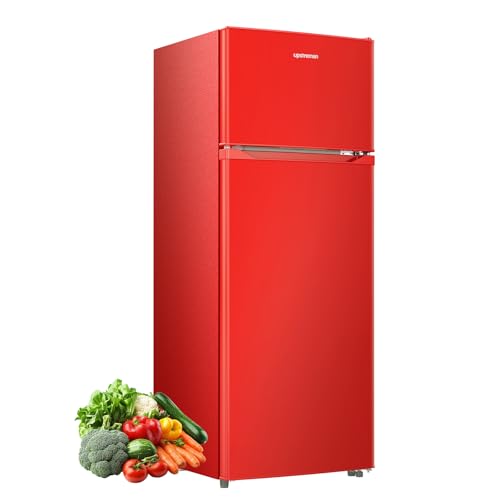
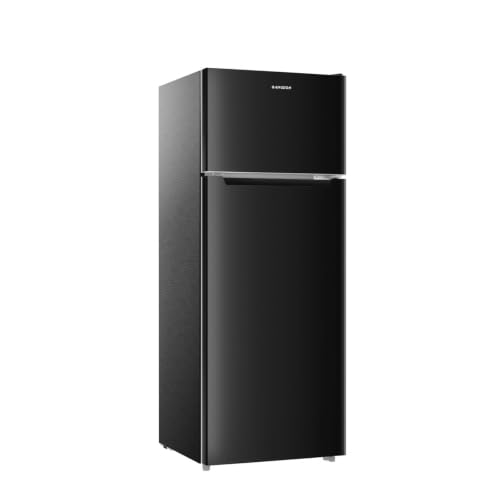
Top freezer models are the budget and longevity veterans: one wide freezer box, no through door ice hardware, and the lowest prices in the aisle. Bottom freezer models put fresh food at eye level and add a large drawer below. Side by side models split the cabinet vertically, which suits narrow kitchens but pinches wide pizza boxes and sheet pans.
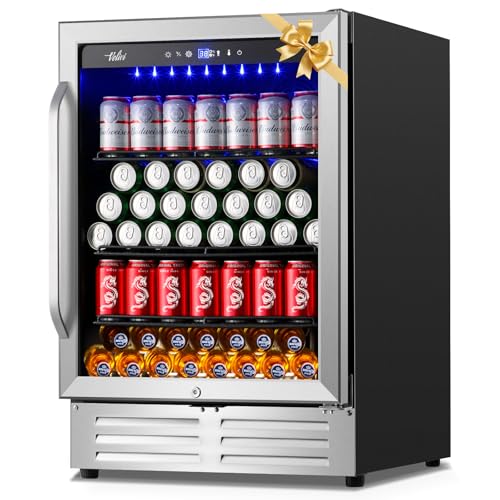
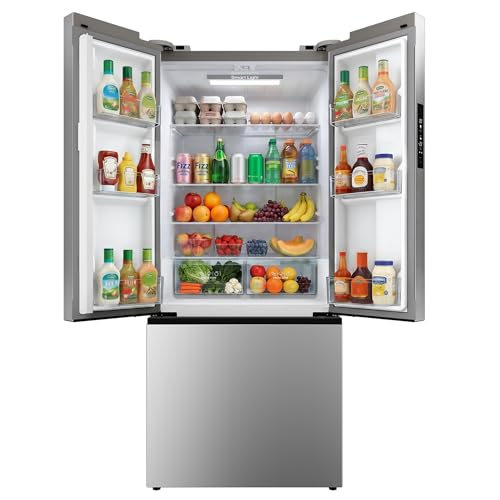
French door models pair two fresh food doors with a freezer drawer and dominate the premium shelves, though the extra door seals and drawer rails add parts. Separate specialty cabinets exist too: a glass door unit from our guide to the best beverage refrigerators keeps drinks visible and cold without opening the main doors twenty times a day.
Ice Maker and Water Dispenser
Feature classes are failure classes. Every plumbed extra, an ice maker, a through door water dispenser, a second ice maker in the freezer drawer, or a screen in the door, adds valves, lines, motors, and boards that can fail. An ice maker also needs a water line, and a slow leak behind the cabinet can damage a floor before anyone notices it.
None of this makes these features bad choices; it means you should want them on purpose. If your household rarely uses ice, skipping the dispenser removes the most repaired system in the appliance.
Dimensions, Counter Depth, and Door Clearance
Measure before you fall in love with a model. Record the height, width, and depth of the opening, then measure every doorway, hallway corner, and stair turn on the delivery path. Door swing classes matter as much as cabinet size: French doors need room to open past 90 degrees before the drawers inside can slide out, and a single wide door can block a walkway in a small kitchen.
Counter depth models sit nearly flush with cabinets and look built in, but they trade away several cubic feet. Specialty sizes follow the same measuring rules, and a compact unit from the best undercounter refrigerators guide can serve a bar corner or office without touching the main opening at all.
Energy Efficiency and ENERGY STAR
A refrigerator runs all day, every day, so its yearly electricity use matters more than its sticker efficiency class. The yellow energy guide label states estimated kilowatt hours per year; multiply that figure by your local rate to get the yearly cost. ENERGY STAR certified models use less energy than the federal minimum for their size class, and the gap is widest on large French door units. Inverter compressors, which vary their speed instead of cycling fully on and off, also trim use and run more quietly.
Capacity and Household Size
A common planning rule is about 4 to 6 cubic feet of total capacity per person, with a freezer share near one third for households that freeze in bulk. Stated capacity counts every shelf and bin at its fullest, so treat it as a comparison figure rather than a promise. Counter depth and side by side layouts hold less than their footprint suggests. If drinks overflow into the main cabinet every week, a small unit from the best beer refrigerators guide in the garage or pantry can be cheaper than jumping a full size class on the main refrigerator.
Reliability and Warranty
Read the warranty in two parts: the general coverage, often about one year, and the sealed system coverage for the compressor and coils, which better lines extend to five or ten years. A long sealed system warranty signals maker confidence and caps your worst repair bill. Ratings and lists of best recommended refrigerators describe survey averages across many owners; they are a starting point for research, never a promise about the individual unit delivered to your kitchen. Before ordering, search for authorized service in your zip code and confirm a real shop answers.
Rookie Mistakes to Avoid
- Skipping the tape measure: a refrigerator that cannot pass the front door or turn the hallway corner goes straight back on the truck.
- Buying the biggest cabinet first: oversized models crowd the kitchen, and food packed against the back wall vents can freeze solid.
- Paying for a door screen and dual ice makers without counting repairs: each added system is another failure point and another service call.
- Ignoring the water line: an ice maker ordered with no line and shutoff valve nearby means a plumber visit, or a feature that never gets used.
- Forgetting airflow clearance: a cabinet pushed tight against walls traps heat and makes the compressor run longer every day.
Getting Started: Setup and First Use
Let the refrigerator stand upright for a few hours after delivery if it traveled on its side, so the compressor oil settles back where it belongs. Level it so the doors drift closed on their own, plug it into its own grounded outlet, and set the fresh food section to 37 degrees Fahrenheit and the freezer to 0 degrees. Give it a full day to reach temperature before loading it heavily, and add food in stages so cold air keeps circulating.
Vacuum the condenser coils twice a year, since a blanket of dust makes the compressor work harder. Finally, write the delivery date on the manual, because that date anchors every warranty claim later.
Frequently Asked Questions
How long should a reliable refrigerator last?
Most refrigerators last about 12 to 17 years before repair costs argue for replacement. Simple top freezer models often reach the top of that range because they carry the fewest plumbed parts, while feature heavy French door models trend lower. Shoppers comparing the best and most reliable refrigerators should plan around the middle of the range and budget for one midlife repair, such as a fan or a control board, rather than assuming a trouble free life.
Can a refrigerator run in an unheated garage?
Yes, but only within the temperature range printed in its manual. In a cold garage the thermostat can be fooled into running too little, letting the freezer drift above safe storage temperature, while summer heat forces long run times. A model rated for garage use handles both swings better than a kitchen only unit. Placement, ventilation, and door clearance for a second unit are covered in the best garage refrigerators guide.
Are counter depth refrigerators worth the extra cost?
They are worth it when the kitchen layout demands it, not for storage. A counter depth cabinet sits flush with the counters and keeps walkways open, which matters in galley kitchens and around islands. The trade is real: you give up roughly 4 to 6 cubic feet against a standard depth model of the same width, and you usually pay more for the privilege. If your opening allows standard depth and the doors clear the room, standard depth is the better value.
How much electricity does a refrigerator use each year?
A modern full size refrigerator typically uses about 400 to 700 kilowatt hours per year, which costs roughly $55 to $110 at common residential rates. The energy guide label on each model gives its own estimate, and large French door units with through door ice sit at the high end. Usage habits matter too: a reasonably packed freezer runs more efficiently than an empty one, and worn door seals leak cold air around the clock.
What size refrigerator does a family of four need?
Plan on about 20 to 25 cubic feet of total capacity for four people. That range assumes weekly shopping and some bulk freezer storage; households that shop daily and buy fresh can go smaller, while warehouse club shoppers should size up or add a chest freezer. Measure your opening first, because cabinet widths jump in steps and a 36 inch opening cannot accept a wider cabinet no matter how good the price looks.
Wrapping Up
Measure the opening, pick the simplest layout that fits how you shop, and check the sealed system warranty and local service before you compare prices. Follow that order and the best and most reliable refrigerators become a short, sensible list instead of a gamble. Set your finalists against the product table above, and choose the one your kitchen and your repair shop can both live with.