
Best Analog Security Cameras of 2026: Complete Buying Guide
Disclosure: We may earn a commission when you buy through links on this page, at no extra cost to you. As an Amazon Associate I earn from qualifying purchases. Learn more

Compare the best analog security cameras by format, resolution, lens and night vision, with DVR, cabling and storage checks for a reliable wired system.
Analog cameras still make sense when you want simple wired recording that keeps working when the internet drops. The best analog security cameras send video over coax cable to a DVR, store footage on a local hard drive, and need no subscription to record. This guide helps you match format, lens and housing to your building before you compare the comparison table below.
Start with what you already own and what you must identify. An existing DVR limits the formats and resolution you can use, while each view needs its own lens and night range.


Who Should Buy Analog Security Cameras?
Analog suits buyers who value wired reliability and local recording over app features.
Homeowners Replacing an Older Coax System
You already have cable in the walls and a DVR on a shelf, so a new analog camera can reuse both and save a full rewiring job. Check the format your DVR accepts before you order, because a camera it cannot decode will show no picture at all. For a full house plan, see our guide to the best security cameras for house.
Small Shops and Offices That Need Nonstop Recording
You need footage that records all day without depending on a router, a cloud account or a battery schedule. A DVR records every channel at once and keeps the video on site, which helps when you review an incident from last week. For wider planning ideas, see our guide to the best security surveillance cameras for business layouts.
Property Owners With Long Runs and Weak WiFi Outdoors
Barns, gates and workshops often sit far from the router, where a wireless signal fades behind walls and metal siding. Coax carries video over long runs and one power supply near the DVR can feed cameras through siamese cable. If the view is fully outdoors, see our guide to the best outdoor analog security cameras for housing and placement points.
Key Features to Compare
When you compare best analog security cameras, work in this order: format first, then resolution, lens, night vision, light handling and housing.
Signal Format and DVR Compatibility
Analog cameras speak one of several signal formats, mainly TVI, CVI, AHD and the older CVBS. Your DVR must support the format you buy, and many current cameras offer a small switch or an on screen menu that lets you change format before installation. Keep the camera set to the format the DVR records correctly.
Resolution That Your DVR Can Actually Record
Analog resolution now ranges from 1080p up to 5 megapixel and 8 megapixel models, but the DVR sets the ceiling for what gets recorded. A 5 megapixel camera on a DVR that records only 1080p will give you a 1080p file, so the extra detail never reaches your footage. Higher resolution also fills the hard drive faster.
Lens, Field of View and Identification Distance
A fixed 2.8 mm lens gives a wide view of about 100 degrees or more. A 3.6 mm lens narrows the view and puts more detail on a face at the same distance. A varifocal lens, often about 2.8 to 12 mm, lets you adjust the view during installation. Pick the lens by the distance at which you must identify a person.
Night Vision Range and Infrared Design
Analog cameras use infrared LEDs to light a scene the eye cannot see, and makers rate that range at about 60 to 100 feet for many outdoor models. Treat the rating as a best case in an open area, because walls, rain and dust reflect infrared back toward the lens and shorten the useful range. Place faces well inside the rated range, not at its edge.
Wide Dynamic Range and Low Light Handling
Wide dynamic range, often shortened to WDR, balances a bright doorway against a shaded interior so neither area turns white or black. True WDR handles strong contrast at shop entrances and garage doors. Backlight compensation brightens a subject in front of a window but can wash out the background.
Housing, Weather Rating and Vandal Resistance
Outdoor analog cameras should carry an IP66 or IP67 rating, which means the housing resists rain and dust. Metal housings handle knocks and heat better than plastic ones, and dome models with an IK10 rating resist deliberate impact in public areas. Cable entries matter as much as the shell, because water following a loose gland into the housing will fog the lens.
Types of Analog Cameras Compared
Shape decides where a camera works well, how easy it is to aim and how visible it looks.
Bullet Cameras for Walls and Long Views
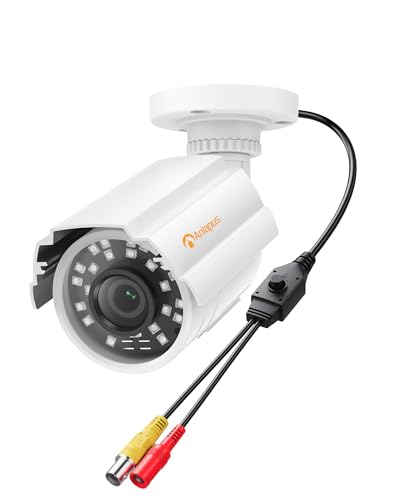
Bullet cameras mount on a bracket, point in one clear direction and often carry larger infrared arrays for longer night range. They suit driveways, side paths and parking rows. Mount bullets high, because the exposed bracket is easier to grab or knock than the other shapes.
Dome Cameras for Ceilings and Public Areas
Dome cameras sit inside a rounded cover that hides the direction the lens faces, which makes them a calm choice for shops, lobbies and porches. The cover protects the lens from casual tampering. Dust and infrared glare collect on the cover over time, so domes need the most cleaning of the three shapes.
Turret Cameras for Flexible Aiming
Turret cameras, also called eyeball cameras, hold the lens in a ball that rotates inside a fixed base, so you can aim them precisely without a bracket arm. The flat lens face avoids the infrared reflections a dome cover can cause at night. Turrets work well under eaves. For a broader look at the family, see our guide to the best analog cameras before you settle on one shape.
Cable, Power and DVR Setup Basics
Most installations use RG59 siamese cable, which pairs the coax video line with two power wires in one jacket, and BNC connectors carry the signal into the DVR. Keep runs direct, avoid sharp bends, and use compression fittings that grip firmly, because a loose connector causes lines, flicker or a lost channel that can look like a failed camera.
Power comes from a 12 volt supply near the DVR, and long runs lose voltage along the way, so a distant camera may restart at night when its infrared LEDs draw extra current. Use a supply with headroom above the total camera draw, and test each camera after dark before you finish. Choose a DVR with more channels than you need today.
Common Mistakes to Avoid
- Buying a camera format your DVR cannot decode leaves that channel blank no matter how good the camera is.
- Mounting every camera with the widest lens spreads pixels too thin to identify a face at the door.
- Pointing a camera straight at a porch light or low sun blinds the image at the hours you need it most.
- Running power over a very long thin cable starves the camera at night and causes random restarts.
- Skipping a test recording before you finish hides storage and channel errors until an incident occurs.
- Recording audio without checking local consent laws can make footage unusable and create legal trouble.
Care and Maintenance Tips for Analog Cameras
Clean each lens and dome cover with a soft cloth and plain water every few months. Check for webs across the infrared ring, because webs glow brightly at night and hide the scene behind them. Trim plants that grow into the view.
- Mount cameras about 8 to 10 feet high so faces stay clear and the housing stays out of easy reach.
- Inspect outdoor connectors once a year and reseal any junction box that shows cracks or moisture.
- Position cameras away from direct sun glare where you can, angled slightly down at the area to watch.
- Review one recorded clip each month on every channel to confirm the DVR is still storing footage.
- Check local laws before recording audio, and disable the microphone input where consent rules are unclear.
Frequently Asked Questions
Can analog security cameras work without WiFi or the internet?
Yes, analog security cameras record without WiFi or the internet because the DVR writes footage straight to its hard drive. You only lose remote viewing on a phone app when the connection drops. A useful check is to unplug the network cable for a day and confirm that playback still shows every hour.
How far can an analog security camera run on coax cable?
A single RG59 coax run can carry an analog signal about 300 to 500 feet in good conditions, with higher resolution formats tending toward the shorter end. Thin cable, poor fittings and many joins shorten that range further. For longer runs, a video balun over network cable or a closer second DVR solves the problem more cleanly than pushing one weak run.
How much DVR storage do analog security cameras need for a month of recording?
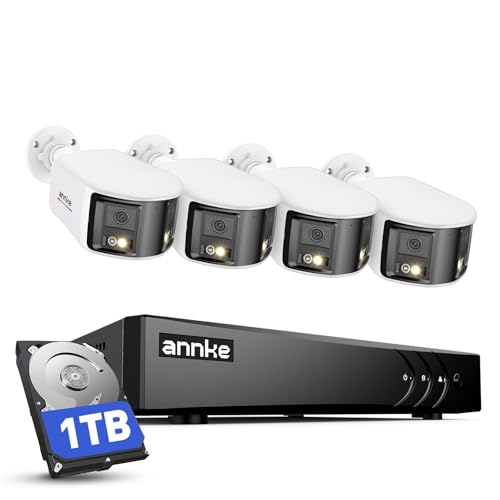
A month of continuous recording for four 1080p cameras often needs about 2 to 4 terabytes, depending on frame rate and scene activity. Busy scenes with trees, traffic and rain compress poorly and fill space faster than a quiet hallway. Lowering the frame rate on wide overview channels stretches storage most.
Can analog security cameras record clear audio?
Some analog cameras include a built in microphone that sends audio over the same coax line, but many models record video only. Voices near the camera read clearly, while wind outdoors can cover speech within a few steps. Confirm that both the camera and the DVR channel support audio before you buy.
When should an analog security camera be replaced instead of repaired?
Replace an analog security camera when its night image stays milky after a careful lens cleaning, because that film usually sits inside the sealed housing. Repeated dropouts that follow the camera when you swap cables also point to the camera itself. A single replacement costs little compared with a service visit.
Final Thoughts
Build your shortlist in order: format your DVR accepts, resolution it can record, a lens matched to the identification distance, and a housing rated for the mounting spot. Then use the product table above to check format, lens and price side by side.
Chosen that way, best analog security cameras give you steady local recording without subscriptions or app clutter.


