
Best Amplifier for Klipsch Speakers for 2026: A Buying Guide
Disclosure: We may earn a commission when you buy through links on this page, at no extra cost to you. As an Amazon Associate I earn from qualifying purchases. Learn more

The best amplifier for klipsch speakers is clean and quiet, not huge. See power needs, amp types and setup tips for efficient horn speakers.
Klipsch speakers are known for efficient horn-loaded tweeters, lively dynamics and a forward, detailed sound. That makes the best amplifier for Klipsch speakers a slightly different choice than for dull or low-sensitivity designs: you want clean, quiet power that tames brightness rather than a loud amplifier that makes it worse. This guide explains the power you need, what to look for in an amplifier, and how to match the type to your Klipsch model. The product table above lists current options.
Because many Klipsch models have high sensitivity (often 90 dB or more), they play loudly on modest power. A good 30 to 60 watt amplifier can fill a room, which opens the door to small class D amps, tube-flavoured designs and compact receivers.

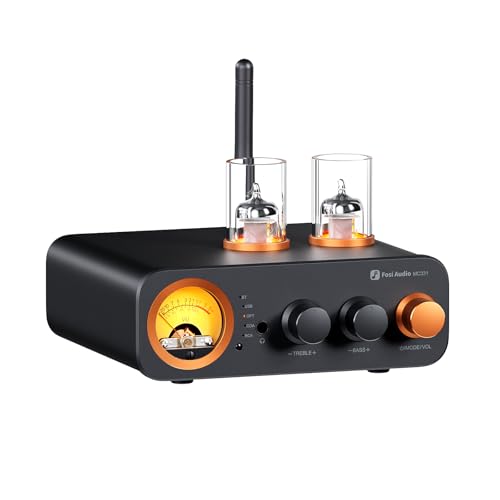
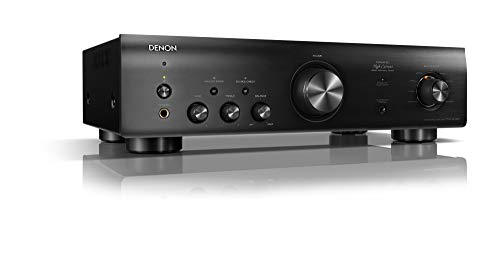

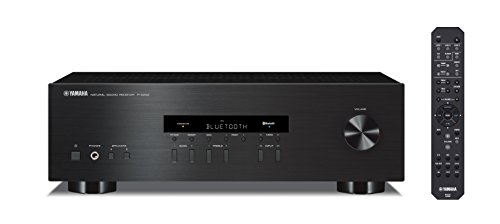

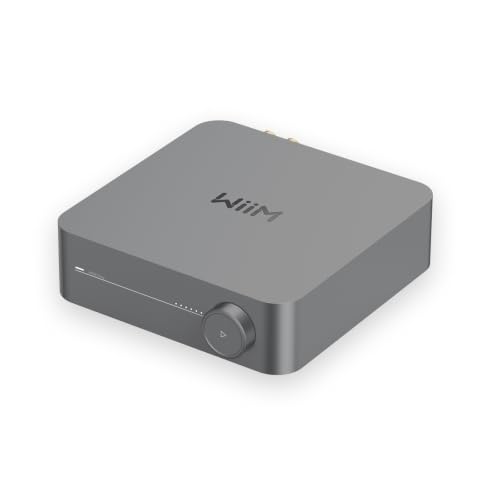
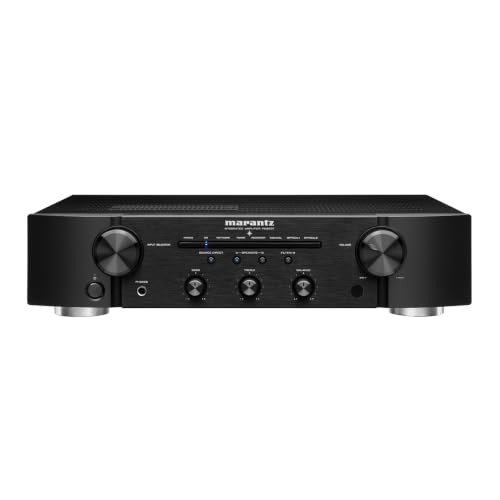

Who Should Buy the Best Amplifier for Klipsch Speakers
This guide suits owners of Reference and Heritage bookshelf and floorstanding models, buyers building a stereo system around a Klipsch pair, and home theater owners who want a stereo amplifier for the front channels. If you are still choosing speakers, see best klipsch speakers and best klipsch bookshelf speakers. If you want a surround system, our guide to the best receiver for klipsch speakers covers that route.
Key Features to Compare
Power and sensitivity
High-sensitivity Klipsch speakers need less power than typical speakers. Around 40 to 80 clean watts per channel is plenty for most living rooms. Large rooms or heavy listening benefit from more headroom, but the amplifier's quality matters more than its size.
Tone and voicing
Horn tweeters can sound bright with a harsh amplifier. A neutral, smooth amplifier with low noise and tone controls you can use gently is a good partner. Many owners like warm-sounding designs for the same reason.
Low noise floor
Efficient speakers reveal hiss. Look for a low noise figure and avoid amplifiers with a noisy volume pot at low levels.
Inputs and connectivity
Match inputs to your sources: a TV (optical or HDMI ARC), a turntable (phono), a streamer (RCA) and a phone (Bluetooth). Add one spare input.
Types of Amplifiers for Klipsch Speakers
Small amplifiers
Compact class D amplifiers are a natural fit because Klipsch speakers need little power. They suit desks, bedrooms and small living rooms. For more compact ideas, see best small amplifier for speakers.
Full-size integrated amplifiers
A traditional stereo integrated amplifier gives better inputs, a stronger supply and more headroom. It suits floorstanding models and large rooms.
Stereo and surround receivers
Receivers add a tuner, HDMI and room correction, which suits home theater and TV use. Make sure the receiver has a stable 4 ohm rating if your Klipsch model has a lower impedance.
Budget Expectations
Good small amplifiers start around $100. Between $250 and $600 you find integrated amplifiers and receivers with better power supplies and streaming. Premium models above $700 add refinement, but efficient Klipsch speakers rarely need them. Put the savings into speaker placement and good cables.
Placement and Setup Tips
Position the speakers so the horn tweeters sit near ear height and angle them slightly toward the listening seat. Spend an evening trying small changes in distance from the wall, because a few inches can change the bass and the stereo image noticeably. Keep them away from corners to avoid boomy bass. Connect the speakers with at least 16 gauge cable, match polarity, and start at low volume. Because the speakers are efficient, you rarely need to turn the volume high.
Matching Amplifier Type to Klipsch Model Families
Reference bookshelf models such as the R-41M class are easy loads and pair happily with compact amplifiers and small receivers. Floorstanding Reference towers play louder and deserve a stronger power supply, particularly in open rooms. Heritage designs are very efficient and sound outstanding with low-power amplifiers, including tube designs, though their horn voicing can be unforgiving with harsh electronics. Home theater owners often use a stereo amplifier for the front pair and let a separate receiver handle the rest.
What to Listen For
Play three kinds of music: a recording with sharp cymbals or strings to judge brightness, a quiet vocal track to check the noise floor, and a bass-heavy track to confirm that the amplifier stays composed. If cymbals sound splashy, try a smoother amplifier or adjust toe-in before blaming the speakers. If you hear hiss at idle, choose a quieter model. If the bass loosens at volume, step up in power supply quality.
Buying Checklist
- Check the amplifier lists a rating for your speaker impedance.
- Choose clean power in the 40 to 80 watt range unless your room is large.
- Prefer a low noise floor and a smooth treble character.
- Count the inputs and add one spare.
- Read the warranty and return terms.
Cables, Placement and Room Notes
Because Klipsch speakers are efficient, they reveal small differences in room acoustics. Soft furnishings, rugs and curtains tame the bright edge that horn tweeters can show in a hard room, while bare walls and glass emphasize it. Position the speakers so the tweeters aim at your ears, and try a small amount of toe-in so the sound focuses on your seat. Use cable of at least 16 gauge for short runs and 14 gauge for long ones, and make sure the connections are firm and tidy.
Finally, set your expectations for volume. With high sensitivity, a little turn of the knob goes a long way, so choose an amplifier with smooth volume control at low levels. A poor volume control can make the first few clicks of the dial jump, and that is more annoying than it sounds when speakers play loudly on small power. A remote that changes volume in fine steps is a real convenience in this situation, and so is a headphone output for late evenings.
Common Mistakes to Avoid
- Buying a very powerful amplifier when an efficient speaker needs far less.
- Pairing with a harsh, bright amplifier that emphasizes the tweeters.
- Ignoring noise: some amplifiers hiss audibly through high-sensitivity speakers.
- Leaving no ventilation space around the amplifier.
Frequently Asked Questions
How many watts do Klipsch speakers need?
Most Klipsch speakers are happy with 30 to 100 watts per channel. Their high sensitivity means they play loudly without much power.
Are tube amplifiers a good match for Klipsch?
Many owners like them, because efficient speakers suit low-power tube designs. Check the speaker impedance and the amplifier rating for compatibility.
Do Klipsch speakers sound bright?
Some models sound forward. A smooth amplifier, careful toe-in and a softer room help balance them.
Can I use a receiver?
Yes. A stereo or AV receiver drives Klipsch speakers well. Choose one with a stable 4 ohm rating for safety.
Is Bluetooth worth having?
It is convenient for phones and guests, but wired inputs sound best for critical listening and are the most reliable.
Final Thoughts
The best amplifier for Klipsch speakers is clean, quiet and smooth, with enough power for your room and the inputs you use. Efficient speakers do not need an amplifier with a huge wattage figure. Use the product table above to shortlist current models, and compare our broader guide to the best amplifier for speakers if you want more background.


