
Best Aluminum Frying Pan (2026): Size, Material and Burner Fit
Disclosure: We may earn a commission when you buy through links on this page, at no extra cost to you. As an Amazon Associate I earn from qualifying purchases. Learn more

Best Aluminum Frying Pan guide for home cooks: compare bare, anodized and clad pans by size, burner fit, induction support and budget.
Picture a weeknight in a small kitchen. Two burners are busy, counter space is tight, and you need one pan that heats fast, lifts easily with one hand, and cleans up without a fight. That is exactly where the best aluminum frying pan earns its place. This guide helps you choose by the space you have, the number of people you cook for, and the budget you want to stay within.
Aluminum pans vary more than the label suggests. The metal may be bare, hard anodized, coated, or layered inside a clad build, and each version suits a different routine. Use the product table below to see real models, and the sections here to see the main types side by side, then work through the checklist that follows before you spend anything.
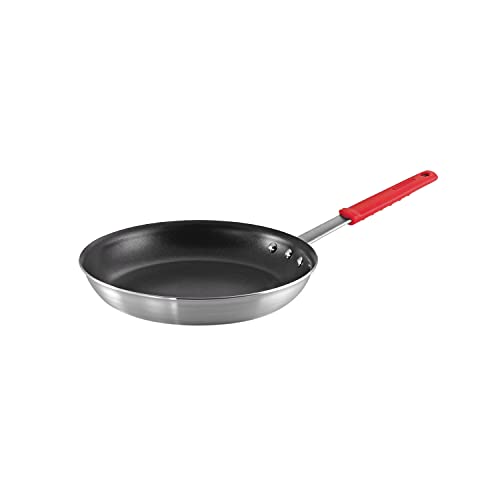


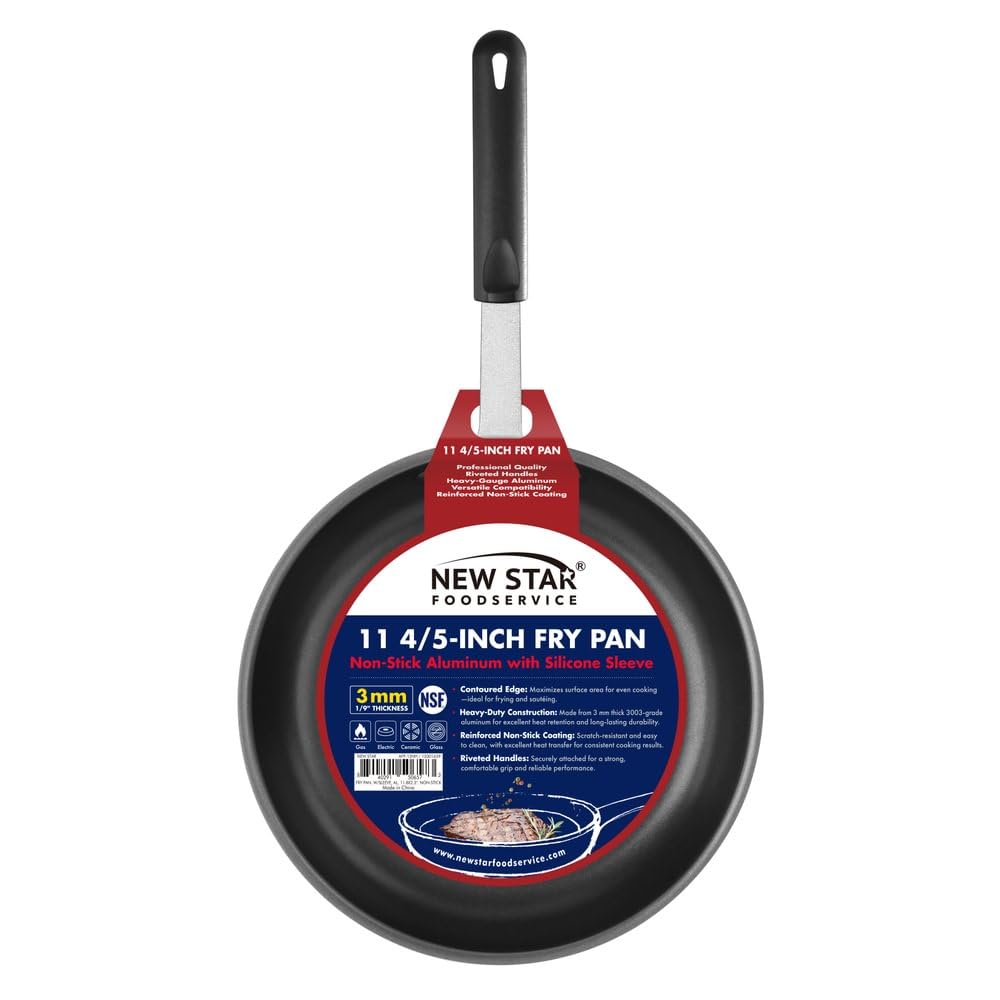
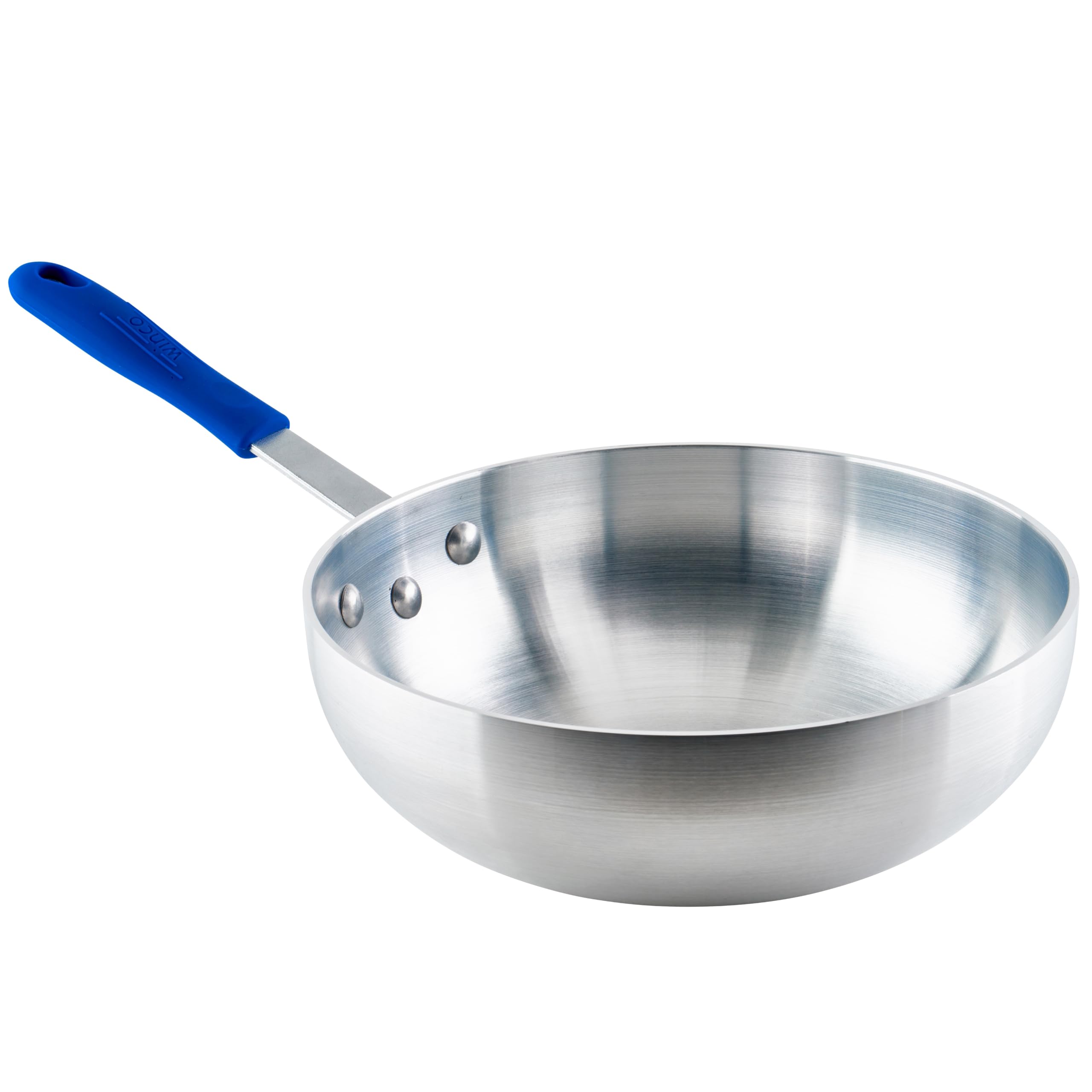
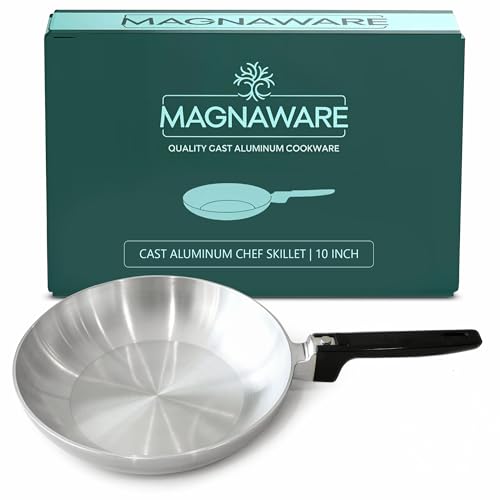
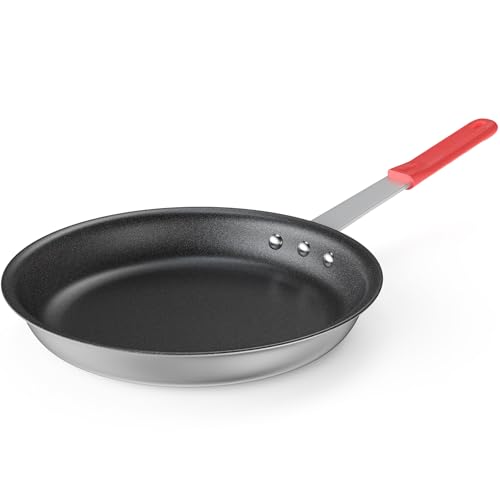
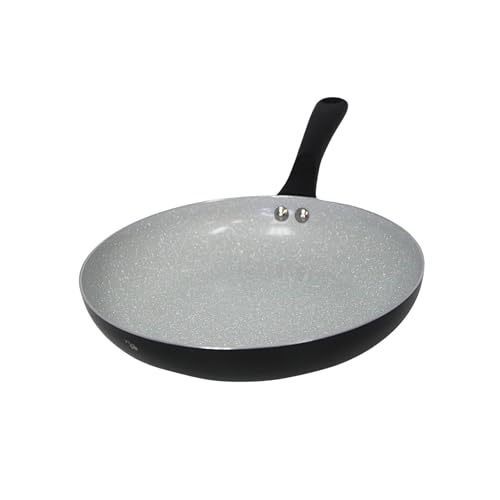

Quick Answer: Three Types in 30 Seconds
If you want the short version, most homes land on one of three types. Bare aluminum is the lightest and cheapest option, and it suits simple cooking where easy release is not the priority. Hard anodized aluminum with a nonstick coating handles eggs and fish with little fuss. Clad pans with an aluminum core cost more but spread heat through a steel cooking surface.
None of these types wins for every household. The sections below match each type to your burners, your storage, and the food you cook most often.
Before You Buy: A Quick Checklist for Choosing a Frying Pan
Size: Match It to Your Space
An 8 inch pan suits one or two eggs, a single sandwich, or reheating a small portion. A 10 inch pan is the most flexible size for one or two people, while a 12 inch pan gives chicken pieces and vegetables room to brown instead of steam. A 14 inch pan only makes sense if your burner and your storage can handle it.
Measure before you buy. Check the diameter of your largest burner, the depth of the drawer or cabinet where the pan will live, and whether a long handle will clear the wall behind your stove. If naming confuses you, our guide to skillet vs frying pan explains why the two words often describe the same shallow, sloped pan.
Which Type Fits Your Routine
Bare aluminum heats quickly and responds fast when you lower the flame, which makes it handy for vegetables and quick sautés. Food can stick, though, and acidic sauces cooked for a long time can pick up a metallic taste and darken the surface. It suits cooks who use plenty of fat and do not mind a little more attention at the stove.
Hard anodized aluminum has a hardened surface that resists scratches better than bare metal, and most versions carry a nonstick coating for easy release. If easy release is your top priority, compare these pans with the options in our guide to the best nonstick frying pan. Ceramic coatings offer a slick surface without PTFE, but they tend to lose that slickness sooner. Steel and carbon steel pans behave very differently and appear later in this guide only as points of comparison.
Features Worth Paying For, and Ones to Skip
A lid earns its cost if you finish grains in the pan, melt cheese often, or simmer sauces that splatter. A helper handle matters on 12 inch and larger pans, because a full pan of food is heavy even when the metal itself is light. Pour spouts help when you drain fat or move sauce into a bowl without drips.
Skip features that solve problems you do not have. Detachable handles add a joint that can loosen, and decorative finishes add cost without improving how the pan cooks.
Is an Aluminum Frying Pan Non Toxic?
Bare and hard anodized aluminum have long histories in home kitchens, and the anodized layer keeps food from touching the raw metal directly. Nonstick versions usually rely on PTFE, which is stable at normal cooking temperatures but should never be heated empty on high heat. Ceramic coatings avoid PTFE and PFAS, yet they wear faster, so the trade is a shorter service life.
If avoiding coatings matters most to you, read our guide to the best non toxic frying pan before deciding. Whatever surface you choose, retire a coated pan once the surface is deeply scratched or flaking, and never use a pan in ways its maker warns against.
Induction, Gas, and Glass Top Compatibility
Plain aluminum does not work on induction cooktops, because the metal is not magnetic. Some aluminum pans add a steel base plate so they can run on induction, so check the product details for an explicit induction rating rather than assuming. On gas, aluminum is an easy match, since the flame heats the base directly and the metal spreads that heat well.
On glass top and ceramic ranges, look for a flat, thick base that sits flush on the element. A warped or very thin base rocks on the glass and heats unevenly. Lift the pan instead of sliding it, since grit trapped under the base can mark the surface of the range.
Oven Safe Temperature and Handles
Oven limits depend on the handle and the coating more than on the aluminum itself. Metal handles usually tolerate higher heat than handles with silicone or phenolic grips, and coated pans often carry lower stated limits than bare or clad pans. Always go by the limit printed by the maker of the pan you own, not by a general number.
Broiler use is stricter still, and many coated pans are not rated for it at all. If you finish frittatas under high heat, choose an all metal build and confirm its rating first.
Realistic Budget Ranges
Under about $30, expect bare or basic coated aluminum in common sizes, fine for a first apartment or a spare pan. Between about $30 and $50, you get thicker metal, better handles, and more even heating. Between about $50 and $100, hard anodized and stronger clad options appear, with sturdier construction.
Above about $100, you are mostly paying for clad builds, refined handles, and longer warranties. That can be money well spent for a pan you use daily, but it will not fix a size or compatibility mistake, so settle those questions first.
Three Types Compared: Where Each One Fits Best
Since the best aluminum frying pan for your home depends on your routine, compare types rather than chasing a single winner. Bare aluminum costs the least and weighs the least, which helps in small kitchens and for cooks with limited grip strength. Its weakness is sticking, and it asks for more oil and more patience with delicate food.
Hard anodized nonstick pans are the easiest match for most homes. Eggs slide, fish releases, and cleanup takes minutes. The limits are real, though. The coating has a finite life, high heat shortens it, and the pan will need replacing years before a bare or clad pan wears out. Budget for that replacement when you compare prices.
Clad pans with an aluminum core pair fast, even heating with a steel cooking surface that sears well and stands up to metal tools. They cost the most and weigh more than plain aluminum, but they contain no coating to wear away. For a household that cooks daily and wants one pan for a decade, this type often makes the strongest case.
Our Selection Process for Aluminum Frying Pans
This guide weighs five criteria: how evenly the pan heats, build quality, what the cooking surface is made of, stovetop and oven compatibility, and cleaning effort. The information comes from maker specifications and patterns in verified buyer reviews, not from marketing copy.
What We Like and What We Do Not About Aluminum Versus Other Frying Pans
Aluminum heats faster than steel and cast iron, and it cools faster too, which gives you quick control when garlic is about to brown or a sauce needs the heat dropped now. It is also far lighter, so tossing vegetables or pouring from a full pan is easier on your wrist. On the downside, plain aluminum dents more easily, reacts with long cooked acidic food, and cannot sear as hard as heavier metals.
Steel pans sear beautifully and last for decades, and our guide to the best stainless steel frying pan covers that route in depth. Cast iron holds heat longer but weighs far more and needs seasoning. Aluminum wins on speed, price, and ease of handling, and it loses on hardness and induction use unless a steel base is added.
Common Buying Mistakes to Avoid
- Buying a 14 inch pan for a small burner, so the edges stay cool and food cooks unevenly.
- Ignoring induction compatibility and discovering at home that a plain aluminum base will not trigger the cooktop.
- Choosing a coated pan for daily high heat searing, which wears the surface out far sooner than expected.
- Forgetting replacement cost, so a cheap coated pan bought every two years ends up costing more than one clad pan.
- Storing pans stacked with no protection, which scratches coatings and dents thin bases.
Cost of Ownership and Care
Ownership cost is mostly about lifespan and replacement. A coated pan is a recurring purchase, while a bare or clad pan is not. Factor in pan protectors for stacking and silicone tools if you cook on a coating.
For daily care, let the pan cool before washing, use warm water with mild soap, and dry it fully before storing. Burned on residue usually loosens after a soak rather than hard scrubbing. Our step by step guide on how to clean a frying pan covers stubborn spots for each surface type. Avoid the dishwasher unless the maker allows it, since harsh detergents dull bare aluminum and age coatings.
Your Questions, Answered
Are aluminum frying pans worth it for everyday cooking?
Yes, for most homes they are, because they heat fast, cost less than steel or clad pans, and stay light enough for daily use. They make the most sense as a workhorse for eggs, vegetables, and quick dinners. If your cooking centers on hard searing steaks at very high heat, pair the aluminum pan with a heavier pan for that one job rather than expecting one pan to do everything.
How long does an aluminum frying pan usually last?
A coated aluminum pan often gives two to five years of good release with gentle heat and soft tools. Bare aluminum and clad pans can last far longer, often a decade or more, because there is no coating to wear away. A pan that warps so it spins on the burner, or a coating that flakes, has reached the end regardless of age.
Can an aluminum frying pan go in the dishwasher?
Many can survive it, but it is rarely a good idea. Dishwasher detergents are harsh enough to darken bare aluminum and leave it with a chalky film, and they age nonstick coatings faster than hand washing does. If a pan is labeled dishwasher safe, occasional cycles are acceptable, but routine hand washing keeps every type looking and cooking better for longer.
Can you cook eggs and omelettes in a bare aluminum frying pan?
You can, but technique matters more than with a coated pan. Preheat the pan over medium heat, add butter or oil and let it shimmer, then add the eggs and leave them alone until the edges set. Adding eggs to a cold, dry pan is the usual reason they weld themselves to bare metal. If eggs are your daily breakfast, a coated pan is simply the easier tool.
What makes one aluminum frying pan better than another for a family kitchen?
Thickness is the first difference, since a thicker base resists warping and spreads heat across a family size batch. Next comes handle comfort, because a 12 inch pan full of food is a real load to carry to the table. Finally, check that the size matches your largest burner. Those three points separate a pan a family keeps from one that ends up at the back of the cabinet.
Final Thoughts
The right choice comes back to your home: your burners, your storage, and the meals you cook each week. Pick the type that fits, confirm compatibility, and check the product table above before you decide. For most households, the best aluminum frying pan is the hard anodized nonstick pan sized to the largest burner, while cooks who want a decade of service should look at clad builds instead.


