
Best ALR Projector Screen (2026): Buying Guide for Bright Rooms
Disclosure: We may earn a commission when you buy through links on this page, at no extra cost to you. As an Amazon Associate I earn from qualifying purchases. Learn more

Best ALR Projector Screen guide: how gain, throw type, seating angle and room light decide which ALR screen suits your wall and budget.
Saturday afternoon, the curtains are open, the kids want a movie, and your projector throws a pale, washed out picture onto the wall. An ALR screen fixes that problem by reflecting light from your projector toward your seats while pushing light from lamps and windows away. Finding the best alr projector screen for your home comes down to your room, your projector, and how your family actually watches. The product table below gives you a fast overview, and the checklist that follows walks you through each decision in plain order.

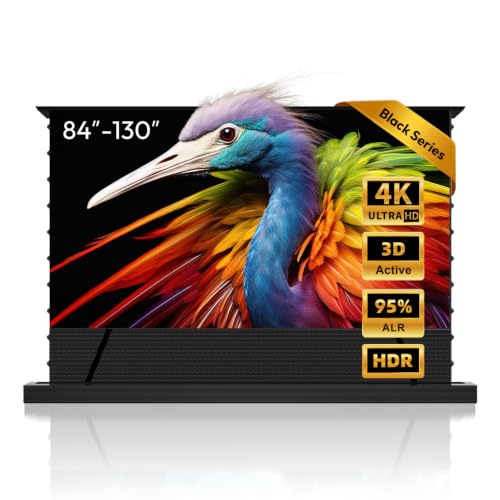
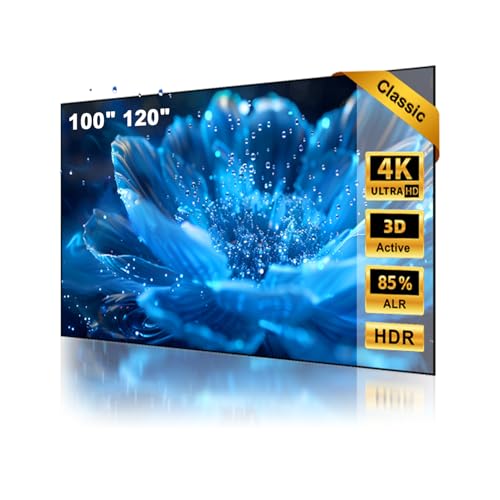
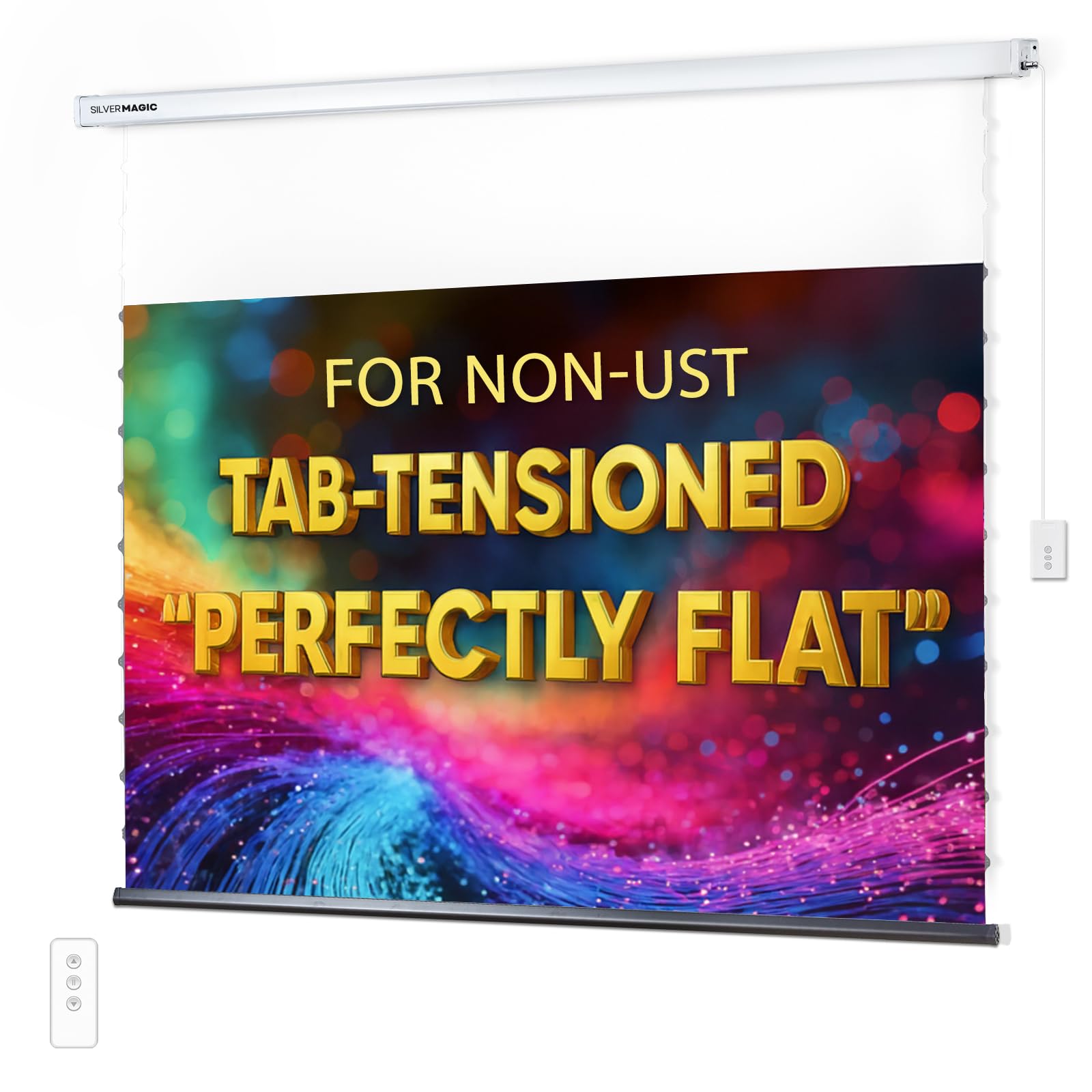



Quick Answer: What Matters Most in 30 Seconds
ALR stands for ambient light rejecting, and the surface is the whole point. A good ALR screen keeps contrast and color looking rich in a room you cannot or do not want to darken fully. Three things decide whether a screen suits you: it must match your projector throw distance, it must fit your wall and seating, and its gain must suit your light. Get those three right and almost any well made ALR screen will please you. Get one wrong and even an expensive screen will disappoint.
Before You Buy: A Quick Checklist for Choosing a Projector Screen
Size: Match It to Your Space
Common ALR sizes run from 84 inch up to 150 inch, with 100 inch and 120 inch the most popular choices for living rooms. Measure your wall first, then leave room for the frame, which adds a few inches on every side. A screen that crowds the wall leaves no space for speakers and makes the room feel cramped. Bigger is not automatically better, because an oversized image from a modest projector looks dim and soft. Match the diagonal to the brightness your projector can honestly deliver across that area.
Which Type Fits Your Routine
Most ALR screens are fixed frame models that hang on the wall like a large picture, and the taut, flat surface suits the delicate optical layers that reject light. Retractable ALR screens exist for rooms that double as living space, rolling down for movie night and disappearing afterward, though they cost more and need careful tensioning to stay flat. If you are still weighing formats for other rooms, our overview of the best projector screen types covers the wider field. For a shared family room, think about how often the screen goes up and down each week.
Seating Distance and Viewing Angle
ALR surfaces direct light back toward viewers in a narrower cone than a plain white screen, so your seats need to sit inside that cone. Plan seating roughly one to one and a half times the screen width away, and keep chairs from drifting far off to the sides. From a sharp side angle the picture on an ALR screen looks dimmer and colors shift slightly. Walk your room before ordering, sit where guests will sit, and check that everyone lands within the bright zone.
Gain and How the Surface Handles Light
Gain describes how strongly a screen reflects light toward you compared with a plain white reference. Many ALR screens rate around 0.6 to 1.2 gain, trading a little peak brightness for much deeper blacks and stronger contrast under room light. The surface uses tiny angled structures that bounce projector light forward while sending ceiling light down toward the floor. That trick works best against light coming from above. Bright windows beside the screen are harder to defeat, so plan curtains on side windows even with an ALR screen.
Match the Screen to Your Projector Throw
This is the pairing buyers get wrong most often. Screens built for ultra short throw projectors use a sawtooth style surface tuned for light arriving from below at a steep angle, and they only work with that projector style. Screens for standard throw and long throw projectors use a different structure tuned for light arriving from the front. The two types are not interchangeable, and a mismatched pairing gives a dim, uneven picture with a bright spot in the middle. Check the listing wording carefully before you order.
Realistic Budget Ranges
True ALR material costs more to make than plain white vinyl, so expect to pay about $300 to $600 for a modest fixed frame screen and about $800 to $1,500 or more for large sizes and premium frames. Retractable ALR models usually start higher still. Very cheap screens sold with ALR claims often use plain gray material that dims the whole picture instead of rejecting light directionally. If your budget is tight, a smaller genuine ALR screen beats a huge fake one, and our guide to a diy projector screen explains the low cost route and its limits honestly.
Three Screen Setups That Fit Real Homes
A Fixed Frame ALR Screen for a Dedicated Wall
If one wall in your home can belong to the screen full time, a fixed frame ALR model is the simplest and most satisfying setup. The rigid frame keeps the optical surface perfectly flat, which ALR layers need in order to reflect light evenly, and there is nothing to raise, lower, or align before a movie. Families who watch most nights in the same room get the most from this route. It is also the natural anchor for a planned media room, and the advice in our best projector screen for home theater guide pairs well with it.
A Retractable ALR Screen for a Shared Living Room
When the big wall also holds art, shelves, or a fireplace, a retractable ALR screen keeps everyone happy. You lower it for films and sports, then hide it away so the room returns to normal the rest of the day. Look for a tab tensioned design, because ordinary roll down screens can curl at the edges, and curl badly distorts an ALR surface. If hiding the screen matters in more than one room, compare the approach with the best motorized projector screen options, which trade some light rejection for push button convenience.
An ALR Screen Built for Ultra Short Throw Projectors
Ultra short throw projectors sit on a console inches from the wall, which suits apartments and rooms where ceiling mounting is not allowed. Their matching ALR screens are often called CLR screens, and they excel at rejecting overhead light from ceiling fixtures, the exact light that ruins most living room viewing. This pairing gives the closest thing to a giant TV experience with a projector, at a lower total cost than a very large television. Just remember the screen and projector must be bought as a matched pair, never mixed with standard throw gear.
The Criteria That Matter When You Compare
Compare screens on the factors that change what you see: how much ambient light the surface rejects, the gain rating, the width of the viewing cone, and whether the material suits your projector throw. Frame quality matters more than it sounds, because a frame that flexes lets the surface ripple. Warranty length and the availability of replacement material tell you how the maker expects the screen to age. Ignore headline contrast numbers, since brands measure them differently and they rarely predict what your room will show.
ALR Screens Compared With Plain White Screens
The strength of an ALR screen is contrast under real room light. Blacks stay dark during daytime scenes, colors hold their saturation, and you can leave a lamp on for snacks and homework breaks. A plain white screen in the same room looks gray and flat by comparison. The trade offs are real too. ALR screens cost several times more, the viewing cone is narrower, and the structured surface can add a slight shimmer to very bright scenes that a matte white surface avoids. In a fully darkened dedicated theater, a good white screen still holds its own for less money.
Common Buying Mistakes to Avoid
- Buying an ultra short throw screen for a standard projector, or the reverse, which guarantees a dim picture with a bright hot spot in the center.
- Choosing the largest size your wall allows while ignoring projector brightness, so the image looks washed out even in the evening.
- Expecting an ALR screen to defeat direct sunlight from side windows, which no screen material can fully reject.
- Mounting the screen where ceiling lights sit outside the rejection zone, then blaming the material for glare it was never built to block.
- Skipping the frame quality check, since a warped frame wrinkles the optical layer and the wrinkles show in every bright scene.
Cost of Ownership and Care
An ALR screen draws no power and has no parts that wear out on a schedule, so running costs are close to zero. Your real costs are one time items: a sturdy wall mount, longer HDMI cables if your projector sits across the room, and perhaps blackout curtains for side windows. Care is gentle by necessity. Dust the surface with a soft, dry microfiber cloth using light strokes in one direction, and never scrub, because the tiny optical structures scratch easily and a scratch shows as a permanent bright line. Keep food, markers, and curious fingers away from the surface.
Your Questions, Answered
How long does an ALR projector screen last?
A quality ALR screen commonly serves a household for about ten years or more, because nothing in it moves or heats up during use. The surface slowly loses a little reflectivity as household dust works into the optical layer over the years, which is one more reason gentle dusting matters. Yellowing, once common on cheap vinyl, is rare on modern ALR material kept out of direct sun. If the frame ever loosens, retightening the corner brackets restores the flat surface the material needs.
How do you hang an ALR projector screen?
Most fixed frame screens hang from two wall brackets, much like a heavy picture frame. Locate the wall studs with a stud finder and drive the bracket screws into wood rather than drywall alone, because a 120 inch frame carries real weight. Use a long level when you mark the bracket line, since a tilted screen makes projector alignment far harder later. Our step by step walkthrough on how to hang a projector screen covers bracket spacing and safe lifting with a helper.
What size ALR projector screen do I need?
Start from your seats rather than your wall. Sit in your main chair and hold the idea of a screen that fills roughly a third of your field of view without forcing your eyes to travel during dialogue scenes. Ceiling height is the limit many buyers forget, since a 150 inch screen in the common 16 to 9 shape stands about six feet tall before the frame. Leave clearance below the screen for a center speaker if you run a sound system.
Are ALR projector screens worth the extra cost?
They earn their price when your room cannot go fully dark or when daytime viewing is a weekly habit. One underappreciated benefit is that strong light rejection lets a mid brightness projector look punchy, so money saved on the projector can fund the screen. If you only watch at night with the lights off, the same budget buys a larger white screen and a better mount instead. The honest answer depends on your light, not on the technology label.
Can you use an ALR screen outdoors in the evening?
You can for occasional garden movie nights, provided the screen is a portable model you bring back inside afterward. Fixed ALR material dislikes moisture and dew, and leaving it out will stain the optical layer. Outdoor viewing also removes the ceiling light the surface was designed to reject, so gains over a plain screen shrink after dark. For regular backyard use, a simpler screen from our best portable projector screen roundup travels better and costs less to replace if weather turns.
Final Thoughts
Choosing the best alr projector screen is really about fit: fit for your projector throw, fit for your wall and seats, and fit for the light your room honestly has. A fixed frame suits a dedicated wall, a retractable model suits a shared room, and a matched ultra short throw pairing suits tight spaces. Check the product table above once more against your measurements, confirm the throw type in the listing, and you will end up with a picture your whole household enjoys every single day.


