Best All Weather Floor Mats for Trucks in 2026: Types Compared and How to Choose
Disclosure: We may earn a commission when you buy through links on this page, at no extra cost to you. As an Amazon Associate I earn from qualifying purchases. Learn more

Compare the best all weather floor mats for trucks by type, from molded tray liners to trim to fit rubber mats, with fit, pedal safety, and price guidance.
Truck floor mats look alike in photos, yet they split into classes that behave very differently under muddy boots and melting snow. The first split is fit. A custom mat is molded to the floor pan of one cab design, while a trim to fit mat is cut by the buyer to roughly match. That single fact explains most of the price gap between the best all weather floor mats for trucks and the rest, and the comparison table below sets the main types side by side.
The second split is what the mat does with water. A flat mat gives melt water nowhere to go, while a tray shaped liner holds it until you pour it away. Keep both splits in mind as you read the types.


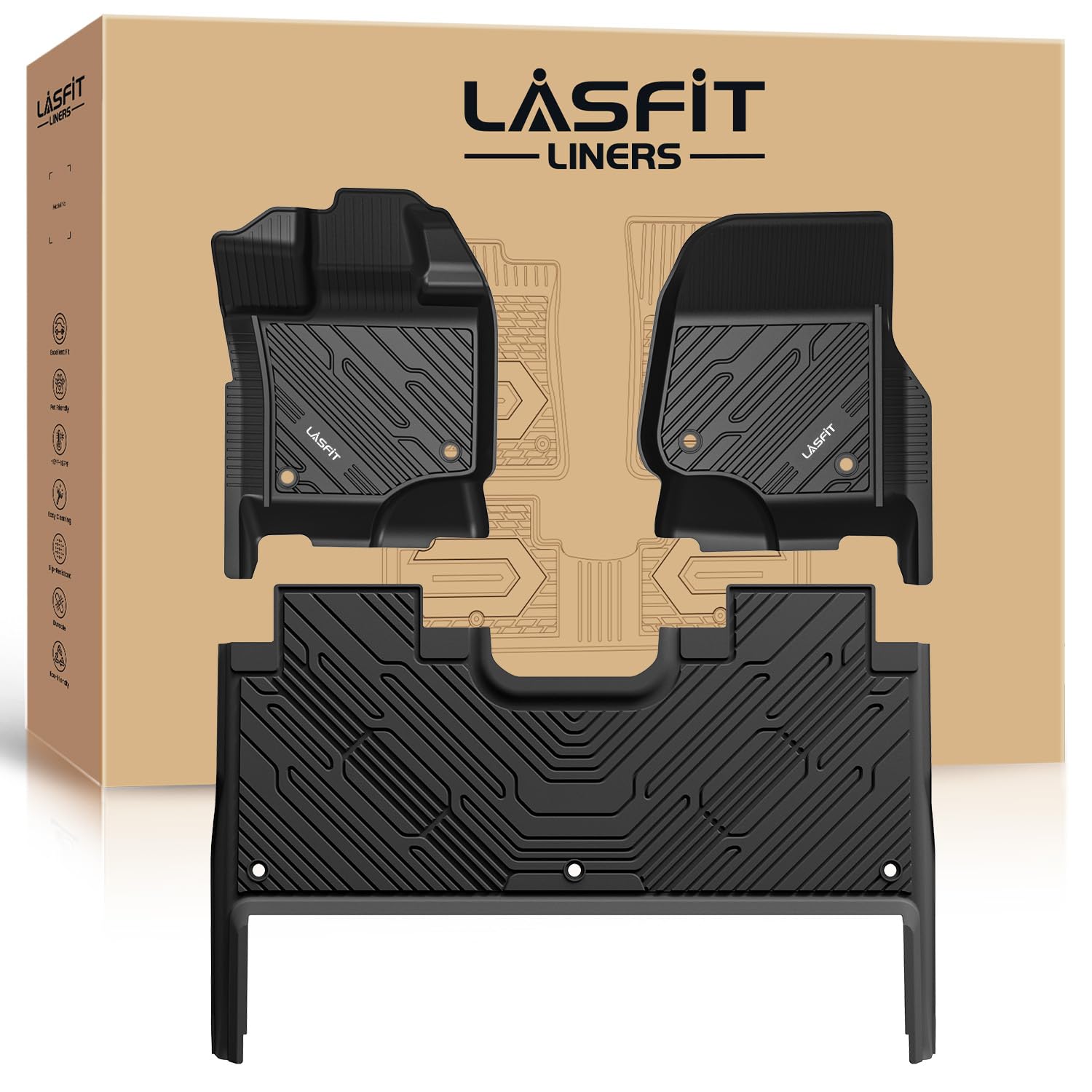


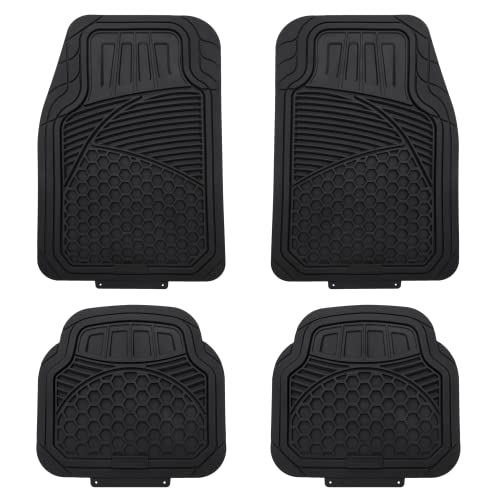
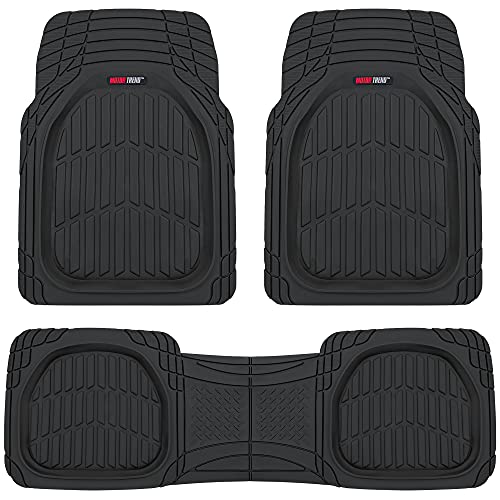
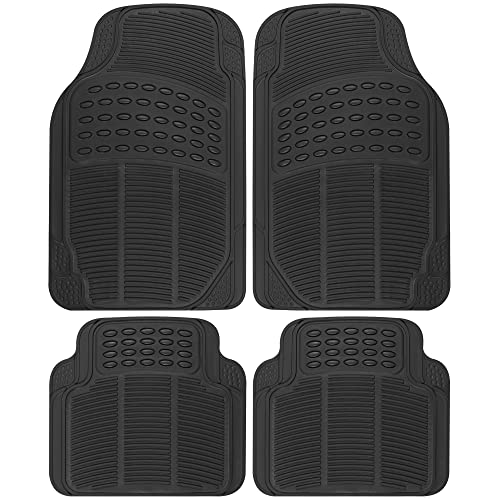

Types of Weather Floor Mats Compared
The table below summarizes the four types; each type then gets a closer look at how it works and who should choose it. Our guide to the best floor mats for truck models covers carpet and hybrid styles as well.
| Type | Best For | Pros | Cons | Typical Price |
|---|---|---|---|---|
| Custom molded tray liners | Work trucks, snow country | Full floor coverage, raised lip holds water and mud | Highest price, made for one cab design only | about $150 to $250 |
| Mid range heavy rubber mats | Daily drivers, mixed use | Thick, durable, deep grooves trap grit | Heavier to remove, coverage stops short of the edges | about $60 to $110 |
| Budget trim to fit mats | Older trucks, second vehicles | Lowest price, cut to fit almost any floor | Thinner material, edges can curl, less retention | about $30 to $60 |
| Compact flat mats | Rear seats, light duty use | Small, light, easy to shake clean | Little coverage, water runs off the sides | about $20 to $40 |
Compact Flat Mats
Compact flat mats are the simplest type: a thin sheet of rubber or rubber like material with shallow grooves that protect the carpet under your heels and shake clean in seconds. Their weakness is coverage, since the flat edges leave the carpet around the mat exposed and let melt water run off onto the floor. Choose them for rear seat footwells, fair weather regions, or a second truck that rarely sees mud. They are a supplement to real protection, not a substitute for it.
Premium Molded Liners
Premium liners are molded from a scan of one specific cab floor, so the edges follow the door sill, seat rails, and transmission tunnel exactly. The raised lip, often an inch or more tall, turns the liner into a tray that holds a full boot load of slush. The material is usually a firm thermoplastic that stays put without clips. You pay for the scan and the fit: a front and rear set runs about $150 to $250, and it fits only the cab it was molded for. In snow country, this is the class that earns its price.
Budget Trim to Fit Mats
Trim to fit mats arrive oversized, with scored lines guiding your scissors as you cut the mat to your floor shape. The rubber is thinner than the mid range class, and the groove pattern is shallower, so they trap less grit. Their strength is flexibility: one set can serve an older truck, a farm truck, or any cab that molded liners no longer cover. Expect about $30 to $60 for a full set. Cut conservatively, check the fit, and check the driver mat against the pedals before the first drive.
Mid Range Heavy Rubber Mats
Mid range mats use thick, heavy rubber with deep channels, sold in a few universal shapes rather than one exact mold. The weight is the retention system: a heavy mat stays where you drop it. Coverage is generous but not complete, since the edges follow a generic outline rather than your sill and tunnel. This is the natural home of the best rubber floor mats for trucks, and at about $60 to $110 a set it suits daily drivers who face real weather without needing a sealed tray.
Flat Mats vs Molded Liners: Which Should You Choose?
Choose by water first. If your boots regularly carry snow, slush, or job site mud into the cab, only a molded liner with a raised lip keeps that water off the carpet, and the flat mat loses on the first wet day. If your weather is mostly rain and dust, a flat or heavy rubber mat protects the wear patch at a third of the price. Fit runs second: a liner is cut for one cab, while a flat mat moves between vehicles.
Drivers who trade trucks often should stay with transferable mats, and our look at the best all weather mats covers that broader, vehicle agnostic end of the market.
How to Choose the Right Weather Floor Mat
Price vs Value
Value in this category is cost per winter, not cost per set. A liner at about $200 that serves ten winters costs less per year than a thin mat replaced every second season. Still, price should follow exposure: a garaged truck in a mild climate gains little from the premium class. The humble best floor mat for a dry climate is often a mid range rubber set, bought once and kept. Spend where the weather and your work actually punish the floor.
Intended Use and Who It Is For
Work trucks that carry crews, tools, and mud need tray coverage and a surface that hoses off without absorbing odor. Family trucks need rear seat coverage and mats that lift out easily for cleaning. Hunters and anglers should weigh how a mat handles grit and fish slime, which argue for deep grooves and no carpet content at all. Match the type to the mess using the comparison table above.
Key Performance Specs
The feature that matters most is retention. Factory anchor posts, nibbed backing, and sheer weight keep the mat off the pedals, and a loose mat is a driving hazard, because a mat that slides forward can bunch under the brake pedal. After retention, read lip height, groove depth, and material thickness. A lip under half an inch is decorative in slush, and thin mats wear through at the heel within a couple of winters.
Features That Matter for Trucks
Truck floors are wider and flatter than car floors, and truck boots carry more of everything. Look for coverage that extends under the seat front edge, where grit migrates, and a surface texture that grips a wet boot without trapping it. A tray lip holds melt water in the mat until you pour it out, and a good mat hoses clean and dries in minutes. For the general category view, compare the best weather floor mats for cars and smaller vehicles.
Setup and Care Tips
Before the first drive, lay the driver mat in place and work every pedal through its full travel to confirm nothing catches, then engage any factory retention posts. Let a rolled liner relax in a warm room before fitting it. Clean mats outside the truck: shake out grit, hose the surface, and let the mat dry fully before reinstalling, since a wet mat sealed against carpet invites mildew. Inspect the driver mat each season for heel wear, and store spare sets flat.
Weather Floor Mats: Your Questions Answered
What features matter most in all weather floor mats for trucks?
Retention and lip height matter most, in that order. Retention keeps the driver mat anchored away from the pedals, which is a safety feature, not a convenience. Lip height decides how much melt water the mat holds before it spills onto the carpet. After those two, look at groove depth for grit and a material that stays flexible in deep cold, because a mat that turns stiff and curls in January has already failed at its job.
How much should you spend on all weather floor mats for a truck?
Most truck owners land between about $60 and $110 for a heavy rubber set that covers the front footwells well. Spend about $150 to $250 on a molded liner set if you face months of snow or carry work mud daily, since the tray protects carpet that costs far more to replace. Under about $40, mats are thin and short lived, so treat that class as temporary coverage.
How long do all weather floor mats last in a work truck?
A thick rubber or molded liner set usually lasts five years or more in a work truck, while thin budget mats can wear through at the heel in one to two winters. The driver mat always dies first, because the heel pivots on it at the pedals. Some makers sell the driver side mat alone, which stretches the life of a set. Replace any mat whose backing has worn smooth, since grip against the carpet is part of the retention system.
Do all weather floor mats fit every truck cab?
No, and the fit class decides what you are buying. Molded liners fit only the cab design they were scanned from, and crew cab and regular cab floors differ behind the front seats. Trim to fit mats adapt to almost any floor because you cut them, but the result is approximate. Before ordering a molded set, confirm the cab style, the seat configuration, and whether your truck has factory retention posts, since all three change which liner actually fits.
How do you clean and maintain all weather truck floor mats?
Pull the mats out, shake off the loose grit, and hose them down; dried mud releases better after a short soak. Use a stiff brush on the grooves and avoid oily dressings, which leave the surface slick under your boots. Let the mats dry completely before putting them back, and wipe the carpet dry as well. In salt season, rinse more often, because the brine held in the grooves will keep working on both the mat and the floor beneath it.
Final Thoughts
Choose the best all weather floor mats for trucks by fit class first, retention second, and water capacity third. A molded tray liner earns its price in snow and work mud, a heavy rubber set covers most daily drivers honestly, and trim to fit mats serve older cabs that liners have left behind. Whichever class you pick, anchor the driver mat, check the pedals before you drive, and use the product table to compare the types against your cab and climate.