Best Air Hoses for Framing: The Buyer Checklist We Use for 2026
Disclosure: We may earn a commission when you buy through links on this page, at no extra cost to you. As an Amazon Associate I earn from qualifying purchases. Learn more
Compare the best air hoses for framing by bore, pressure rating, material, fittings, and length, with a clear buyer checklist for safe framing work.
Framing moves fast, and a hose that starves your nailer, kinks at every stud bay, or turns stiff on a cold morning slows the whole crew down. Choosing the best air hoses for framing comes down to a short checklist of bore, pressure rating, material, fittings, length, and durability. This guide walks through each item so you can match a hose to your compressor, your nailer, and the size of the jobs you run.
Use the checklist as you scan the comparison table below. A hose that looks like a bargain can cost you time if its bore is too small for a long run or its fittings leak under constant cycling. The sections that follow explain what good numbers look like, what warning signs to skip, and how to narrow the field without guessing.

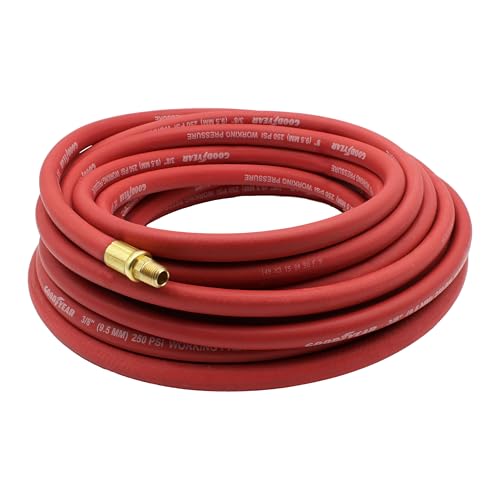


How We Evaluate Air Hoses for a Framing Crew
A framing hose has a harder life than a hose that feeds a small shop tool. It gets dragged across subfloor and concrete, pulled around corners, stepped on, and cycled hundreds of times a day as the nailer fires in bursts. Our checklist scores each hose on whether it can hold pressure and flow under that load, survive the dragging, and stay easy to handle from the first wall to the last.
Features That Matter for Framing Work
A framing nailer drives large nails and cycles quickly, so it needs volume as much as pressure. Look for a stated working pressure of about 300 psi, which gives a wide margin above the roughly 70 to 120 psi most framing nailers use at the tool. A burst rating well above the working rating adds a safety cushion. Bend restrictors at each end matter too, because the hose flexes most where it meets the fitting, and that is where early cracking usually starts.
Match the Hose to Your Job Size and Layout
Start with the distance from where the compressor can sit to the farthest wall you will frame. A 50 foot hose covers most single story work with the compressor on the ground or the deck. Long ranches, two story builds, and remote compressors often need 100 feet, but every added foot increases pressure drop and carrying weight. If you are comparing general shop lines as well, see our guide to the best air compressor hoses for how framing needs differ from lighter duty use.
Value and Cost per Foot
Divide the price by the length to get a fair cost per foot, then check what that price includes. Solid brass fittings, bend restrictors, and a usable warranty add real value, while a bare hose with plastic ends often needs parts right away. Paying a little extra per foot for better fittings usually beats replacing a cheap hose mid season.
Safety on a Pressurized Line
Never use a hose above its working pressure, and never trust a hose with a cut, bubble, or frayed cover on a pressurized line. Always release the air before you disconnect a fitting, wear eye protection when you blow out a line, and keep couplers clean so they lock fully. A loose hose under pressure can whip hard enough to cause serious injury. If compressed air ever breaks the skin, treat it as an emergency and get medical care right away, because that kind of injury can worsen quickly.
Material and Build Quality
Rubber is the traditional choice because it stays flexible in cold weather, lies flat, and tolerates dragging well, but it is the heaviest option. Hybrid polymer blends rubber like flexibility with lower weight and suits most crews well. Polyurethane is the lightest and recoils neatly, yet it can feel springy underfoot and scuff sooner on rough decks. PVC is the cheapest and the stiffest in cold weather, so it fits mild climates and light use better than daily framing.
Durability and Weather Resistance
The cover takes most of the abuse, so look for an abrasion resistant jacket that can slide over joists, rebar, and concrete edges without shredding. Cold rating matters if you frame through winter, because a hose that coils fine in summer can fight you at dawn in January. Resistance to oil and grease helps around compressors and truck beds. Ultraviolet exposure slowly weakens many covers, so a hose rated for outdoor use will hold up longer on open decks with no shade.
Ease of Use and Storage
Weight and coil memory decide how a hose feels at the end of a long day. A line that lies flat saves constant fussing and tangles less at the compressor. Swivel ends reduce twisting at the nailer. For storage between jobs and quick payout on site, see our guide to the best air hose reels, which covers reel sizes that keep long framing lines neat without crushing the cover.
From Checklist to Shortlist: How to Narrow Your Choice
Once the product table above has given you a few candidates that pass the basic ratings, narrow them by how your crew actually works. A solo remodeler and a crew running two nailers all day need different answers. Work through crew size, compressor output, and fitting standards, and the shortlist usually shrinks to one or two hoses.
Sizing for One Nailer or a Full Crew
One framing nailer on a 50 foot run does well with a 3/8 inch bore, which flows enough air to keep up with rapid firing without a pressure sag at the tool. A 1/4 inch bore can work on short runs, but it often feels weak at the end of a long line. Two nailers should not share one long small bore hose. Give each tool its own line from a splitter at the compressor, and check that the compressor delivers enough cubic feet per minute for both tools firing together.
Couplers, Plugs, and Threads That Must Match
Most framing setups use 1/4 inch NPT threads at the hose ends, fitted with quick connect couplers and plugs in either industrial or automotive style. The two styles look similar but do not seal together, so standardize your whole crew on one style to avoid leaks and borrowed fitting headaches. High flow couplers suit framing nailers because they pass more air through the fitting itself. Brass fittings resist corrosion and survive drops better than plated steel or plastic. If you also run smaller nailers on the same compressor, see our guide to the best air hoses for nail guns for bore advice for lighter tools.
Quick Buyer Checklist
Run through these questions before you order. A yes on every line means the hose fits framing work as most crews do it.
- Is the inner diameter stated clearly, and is it 3/8 inch for longer runs?
- Is the working pressure about 300 psi, with a higher burst rating listed?
- Does the length reach your farthest wall without stretching the line tight?
- Are the fittings solid brass, with bend restrictors at both ends?
- Does the material stay flexible at the coldest temperature you work in?
- Do the coupler style and thread size match the tools you already own?
- Does the warranty cover at least a full season of job site use?
- Can you buy replacement fittings that fit this hose if an end wears out?
Red Flags to Watch For
Weak hoses usually reveal themselves in the listing, if you know where to look. Skip any hose that shows one or more of these warning signs.
- The listing gives an outside diameter but hides the inner diameter, so you cannot judge airflow.
- No working pressure is stated, or the number appears without any burst rating behind it.
- The fittings are plastic on a hose sold for heavy framing, and they will crack when dropped on concrete.
- The hose claims to stay flexible in deep cold but lists no temperature range at all.
- The warranty lasts only a few months, which signals the maker expects a short working life.
One more flag is a wall of vague praise with no measurements. A serious listing states bore, length, pressure, thread size, and fitting material in plain numbers. If you have to guess at any of those, move on to a hose that tells you what you are buying.
How to Make Your Air Hose Last Longer
Drain the line at the end of the day by opening the tool end and letting moisture blow out, because standing water corrodes fittings from the inside. Coil the hose in large loose loops rather than tight wraps, and store it indoors or under cover, out of direct sun. Keep it off hot exhaust parts and away from solvents that soften the cover. Relieve pressure before storage so the hose rests at its natural shape instead of holding a stretch overnight.
Inspect the cover and both ends each week during heavy use. Look for cuts that reach the braid, soft bubbles, cracked bend restrictors, and couplers that no longer lock with a firm click. Wipe grit out of couplers before you connect them, because grit scores the sealing surfaces and starts slow leaks. Replace a damaged hose rather than wrapping it in tape, since tape cannot restore a pressure rating and a patched line can fail without warning.
Air Hoses: Your Questions Answered
What features matter most in an air hose for framing?
Bore, working pressure, and fitting quality matter most in an air hose for framing. A 3/8 inch bore with a working pressure around 300 psi keeps a framing nailer cycling without starving for air. One feature buyers often miss is a swivel fitting at the tool end, which lets the hose rotate as you move along a wall and cuts down on the twisting that wears the cover near the coupler.
What inner diameter should a framing air hose have?
A framing air hose should have a 3/8 inch inner diameter for most work. That size balances airflow, weight, and handling for runs of 50 feet and beyond. A simple field check helps if you inherit an unmarked hose: if the nailer slows or sinks nails shallow at the far end of the line while pressure at the compressor looks right, the bore is likely too small for that length.
How long should a framing air hose be for most job sites?
A framing air hose should be 50 feet long for most job sites. That length reaches across a typical foundation or deck while the compressor stays in one spot. Rather than buying one very long hose for rare big jobs, many crews carry a second 50 foot line and join the two only when needed, because a joined setup lets a damaged section be swapped out without sidelining the only hose on site.
Is rubber or hybrid better for a framing air hose?
Hybrid is better for a framing air hose if you carry it often, while rubber suits crews who prize cold weather flexibility above all. A 50 foot hybrid line can weigh noticeably less than the same length in rubber, which matters when you haul it up stairs or across a deck many times a day. Rubber still wins on the coldest mornings, so your climate may matter more than the weight saving.
How long should a framing air hose last with daily use?
A framing air hose should last about two to five years with daily use. Life span depends more on dragging habits and storage than on the brand name on the cover. In practice, the fittings often wear out before the hose wall does, so a hose with field replaceable ends can stay in service longer than a similar hose with crimped ends that must be cut off and refitted by a shop.
Final Thoughts
Start with the bore and the pressure rating, then pick the material that fits your climate and the length that fits your typical build. Match the coupler style to the tools you already own, insist on brass fittings with bend restrictors, and use the product table above to compare the candidates side by side. Chosen that way, the best air hoses for framing will feed your nailer steadily, survive the deck, and stay easy to handle season after season.