Best Air Hoses for Nail Guns 2026: A Buyer Checklist
Disclosure: We may earn a commission when you buy through links on this page, at no extra cost to you. As an Amazon Associate I earn from qualifying purchases. Learn more

Use a buyer checklist for the best air hoses for nail guns: compare material, length, diameter, fittings and pressure ratings, with price bands and care tips.
A checklist keeps hose shopping honest, because a hose that looks fine on the shelf can still drag on the tool, leak at the coupler, or drop pressure at the far end of a long run. This guide sets out the criteria that matter for nail work and applies them in a fixed order. If you are comparing the best air hoses for nail guns, start with material, then work through length, diameter, fittings, and pressure rating. The comparison table below lines the main hose types up side by side.
Every section below follows the same pattern: what to check, what figure counts as good, and what to walk away from. By the end you will have a short list of questions you can answer yes or no in the store.



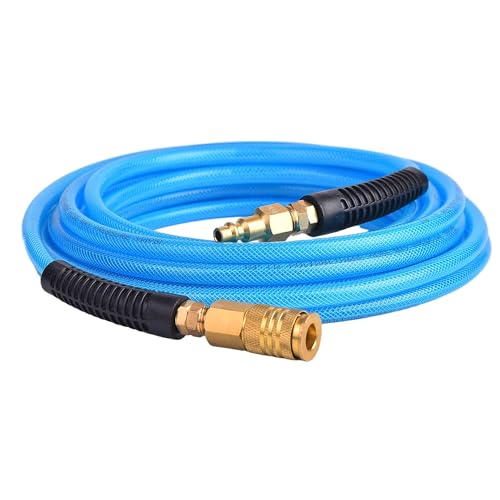
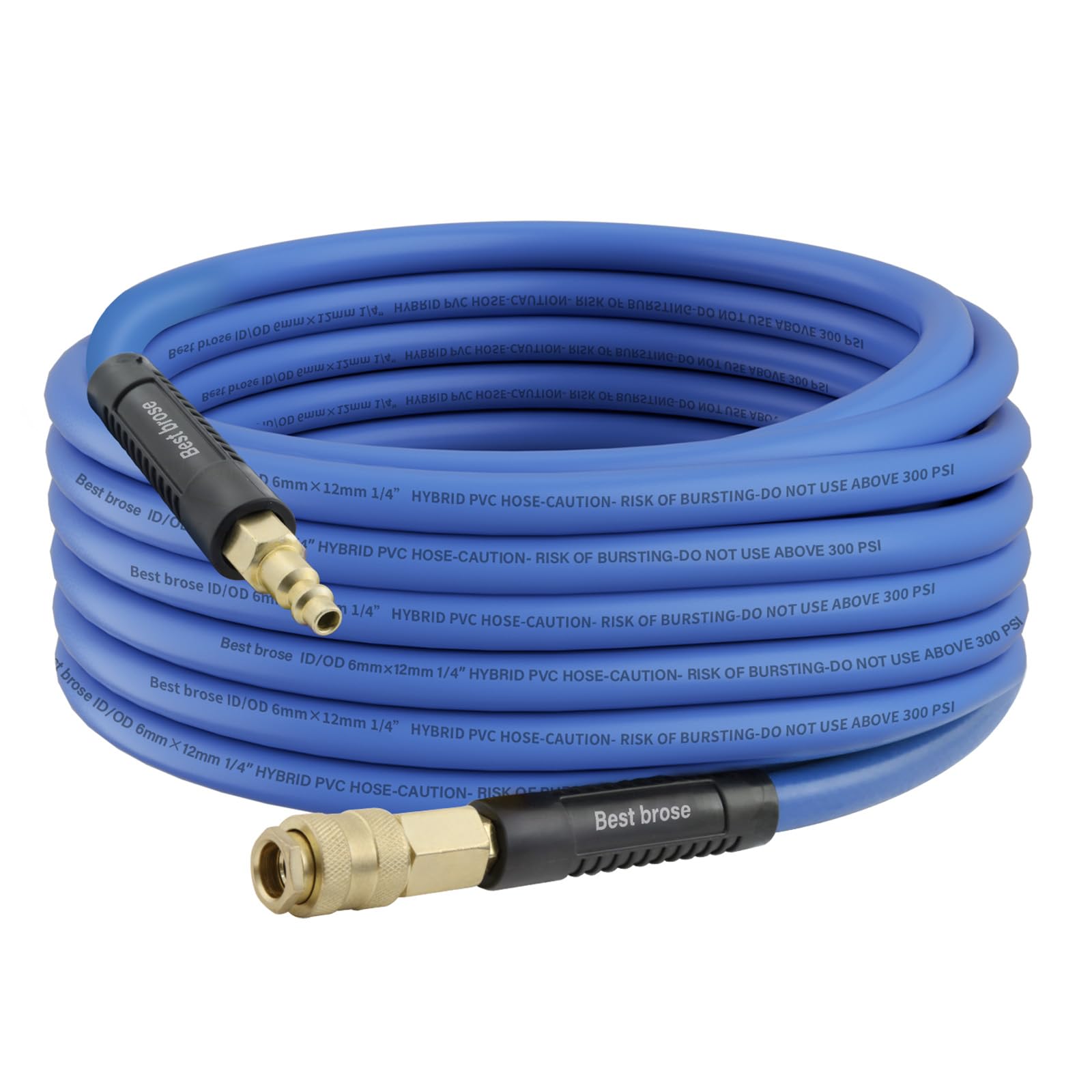
Best Air Hoses for Nail Guns: Key Features to Compare
Work through the best air hoses for nail guns in a fixed order, because each choice narrows the next one. Material comes first, since it governs weight, flexibility, and how the hose behaves in cold weather. Length and diameter then set the pressure your gun actually receives.
Hose Material Governs Weight and Flex
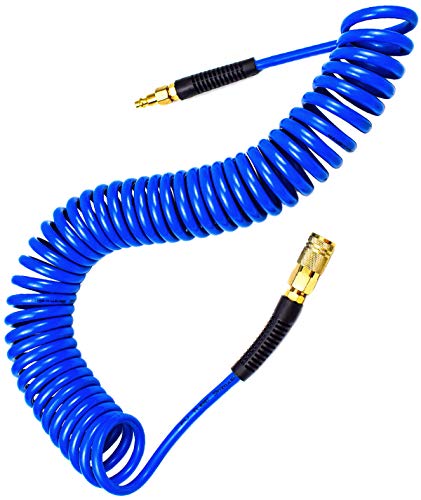
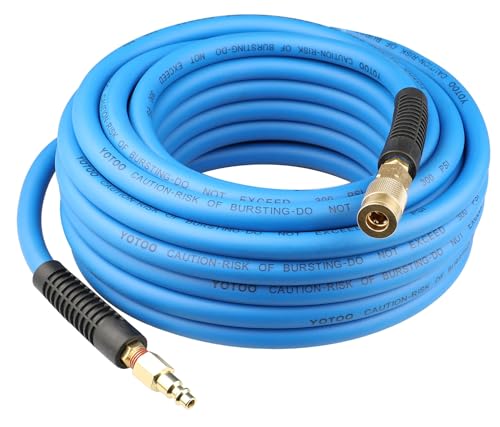
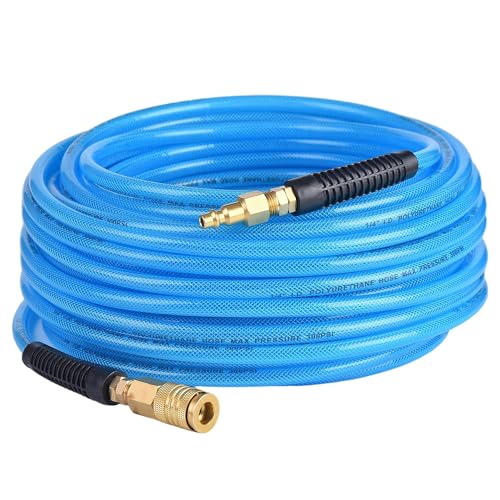
Material governs how a hose handles on the job, so compare it before anything else. Rubber is the heavy, durable classic: it lies flat, resists kinks, and stays flexible in cold weather, but it drags on a light finish nailer. Hybrid hoses blend rubber and polymer to cut weight while keeping most of that flexibility, and they suit most nail work. PVC is the lightest and cheapest option, yet it stiffens in the cold and coils with a memory that fights you all day.
Length and Reach
Length is a reach decision: buy enough hose to cover your longest run from the compressor, with a little slack for moving around the work. A 25 foot hose suits a single room, a 50 foot hose covers most homes and workshops, and a 100 foot hose reaches across a site but costs you pressure along the way. Each extra length adds pressure drop while air is flowing, so longer is not automatically better. A reel keeps long runs tidy, as our guide to the best air compressor hose reel explains.
Inside Diameter and Airflow
Inside diameter sets how much air the hose can deliver while the gun fires. A 1/4 inch bore is the standard for nail guns, because finish and framing nailers sip air in short bursts rather than drawing a steady flow. Step up to a 3/8 inch bore only for long runs or for feeding several tools, which is why crews comparing the best air hoses for framing often choose the larger bore. A bigger hose is heavier, so do not carry capacity your tools never use.
Fittings and Thread
Fittings and thread decide whether the hose connects without leaks or adapters. Most nail gun hoses use 1/4 inch NPT threads with quick connect couplers, and the coupler style on the hose must match the plugs on your guns and compressor. Brass fittings resist corrosion and thread smoothly, while steel costs less and wears faster. A swivel fitting at the gun end stops the hose twisting the tool in your hand. Shoppers browsing the best air compressor hoses shelf will find the same thread standard, so parts interchange freely.
Pressure Rating and Safety
Pressure rating governs safety, so read it before the price. Nail guns typically run at about 70 to 120 PSI, and a sound hose carries a working pressure rating well above that, commonly about 300 PSI, with a higher burst rating behind it. Never run a hose rated below your compressor output. Inspect the cover before each session: a hose with a cut, a bulge, or a crushed section must be replaced, never wrapped in tape and kept in service, because a burst under pressure whips hard enough to injure.
What Nail Guns Ask of a Hose
Nail guns ask for a hose that moves with the tool instead of steering it. A finish nailer is light, so a heavy rubber hose can pull the nose off your line at the top of a ladder, while a hybrid hose in a 1/4 inch bore is the usual answer. Flexibility at working temperature matters as much as weight, because a stiff coil underfoot is a trip hazard. Woodworkers running trim guns all day make the same trade, which is why hose advice pairs closely with guides to the best nail gun for woodworking.
What Your Money Gets You
Hose prices cluster into three bands, and the differences are mostly material and fittings rather than raw performance. The product table above shows where the current options fall.
Starter Hoses for Occasional Projects
At about $20 to $35 you get PVC or light hybrid hoses with basic steel fittings. They handle weekend trim jobs and small repairs well, and their low weight suits short runs. Expect a stiffer coil in cold weather and fittings that loosen sooner. For a first hose used a few times a month, this band is honestly enough.
Mid Priced Hoses for Weekly Workshop Use
At about $35 to $60 the material improves to true hybrid or lighter rubber, and brass fittings become standard. These hoses stay flexible through winter, coil without a fight, and shrug off being dragged across concrete. Most home workshops and serious hobbyists should land here, because the handling gain over the starter band is felt on every single job.
Premium Hoses for Daily Site Work
At about $60 to $100 you are paying for heavy rubber, reinforced covers, and couplers built for daily connection cycles. The advantage is lifespan under abrasion and reliable flexibility in freezing weather, not extra power for the gun. Crews who drag hoses over framing decks and driveways all week recover the cost in replaced hoses avoided.
Quick Buyer Checklist
- Is the hose material right for your working temperature?
- Does the length cover your longest run without a long excess?
- Is the bore 1/4 inch, or do your tools truly need a 3/8 inch bore?
- Do the couplers match the plugs on your guns and compressor?
- Is the working pressure rating above your compressor output?
- Can you return the hose if it coils too stiffly at home?
Red Flags to Watch For
- A hose with no printed pressure rating, which means the maker will not stand behind a number.
- Fittings that feel loose out of the packet, since leaks only grow under pressure.
- A cover that stays kinked after one bend, a sign the material will fight you in the cold.
- A warranty measured in weeks rather than years on a hose sold for daily work.
- Bargain bundles with no stated bore, because an undersized bore starves the gun at distance.
Care and Maintenance Tips
Drain moisture from the tank and hose after use, because standing water corrodes fittings from the inside. Coil the hose in large loops or store it on a reel out of direct sunlight, since sun and sharp bends age the cover fastest; our guide to the best air hose reels covers reel sizes and mounting. Wipe grit off the couplers before connecting, and release the pressure before you disconnect any fitting. A hose stored clean and dry keeps its flexibility for years.
Air Hoses: Your Questions Answered
What length of air hose should I buy for a nail gun?
Buy the shortest length that covers your longest run with a few feet of slack. Most home users land on 50 feet, which reaches across a house without the pressure drop of a 100 foot run. Add a short whip hose of about 4 to 6 feet at the gun end if you can, because the light whip section removes most of the drag on the tool while the main hose stays put. Measure the run before you buy, not after.
Can one air hose run two nail guns at the same time?
One air hose can run two nail guns at the same time through a tee or manifold fitting, because nailers draw air in short bursts rather than continuously. Problems start only when both guns fire in rapid sequence on a long, narrow hose, which dips the pressure and can leave a nail standing proud. Keep the shared run short, and step up to a 3/8 inch bore if two framers work together all day. A small compressor may also cycle more often, which is normal.
Why does a nail gun feel weak at the end of a long hose?
A nail gun feels weak at the end of a long hose because flowing air loses pressure to friction along the hose walls. The gauge on the compressor can read correctly while the gun receives far less during each shot. Raise the regulator slightly to compensate, or shorten the run, or step up one bore size. If the weakness appears suddenly, check for a kink or a partly closed coupler before blaming the hose.
How do I stop air leaks at hose fittings?
Stop air leaks at hose fittings by wrapping thread seal tape around the male NPT threads before assembly, then tightening hand tight plus about a quarter turn with a wrench. Most leaks live at threaded joints, not in the hose itself. Replace worn coupler seals when a quick connect hisses, since the small rubber ring inside is a wear part. Never overtighten brass fittings, because cracked threads leak worse than loose ones.
When should an air hose be replaced instead of kept in service?
Replace an air hose at the first bulge, deep nick, or section that stays stiff and cracked after warming up. Sun and ozone age a stored hose even when it is rarely used, so a hose that has lived outdoors for years deserves suspicion before its looks fail. A damaged hose is never repaired with tape, because the cover is part of the pressure structure. Retire it, cut it up so nobody reuses it, and fit a new one.
Final Thoughts
Run the checklist in order: material for handling, length for reach, bore and fittings for a leak free match, and a pressure rating with real margin. Do that and the best air hoses for nail guns stop being a guess. Compare your shortlist against the product table above, and choose the lightest hose that still clears every line.