Best Air Fryer With Two Baskets in 2026: Buying Guide for Busy Households
Disclosure: We may earn a commission when you buy through links on this page, at no extra cost to you. As an Amazon Associate I earn from qualifying purchases. Learn more

The best air fryer with two baskets lets a main and a side finish together. Compare layouts, capacity and cost.
Dinner at a full house often stalls at the same point. The chicken needs one temperature, the potatoes need another, and a single basket forces you to cook in rounds while the first batch cools. A best air fryer with two baskets search usually starts right there, with a wish to serve both foods hot at once. Two independent baskets let you do that without heating a large oven.
This guide focuses on fit for real homes rather than cooking power alone. You will see how each layout suits a different counter, household size, and routine, plus what ownership and cleaning involve. Use the product table to spot layouts and capacities that match your kitchen.


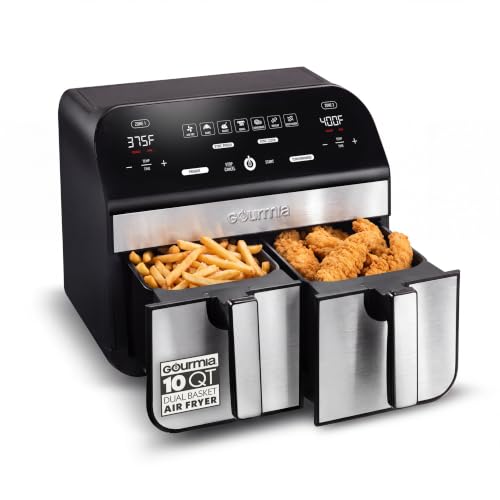

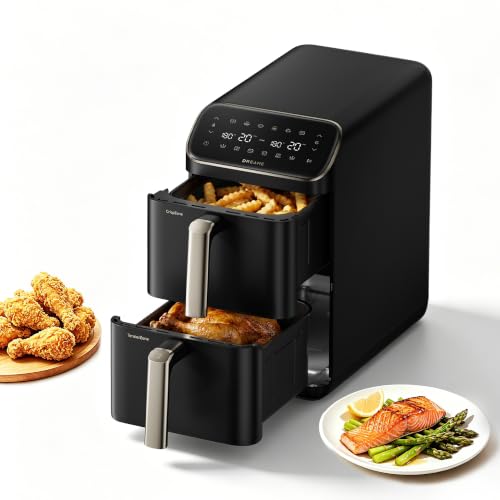
Quick Answer: The Three Layouts at a Glance
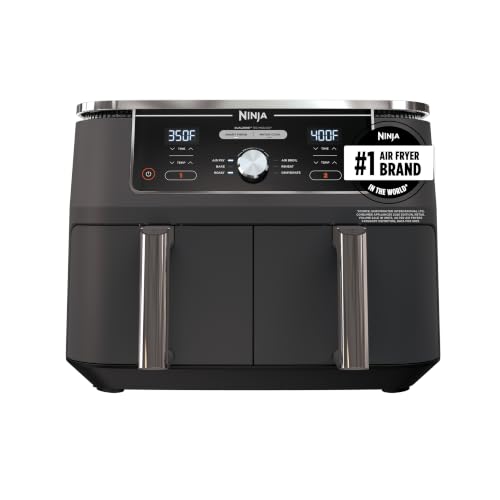
Two baskets come in three basic layouts, and layout matters more than headline capacity. The best air fryer with two baskets for your home is the one whose shape matches your meals and your counter, since all three cook two foods at once.
- Equal baskets side by side: two similar zones with separate heat and timers, for a main and a side at different settings.
- Convertible wide basket: one broad zone that a removable divider splits in two, for large items on some days and two smaller foods on others.
- Stacked baskets: two zones one above the other, for narrow counters where width is scarce but vertical space is free.
Before You Buy: A Quick Checklist for Choosing a Two Basket Air Fryer
Work through the checks below in order. Space and household size narrow the field first, and features and price make sense after that.
Size: Match It to Your Space and Household
Total capacity is the sum of both baskets, and that headline number can mislead you. A model listed at 8 quart might split into two 4 quart baskets, so judge each basket alone. For one or two people, about 2 to 3 quart per basket handles a chicken breast and a side. Families of four usually want about 4 to 5 quart per basket, and inner width matters too, since a long fish fillet needs floor space.
Which Type Fits Your Routine
Think about your three most common meals and match the layout to them. If you often pair a protein with a vegetable at a different temperature, equal baskets give the most freedom, since each zone runs alone. If you roast a whole chicken weekly, a convertible basket protects that option, while stacked baskets suit homes that mostly reheat leftovers. An oven style model may suit tray baking better, though it gives up the split.
Features Worth Paying For and Ones to Skip
Worth paying for are independent controls for each basket, a setting that times both zones to finish together, and a shake reminder. A window with a light helps with delicate foods that brown fast, and dishwasher safe parts save daily effort. Readers who care about basket coatings can compare materials in our guide to the best non toxic air fryer. Skip long preset lists, phone apps that only repeat the panel, and bulky accessory bundles.
Wattage, Power and Energy Use
Most dual basket models draw about 1500 to 1800 watts with both zones running, close to the limit of a standard kitchen circuit. Run the fryer without a kettle or microwave on the same circuit, so you avoid a tripped breaker mid meal. Some models share one heating system between zones, and times can stretch when both baskets are full. A two basket fryer still uses less energy than a full oven heated for a small meal.
Safety Features and Certifications
Look for a UL or ETL listing on the rating label, which shows the model met a recognized safety standard. Useful protections include automatic shutoff when you pull a basket out and a pause in heat and fan while it is open. An exterior that stays cool enough to touch also helps in a busy kitchen. Keep the cord clear of the hot rear exhaust, supervise children around hot baskets, and stop using a model with a damaged cord.
Counter Space and Dimensions
Measure the spot before you shop, including height up to any cabinet above it, and check product dimensions against that space. Leave a few inches of open room behind and above the unit, since hot air leaves through the rear vent. Side by side layouts are wide, while stacked layouts trade width for height that may not fit under cabinets. If your counter is truly tight, see our guide to the best small air fryer before giving up storage space.
Realistic Budget Ranges
Prices shift with sales, but these tiers reflect what your money usually buys here.
- Under $100: basic dials or a simple panel, smaller baskets, and fewer coordinating settings, for light use a few times a week.
- About $100 to $180: the range most homes should shop, with independent digital controls, zones timed to finish together, and dishwasher safe parts.
- About $180 to $250: convertible wide baskets, larger totals, viewing windows, and quieter fans, for daily cooking for four or more.
Two Basket Types Compared
With the checklist in mind, compare the layouts on daily use. None wins on every point, so weigh the tradeoff you will feel most often, be it washing, storage, or fitting a large roast.
Equal Baskets Side by Side
This is the layout most shoppers picture first. Each basket has its own element, fan, temperature, and timer, so salmon can cook gently on the left while green beans roast firmly on the right. It is the easiest layout to learn, and replacement baskets are simple to find later. The costs are counter width and two baskets to wash after nearly every meal, and a large item that fits in neither basket has no home.
Convertible Baskets With a Removable Divider
A convertible model uses one wide zone that a divider splits when you need two foods kept apart. Remove the divider and the full width opens up for a whole chicken, a rack of ribs, or a family size casserole. In split mode it behaves much like a side by side model, though the zones may share heat more closely. The divider adds a part to wash and store, and the wide body needs generous room.
Stacked Baskets for Narrow Counters
Stacked models place one basket above the other, so the footprint stays close to a single basket unit while cooking two foods at once. They suit galley kitchens, apartments, and counters broken up by sinks and stoves. The upper basket sits high, which can feel awkward with heavy food, and the lower basket may cook a touch slower in some designs. Check total height with both baskets closed before you buy.
How to Evaluate Models Without a Showroom
Start with the spec sheet from the maker and confirm figures that store listings sometimes blur, namely capacity per basket, full dimensions, wattage, and warranty length. Then read verified buyer reviews for patterns, watching for repeated notes about noise, coating wear, and uneven cooking between zones. Weigh ease of cleaning heavily, because a fryer that annoys you at the sink gets used less. Check that replacement baskets and crisper plates are sold for the model.
Do You Really Need an Air Fryer With Two Baskets?
You will feel the benefit most on busy evenings when a main and a side must land on the table together. Two zones also help with meal prep, since chicken for the week and vegetables for tonight can cook in one run. Cooking for one is easier too, because one small basket heats faster than a large cavity warmed for a small portion.
You may not need the second basket if you mostly cook one large item, bake in trays, or own a good oven you enjoy. Our comparison of air fryer vs convection oven helps weigh that choice, as does our guide to the best air fryer. If you are new to air frying, skim our walkthrough on how to use an air fryer before spending on a larger model.
Common Mistakes to Avoid
- Buying by total capacity alone, then finding neither basket fits your usual foods.
- Placing the fryer tight against a wall, so the vent blows hot air at paint or cabinets.
- Filling both baskets to the top, so air cannot move and food steams instead of crisping.
- Running both zones plus a second appliance on one circuit, so the breaker trips mid cooking.
- Paying for dehydrator or rotisserie functions you never use, wasting money that could buy capacity.
- Ignoring replacement basket costs in price comparisons, so a cheap model turns costly within a few years.
Cost of Ownership and Care
Running costs stay modest, since a two basket fryer uses far less electricity than a full oven heated for two portions. The bigger cost is parts, because nonstick baskets and crisper plates wear with daily use and replacements can cost about $20 to $40 each. Confirm part prices before you buy, and treat paper liners as an optional small weekly cost.
Care is simple but steady. Wash baskets and plates in warm soapy water after they cool, or use the dishwasher if the maker allows it, and avoid abrasive pads that strip the coating. Wipe the interior and heating area with a damp cloth once the unit is unplugged and cool, since grease film can smoke at high heat. Our full routine for how to clean an air fryer covers deep cleaning and the spots most owners miss. Store the unit with baskets slightly open so moisture and odors clear.
Your Questions, Answered
Can you use only one basket in a two basket air fryer?
Yes, and many owners cook that way on quiet nights. Leave the empty basket in place so the unit senses a closed zone, and run only the zone you need, which draws less power. Alternate which zone you use across the week, so heat and washing wear spread evenly between baskets instead of falling on the same one each time.
Can you cook a whole chicken in an air fryer with two baskets?
Only if one cooking space is wide enough, which usually means a convertible model with the divider removed. Check the weight limit and leave clear space between the bird and the element above it. Tie the legs together, and judge doneness with a thermometer in the thickest part of the thigh, where poultry is done at 165 degrees Fahrenheit.
Do both baskets finish at the same time in a two basket air fryer?
They can, with a little planning. A finish together setting starts the faster food later, so both zones end at the same moment. On models without that setting, start dense foods such as potato wedges first and add quick foods such as shrimp partway through. Note the stagger that works for your regular meals, and timing becomes routine.
Are paper liners safe to use in both baskets of an air fryer?
Perforated paper liners made for air fryers are safe when used correctly. Choose a size that sits flat, and always place food on top before cooking, so the weight holds the liner down. Never preheat a basket with an empty liner inside, because the fan can lift loose paper toward the element. Solid liners block airflow more, so expect softer undersides.
How long does a two basket air fryer usually last?
With daily use, many owners get about 3 to 5 years from a two basket model before wear shows. The coating on baskets and plates usually ages first, followed by fan noise and fading controls. Replace a basket if the coating peels, and stop using the unit if the fan grinds or controls cut out.
Final Thoughts
For most homes, the right choice comes down to layout first, capacity second, and features third. Equal baskets suit steady two dish dinners, a convertible zone suits cooks who also roast large items, and stacked baskets suit narrow counters. Compare your shortlist against the product table above, measure your counter once more, and pick the best air fryer with two baskets that matches the meals you actually cook each week.