Best Affordable Cameras for Pictures by Budget: Smart Picks for 2026
Disclosure: We may earn a commission when you buy through links on this page, at no extra cost to you. As an Amazon Associate I earn from qualifying purchases. Learn more

Compare the best affordable cameras for pictures by budget, sensor, lens and battery life, with clear guidance on types, long term costs and features.
Camera prices stretch from under $100 to several thousand dollars, so a low price alone tells you very little. The best affordable cameras for pictures put your money into a good sensor and lens first, because those two parts decide how your still images look. Use the comparison table below to compare models once you know which parts matter most.
This guide is built around still pictures, not video bragging rights. It walks through three budget tiers, the features that change your photos, and the extra costs that arrive after the camera itself, so you know where a budget is plenty.




Who Should Buy an Affordable Camera for Pictures?
Start from the pictures you take most, not from a spec sheet. A camera that lives in a jacket pocket gets used, while a larger camera only earns its price if you carry it on purpose.
Families and Everyday Photographers
You want birthdays, school events and holidays to look cleaner indoors, where phone photos turn soft and grainy. A compact with a 1 inch sensor is usually the sweet spot, because it stays small while gathering far more light. Look for simple auto modes and quick WiFi sharing, and read our guide to the best cameras for pictures if image quality is your priority.
Students and New Hobbyists Learning Photography
You want manual controls so you can learn how aperture, shutter speed and sensitivity shape a picture. An entry level mirrorless camera with interchangeable lenses gives you that control and room to grow, because you can add a lens later instead of replacing the whole camera. Choose clear dials, a viewfinder and a lens mount with plenty of used lenses available.
Travelers Who Want Prints and Keepsakes
You carry a camera all day, so weight and battery life matter as much as image quality. Point and shoot compacts with a moderate zoom suit walking tours, while instant cameras trade detail for a print you can hand to someone on the spot. If that print first idea appeals to you, see our guide to the best instant picture cameras before you decide.
What Each Price Step Adds for Everyday Photography
Prices below are typical street prices on Amazon in the US, and they move with sales. Treat each tier as a set of trade offs rather than a ranking, because the right tier matches how and where you shoot.
Under About $300: Simple Compacts for Daily Snapshots
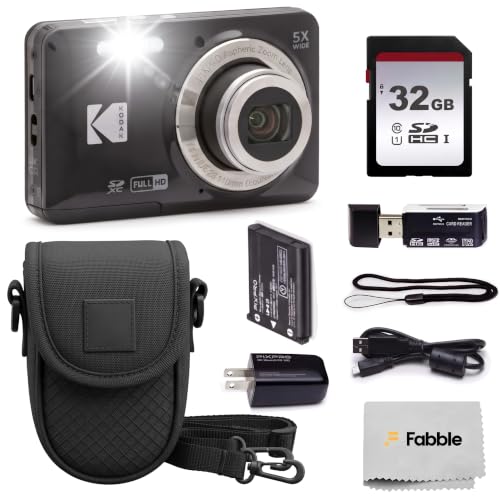
Expect a small sensor, a fixed lens and fully automatic shooting on most models at this level. Pictures look good in daylight and for sharing online or making small prints, but indoor shots show more noise and zoomed shots soften quickly. This tier suits buyers who want a dedicated camera without menus to learn.
About $300 to $600: Larger Sensors and Real Control
This is where still pictures take a clear step forward. Many models use a 1 inch sensor or an APS C sensor, add raw file capture and give you dials for exposure settings. Autofocus gets faster and lenses are brighter, so indoor and evening shots hold together better. For most people who print or edit photos, this tier delivers the strongest value per dollar.
About $600 to $1,000: Room to Grow With Lenses
Bodies in this range add stronger autofocus tracking, better stabilization and tougher builds, and some add partial weatherproof sealing for light rain. The bigger gain is the system around the body, because you can add portrait, wide angle or telephoto lenses over time. Choose this tier if photography is becoming a weekly hobby.
Features Worth Paying For in a Camera for Pictures
Spec lists are long, but only a handful of features change your still photos in ways you can see. The points below decide how the best affordable cameras for pictures perform, and the last section names specs you can safely skip.
How Sensor Size Shapes Your Everyday Photos
Sensor size is the single strongest predictor of picture quality at a fair price. A 1 inch sensor collects much more light than the tiny sensor in a basic compact, and an APS C sensor collects more again, which means cleaner shadows and softer backgrounds. Megapixel counts matter less, because 20 to 24 megapixels give large prints and room to crop.
Lens Quality and Optical Zoom
The lens decides how much of the scene you can frame and how sharp the edges look. Optical zoom moves real glass, so detail holds up across the range, while digital zoom only crops the image and throws detail away. A zoom range of about 24 to 70 mm in full frame terms covers groups, travel scenes and portraits well. Check the widest aperture too, because a lower f number lets in more light at dusk.
Autofocus Speed and Accuracy
Autofocus decides whether the moment you wanted is the moment you got. For still pictures, look for reliable face and eye detection, because portraits and family shots make up most albums. Cameras at the lowest tier often hunt in dim rooms and miss moving children or pets. A modest step up usually brings tracking that follows a subject across the frame.
Battery Life for Day Trips and Family Events
Makers rate battery life in shots per charge, and figures of about 300 to 400 shots are common for mirrorless models, while simple compacts often manage fewer. Real life varies with screen use and cold weather. USB C charging is worth having, because you can top up from a laptop or power bank between outings.
Specs You Can Safely Skip for Still Pictures
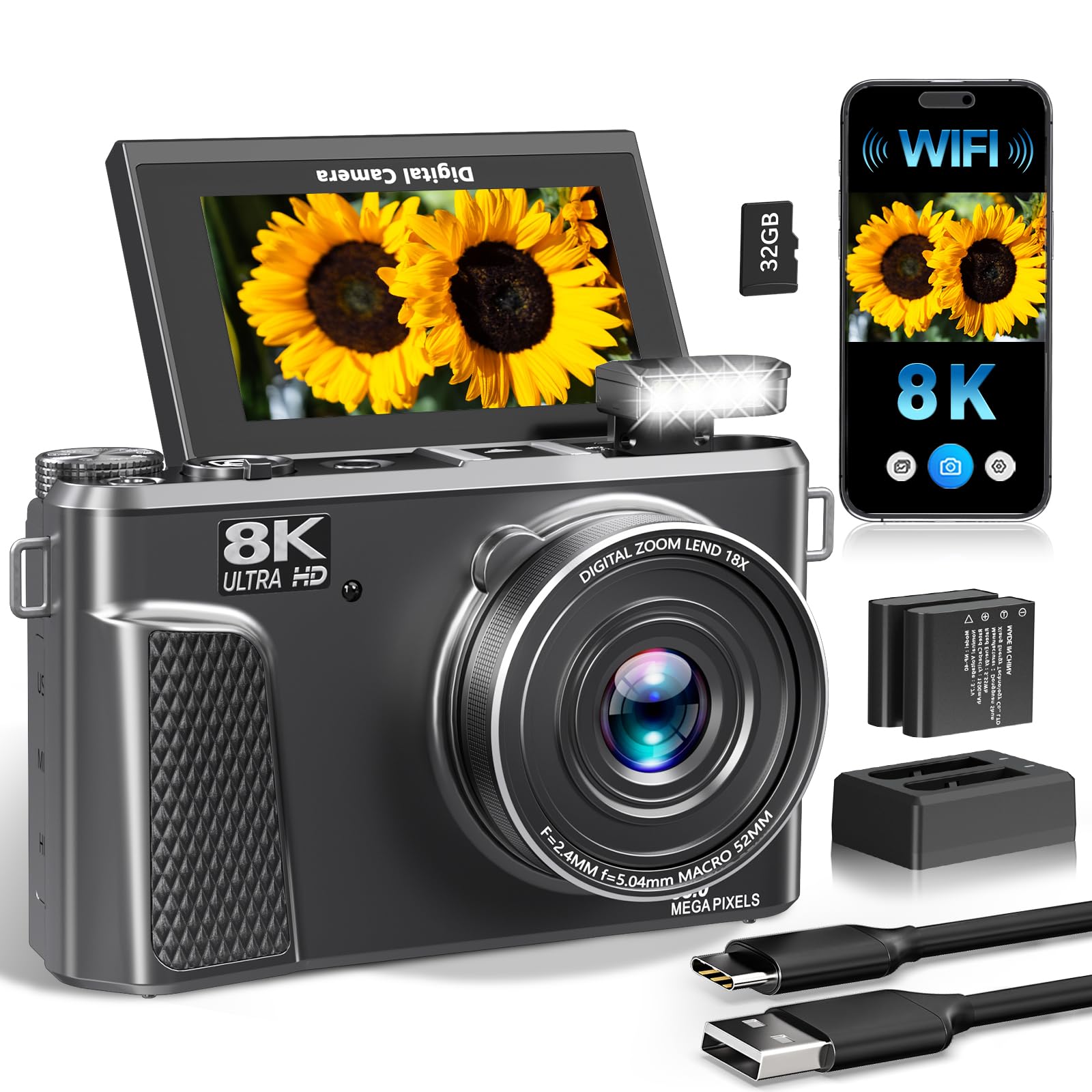
Skip paying extra for headline video features if stills are your goal. Many vlogging cameras charge more for flip screens, microphone ports and 4K video modes that do nothing for a photograph. Very high megapixel counts and extreme digital zoom numbers also add cost without adding picture quality. Put that money toward the sensor, the lens or a second battery instead, and compare the wider market in our guide to the best digital cameras for context.
Ownership Costs Beyond the Camera Body: Lenses, Cards and Batteries
The camera body is only the first purchase. A memory card with enough speed and space usually costs about $20 to $50, a padded case about $25 to $40, and a spare battery about $30 to $60. Interchangeable lens cameras add the biggest future cost, because one extra lens often costs about $150 to $400.
Instant cameras reverse that pattern, since the camera can be cheap while film packs add up on every outing. Set aside roughly a fifth of the body price for extras. Readers set on a digital model can compare options in our guide to the best affordable digital cameras.
Common Mistakes to Avoid
Each mistake below costs money or pictures.
- Buying by megapixel count alone leaves you with a small sensor that struggles indoors.
- Choosing the longest zoom on the box gives you soft, shaky pictures at the far end.
- Ignoring battery ratings means your camera dies during the school play or the birthday candles.
- Skipping a memory card upgrade forces the camera to pause while it writes, so you miss the next shot.
- Buying an interchangeable lens body with no lens budget leaves you stuck with one basic lens.
- Paying for advanced video features you never use drains money that could have bought a better lens.
Care and Maintenance for Affordable Cameras
Keep the lens clean, because a fingerprint or dust spot shows up in every picture until you remove it. Wipe the glass gently with a microfiber cloth in small circles, and use a blower for grit before you wipe, since rubbing grit across the glass can scratch the coating.
Charge batteries before long storage and top them up every few months, because a battery left empty for a year may never hold a charge again. Keep the camera software updated through the maker app, since updates often improve autofocus behavior. After a rainy outing, dry the body and leave it in open air overnight before sealing it in a bag.
FAQ
What features matter most in an affordable camera used mainly for pictures?
Sensor size, lens brightness and autofocus matter most, in that order. One point buyers often miss is shot to shot speed, because a camera that wakes slowly loses candid moments when its image quality is strong. Pleasing default colors also save editing time later.
How much should a beginner spend on a first affordable camera for pictures?
Most beginners should spend about $300 to $600, which buys a sensor and lens that will not hold back their learning. Watch for the previous version of a popular model when a new one launches, because prices fall while picture quality stays nearly the same.
Is a smartphone enough instead of an affordable camera for pictures?
Yes, a smartphone is enough for daylight snapshots that live on a screen and get shared the same day. A dedicated camera earns its place when you print larger than about 8 by 10 inches, shoot indoors often or want real zoom without cropping.
Which affordable camera type is better for low light pictures?
An interchangeable lens camera with an APS C sensor is the better choice for low light pictures at this budget, because its larger sensor keeps noise down as sensitivity rises. A compact with a 1 inch sensor is the next best option. For still subjects, brace the camera on a table so it can use a slower shutter.
Which specs can beginners safely ignore on an affordable camera for still pictures?
Beginners can safely ignore burst speed, dual memory card slots and the highest video frame rates on an affordable camera for still pictures. Those features serve sports shooters and working video creators. Spend your attention instead on how the menus feel during a store visit, because a camera you understand gets carried more.
Our Verdict
Match the tier to your habits first: under about $300 for simple snapshots, about $300 to $600 for the best balance of quality and control, and more only if you plan to add lenses.
When you choose best affordable cameras for pictures with those priorities in mind, a modest budget buys pictures you will happily print and keep. Compare the finalists in the product table above, and pick the one you will actually carry.