
Best Acacia Cutting Boards (2026): Buying Guide and Top Options
Disclosure: We may earn a commission when you buy through links on this page, at no extra cost to you. As an Amazon Associate I earn from qualifying purchases. Learn more

A practical guide to the best acacia cutting board: sizes, features, budget ranges, and mistakes to avoid before you buy.
Your old board slides around, stains fast, and never quite fits the counter where you actually prep dinner. A best acacia cutting board should solve those daily annoyances without taking over your kitchen or demanding fussy upkeep. This guide helps you choose by room, household size, and budget, so the board you buy matches the meals you cook most often. Start with the comparison table below, then use the checklist to narrow the size, build, and features that suit your home.






Quick Answer: Three Board Styles in 30 Seconds
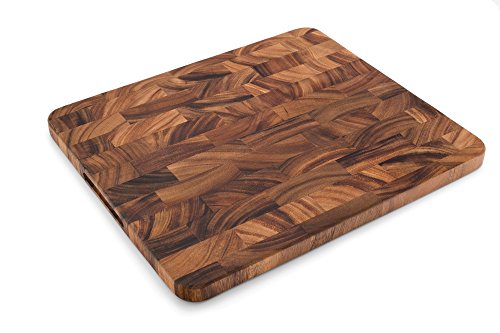
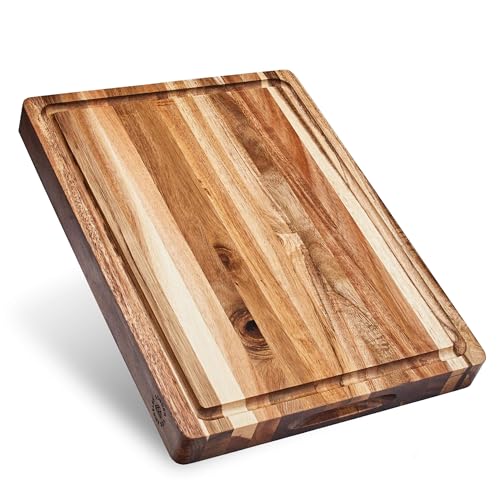
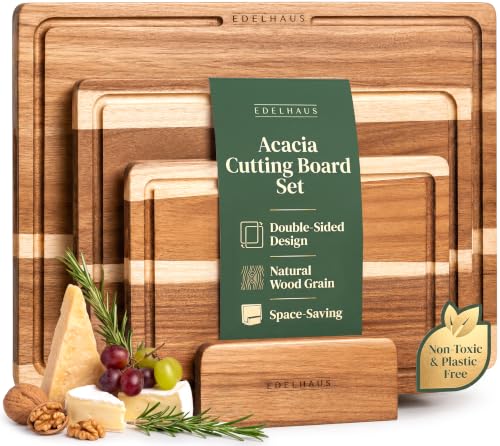
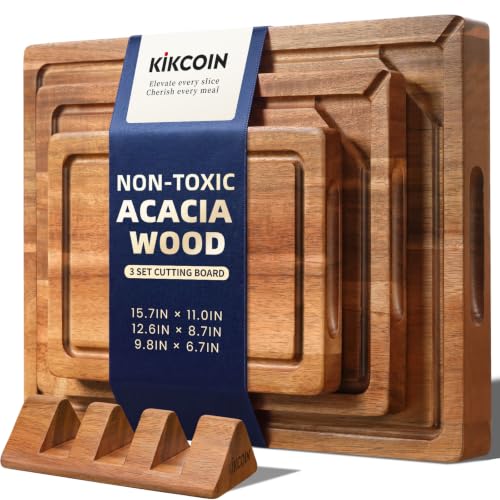
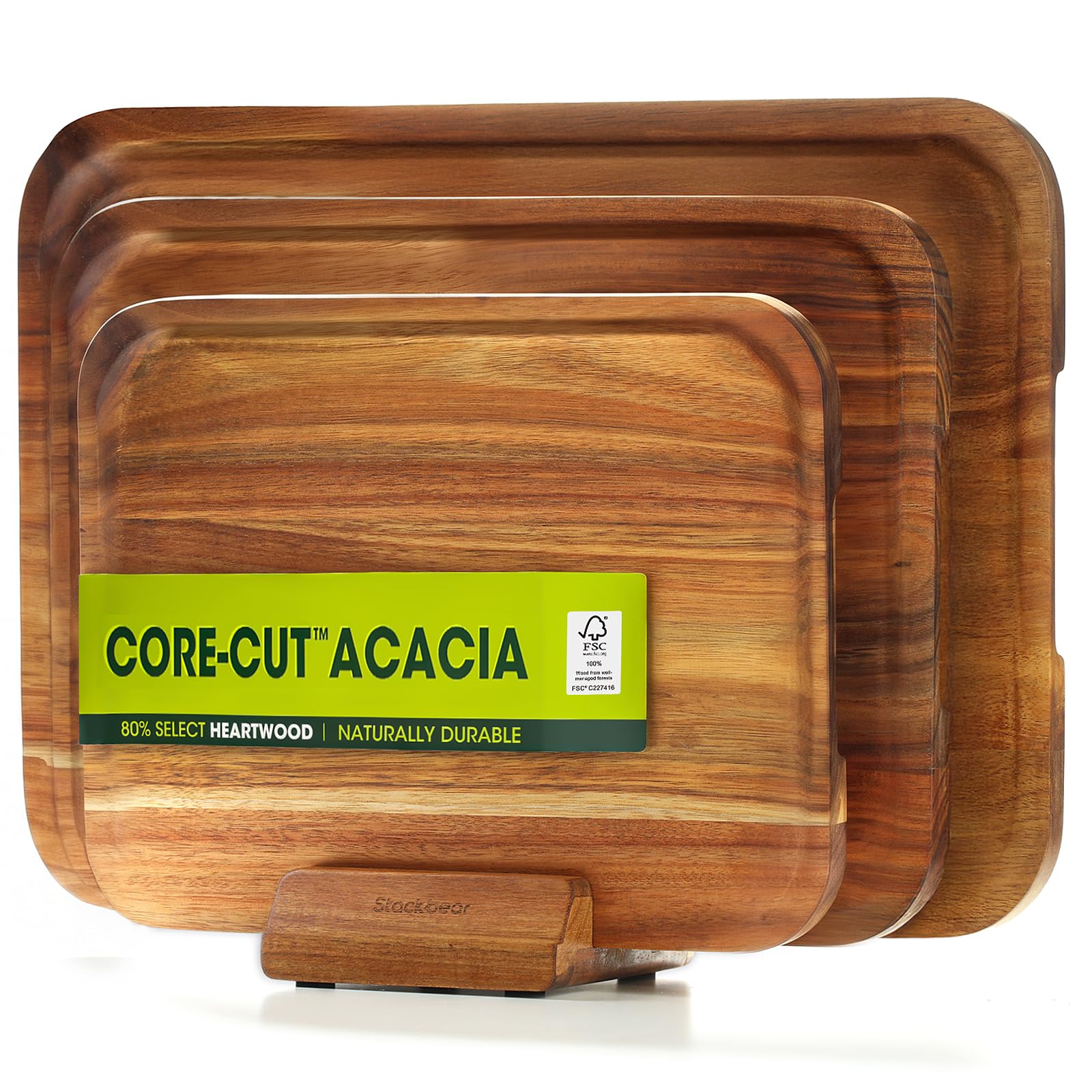
Most homes do well with one of three styles. A mid size edge grain board handles daily chopping and still stores upright in a cabinet. A compact board suits small counters, single cooks, and quick jobs like fruit or cheese. A large thick board suits bigger households that break down whole chickens, carve roasts, or prep produce for several people at once. Pick the style first, then compare thickness, weight, and care needs within that style.
Before You Buy: A Quick Checklist for Choosing a Cutting Board
Acacia boards look similar in photos, yet small differences in size and construction change how they feel every day. Work through the points below before you compare prices. If you want broader context first, see our guide to the best cutting board for how board materials compare across a whole kitchen.
Size: Match It to Your Space
Measure the clear counter space where you prep, then leave a few inches around the board for bowls and trimmings. A board around 18 by 12 inches fits most sinks and cabinets and gives you room for onions, peppers, and a pile of herbs. A board around 24 by 18 inches helps when you carve large roasts, but it can feel awkward to lift and wash in a small sink. Small boards near 12 by 8 inches earn their keep for lemons and snacks, yet they crowd a family dinner prep fast.
Which Type Fits Your Routine
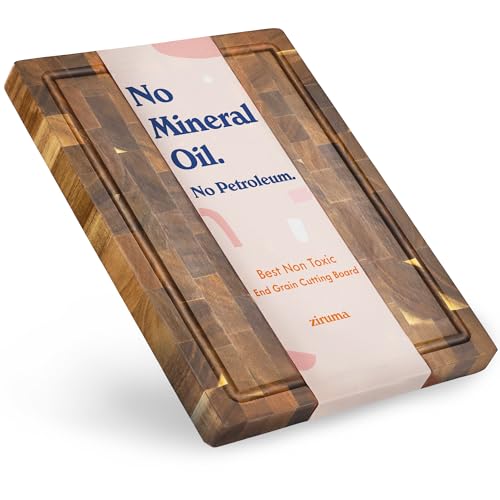
Edge grain boards join long strips of wood along their sides, giving a stable surface that stays fairly light for its size and suits daily use. End grain boards show the ends of the wood fibers, feel a bit softer under a knife edge, and usually cost more and weigh more. If you are weighing that choice, read our explainer on end grain vs edge grain before you decide. A reversible board adds flexibility, with a grooved side for juicy foods and a flat side for bread and dry prep.
Features Worth It and Ones to Skip
A juice groove earns its place if you cut melons, tomatoes, or rested meat often, since it catches liquid before it reaches the counter. Cut in handles help you lift a loaded board and hang it for storage, which matters in a small kitchen. Small feet can steady a board on a slick counter, though they stop you from flipping it over. Skip deep compartments and many carved sections unless you serve snacks on the board often, because each extra groove adds cleaning time and traps crumbs.
Materials and Food Safety
Acacia is a dense hardwood with varied grain, so two boards rarely look alike and minor knife marks show less than on pale woods. Density helps it resist deep cuts where moisture can linger, but it is still wood, so you should dry it fully after washing. Keep one side for produce and use a separate board for raw meat if your kitchen allows it. For households that prep meat daily, our guide to the best cutting board for meat explains separation habits in more detail.
Hand Washing and Why It Matters
Plan on hand washing an acacia board with warm water and mild soap, then drying it upright so air reaches both faces. A dishwasher exposes wood to long heat and soaking water, which can split the glue lines and warp the board. If everyone in your home expects dishwasher loading after dinner, a wood board may frustrate you. In that case, keep acacia for serving and prep you wash by hand, and use another material for the busiest cleanup nights.
Realistic Budget Ranges
Small and thin acacia boards often cost under $20 and work well as a second board for fruit or bread. Most mid size boards for daily prep fall around $30 to $70, where you get better thickness and smoother finishing. Large or end grain boards often run about $50 to $100, and very large thick boards can pass $100. Paying more should buy size, thickness, and careful finishing, not decorative extras you will never use. Set your budget after you choose a size, so you compare like with like.
Three Acacia Board Styles Compared
Instead of chasing a single winner, match a style to your household. The three styles below cover most homes, and each one trades counter space, weight, and upkeep in a different way. Shoppers who prefer wood in general may also want to compare the best wood cutting board options across other hardwoods.
A Mid Size Edge Grain Board
This is the board you leave within reach. At roughly 18 by 12 inches and about three quarters of an inch to one inch thick, it handles weeknight vegetables, chicken breasts, and sandwiches without dominating the counter. Edge grain construction keeps the weight manageable, so you can carry it to the stove with one hand while the other holds a spatula. Look for a reversible design, smooth sanded edges, and a finish that feels even, with no rough patches that catch a towel.
A Compact Board for Small Jobs
A compact board earns its price by getting used many times a day. It is the one you grab for an apple, a block of cheese, or a single sandwich, and it rinses clean in seconds. Thin boards in this group can flex or feel light under heavy chopping, so treat this style as a helper rather than your main prep surface. It suits studio apartments, dorm rooms, and couples who cook simple meals. Store it upright near the knife block and it will rarely be in your way.
A Large Thick Board
A large thick board suits households that cook from scratch, host often, or carve meat at the table. Extra thickness adds stability and gives you room to sand away shallow marks later in its life, which extends its useful years. The trade off is weight and storage, since a board this size may need its own cabinet slot or a permanent counter spot. Choose this style only if your sink fits it for washing. A board you dread cleaning will sit unused, no matter how sturdy it is.
How the Options Are Compared
We judge acacia boards on ease of use, durability, cleaning effort, design, and value for a typical home. That means checking listed dimensions against common sink and cabinet sizes, looking at construction type and thickness, and reading buyer feedback for repeated complaints about splitting, warping, or rough finishing. The goal is a short list of criteria you can apply to any board you find.
Pros and Cons of Acacia Versus Other Cutting Boards
The best acacia cutting board earns praise for its warm color, solid feel, and ability to double as a serving board when guests arrive, which saves storage in a small home. Acacia also tends to cost less than walnut or teak at similar sizes. On the down side, the grain varies a lot, so the board you receive may look darker or lighter than photos. Compared with plastic, acacia needs oiling and hand washing. Compared with bamboo, it is usually heavier and gentler on edges, a point covered in our bamboo vs wood cutting board comparison.
Common Buying Mistakes to Avoid
- Buying a board too large for your sink, so washing it becomes a chore you avoid.
- Choosing the thinnest board to save money, then dealing with sliding and warping during daily prep.
- Ignoring total cost, including board oil and a second board for raw meat separation.
- Paying for carved compartments and extra grooves you will rarely use but must clean every time.
- Storing a damp board flat in a closed cabinet, which traps moisture and invites odor.
Cost of Ownership and Care
Ownership costs stay low if you plan for them. A bottle of food grade mineral oil costs around $10 and lasts many months, and a small tub of board butter adds a bit more. Oil the board when the surface looks dry or pale, often once a month for heavy use and less often for light use. Wipe spills promptly, wash after raw meat, and let the board dry upright. With that routine, an acacia board can serve for years, and you avoid buying replacements every year or two. Our step by step guide on how to clean a cutting board covers stain and odor removal in depth.
Your Questions, Answered
How do you clean an acacia cutting board after cutting raw chicken?
Wash the board right away with hot water and dish soap, scrubbing the cut marks where juices settle. Rinse, then dry it with a clean towel and stand it upright. For extra peace of mind, wipe the surface with a cloth dampened with white vinegar, then let it air dry fully. Never soak the board in the sink, since sitting water can swell the wood and loosen the joints.
Are acacia cutting boards worth it for a small apartment kitchen?
Yes, if you choose a compact or mid size board and have a spot to store it upright. Acacia gives you a sturdy prep surface that also works for serving cheese or bread, so one item does two jobs in a tight space. Skip the largest sizes, since a board that blocks your only counter or will not fit your sink will cause more friction than value in daily cooking.
How long does an acacia cutting board last with daily use?
A well made acacia board that is washed by hand, dried upright, and oiled when dry can last several years of daily use. Boards that go through a dishwasher or sit wet tend to split much sooner. Deep cuts that hold moisture and will not clean out are a sign to retire a board, as is a crack that runs across the surface and keeps widening over time.
Does an acacia cutting board dull kitchen knives quickly?
Acacia is dense, so it feels firmer under a blade than softer woods like maple, but normal home chopping will not ruin an edge. Use a smooth slicing motion and avoid twisting the blade sideways to free stuck food, which stresses the edge more than the board does. Hone your knife regularly and store it on a magnetic strip or in a block, since drawer contact dulls edges faster than board choice.
Can an acacia cutting board double as a serving board for guests?
Yes, and many households buy acacia for exactly that reason. Use the flat side without a juice groove for cheese, bread, and fruit, so the presentation looks clean and crumbs stay put. Wash and dry it after serving, especially after soft cheeses, and oil it before a gathering if the surface looks dull. Keeping one face mainly for serving also keeps that side smoother and better looking over time.
Final Thoughts
Start with your counter, your sink, and the number of people you cook for, then pick the acacia style that fits that life. The product table above can help you compare sizes and builds side by side. For most homes, the best acacia cutting board is a mid size edge grain board that is easy to lift, simple to wash, and sturdy enough for dinner every night.


