Best Above Ground Pool Filter Hoses for 2026: Every Type Explained Side by Side
Disclosure: We may earn a commission when you buy through links on this page, at no extra cost to you. As an Amazon Associate I earn from qualifying purchases. Learn more

Compare above ground pool filter hoses by diameter, length, material and cuffs, with measuring steps, fitting tips and care advice for a leak free setup.
A filter hose looks like the simplest part of your pool, yet a wrong diameter or a weak cuff means drips at the pump and air in the lines. The best above ground pool filter hoses match your ports exactly, reach each fitting without strain, and hold up to sun and chlorinated water. This guide compares hose types by build and job.
Start by mapping your setup. Most pools have a suction hose from the skimmer to the pump, a short link from the pump to the filter, and a return hose back to the pool inlet. Then use the comparison table below to match each piece to the right diameter, length and fitting style.




Who Should Buy a New Filter Hose for an Above Ground Pool
Filter hoses are replacement parts. You need one when an old hose fails, when your equipment changes, or when a stored hose no longer fits well at setup time.
Owners Replacing a Cracked or Leaking Hose
If a hose drips at the cuff, shows fine cracks along the ridges, or has turned cloudy and stiff, replacement is the reliable fix. Tape rarely holds, because the hose flexes each time the pump runs. Match the old hose diameter and length, and inspect the other hoses too, since hoses of the same age often fail within a season of each other.
Owners Changing a Pump or Filter Unit
A new pump or filter can shift port positions slightly, and that small change can leave a hose too short or bent at a sharp angle. Measure the new layout before ordering. If port sizes differ from your old unit, our guide to the best filter pumps for above ground pools explains how port size ties into pump choice.
Owners Setting Up a Pool Again Each Season
If you drain and store your pool each year, your hoses face extra handling and storage wear. Keep a spare set on hand before opening day, with cuffs matching your current fittings so the spares drop straight in, stored flat and out of the sun.
Key Features to Compare
Five factors decide whether a hose seals well: diameter, length, material, cuffs and the job the hose does in the loop. Judged together, they separate the best above ground pool filter hoses from hoses that almost fit, and almost is where leaks start.
Hose Diameter and Port Size
Diameter is the first check, because a hose that is even slightly off will not seal. Most above ground pools use 1.25 inch or 1.5 inch hoses, and many soft sided pools use ports close to 32 mm or 38 mm. Measure the outside of the fitting the hose slides onto, not the old hose. If your ports fall between sizes, use the adapter your equipment maker specifies instead of forcing a hose on and clamping harder.
Hose Length and Routing
Length decides how the hose sits once fitted. A hose that is too short pulls on its cuffs and can work loose, while one that is too long sags and can kink where it droops. Measure along the path the hose will take, including curves, then choose the closest standard length, often about 3 to 6 feet for equipment links. Keep curves gentle, since a tight bend near a cuff strains the plastic.
Material, Wall Build and Sun Resistance
Most filter hoses are flexible plastic, and the wall build decides how they age. Corrugated walls bend easily and resist kinking, but thin ridges can split after long sun exposure. Thicker walls hold up better and restrict flow less, though they feel stiffer to route. Look for plastic described as resistant to pool chemicals and sunlight, and note that light colored hoses can show algae inside sooner, since light passes through the wall.
Cuffs, Fittings and Clamps
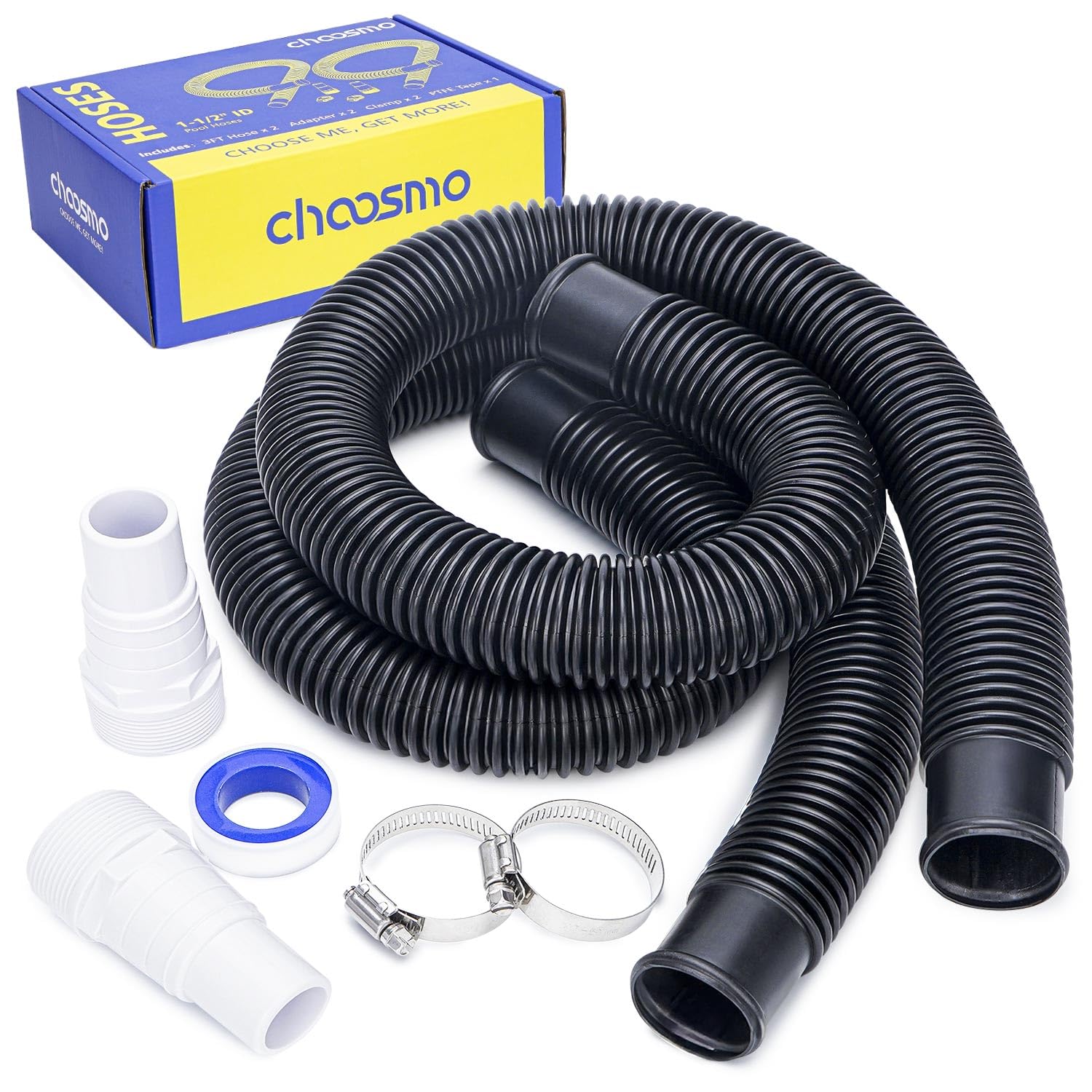
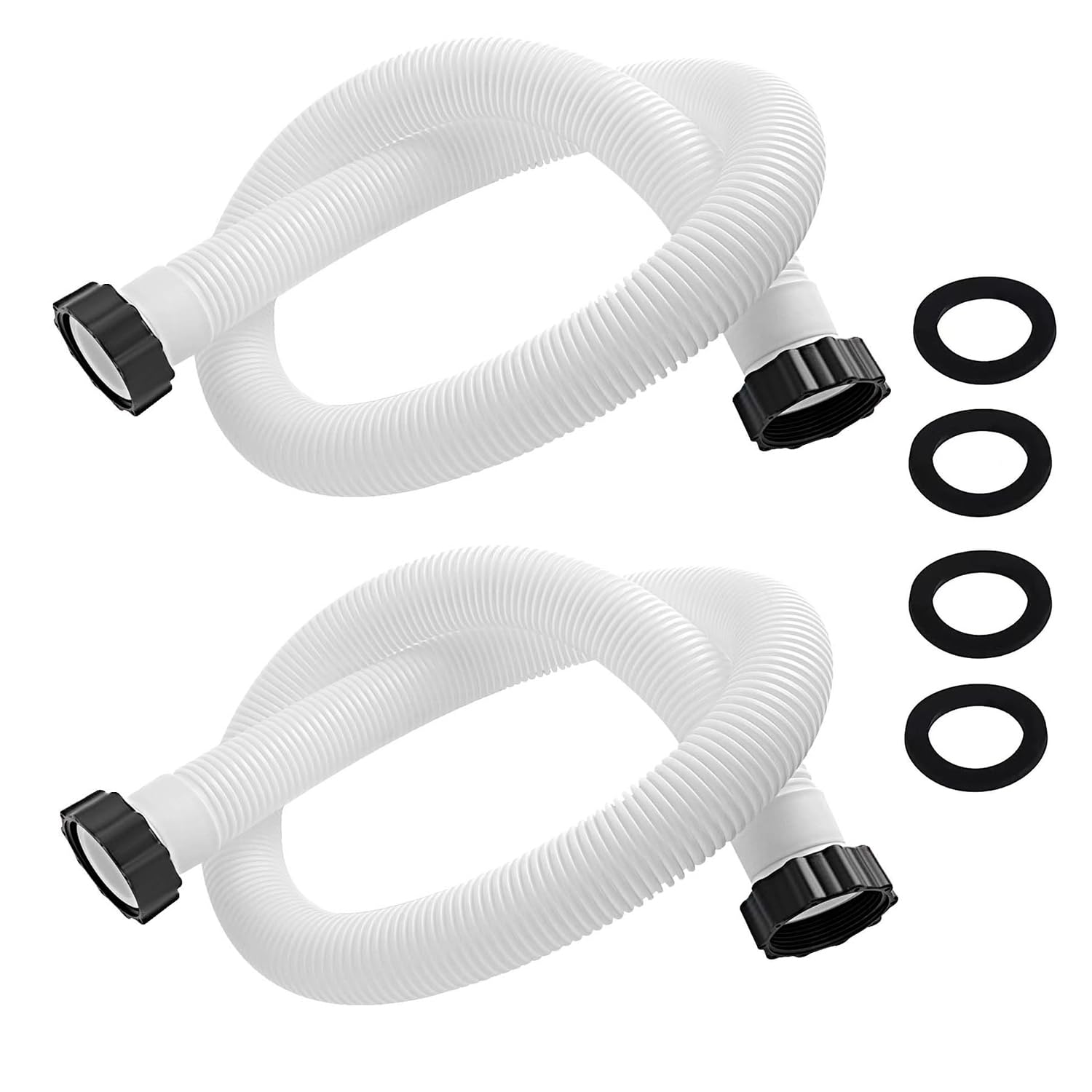
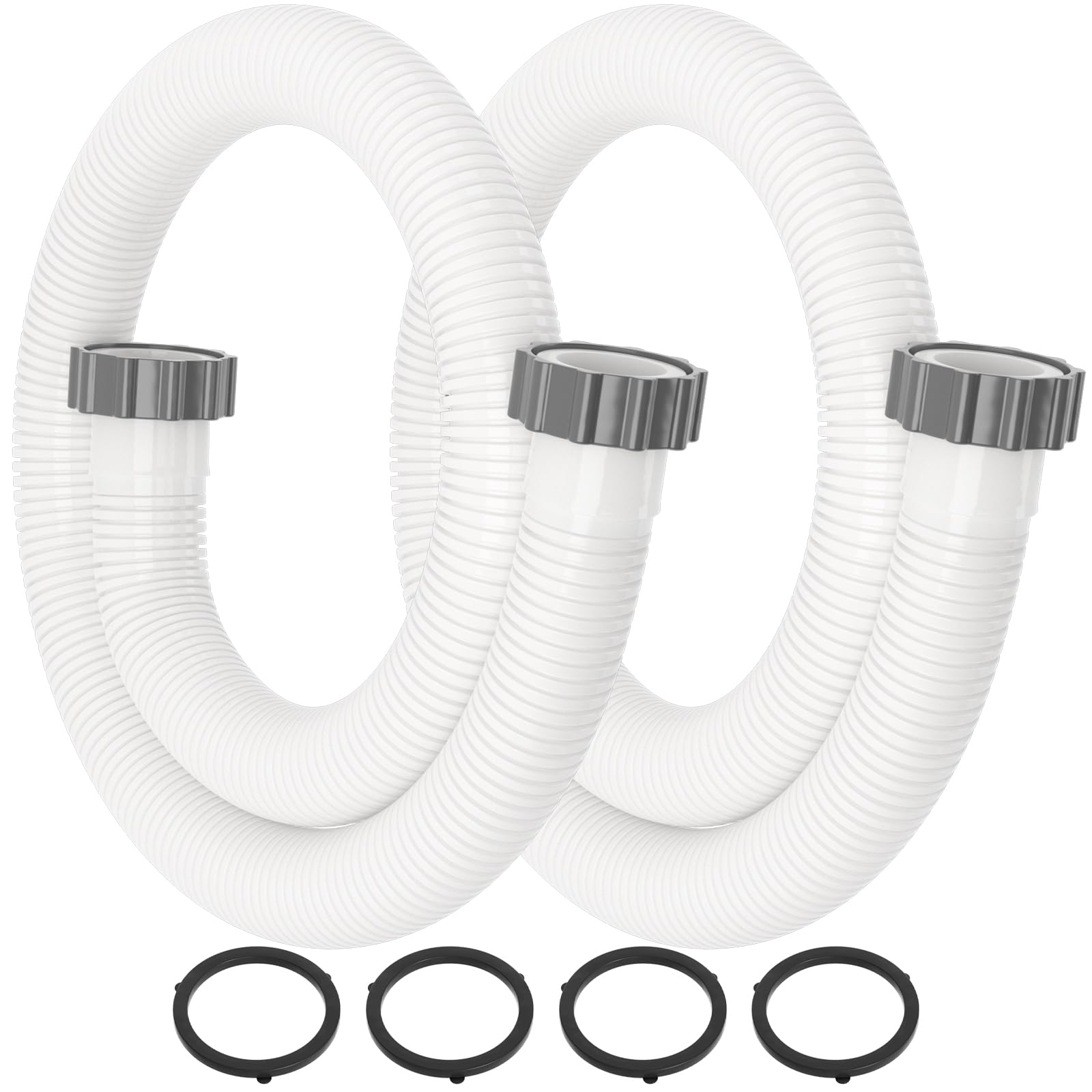
The cuff is the smooth end section that seals against the port. Some cuffs slide over a port and secure with a clamp, while others on soft sided pools use a threaded collar that twists onto a matching fitting, and the two styles do not interchange. Stainless steel clamps resist rust better than plain steel. Seat the cuff fully on the port, with the clamp over the port area, not over the corrugated section, where it can cut in.
Suction Side and Return Side Duty
Hoses on the suction side, between the skimmer and the pump, work under vacuum, so they must resist collapsing inward when the pump draws hard. Hoses on the pressure side, after the pump, work under outward pressure and need secure cuffs and clamps so they cannot slip off. A sturdy corrugated hose can serve both roles. Trouble starts when a thin, worn hose moves to the suction side, where it can flatten and starve the pump.
Filter Hose Types Compared
With the fit factors clear, the main choice is hose construction. The three types below cover nearly every above ground setup.
Corrugated Flexible Hoses With Molded Cuffs
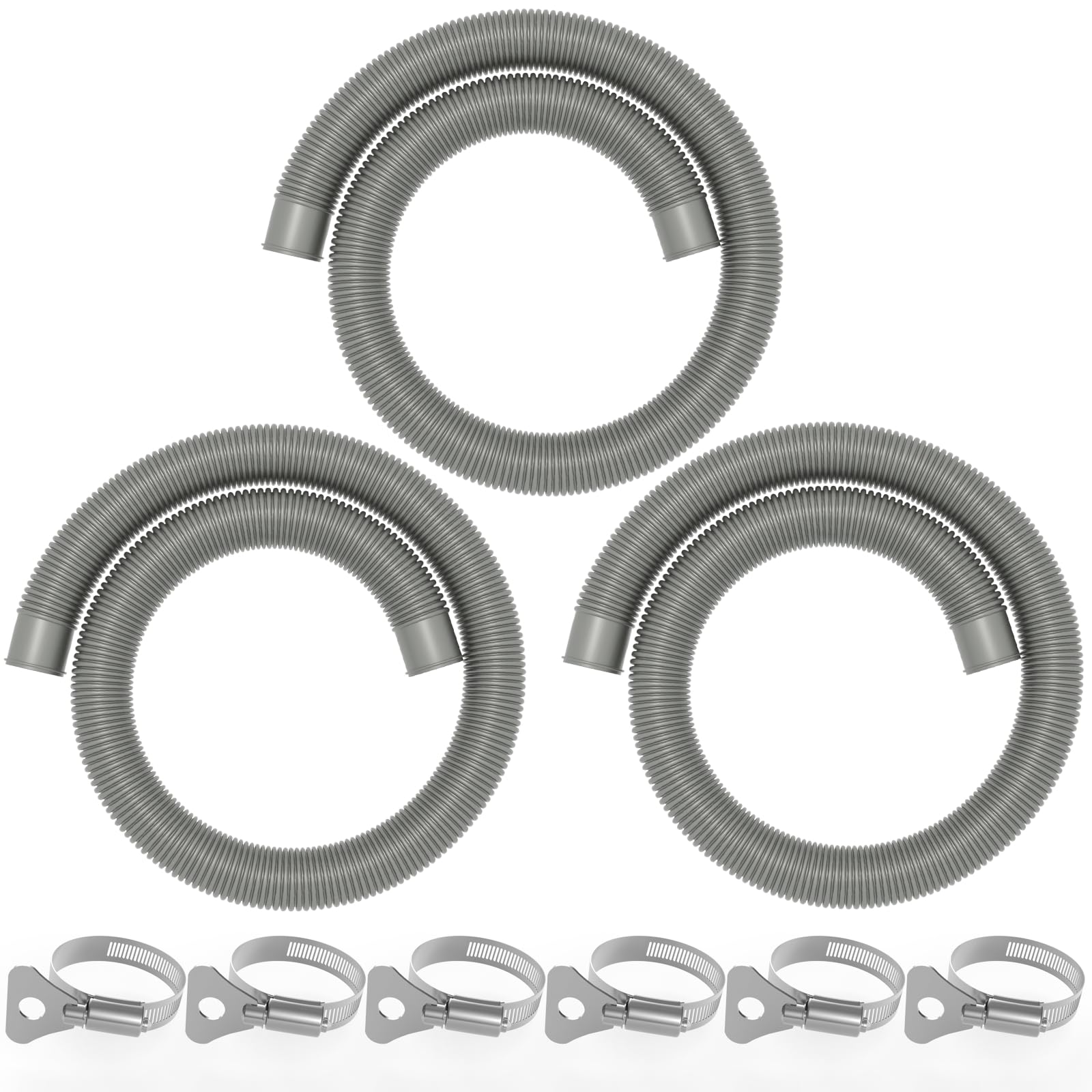
This is the standard replacement on most above ground pools, sold in single lengths around $15 to $30. The ridged wall bends around equipment pads without special tools, and molded cuffs slide onto ports for a clamp to secure. Ridges reduce flow slightly, which matters little on short runs. Choose it for a like for like swap, and check our guide to the best pool filter hoses if your layout mixes sizes.
Smooth Bore Flexible Hoses
A smooth bore hose has a flat inner wall, so water moves through with less resistance and debris has fewer ridges to cling to. These hoses feel stiffer and need a wider curve, so they suit straight, short links between a pump and a filter mounted side by side, at about $20 to $40.
Cut to Length Hoses With Separate Cuffs
Some hoses come in longer coils that you cut to the exact span you need, with cuffs fitted to each cut end. This solves awkward layouts where standard lengths leave slack or fall short. Cuts must be square and clean, because a rough end seats poorly inside the cuff and leaks under pressure. Choose this type only if your equipment spacing is unusual. For wider pool hose duties beyond the filter loop, our guide to the best above ground pool hoses covers the broader category.
Common Mistakes to Avoid
- Guessing the diameter from the old hose instead of measuring the port, so the new cuff seals poorly and drips.
- Ordering a hose that is too short, so tension slowly works one cuff off its port while the pump runs.
- Mixing a clamp style cuff with a threaded collar fitting, so the joint never seats and always leaks.
- Routing a hose with a sharp bend at the cuff, so the plastic fatigues there and splits early.
- Moving a worn, thin hose to the suction side, where vacuum can flatten it and leave the pump running short of water.
- Leaving a spare hose coiled in full sun, so the plastic turns brittle before it is ever fitted.
How to Make Your Above Ground Pool Filter Hose Last Longer
Care is mostly about sun, strain and storage. Route hoses so they rest without sharp bends or ground contact where feet and mower wheels can crush them. Rinse grit and chemical splash off the outside at mid season.
At closing time, drain each hose fully, let it dry, and store it loosely coiled in a shaded, dry place. Trapped water can freeze and split the wall. Before reopening, flex each hose gently and look along the ridges for cracks.
Frequently Asked Questions
What size filter hose does a typical above ground pool need?
Most above ground pools need 1.25 inch or 1.5 inch hoses. Measure the outside of the port the cuff slides onto, then match that number. Soft sided pools often label the same sizes as about 32 mm or 38 mm. If ports differ, size each hose to the ports it joins rather than assuming one size fits all.
Can an inground pool hose be used on an above ground pool?
Usually not as a direct swap. Inground pools are normally plumbed with rigid pipe and glued fittings, while above ground systems use flexible hoses with cuffs or threaded collars sized for equipment ports. An adapter can bridge the two in some setups, but each added joint is another place to leak. A hose made for above ground ports seals better and removes by hand at closing time.
How often should above ground pool filter hoses be replaced?
Plan on about two to four seasons for a standard corrugated hose in full sun, and longer for a thicker hose stored out of sunlight each winter. Replace a hose when you see cracks along the ridges, feel stiff sections that no longer flex, or find a cuff that stays oval instead of round. Swapping a doubtful hose at setup costs far less than a leak that drains water below the skimmer line.
Does a filter hose change the micron rating of a pool filter?
No, a filter hose does not change the micron rating of your filter. That rating belongs to the filter media, the sand, cartridge or powder that traps particles as water passes through. A hose that is too narrow can still hurt cleaning, because lower flow means the full pool volume passes through the filter fewer times each day.
Why does a new filter hose leak at the cuff on an above ground pool?
The usual cause is a cuff that is not seated fully, or a clamp placed over the corrugated section instead of over the port. Push the cuff on until it covers the port evenly, set the clamp over the solid part of the fitting, and tighten until snug without crushing the plastic. Then run the pump briefly, stop it, and look again, since some joints only weep once pressure drops.
The Bottom Line
Get the diameter right, give the hose a gentle route with no strain at the cuffs, and match the cuff style to your fittings. When a hose matches your ports and its job on the suction or return side, the best above ground pool filter hoses for your pool are simply the ones you stop thinking about. Compare your measurements against the product table above before you fill the pool.