
Best 9 Inch Springform Pans (2026): Buying Guide and Top Options
Disclosure: We may earn a commission when you buy through links on this page, at no extra cost to you. As an Amazon Associate I earn from qualifying purchases. Learn more

A practical guide to the best 9 inch springform pan: sizes, features, budget ranges, and mistakes to avoid before you buy.
Your cheesecake has set, the sides look smooth, and now comes the moment that decides whether it reaches the table looking that way. A springform pan solves that moment, because the ring lifts away instead of forcing you to flip a delicate cake out of a solid pan. Finding the best 9 inch springform pan comes down to your oven space, the size of the household you bake for, and how much upkeep you want.
This guide walks through sizes, materials, finishes, and budgets in plain terms, then compares the main types side by side. Use the comparison table below to scan the key differences, then read on for the details that matter in daily home baking. If you want the broader picture first, our guide to the best springform pan covers the category across all sizes.






Quick Answer: Three Types That Fit Real Homes
Most homes do well with one of three types. A classic nonstick metal pan suits everyday bakers who want easy release and simple cleanup. A plain steel or aluminized steel pan without coating suits bakers who prefer to grease and line the base themselves. A heavier pan built for leak resistance suits anyone who bakes runny batters often. The sections below help you choose.
Before You Buy: A Quick Checklist for Choosing a Springform Pan
A springform pan has two parts, a flat base and a ring with a latch that opens so the ring can lift away. Small differences in that simple design change how evenly your cake bakes, how cleanly it releases, and how long the pan stays useful.
Size: Match It to Your Space
Common sizes run from 6 inch and 7 inch pans for small bakes, through 8 inch, 9 inch, and 10 inch pans, up to 12 inch pans and mini sets. The 9 inch size fits most standard ovens with room to spare, matches the pan size called for in most cheesecake and layer cake recipes, and stores easily in a normal cabinet or drawer. Measure your oven width and your storage shelf before ordering, because the latch adds a little width beyond the stated diameter.
Which Type Fits Your Routine
Nonstick pans release delicate crusts with little fuss and suit occasional bakers. Designs sold for leak resistance use a tighter seal or a raised base lip, which matters for thin batters. Glass bottom pans let you serve on the base, while stainless steel and silicone versions trade some structure for easy storage or rust resistance. Heart shaped pans are a fun extra, but a round 9 inch pan covers far more recipes. For cheesecake in particular, see our guide to the best springform pan for cheesecake.
Light vs Dark Finish and Browning
The finish changes how your crust colors. Dark finishes absorb more heat, so crusts brown faster and can overbrown at the edges before the center sets. Light finishes reflect more heat and give slower, more even browning, which suits pale cheesecakes and sponge layers. If you own a dark pan already, you can lower the oven temperature slightly and check a few minutes early. Pick the finish that matches the bakes you make most, not the one that looks best on the shelf.
Oven Safe Temperature
Every pan has a stated heat limit, and coatings usually set that limit rather than the metal itself. Check the rating on the listing and on the packaging, and keep your usual baking temperatures within it. Most home cake baking stays well below common limits, but broiling and very hot roasting can exceed them, and a springform pan is not built for those jobs anyway. Silicone parts and plastic latch covers, when present, often carry a lower limit than the metal ring, so check each part.
Nonstick Coating vs Uncoated
A coating gives you easy release and faster washing, but it wears with time, scratches if you cut slices in the pan, and eventually loses its slick feel. An uncoated pan asks a little more of you at prep time, because you grease the ring and line the base with parchment, yet it can stay in service far longer with no surface to degrade. Our step by step guide on how to grease a springform pan shows the simple routine that makes uncoated pans release cleanly.
Realistic Budget Ranges
At under $20, expect a basic nonstick pan that serves occasional bakers well but may warp or lose its coating sooner. At under $30, you usually get heavier metal, a stronger latch, and a more even base. At under $50, you are paying for premium materials, tighter seals, and longer warranties rather than better cake. For a pan you use a few times a year, the middle range often makes the most sense, because the coating and latch get the most wear.
Three Types Compared: Which Build Suits Your Home
Instead of chasing a brand name, compare builds. These three types cover nearly every home kitchen, and the right one depends on how often you bake and what you bake most.
The Everyday Nonstick Pan for Most Homes
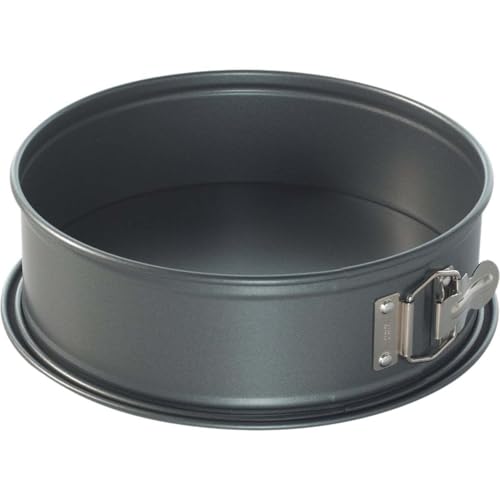
This is the default choice for most households. A medium weight metal body heats evenly enough for cheesecake and tortes, the coating releases the sides without tearing, and cleanup takes minutes. It suits families who bake for birthdays, holidays, and the odd weekend project. Its limit is lifespan, because the coating is the first thing to wear. Treat it gently, serve slices from a board rather than cutting in the pan, and it will cover years of regular use at a fair price.
The Simple Steel Pan for Value Seekers
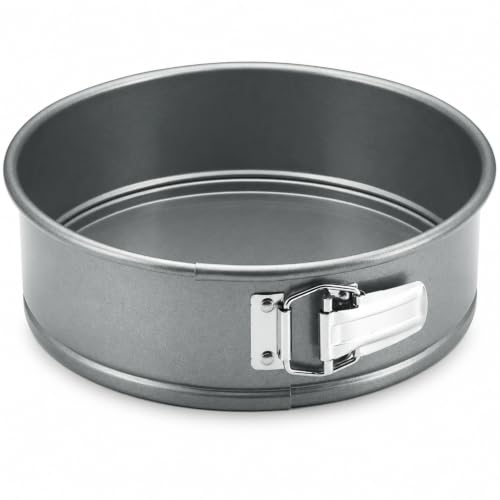
A plain steel pan with no coating costs the least over its lifetime, even when the purchase price matches a coated pan. There is no surface to scratch or flake, so metal tools and stacking in a crowded cabinet do less harm. You trade a little convenience at release time, since greasing and lining become part of your routine. For a small kitchen where every item must earn its shelf space and last, this tough, simple design is hard to beat.
The Heavy Leak Resistant Pan for Frequent Bakers
If you bake weekly, a heavier pan with a tight fitting base and a firm latch pays off in consistency. Thick metal resists warping, so the base seals the same way bake after bake, and thin batters stay inside the pan. That matters for quiches, deep dish styles, and cakes with fruit juices. If leaks are your main frustration, our guide to the best leakproof springform pan explains seal designs in more depth. This type costs more upfront but spreads that cost over many more bakes.
How the Options Are Compared
Compare pans on heat distribution, food release, warp resistance, material safety, and cleaning. Maker specifications and recurring buyer comments about leaks and latches point to the same checks. A pan scores well when its latch felt secure in repeated reports, its base sat flat, and owners still praised its release after many uses. We also weighed cost of ownership, because a cheap pan replaced often is not cheap at all.
Is a 9 Inch Springform Pan the Right Size for You?
For a household of four to six people, a 9 inch cheesecake gives generous slices without leftovers lingering all week. Most published cheesecake, torte, and icebox cake recipes are written for this size, so you can follow them without scaling ingredients up or down. A smaller household that bakes often may prefer a 7 inch or 8 inch pan for smaller cakes, while big gatherings call for the next size up, covered in our guide to the best 10 inch springform pan.
Check two practical points before you decide. First, your oven and any water bath setup must fit the pan plus its latch, with space for air to circulate. Second, your storage spot must hold a round pan about 9 inches across and about 3 inches tall. If both answers are yes, the 9 inch size is the most recipe friendly choice you can buy.
Common Buying Mistakes to Avoid
- Guessing the size from the box photo. Photos hide scale, so a pan that looks right can crowd your oven or leave a recipe underfilled.
- Ignoring the latch. A weak latch opens under pressure or lets batter escape, so check that it closes with a firm, positive click.
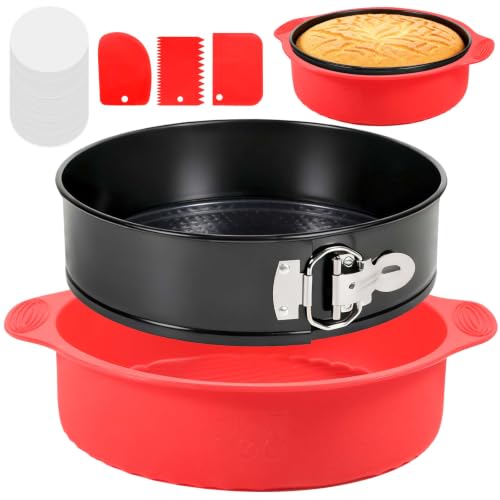
- Paying for extras you will not use. Extra bases and novelty shapes add storage bulk, and most home bakers reach for the plain round pan every time.
- Forgetting replacement cost. A coated pan is a consumable over the long run, so factor a future replacement into a very low purchase price.
- Cutting slices in the pan. Knife cuts damage coatings and scratch uncoated bases, and those marks make later cakes stick in the same spots.
Cost of Ownership and Care
Ongoing cost is low. Your main extras are parchment for lining the base, a little butter or spray for the ring, and foil if you bake in a water bath. Store the pan with the ring closed loosely around the base so the latch is not strained, and keep a cloth or paper sheet between it and heavier pans to protect the surface. Hand washing takes a minute and protects both coatings and latch springs. For latch crevices and baked on residue, follow our guide on how to clean a springform pan.
Your Questions, Answered
What makes a springform pan reliable?
Reliability comes from build details rather than a name on the box. Look for a base that sits flat on the counter, a ring that meets the base with no visible gaps, and a latch that clicks shut and stays shut when you lift the filled pan by the ring. Reviews that mention the same pan still sealing well after a year of use are a stronger signal than a high rating earned in the first week.
Is a springform pan worth it if you already own a cake pan?
Yes, for any cake you cannot flip. Cheesecake, mousse cake, and crumb crust pies would tear or crack if turned out of a solid pan, while the opening ring leaves the sides untouched. If you only bake sturdy layer cakes and loaf cakes, a springform pan adds little. Its value shows up the first time a delicate dessert slides onto a serving plate with its edges intact.
How long does a springform pan last?
An uncoated steel pan can last decades, because there is no surface to wear away. A coated pan usually gives several years of regular use before release suffers, and gentler handling stretches that span. Replace any pan when the base warps enough to rock on the counter, when the latch no longer holds under light pressure, or when rust appears at the rim, since each fault leads to leaks or sticking.
What size springform pan do you need for a standard cheesecake recipe?
Most standard recipes assume a 9 inch pan, so that size needs no adjustment at all. An 8 inch pan makes the cake taller and adds baking time, while a 10 inch pan makes it thinner and shortens the bake. If you swap sizes, watch the center rather than the clock, because a cheesecake is done when the edges look set and the middle still has a slight wobble when you nudge the pan.
What is the best 9 inch springform pan for a small kitchen?
Choose the type you will use for more than one job. A plain round 9 inch pan handles cheesecake, quiche, and deep pan pizza style bakes, so it earns its shelf space three ways. Skip sets with several sizes you will rarely touch, and pick a pan that stacks flat or hangs from a hook. In a small kitchen, one versatile pan you reach for weekly beats a cabinet full of specialty shapes.
Final Thoughts
The right pan is the one that fits your oven, your recipes, and the number of people at your table. Compare builds rather than logos, weigh coating convenience against long term durability, and let the product table above refresh your memory of how the types differ. For most homes, the best 9 inch springform pan is a sturdy everyday model with a firm latch, a flat base, and a finish that matches the cakes you bake most.


