Best 8 Inch Chef Knives (2026): Styles, Steel and Buying Tips
Disclosure: We may earn a commission when you buy through links on this page, at no extra cost to you. As an Amazon Associate I earn from qualifying purchases. Learn more

A practical guide to the best 8 inch chef knife: German, Japanese and stamped styles compared on steel, balance and care.
Picture a weeknight dinner in a real home. Two people share one counter, and onions, carrots, chicken, and herbs all need prep before anyone gets too hungry. The best 8 inch chef knife earns its place in that moment because it handles almost every task without feeling huge in a small kitchen or flimsy during a big batch of soup vegetables.
This guide helps you choose by space, household size, and budget. Start with the comparison table below, then use the checklist that follows.

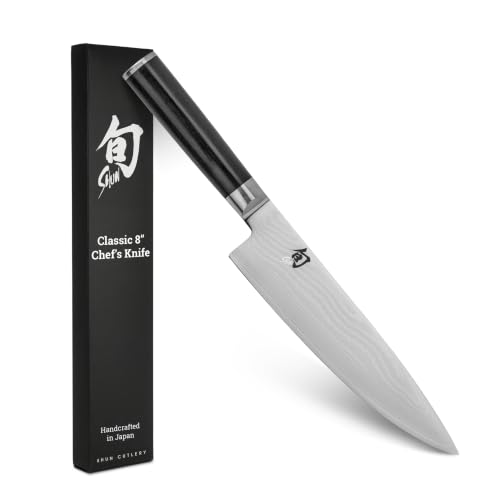
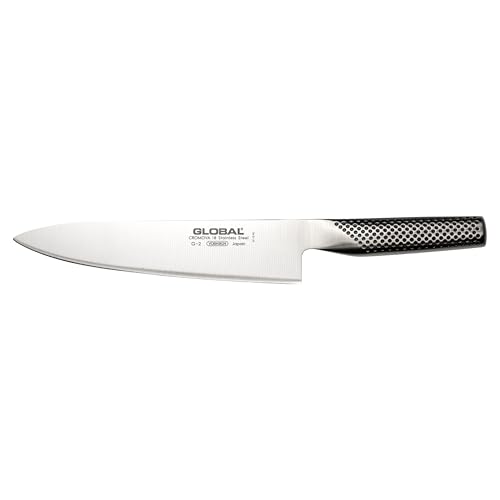

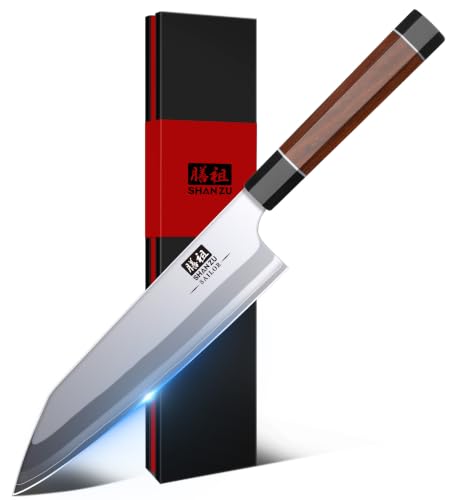
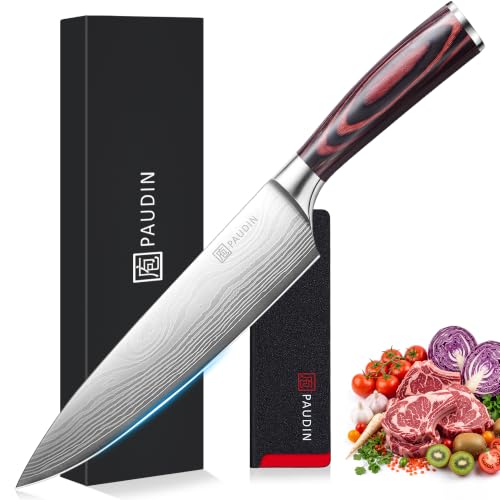
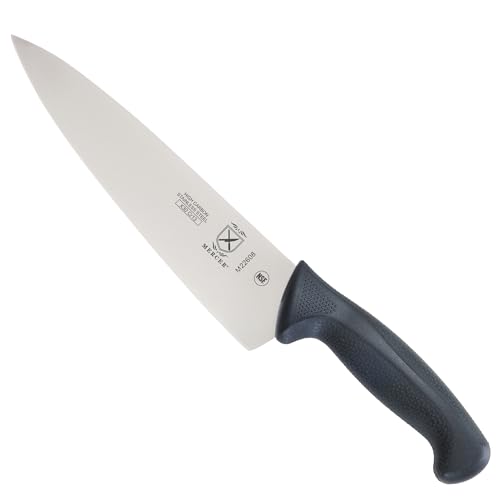
Quick Answer: Three Styles That Cover Most Homes
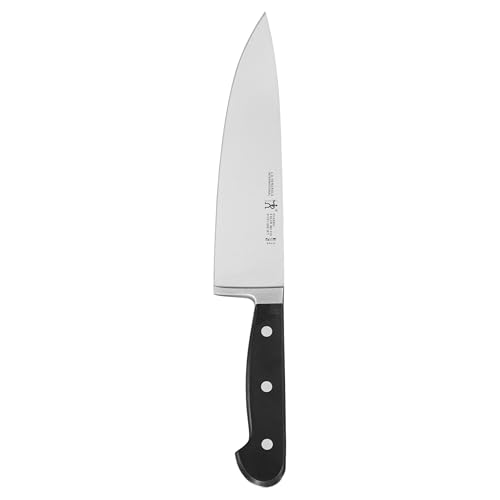
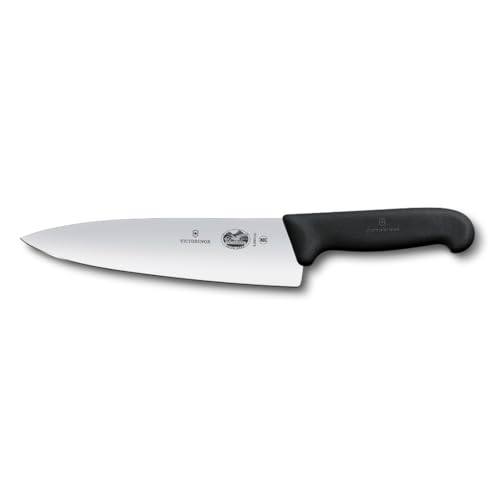
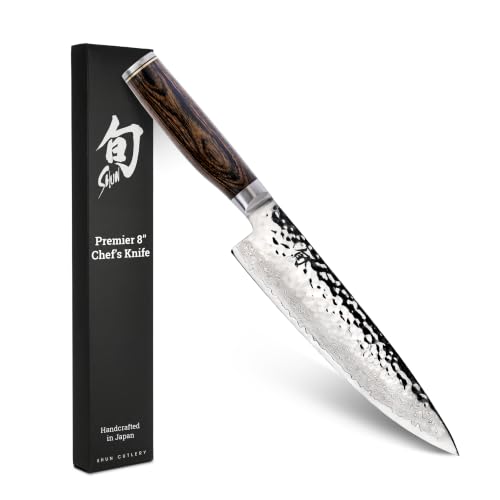
Most homes fall into one of three groups. A German style knife suits shared family kitchens where the blade must feel sturdy and forgiving. A Japanese style knife suits cooks who value light weight and precise cuts. A light stamped style suits tight budgets, small spaces, and low upkeep.
Before You Buy: A Quick Checklist for Choosing a Chef Knife
Work through these points in order. Size and routine come first, because a knife that fits your space and your food will please you more than a fancy feature you rarely use.
Size: Match It to Your Space
An 8 inch blade gives you enough edge for a cabbage, a winter squash, or a whole chicken, yet it still turns easily on a standard board in a modest kitchen. A 6 inch or 7 inch blade feels nimble in a tiny galley kitchen but can feel short on large produce. A 9 inch or 10 inch blade rewards big boards and big hands, while it can crowd a small counter. Metric listings call this size about 210 mm, with larger blades near 240 mm.
Which Type Fits Your Routine
A German or Western style knife has a thicker blade and a curved belly built for a rocking motion through herbs and garlic. A Japanese gyuto runs thinner and flatter, and it rewards a straight up and down motion for fish, vegetables, and boneless meat. Carbon steel takes a keen edge but needs prompt drying, while stainless steel resists rust with far less fuss. Forged blades feel solid and dense, and stamped blades feel light and simple to care for.
Features Worth It, and Ones to Skip
A sheath or blade guard is worth it if your knife will live in a drawer, because it protects both the edge and your fingers. A wood handle can feel warm and secure, though it asks for careful drying and a little oil over time. Shallow dimples along the blade can help slices of potato or cucumber release instead of sticking. Skip a large matching set when you only need one main knife, and skip decorative finishes that add cost without helping a single cut.
Steel Type and Hardness
Hardness is often listed as HRC, a scale that tells you how hard the steel is after treatment. Softer German style steel, often in the mid to upper 50s, dulls sooner but sharpens easily and tolerates rough use. Harder Japanese style steel, often in the low 60s, holds a fine edge longer but can chip if it twists in hard squash or hits bone. High carbon stainless blends edge holding with stain resistance, which suits most homes well.
Blade Geometry: German vs Japanese
Geometry is the shape of the blade, and it decides how the knife moves through food. A German profile curves upward toward the tip, so the edge can rock without lifting your wrist much. A Japanese profile stays flatter, so each downward cut finishes cleanly with less tearing of delicate greens. A thick spine adds strength but can wedge in dense carrots. If this contrast draws you toward the thinner profile, read our guide to the best japanese chef knife next.
Handle, Bolster and Balance
Hold matters as much as steel. A good handle fills your palm without forcing your fingers open, and it stays secure when your hands are wet from rinsing produce. A full bolster adds weight near your fingers and can block sharpening at the heel, while a partial bolster or no bolster keeps sharpening simple. Balance should sit near the pinch point where blade meets handle, so the knife feels neutral rather than blade heavy or handle heavy during long prep.
Realistic Budget Ranges
At under $30 you get a light stamped blade that covers daily prep and asks little of your wallet. At under $50 you gain a thicker blade, a fuller handle, and a better edge from the start. At under $100 you enter the range of forged construction, better steel, and more careful balance. At under $150 and under $200 you pay for harder steel and finer finish. At under $300 you are buying refinement more than extra cutting ability.
Types Compared for Real Homes
Brand names tell you less than construction does, so compare the three styles below against your own routine.
German Style for Shared Family Kitchens
This style suits homes where several people share one knife and skill levels vary. The blade is thick enough to feel reassuring, the curved edge supports rocking cuts, and the softer steel shrugs off the odd contact with a thick bone. The trade off is more effort on delicate work, since a thick blade can split a carrot rather than glide through it. For a household focused guide, see our roundup of the best chef knife for home cooks.
Japanese Style for Precise Prep
This style suits cooks who prep many vegetables, slice raw fish, or portion boneless meat with care. The thin blade and hard steel produce clean edges on tomatoes and herbs, and the light weight reduces wrist fatigue during fine dicing. You do need a gentler technique, with straight cuts and no twisting to free a stuck blade. You also need a softer board, such as wood or a quality synthetic board, to protect the harder edge.
Light Stamped Style for Tight Budgets and Small Spaces
This style suits first apartments, rental kitchens, and cooks who want a capable knife without worry. The blade is cut from a flat sheet of steel, so the knife stays light, slim in a drawer, and simple to replace if it is lost or damaged. The edge will need honing more often than a forged blade, but the steel responds quickly to a honing rod. Grip shape is basic, yet for twenty minutes of nightly prep it is often enough.
How We Evaluate an 8 Inch Chef Knife
We judge each style on five criteria drawn from maker specifications and patterns in verified buyer reviews. Steel and edge retention come first, then balance and ergonomics, then sharpness from the start, then the maintenance a home cook can realistically keep up, and finally value for the price range. This criteria led view helps you weigh trade offs when you compare the product table above.
Is an 8 Inch Chef Knife the Right Size for You?
For most adults and most counters, yes. The blade is long enough to span a large onion or a melon in one draw, yet short enough to control when you trim fat or work with the tip. If your hands are small and your board is narrow, a 7 inch blade may feel calmer. Many cooks also wonder about the chef knife vs santoku choice, and the answer rests on motion, since a santoku has a flatter edge and a shorter blade built for push cuts.
Technique matters at any size, and safe habits start with a pinch grip, curled fingers on the guide hand, and a stable board. If you are building these habits now, our walkthrough on how to use a chef knife covers grip, stance, and cutting motion in plain steps. A knife that fits your hand makes that learning curve far more pleasant.
Common Buying Mistakes to Avoid
- Choosing a 10 inch blade for a small counter, which leaves no safe room for board, bowl, and scraps.
- Buying the hardest steel while planning to use a glass board, which chips a fine edge fast.
- Paying for a large block set when one good main knife would cover nearly all home prep.
- Ignoring shared use, which leads to a handle that fits one person and slips for everyone else.
- Forgetting storage, which means a new edge knocks against other tools in a drawer from week one.
Cost of Ownership and Care
The purchase price is only part of what a knife costs you. Budget a little for a honing rod, storage such as a magnetic strip or a sheath, and sharpening gear or a local service once or twice a year. A basic whetstone costs about $20 to $40, and a strip costs about $20 to $50. Wash the blade by hand with warm water and mild soap, dry it at once, and store it where the edge touches nothing hard.
Honing and sharpening do different jobs. Honing straightens an edge that has folded slightly during use, while sharpening removes metal to form a fresh edge. Most home cooks hone weekly and sharpen only when honing no longer restores bite on a tomato skin. When you reach that point, follow our guide to how to sharpen a chef knife for angle control and stone grit order.
Your Questions, Answered
What is the most reliable chef knife brand?
Reliability comes from consistent heat treatment, honest steel, and a warranty the maker actually honors, rather than from a famous name alone. Look for clear steel information, a stated hardness range, and return terms that let you send back a blade with a warped edge or a loose handle. Judge the specific model and its construction, not the logo.
How do you clean a chef knife?
Rinse the blade soon after cutting acidic foods such as lemons and tomatoes, because acid left sitting can dull the edge and stain carbon steel. Wash with a soft sponge rather than an abrasive pad, which can scratch the flat of the blade. Dry from the spine downward, with your hand held at the spine, so it never slides along the sharp side. Never leave the knife soaking in a sink where someone may reach in blindly.
Is a chef knife worth it?
It is worth it if you cook at home several times a week, because one versatile blade replaces a drawer of dull specialty tools and makes prep faster and safer. A sharp edge needs less downward force, so food stays put instead of rolling under a struggling blade. It is less worth it if you mostly reheat prepared meals or rely on precut produce.
How long does a chef knife last?
A well kept forged knife can serve for decades, because each sharpening removes only a small amount of steel. The usual end comes from accidents rather than age, such as a dropped tip or a handle damaged by dishwasher heat. Track the heel height over time, since heavy sharpening near the bolster can leave a curve that stops full contact with the board.
What size chef knife do I need?
Match blade length to the largest food you cut each week rather than to a rare holiday project. If that food is a large cabbage or a whole chicken, 8 inches covers it without strain. Borrow a knife of a different length from a friend for one meal if you can, and note whether your wrist or your board feels crowded. Borrowed experience beats guessing from product photos.
What is the best 8 inch chef knife?
The best answer depends on the style that fits your routine, your board, and your sharpening habits, as the checklist above shows. A German style suits shared and forgiving use, a Japanese style suits precise work, and a stamped style suits a lean budget. One extra check helps, which is return policy, because handle comfort at home tells you more than any spec sheet.
Final Thoughts
An 8 inch blade remains the home standard because it balances reach, control, and storage in a way smaller and larger knives rarely match. Choose the style that fits your household and your care habits, and the best 8 inch chef knife for your kitchen will feel obvious. Use the product table above to compare your finalists, and for the wider view across all sizes, start with our guide to the best chef knife.