Best 8 ft Ladders (2026): Buying Guide
Disclosure: We may earn a commission when you buy through links on this page, at no extra cost to you. As an Amazon Associate I earn from qualifying purchases. Learn more

Choosing the best 8 ft ladder? An 8 ft ladder reaches tall ceilings and high shelves safely.
An 8 ft ladder sounds like a simple purchase until you face step, extension, and multi position versions that all claim the same height. Picking the wrong type leaves you with a ladder that is too short for the job, too heavy to move, or too shaky to trust. This guide helps you choose the best 8 ft ladder for your tasks by comparing types, duty ratings, materials, and reach.
The guide below explains what separates a good 8 ft ladder from a poor one, so you can judge any option with confidence. You will find the main types compared in the comparison table below, followed by sizing advice and care steps.




Who Should Buy an 8 ft Ladder?
Homeowners With Tall Ceilings and High Storage
If your home has ceilings around 9 to 11 ft, an 8 ft step ladder gives you the reach for changing light fixtures, hanging curtains, dusting ceiling fans, and reaching top shelves in closets and garages. Shorter ladders force you to stretch or stand higher than you should, so the extra height adds a real safety margin. If most of your jobs are indoors, our guide to the best ladder for home use covers smaller sizes worth comparing.
Painters, Cleaners, and Decorators Working Indoors
Anyone who spends long stretches on a ladder benefits from the wide steps and stable stance of an 8 ft step or platform style ladder. You can shift your weight, keep a paint tray close, and step down less often than on a short ladder. The taller frame also helps with painting near ceilings and cleaning high windows, vents, and light fittings where a compact ladder leaves you short.
DIY Users Handling Light Outdoor Jobs
For trimming low branches, washing siding on a single story home, or reaching a porch roof edge, an 8 ft ladder can be enough, as long as you respect its reach limits. Multi position models earn their keep here, since one ladder works as a step ladder on flat ground and adjusts for uneven spots. For roof work or two story gutters, you will need something longer, and our guide to the best ladder is a better starting point.
8 ft Ladder Types Compared
The 8 ft label means different things across ladder types, so compare the form first and the numbers second. A step ladder stands on its own, an extension ladder leans and adjusts, and a multi position ladder folds into several shapes.
Step Ladders
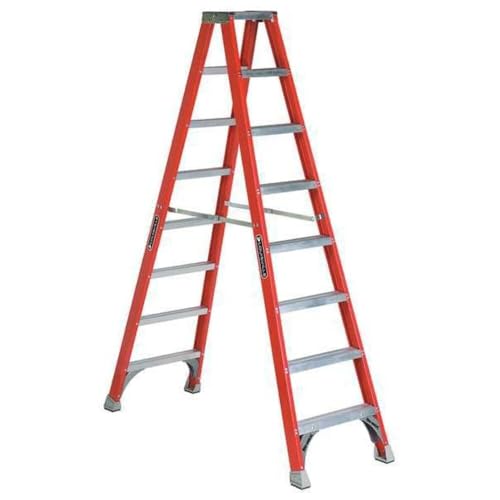
An 8 ft step ladder opens into an A shape and stands without support, which makes it the default choice for indoor jobs and flat outdoor surfaces. You climb one side, work facing your task, and use the top cap to hold small tools. Most models fold flat for storage. Choose this type when your work is mostly ceilings, walls, shelving, and painting, and when you want the steadiest feel underfoot.
Extension Ladders
An 8 ft extension ladder is the compact end of the extension range. Its sections slide to adjust the length, and it leans against a wall or roof edge rather than standing alone. At a safe leaning angle, the top rests well below 8 ft up the wall, so this size suits low tasks such as reaching a porch roof. If your jobs need more height in a package that stores short, see our guide to the best telescoping ladder.
Multi Position Ladders
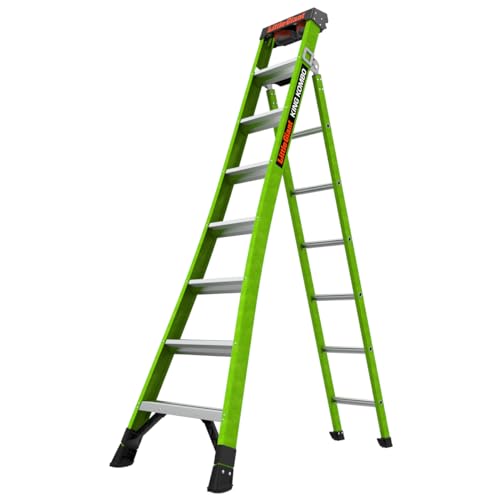
A multi position ladder uses locking hinges to change shape, working as a step ladder, a leaning ladder, or a scaffold base with a plank. In the 8 ft class these models are sturdy but heavier than a plain step ladder, and the hinges need regular checks. Pick one if you work on stairs or varied jobs and would rather own one flexible ladder than several single purpose ones.
Key Features to Compare
Duty Rating and Load Capacity
Every ladder carries a duty rating that states the maximum load it can support, and that load includes you, your clothes, and everything you carry up. Ratings run from Type III at 200 pounds through Type II at 225, Type I at 250, and Type IA at 300, up to Type IAA at 375 pounds. Match the rating to your weight plus your tools with room to spare. A higher rating also brings a sturdier build, so anyone carrying paint cans or tool bags should start at Type I or above.
Material: Fiberglass or Aluminum
Aluminum ladders are light, resist rust, and cost less, which suits most indoor and dry outdoor work. Fiberglass rails weigh more and cost more, but they do not conduct electricity, so they are the safer pick near wiring, breaker panels, and overhead lines. Fiberglass also feels stiffer under load, while thin aluminum can flex more on taller models. For a deeper look at both materials, read our breakdown of fiberglass vs aluminum ladder options before you decide.
Reach and the Highest Standing Step
Ladder height is not the same as reach. On an 8 ft step ladder, the highest step you may stand on sits roughly 5 to 6 ft above the floor, and an average adult can then reach about 12 ft in total. The top cap and the step just below it are not standing surfaces, and labels on the rail mark the highest safe step. When you compare models, check the stated reach height rather than the rail length.
Steps, Treads, and Top Cap Design
Wide steps with a ribbed or textured surface give your feet secure contact and reduce fatigue during long jobs. A platform style top step lets you stand with both feet flat, which feels far steadier when you work with both hands. Look at the top cap as well. Molded slots for screwdrivers, a paint can, and a hammer save trips up and down, and a magnetic strip keeps screws from rolling away while you work.
Feet, Stability, and Storage Size
Rubber feet or boots grip hard floors and protect them from scratches, and they should be replaceable once worn smooth. Wide rear rails and firm spreader braces keep an 8 ft step ladder from rocking when you lean into a task. Finally, measure your storage space before buying. Most 8 ft step ladders fold to a depth of about 6 to 8 inches but still need a tall wall or closet.
Is an 8 ft Ladder the Right Size for You?
The best 8 ft ladder for you matches the highest point you need to touch, so start there and work backwards. For ceiling work indoors, an 8 ft step ladder comfortably serves ceilings up to about 11 ft, covering light fixtures, smoke alarms, and crown molding. For a 12 ft ceiling, you would stand too high to work safely, so a 10 ft model is the better call. Outdoors, an extension ladder loses height to its leaning angle and section overlap, so an 8 ft extension ladder only supports work at roughly 7 ft up a wall.
Gutters on a single story home usually sit about 9 to 10 ft up, which puts them beyond an 8 ft ladder of any type. Treat the 8 ft size as your indoor and low outdoor ladder, and plan a longer extension ladder for roof level work. Our guide on how to choose a ladder walks through the reach math for taller jobs.
How Much Should You Spend?
Most 8 ft step ladders sell for about $100 to $250, with basic aluminum models at the low end and fiberglass or platform models higher up. Multi position ladders in this size often run about $200 to $400, reflecting their hinges and heavier build. Paying more should buy you a higher duty rating, wider steps, and better feet, not just a familiar logo. If a price looks far below the usual range, check the duty rating closely, since very cheap tall ladders often carry the lightest rating.
Common Mistakes to Avoid
- Standing on the top cap or the top step, which removes your balance point and is a leading cause of falls.
- Buying by rail length alone and discovering the safe reach is about 2 ft less than you expected.
- Ignoring the duty rating, then carrying tools that push the load past the limit.
- Using an aluminum ladder beside live wiring, where one contact can carry current through the rails.
- Setting up on soft or uneven ground without checking that all four feet sit firm and level.
- Leaning sideways off the ladder instead of climbing down and moving it.
Most of these errors come from rushing the setup. Taking a minute to position, level, and face your work prevents nearly all of them, and our guide on how to use a ladder explains safe climbing technique.
Care and Maintenance
Clean your ladder after dusty or wet jobs with a cloth and mild soapy water, then dry it fully before storing, since grit in the hinges and locks can stop them closing smoothly. Keep fiberglass rails out of constant direct sun when you can, because long exposure weakens the surface resin over time. Store the ladder indoors, hanging on wall hooks or standing in a dry corner.
Before each use, run a quick inspection. Check rails for dents, bends, or cracks, confirm every step sits tight, and test that locks, hinges, and spreader braces click into place. Look at the feet for worn rubber, and replace worn boots promptly, since they provide your grip on smooth floors. Remove the ladder from use at once if a rail is bent or a lock fails to hold, and never try to straighten damaged rails.
FAQ
Can you stand on the top step of an 8 ft step ladder?
No. The top cap and the highest step below it are not rated as standing surfaces, and the rail label marks the highest step you may use. Standing higher puts your knees above the ladder top with nothing to brace against, so a small shift in balance can tip you sideways. If you regularly need that extra height, move up a ladder size or choose a platform model.
Will an 8 ft ladder fit in a car for transport?
An 8 ft step ladder folds flat but stays 8 ft long, so it will not fit inside most cars or small SUVs. It usually travels on a roof rack or in a truck bed, tied down at two points so it cannot slide. Never rest it against the windshield or leave part of it hanging from a trunk, since a sudden stop can push it forward. Store delivery is often the simplest option.
Can you use an 8 ft ladder on stairs?
Only certain designs allow it. A standard step ladder needs all four feet on one level surface, so stairs are off limits. Some multi position ladders adjust one side shorter than the other to stand on steps, and separate ladder levelers can adapt a straight ladder. Even then, the base must sit firm with the locks fully engaged. If stair work is a regular job, choose a model built and labeled for that use.
Is an 8 ft extension ladder long enough for cleaning gutters?
For most homes, no. Single story gutter lines typically sit about 9 to 10 ft above the ground, and an 8 ft extension ladder leaned at a safe angle reaches only about 7 ft up the wall. You also need ladder length above the gutter line to hold on while you work. A longer extension ladder, usually 16 ft or more, is the right tool for that job.
How long does an 8 ft ladder usually last?
A well kept aluminum or fiberglass ladder often serves for many years of home use, and there is no fixed expiry date. Lifespan depends more on storage and handling than on age alone. Ladders stored dry and never dropped last the longest. Retire a ladder when you find cracked rails, loose rungs, or locks that no longer hold firmly, even if the rest of it still looks sound.
Final Thoughts
The right choice comes down to matching type, rating, and reach to the jobs you actually do. A step ladder covers most indoor work, a multi position model adds flexibility on uneven ground, and an extension ladder in this size handles only low outdoor tasks. Compare the options in the product table above against the rating and standing height you need, and the best 8 ft ladder for your home should be an easy call.