Best 72 Inch Ceiling Fans (2026): Buying Guide and Sizing
Disclosure: We may earn a commission when you buy through links on this page, at no extra cost to you. As an Amazon Associate I earn from qualifying purchases. Learn more
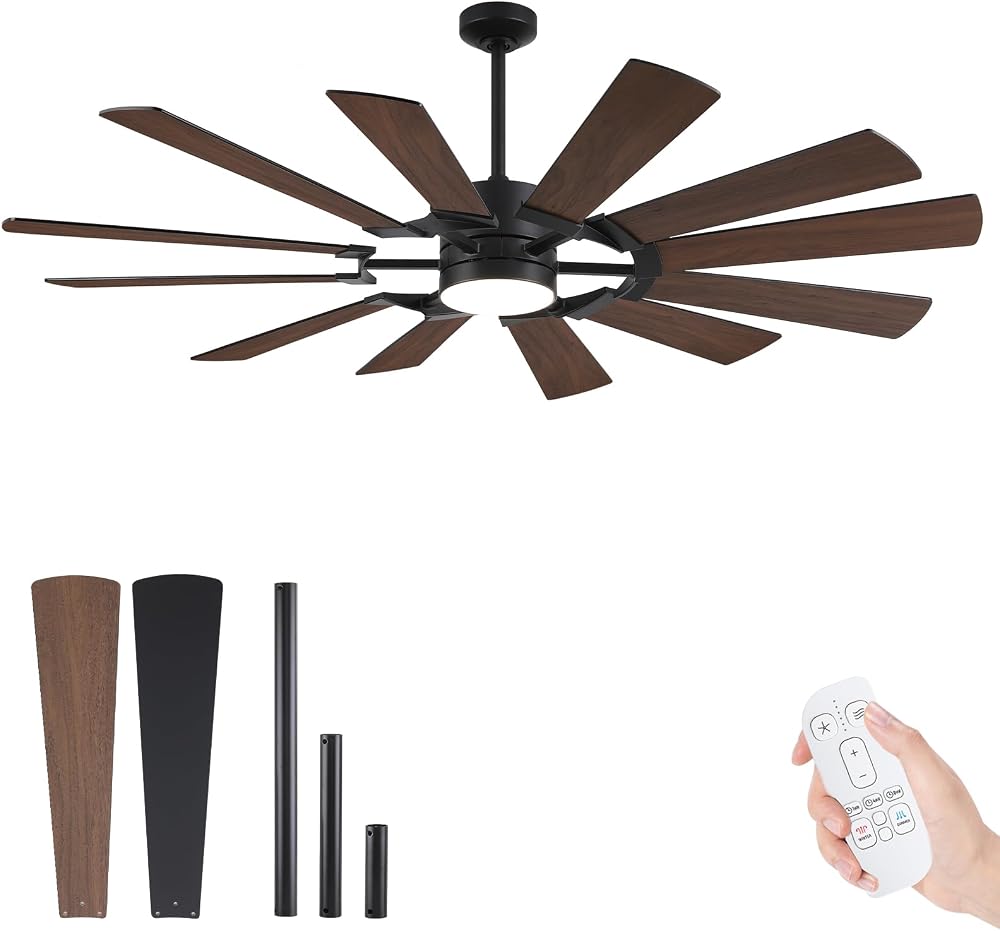
Choosing the best 72 inch ceiling fan? A 72 inch fan moves air across great rooms and large open plans.
A 72 inch fan is a big commitment. The blades span six feet, the box is heavy, and once it is mounted you will not want to take it down because one number on the listing looked better than it performs. Choosing the best 72 inch ceiling fan for your space comes down to matching airflow, ceiling height, light output, and controls to the room, and the comparison table below lets you line up those specs side by side before you commit.
This guide covers the fan types worth considering at this size, the features that change how the fan feels in daily use, and the sizing math that tells you whether 72 inches is right for your room.

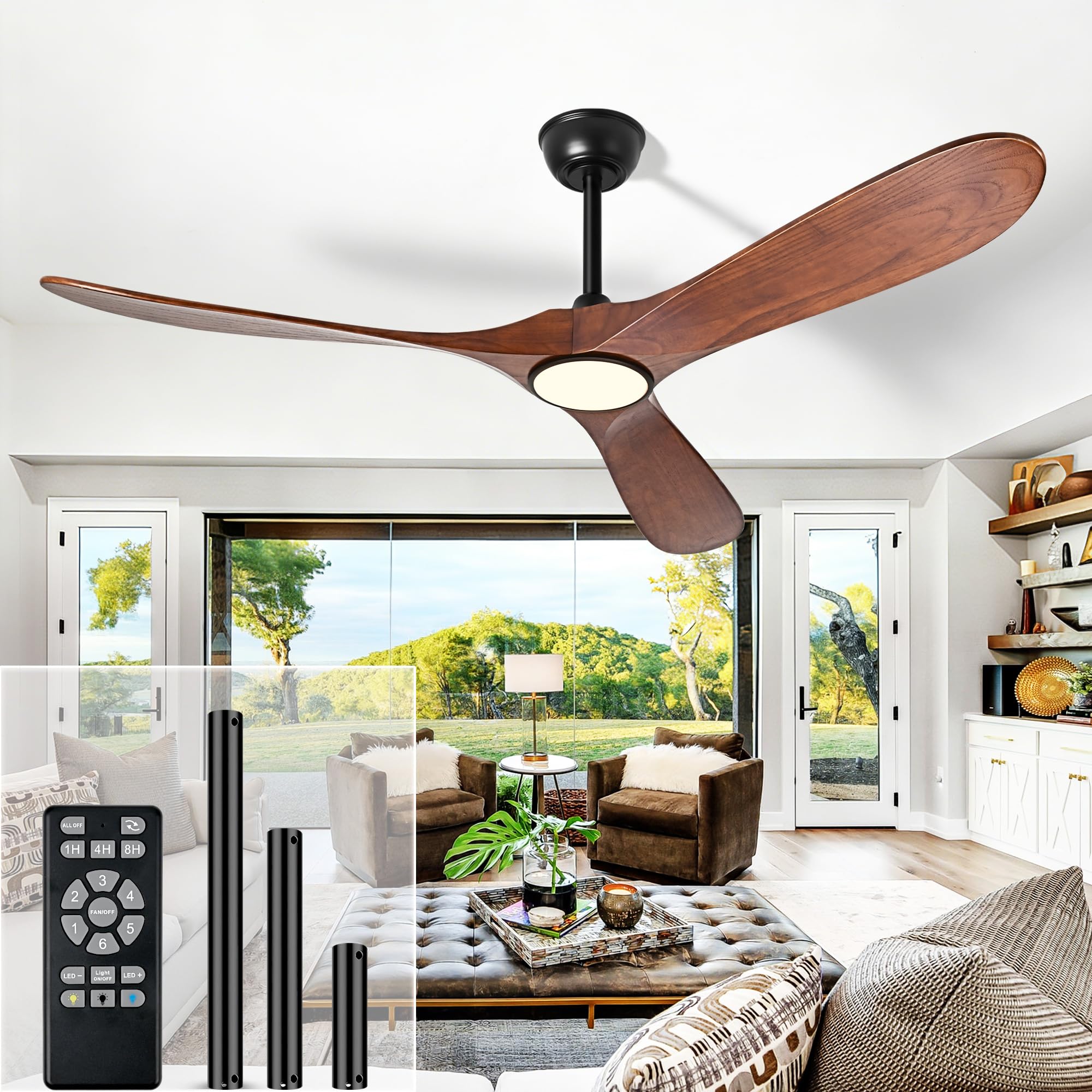


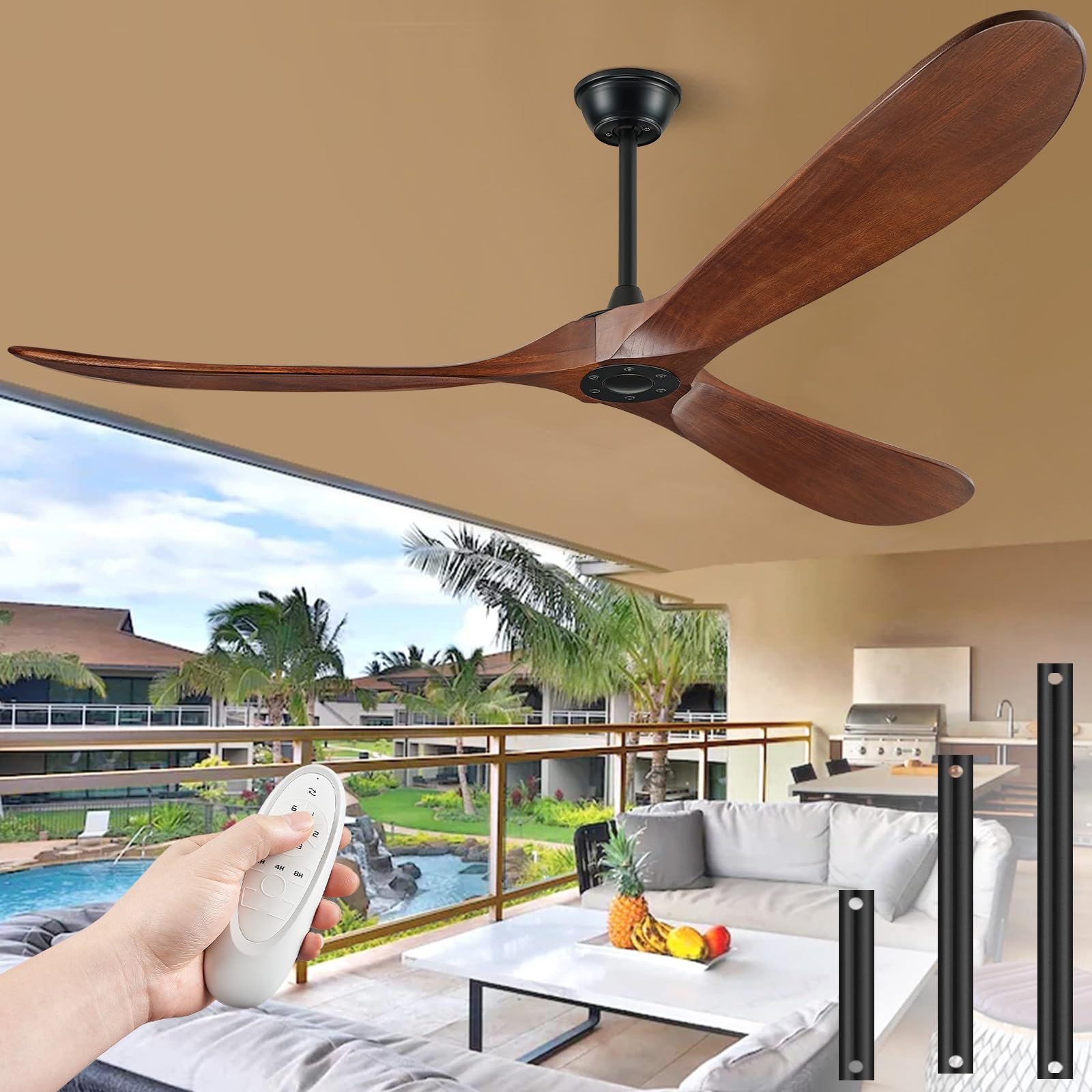
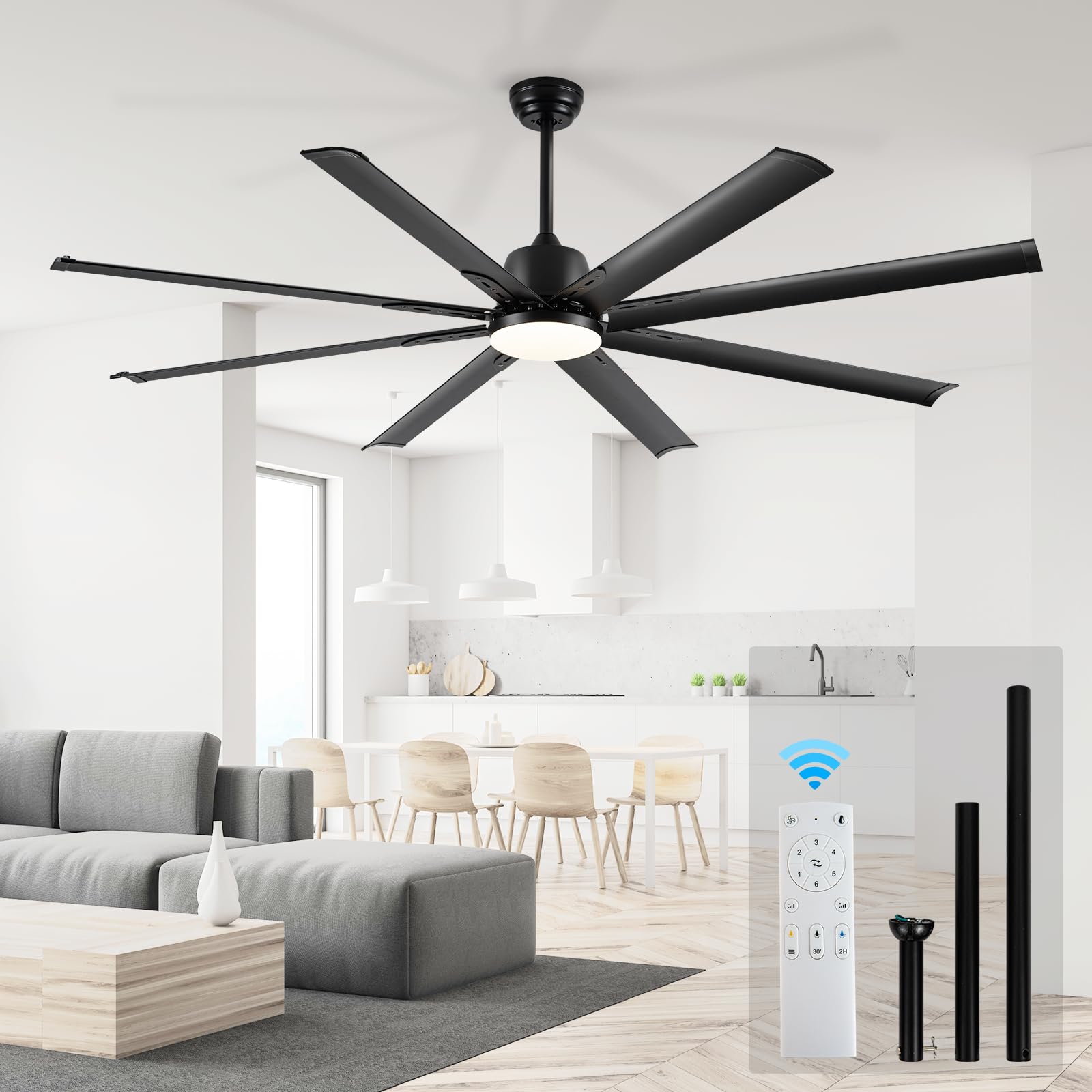

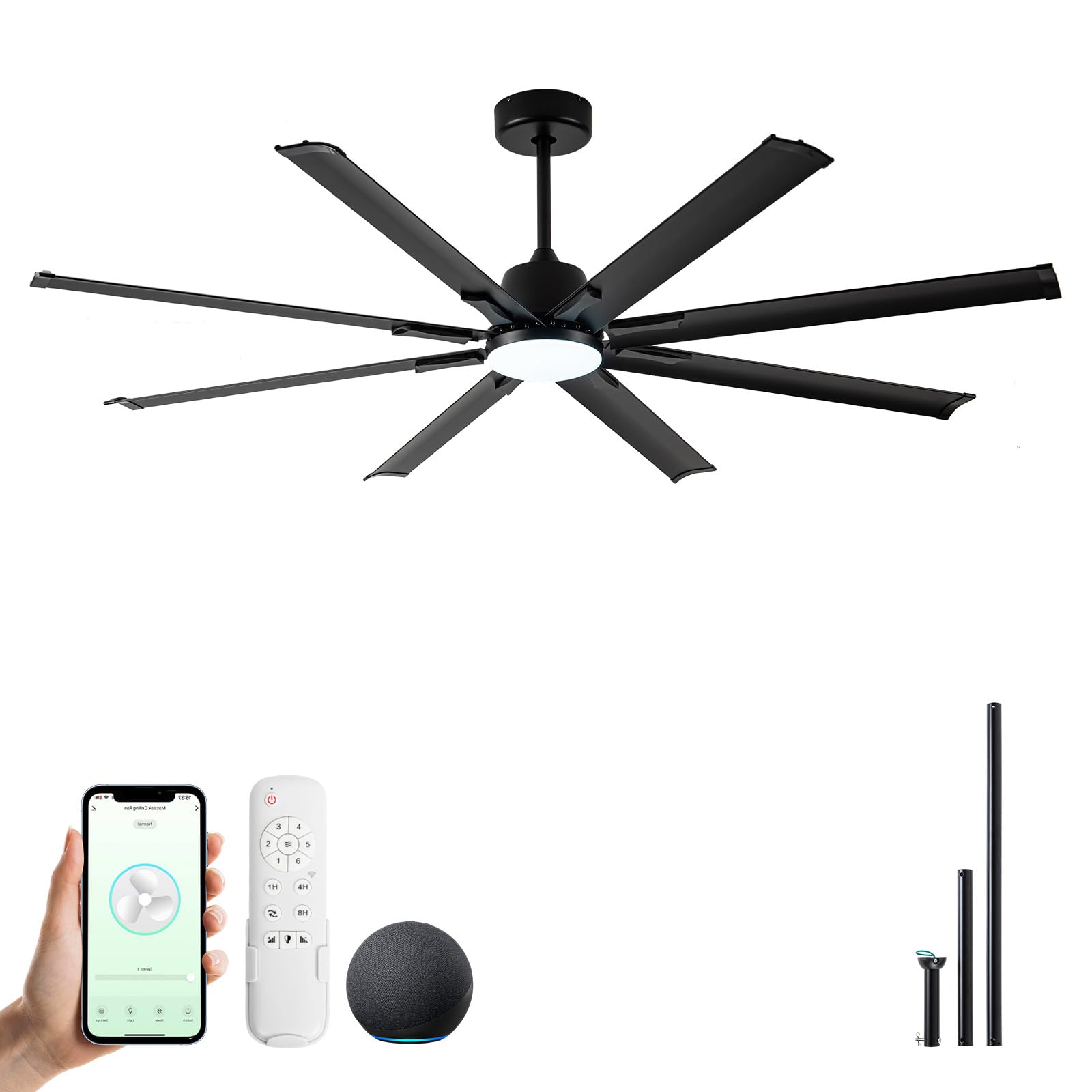
Who Should Buy a 72 Inch Ceiling Fan?
Owners of Great Rooms and Open Floor Plans
If your living area blends into the kitchen and dining space with no walls between, a standard 52 inch fan stirs only the air near the sofa and leaves the rest still. A 72 inch span reaches across a much wider seating area, so one fan can serve the whole zone. If your layout matches that picture, our guide to the best ceiling fan for living room spaces explains how placement over the main seating area affects comfort.
People Cooling Rooms of About 300 to 400 Square Feet
Fan sizing follows room area, and this size class is built for large bedrooms, primary suites, and family rooms in roughly the 300 to 400 square foot range. In a room that large, a smaller fan has to run at full speed to move enough air, which adds noise and still leaves the corners warm. A bigger span moves the same air at a lower speed, so the breeze feels gentler.
Homeowners With High or Vaulted Ceilings
Tall ceilings push the fan far above your head, and air loses force as it travels down to where you sit. A wide blade sweep compensates by moving a larger column of air, and a longer downrod brings the fan closer to the living zone. If your home has both a large footprint and tall ceilings, this is the size class designed for you.
Fan Types Compared at This Size
At 72 inches you will mostly find three broad types. Standard downrod fans hang from a short stem and suit ceilings of nine feet or more, giving the blades the clearance they need to move air freely. Industrial style fans use metal blades and powerful motors for workshops, garages, and commercial style lofts, trading decorative finish for raw airflow. Damp rated and wet rated models are built for covered porches and open outdoor structures, with sealed motors and blades that resist moisture. If the fan will live outside, compare our guide to the best outdoor ceiling fan options before choosing an indoor model.
Flush mount designs exist at this size but are uncommon, because hugging a wide fan close to the ceiling reduces the air it can pull from above the blades. If your ceiling is low, a smaller fan mounted flush usually performs better than a 72 inch fan starved of clearance.
Key Features to Compare
Airflow and Motor Type
Airflow is rated in CFM, and large fans commonly list about 6,000 to 10,000 CFM on high speed. Treat the number as a comparison tool rather than a promise, because ratings are measured under ideal conditions and blade pitch matters as much as raw speed. The motor choice shapes noise and energy use. Our explainer on dc vs ac ceiling fan motors covers the trade in detail, but in short, DC motors run quieter, use less electricity, and offer more speed settings, while AC motors cost less up front.
Blade Count, Pitch, and Material
More blades does not automatically mean more air. Blade pitch, usually about 12 to 14 degrees on residential fans, and the motor power behind the blades decide how much air actually moves. Fans at this size come with three to eight blades, and fewer blades often spin faster with less drag. Blade materials include plywood, solid wood, plastic, and metal. In humid rooms or covered outdoor spots, plastic and metal resist warping better than wood.
Light Output in Lumens and Color Temperature
Many 72 inch fans include an integrated LED light. Judge it by lumens, not watts. About 800 lumens replaces a single standard bulb, while a main light for a large room should offer roughly 1,600 to 2,500 lumens so it can stand alone. Color temperature shapes the mood. Ratings near 2700K to 3000K look warm and suit living rooms and bedrooms, while 4000K and above look cooler for work areas. Check whether the LED module is replaceable, because a sealed module means replacing the whole light kit when it fails.
Controls, Remote, and Smart Options
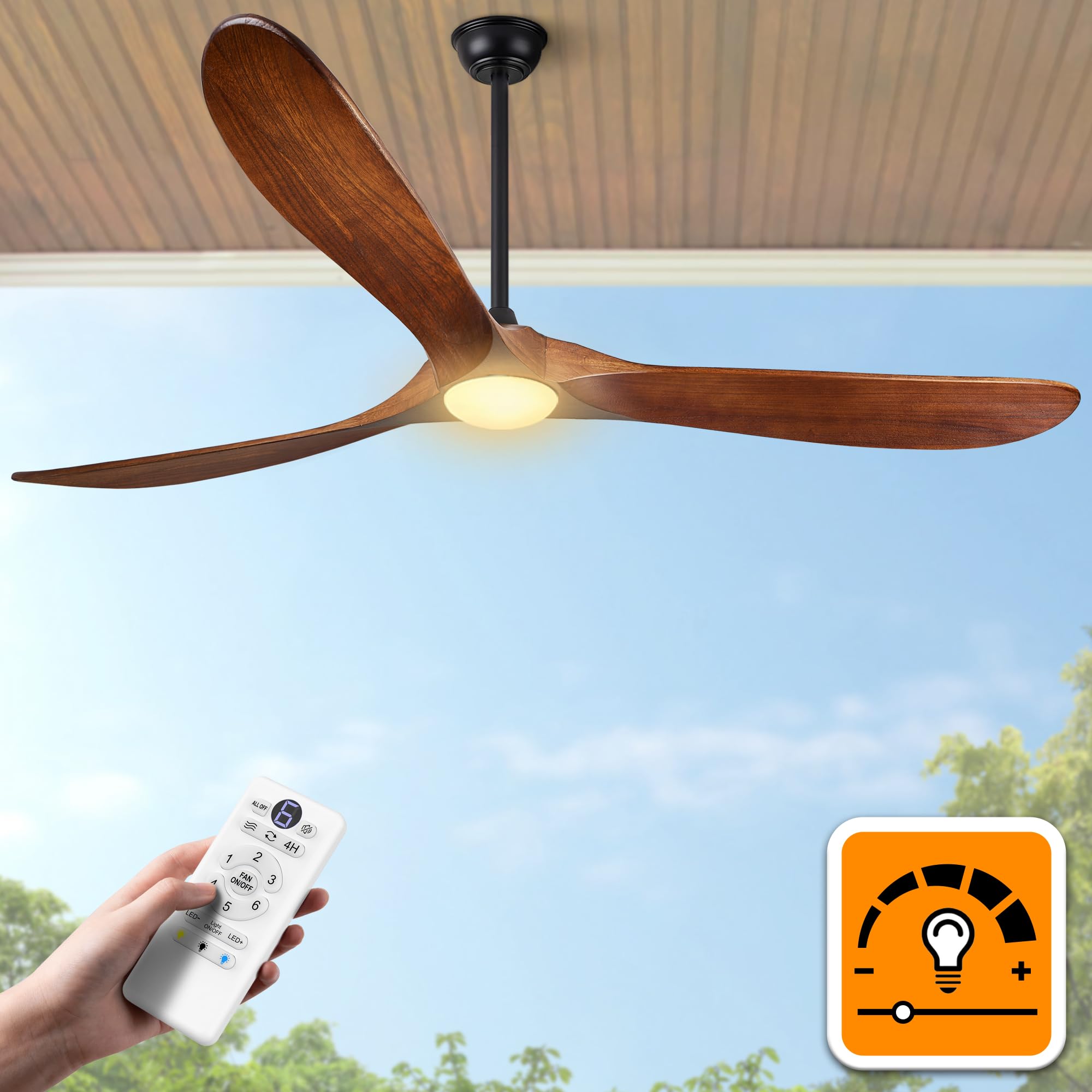
A handheld remote is nearly essential at this size, since the fan usually hangs out of reach of a pull chain. Look for a remote that handles fan speed, light dimming, and reverse from the sofa. Wall controls free you from hunting for the remote but need wiring at the switch box. WiFi models add app and voice control through assistants such as Alexa, though smart features depend on a stable signal reaching the ceiling.
Style, Finish, and Room Fit
A six foot fan is a visual centerpiece, and its finish should agree with the fixtures already in the room. Brushed nickel and matte black suit modern spaces, bronze and wood tones suit traditional and farmhouse rooms, and white disappears against a white ceiling for a quieter look. Blade finish matters too, since the blades are the largest visible surface, and dark blades draw the eye in a way that can feel heavy in a smaller space.
Is a 72 Inch Ceiling Fan the Right Size for You?
Measure the room first. Multiply length by width to get square footage, then compare it with common sizing guidance. Rooms up to about 75 square feet suit fans of 29 to 36 inches, rooms of 76 to 144 square feet suit 36 to 42 inches, rooms of 144 to 225 square feet suit 44 to 52 inches, and rooms of 225 to 400 square feet call for 52 to 72 inches. The best 72 inch ceiling fan earns its place at the top of that range or in an open plan space where the seating area alone is huge.
Ceiling height matters just as much. Safety guidance calls for blades at least seven feet above the floor, and airflow works best when the fan sits about eight to nine feet up. On a nine foot ceiling, a short downrod works well, while taller ceilings need a longer downrod to keep the breeze in the living zone. If your ceiling is under eight feet, step down in fan size instead. For broader help matching any fan to any room, see our guide on how to choose a ceiling fan.
Installation and Placement
Weight is the first thing to respect. Fans at this size often weigh about 30 to 50 pounds, well beyond what a standard electrical box can hold. The ceiling box must be fan rated and marked for the weight, secured to a joist or a brace between joists. Center the fan over the main seating area rather than the exact middle of the room when furniture is grouped to one side, and keep blades at least 18 to 24 inches from the nearest wall. Our step by step guide on how to install a ceiling fan covers wiring and mounting in order, and hiring an electrician is the right call if the existing box needs replacing.
How Much Should You Spend?
Expect broad tiers at this size. Models under about $200 cover the basics with AC motors, simple remotes, and modest light output. Fans in the about $200 to $400 range add DC motors, stronger airflow, dimmable LED lights, and better finishes, and this is where most large room buyers land. Above about $400 you pay for premium materials, smart controls, and quieter engineering. Spending more does not guarantee more air, so compare CFM and light output at each tier instead of assuming price equals performance.
Common Mistakes to Avoid
- Mounting the fan on a standard light fixture box that cannot support its weight, which risks the fan working loose over time.
- Choosing 72 inches for a room of 200 square feet, where the span overwhelms the space and a 52 inch fan would circulate air just as well.
- Placing the fan off center from the seating area, so the people in the room sit outside the strongest part of the breeze.
- Judging the light by wattage instead of lumens, and ending up with a large room lit by a dim decorative glow.
- Skipping the reverse function check in winter, leaving warm air pooled at the ceiling of a tall room.
- Ignoring the rating on an outdoor install, so an indoor only fan corrodes in porch humidity within a few seasons.
Care and Maintenance
Dust the blades every few weeks with a pillowcase slipped over each blade, working slowly so dust falls into the fabric instead of onto the furniture. Twice a year, switch the fan off and check that blade screws and mounting hardware are snug, since vibration slowly loosens them and a loose blade is the most common cause of wobble. If the fan wobbles after tightening, a balancing kit with small adhesive weights usually settles it. Clean the light cover with a dry cloth only, and never spray cleaner directly onto the motor housing.
FAQ
How many blades should a 72 inch ceiling fan have?
Anywhere from three to eight blades can work well, because blade count alone does not set airflow. A three blade fan with strong pitch and a powerful motor often moves more air than an eight blade fan with shallow pitch. Choose the count for the look you prefer, then confirm the CFM rating and pitch before buying, and remember that more blades generally mean more weight for the mount to carry.
Can a 72 inch ceiling fan work in a bedroom?
Yes, in a large primary bedroom of roughly 300 square feet or more it can feel luxurious rather than oversized. Pick a DC motor model with a low speed that stays quiet enough for sleep, and a light with warm color temperature and full dimming for the evening. In a smaller bedroom, though, the span can feel oppressive and a 52 inch fan usually fits the space and the sleeper better.
Does a bigger ceiling fan use much more electricity?
Not much, and often less than expected. A large fan on high typically draws about 30 to 100 watts depending on motor type, with DC models at the lower end. That is a fraction of what a window air conditioner draws, which is why fans pair so well with a slightly higher thermostat setting in summer.
What downrod length does a 72 inch ceiling fan need?
Aim to land the blades about eight to nine feet above the floor. On a ten foot ceiling, a downrod of about 12 to 18 inches usually gets you there once the motor housing height is counted. On a twelve foot ceiling, plan on roughly 36 inches of downrod. Measure from the ceiling to the desired blade height and subtract the height of the fan itself, rather than guessing from the ceiling height alone.
Can a 72 inch ceiling fan go on a sloped ceiling?
Most models can, as long as the mount is rated for slopes and the slope angle falls within the limit the maker states, often around 30 degrees. The downrod must be long enough that the blades on the low side clear the ceiling through the full rotation. Very steep vaults may need an adapter or may rule out this size entirely, so confirm the angle before ordering rather than after the fan arrives.
Final Thoughts
The right choice comes down to honest room measurements, a fan rated mount, enough airflow for the square footage, and a light that can serve the room. Match those four things and the best 72 inch ceiling fan for your home becomes an easy pick. Use the product table above to compare finalists on CFM, lumens, and motor type, and if you are still weighing sizes, start with our overview of the best ceiling fan options across every span.