Best 65 ft LED Strip Lights (2026): How to Choose
Disclosure: We may earn a commission when you buy through links on this page, at no extra cost to you. As an Amazon Associate I earn from qualifying purchases. Learn more

Choosing the best 65 ft led strip lights? A 65 ft strip can ring a medium room or run a long hallway ceiling edge.
A 65 ft strip sounds simple until you start comparing listings. One kit is a single long reel, another is two shorter reels joined at one controller, and a third looks bright in photos but fades badly near the far end. The best 65 ft led strip lights for your room depend on brightness, color temperature, construction, and how the strip handles power across its full length.
This guide compares the main types and the three buying approaches most people fall into, from a low cost accent setup to a premium smart installation. Use the comparison table below to match strip types against your room before you order.


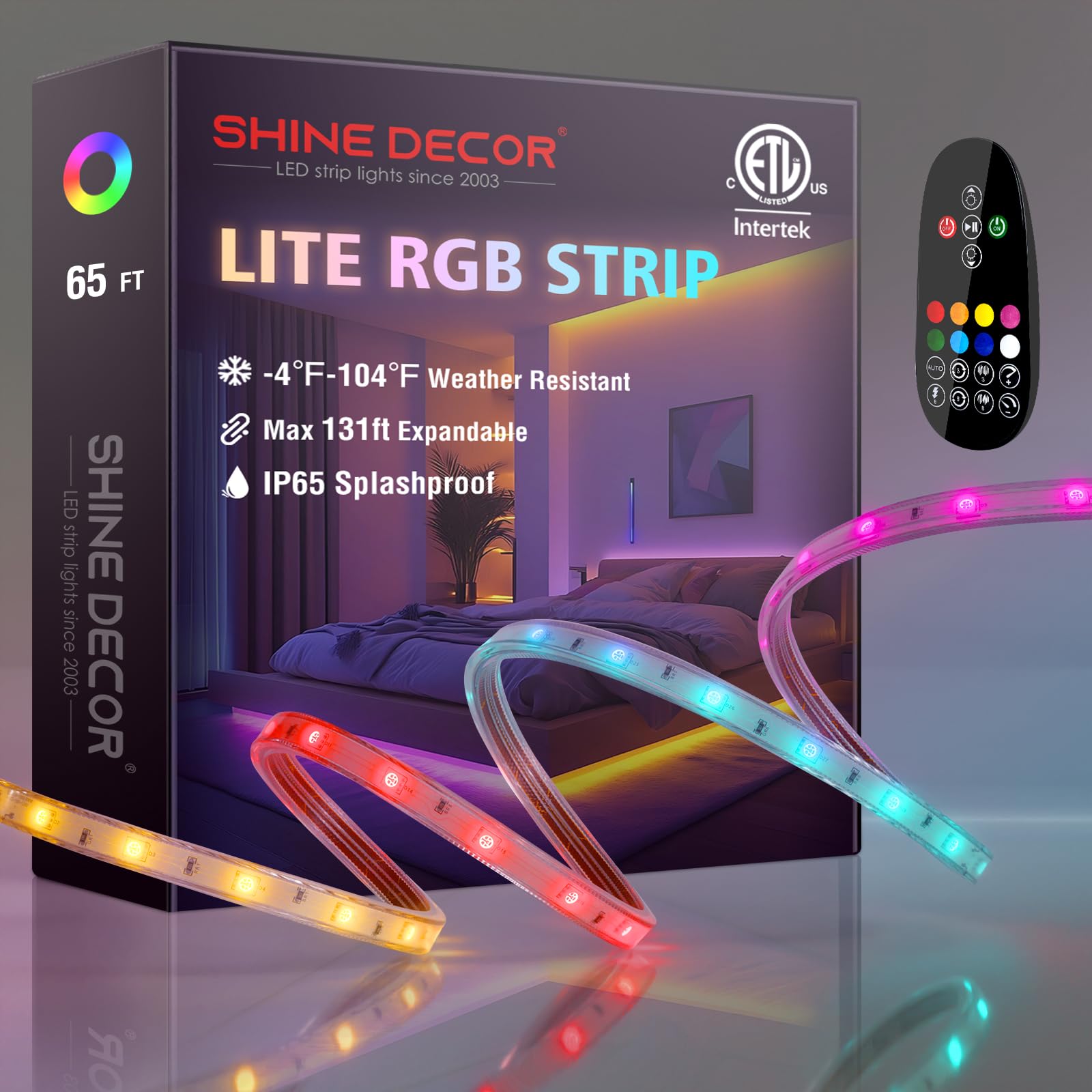
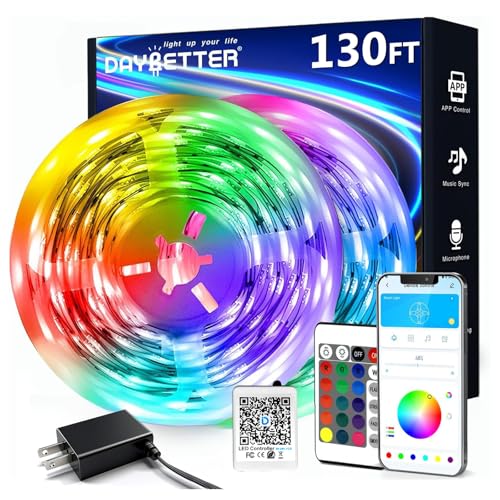
The Main Types of 65 ft Strip Lights at a Glance
Most long strips fall into three groups. Basic RGB strips show one color across the whole run at a time and cost the least. RGBIC strips can show several colors on different segments at once, which suits gaming rooms and media walls. White and COB strips focus on even, useful light, with COB designs packing diodes so closely that the line of light looks smooth instead of dotted.
Finish matters more at this length than on a short strip. A bare strip leaves every diode visible, which is fine inside a cove or behind a TV. An exposed run looks far better inside an aluminum channel with a frosted cover, and the channel also protects the strip and draws heat away from the diodes.
Three Buying Approaches, From Budget to Premium
The Balanced Approach for Most Rooms
Choose a 24 volt RGB or tunable white strip with a remote and an app, a power supply rated above the strip draw, and mounting clips in the box. This middle path covers bedrooms, living rooms, and hallways in one continuous run without paying for advanced effects. Expect even brightness, a wide choice of whites, and controls everyone in the house can use right away.
The Budget Approach for Accent Light Only
Choose a basic 12 volt RGB strip with a simple remote and spend the savings on clips and a channel. At under $20 to about $30, these kits are accent light, not room light, and that is fine behind a headboard or along a shelf. Color choices apply to the whole run at once, adhesive is often the weakest part, and brightness usually drops toward the end.
The Premium Approach for Smart, Even Light
Choose a 24 volt RGBIC or high density COB strip with voice control and a strong warranty. Premium kits at about $50 to $100 earn their price through brighter output, smoother dimming, and power supplies built for the full length. They suit rooms where the strip is the main visual feature. Our guide to the best led strip lights covers the wider field beyond this one size.
How to Judge a 65 ft Strip Before You Buy
Judge every listing on the same points. Check brightness in lumens rather than diode count alone, confirm the color temperature range, and read how the strip is powered across its length. Look at the finish, the installation method, and the efficiency in watts per foot. Finally, weigh the warranty and the price of spare controllers, because a strip you cannot repair loses value fast.
How to Choose the Right LED Strip Lights
Size and Form Factor
Shorter lengths such as 16 ft, 32 ft, and 50 ft suit a single wall, a desk, or one bed. A 65 ft kit, roughly 20 meters, is built to ring a whole room or run a long hallway. Check whether your option is one reel or two joined reels, because a joined kit needs a central spot for the controller and supply.
Type: RGB, RGBIC, White, and Outdoor
RGB strips change color but show one color at a time. RGBIC strips address segments separately, so gradients and chasing effects become possible, and our explainer on rgb vs rgbic walks through the difference. Plain white strips serve kitchens and work areas best. For a porch or patio run, look at the best outdoor led strip lights instead, because indoor strips lack the coating outdoor use demands.
Features Worth Paying For
A remote is the baseline control and works even when your phone is in another room. An app adds schedules, timers, and finer color control, and it is worth paying for on a strip this long. A spare remote and extra corner connectors are also worth a little more. Skip huge effect libraries you will likely use once, and skip a second controller unless your layout has two separate runs.
Lumens and Color Temperature
Brightness listings can mislead, so check whether lumens are quoted for the full strip or per foot, and compare like with like. Accent runs can sit near the low end, while a strip meant to light a room needs far higher output per foot. For color temperature, about 2700K looks warm, 4000K is neutral, and 5000K to 6500K feels like daylight. Tunable white strips let you move across that range.
Fixture Size and Placement
Strip width is usually about 8 to 10 mm, and the channel you pair with it must be wider than the strip itself. Placement shapes the result. A strip hidden in a ceiling cove gives soft indirect light, and our guide to the best led strip lights for ceiling focuses on that layout. Under cabinets, mount the strip toward the front edge so light falls on the counter.
Dimmable and Smart Options
Almost every long strip dims, but the method matters. Remote dimming is instant and simple. App and voice dimming let you set scenes, such as low warm light for a film, then raise brightness for cleaning. Check that dimming stays smooth at low levels without flicker, because flicker shows up most around a TV or a desk where your eyes rest for long periods.
Installation: Hardwired or Plug In Power
Most 65 ft kits plug into a standard outlet through a power supply brick, which suits renters and first installs. Hardwired setups hide the supply inside a wall or cabinet and suit permanent cove lighting, but they need an electrician in most homes. Either way, plan the outlet position before you stick anything down, and dry fit the full run unpeeled so corners land where you expect.
How Much Should You Spend?
At under $20, expect accent level brightness, a basic remote, and adhesive you will probably reinforce with clips. Between about $20 and $50, kits add app control, better power supplies, and steadier brightness along the run, which is the range most buyers should target. At about $50 to $100, you pay for higher output, RGBIC effects or dense COB light, and longer warranties.
Is a 65 ft Strip the Right Size for You?
Measure your route before deciding, including every corner and drop. A bedroom of about 12 by 12 ft has a perimeter near 48 ft, so a 65 ft kit rings it with length to spare for a run behind the bed. A living room of about 15 by 20 ft has a perimeter near 70 ft, so one kit falls short of a full loop. Readers planning a bedroom layout can compare layouts in our guide to the best led strip lights for bedroom.
Choose 65 ft when you want one unbroken line around a medium or large room or along a hallway ceiling edge. Choose a shorter kit when the run is a single feature, such as a TV wall or a set of shelves, because cutting a long strip down wastes the extra length you paid for.
Common Mistakes to Avoid
- Peeling and sticking the whole strip before checking that every section lights, so a dead section only shows up once removal can damage paint.
- Powering a full 65 ft run from one end on a 12 volt kit, so the far end glows dimmer and warmer than the start.
- Bending the strip sharply at corners, so the circuit tracks crack and a segment stops lighting.
- Sticking the strip to a dusty or textured surface, so the adhesive lets go within weeks and the run sags.
- Cutting at a random point instead of the marked lines, so the final section loses its connection and stays dark.
- Skipping a channel on an exposed run, so the bare diodes glare and the strip collects dust it is hard to remove.
Care and Maintenance for Long Strips
Dust dulls output slowly, so wipe the strip or its channel cover with a dry or slightly damp cloth every few months while the power is off. Our step by step guide on how to clean led strip lights covers safe cleaning in detail. Check clips and corners twice a year and press any lifting section back into its clip. Keep the power supply ventilated, because heat at the supply shortens the life of the whole kit.
Inspect the run after any furniture move. A knocked corner connector is the most common cause of a section going dark, and reseating it usually restores the full run. Keep spare connectors and the remote in one labeled drawer, so a small fault stays small.
FAQ
What is the best 65 ft LED strip lights?
The strongest choice is a 24 volt strip with enough lumens per foot for your purpose, a power supply rated above the strip draw, and controls you will actually use daily. For most rooms that means an RGB or tunable white model with both a remote and an app. One extra check helps: confirm that spare controllers and connectors for that exact strip are easy to order, because long runs stay in place for years.
What size LED strip lights do I need?
Measure the exact route the strip will follow, then add about 10 percent for corners, drops, and small measuring errors. A useful trick is to run a length of string along the route first, then measure the string flat on the floor. If your total lands just under a standard size, size up and cut at a marked line. If it lands just over, plan two runs from one controller rather than stretching one strip.
How long do LED strip lights last?
Most strips carry a rated life of about 25,000 to 50,000 hours, which describes the diodes under ideal conditions. In a real home the power supply or controller usually fails first, especially if the supply runs hot inside a closed cabinet. Leaving headroom in the supply rating does more for real lifespan than chasing the highest hour rating on the box.
Are expensive LED strip lights worth it?
They are worth it when the strip is a main light source or a visible feature, because higher output, smoother dimming, and steadier color are things you notice every day. They are harder to justify for a hidden accent behind furniture, where a basic kit looks nearly identical once installed. Think in cost per year of use rather than ticket price.
How do you clean LED strip lights?
Switch the power off, let the strip cool, and wipe it with a soft dry cloth or one barely dampened with water. Never soak an uncoated strip or spray cleaner directly onto it, because liquid can reach the exposed contacts at cut points and joints. For strips inside a channel, remove the cover and clean the cover separately in mild soapy water, then dry it fully before refitting so moisture is not trapped inside.
What is the most reliable brand of LED strip lights?
No single brand is the safe answer for every layout, so judge reliability by build signs instead. Look for a safety listing from a recognized safety organization, a warranty of at least a year, a power supply with clear ratings, and a seller that stocks spare parts. A strip with those four signs, from any maker, is a safer long term bet than a famous name sold with a weak supply and no stated warranty.
Final Thoughts
Start with the route, not the listing. Measure the run, decide whether the strip is accent light or real room light, and pick the voltage, brightness, and controls that match that job. The product table above pulls the current options together so you can compare types side by side. Chosen that way, the best 65 ft led strip lights become a simple fit for your room rather than a gamble on the brightest looking photo.