
Best 7 Inch Santoku Knives (2026): Buying Guide
Disclosure: We may earn a commission when you buy through links on this page, at no extra cost to you. As an Amazon Associate I earn from qualifying purchases. Learn more

Choosing the best 7 inch santoku knife? A 7 inch santoku slices vegetables and boneless meat with fast, clean strokes.
A crowded weeknight counter, a board full of onions, peppers and chicken, and a dull short knife that makes every cut feel like work is a common reason to shop for a new santoku. The best 7 inch santoku knife gives you enough edge for family size batches without feeling bulky. This guide helps you choose by space, household size and budget, and the comparison table below sums up the main types.
Readers who want to compare other lengths can see our guide to the best santoku knife for the full picture. Here the focus stays on the 7 inch size.
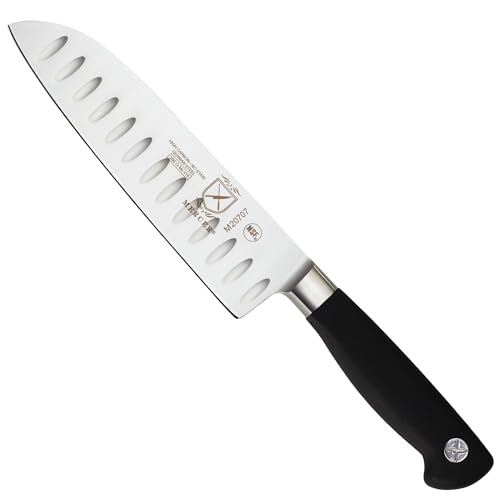
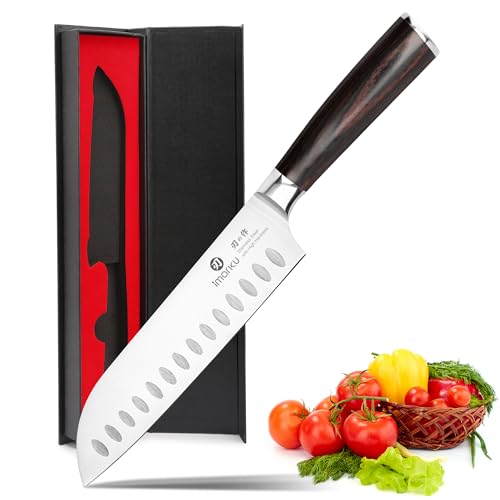


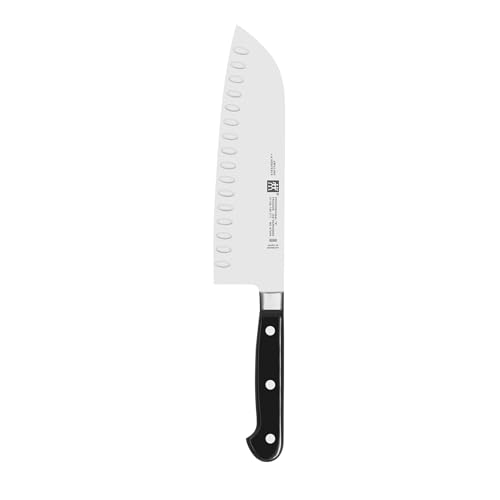
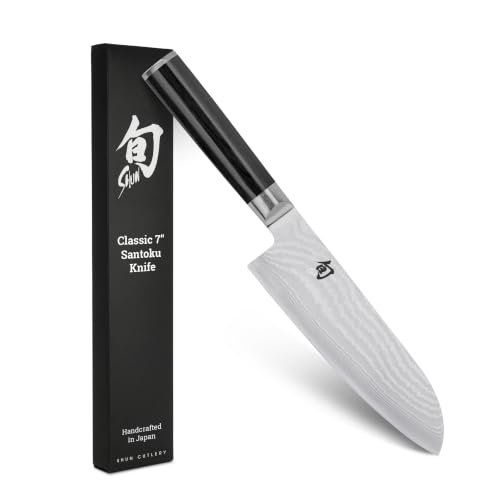

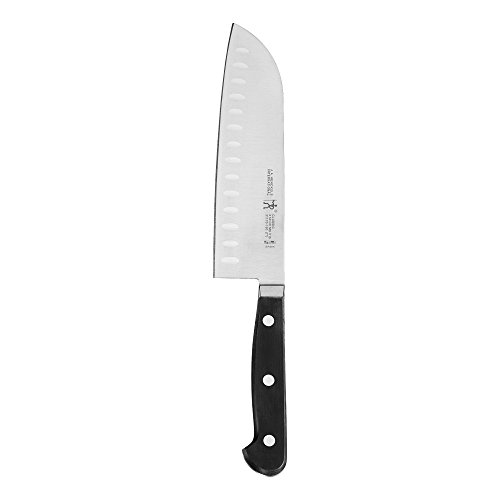


Quick Answer: How the Main Types Compare
For most homes, a balanced stainless type with moderate hardness is the safest start. It handles vegetables, boneless meat and fruit and needs only routine honing. Households on a tight budget can choose a simpler stainless type and spend the savings on a good board and a honing rod.
Hard Japanese types hold a fine edge longer but chip more easily. Soft German leaning types feel tougher around bone and hard squash, though they need honing more often. Your routine should decide.
Before You Buy: A Quick Checklist for Choosing a Santoku Knife
Work through the six points below before you look at any single listing. They decide comfort, safety and cost.
Size: Match It to Your Space
A 7 inch blade needs a board that leaves clear room in front of and behind the edge, plus storage that covers the full blade and tip. In a tiny kitchen, check drawer length and block slots first, since a knife loose on a counter is a safety risk. Households that prep small amounts may find a shorter option easier to control, and our guide to the best 5 inch santoku knife covers that size. For family meals, the 7 inch edge clears sliced onions in fewer strokes and keeps knuckles clear.
Which Type Fits Your Routine
Japanese types tend to be lighter, thinner and harder, with a flatter profile built for straight up and down cuts. German leaning types tend to be heavier and tougher, with more curve for rocking cuts. A hollow edge adds shallow oval dimples that help wet slices of potato, apple or cucumber release instead of sticking. Damascus describes layered steel with a visible pattern, so judge it by core steel and hardness rather than appearance. Carbon steel takes a keen edge but stains and can rust if left wet, while stainless steel trades a little edge life for easier daily care.
Steel Type and Hardness
Hardness is listed as a Rockwell C number, often shortened to HRC. Many balanced stainless blades sit around 56 to 58, which gives decent edge life with good toughness and simple sharpening. Harder blades around 60 to 62 stay sharp longer, but a hard edge is more brittle and can chip on frozen food, bone or a glass board. Softer blades around 54 to 56 rarely chip, yet they roll sooner and need frequent honing. If several people share the knife and technique varies, the middle range is the forgiving choice.
Blade Geometry: German vs Japanese
Geometry is about thickness, edge angle and profile, and it changes how the knife moves through food. Japanese blades often use a narrower edge angle and a thinner spine, so they pass through carrots and onions with little wedging. German leaning blades often use a wider edge angle and a thicker spine, so they feel stable but can split dense roots. The santoku tip curves down to meet the edge, which keeps the point close to the board for detail cuts. If you also cook with a pointed all purpose blade, our comparison of santoku vs gyuto explains how the two profiles differ in use.
Handle, Bolster and Balance
Hold matters as much as steel, since a tired hand changes your control long before the edge dulls. Round and oval handles suit a range of grips, while shaped handles with finger grooves can force one grip and annoy anyone who holds the blade differently. A full bolster adds weight and protects fingers, but it can block sharpening at the heel over years of use. A partial or no bolster design keeps the full edge usable. Balance should sit near where the blade meets the handle. A blade heavy knife tires the wrist, and a handle heavy knife can feel vague at the tip.
Realistic Budget Ranges
For knives priced under $30, expect simple stainless steel, basic handles and edges that need regular honing, which is still fine for light daily prep. The range about $30 to $50 usually buys better fit and a more comfortable handle. The range about $50 to $100 is where many homes find the best mix of steel, balance and finish, and our guide to the best santoku knife under 100 focuses on that bracket. Higher prices around $100 to $200 should bring harder steel and finer finishing. Paying more mainly makes sense if you cook daily and will maintain the edge well.
Types Compared: Choosing a 7 Inch Santoku by Home and Routine
Instead of ranking single models, compare the three broad types below against your household. Use the checklist above to judge any listing inside the type.
For Most Homes: Balanced Stainless Types
This type pairs mid range hardness with a blade of moderate thickness and a handle that suits shared use. It tolerates varied technique from different family members, resists stains from tomatoes and citrus, and sharpens easily on common stones or rods. For homes that cook four or more nights a week and want one main prep knife, this is the type to look at first. Its limit is edge life, since it will need honing sooner than a hard Japanese type.
For Tight Budgets: Simple Stainless Types
This type keeps costs down with softer steel, a plain handle and minimal finishing. It works well for students, rental kitchens and cooks who prep small meals. You will hone often, and the edge may roll if it meets hard rind or bone. Treat it as a practical starter or a spare for guests. Money saved here is well spent on a large board, which protects both the edge and your fingers.
For a Long Term Investment: Hard Japanese Types
This type uses harder, thinner steel ground to a fine edge, often with a light wood handle and no bolster. In skilled hands it gives very clean cuts on vegetables, herbs and boneless protein, and it stays sharp through many meals. The demands are real: no twisting to pry food loose, no frozen items, careful washing by hand and storage that shields the edge. Choose it only when the main cook will use and maintain it, rather than as a shared house knife.
What Separates the Types
Compare steel and edge retention, balance and comfort, sharpness as supplied, maintenance needs and value for the price bracket. Maker specifications for steel, hardness and dimensions, plus patterns in buyer reports about chips, handles and quality control, tell you most of what you need. A type is a good fit only when its strengths match a clear household need.
Is a 7 Inch Santoku Knife the Right Size for You?
Choose 7 inch if you regularly cut large onions, cabbage, melons, squash or family size amounts of meat and vegetables. The longer edge spreads work across more blade, so the middle section stays useful longer between sharpenings. Skip it if your only board is small, your storage cannot cover the blade, or you mostly trim fruit and make sandwiches, where a shorter knife is quicker and safer.
Think about the other knives you already own. If your drawer holds a small vegetable knife, the guide to santoku vs nakiri shows where a flat vegetable specialist overlaps with a santoku and where it does not. Many homes find that the best 7 inch santoku knife plus a small paring knife and a serrated bread knife cover nearly all daily tasks.
Common Buying Mistakes to Avoid
- Buying a 7 inch blade for a small board, which forces the tip off the edge and makes cuts unsafe and uneven.
- Choosing the hardest steel for a shared family knife, which often ends in chips from frozen food.
- Paying for a decorative layered finish while ignoring handle comfort, which is the part you feel in every single cut.
- Skipping storage and sharpening costs, which leaves a good knife dull and damaged within months.
- Assuming a santoku replaces every knife, which leads to misuse on bone, frozen items and bread crusts that need other edges.
Cost of Ownership and Care
The purchase price is only part of the cost. Budget for a honing rod, a whetstone or paid sharpening a few times a year, and safe storage such as a sheath, a magnetic strip or a block slot that fits. Our guide on how to sharpen a santoku knife walks through stone grit choice and angle control when you are ready to sharpen at home. A large board also belongs in the budget, since glass and stone boards damage edges fast.
For daily care, use wood or plastic boards, cut with straight strokes and avoid scraping food off the board with the edge turned down. Store the knife dry and covered so the edge never knocks against other tools. Never leave it in standing water in the sink, where hands can meet the edge unseen. With that routine, a balanced stainless type should serve a home for years.
FAQ
What makes a santoku knife brand reliable?
Reliability shows up less in a famous name than in consistency from knife to knife. Look for clear steel and hardness details on the listing, a stated warranty that covers defects, and a return route if the grind arrives uneven. Brands that publish care guidance also tend to support owners better over time. A missing spec sheet or vague steel claims are a warning sign worth taking seriously before you order.
How do you clean a santoku knife safely?
Wash the knife on its own right after use, with the edge facing away from your fingers and the sponge moving from spine to edge. Dry it fully at once, including around the handle joint. One point many owners miss is timing with salty and acidic foods: rinse soon after cutting lemons, tomatoes or pickles, since residue left for an hour can mark even stainless blades.
Is a santoku knife worth it for a small household?
For one or two people it can still be worth it if you cook from raw ingredients most days, because one versatile knife reduces washing up and drawer clutter. The value case weakens if you rely on precut produce and frozen meals, where a shorter knife does the same work. A useful test is your last week of cooking: count the meals that needed more than a paring knife. If that count is four or more, the size will earn its place.
How long does a santoku knife last before it needs replacing?
There is no fixed year count, because replacement is driven by edge condition and handle integrity. A knife needs replacing when repeated sharpening has ground the edge so far back that the blade wedges in food, when a crack appears, or when the handle loosens and cannot be secured. Small chips and a dull edge alone are not reasons to replace. A professional sharpener can often remove minor damage for far less than a new purchase.
What size santoku knife do I need for large hands?
Large hands need handle length and knuckle clearance more than extra blade length. Check that your full grip fits the handle without your fingers crowding the bolster area, and that your knuckles clear the board when you hold the knife over a tall onion. If possible, compare handle shapes in a store before ordering. A 7 inch blade with a cramped handle will still feel awkward, while a roomier handle can feel calm and controlled.
Final Thoughts
Match the type to your space, household and care habits, and the best 7 inch santoku knife will handle most daily prep with ease. Balanced stainless suits most homes, simple stainless suits tight budgets, and hard Japanese types reward a careful single cook. Before you order, look back at the product table above and confirm your board and storage fit the blade.


