Best 6 Gallon Air Compressors (2026): Types and Buying Guide
Disclosure: We may earn a commission when you buy through links on this page, at no extra cost to you. As an Amazon Associate I earn from qualifying purchases. Learn more

A buying guide to the best 6 gallon air compressor: airflow, pressure, noise and weight compared for nailers, inflating and garage work.
A 6 gallon tank sounds simple, yet two models with the same tank size can feel very different in your garage. One refills fast and runs a brad nailer with ease, while another cycles often, sounds harsh, and struggles with a blow gun. If you want the best 6 gallon air compressor for your home, the tank number is only the starting point. You also need to match airflow, pressure, noise, and weight to the tools you actually own.
This guide compares the main types in this size, explains the specs that matter, and shows you where money is well spent and where it is not. Use the comparison table below to line up the key specs, then read on for the details behind each number.


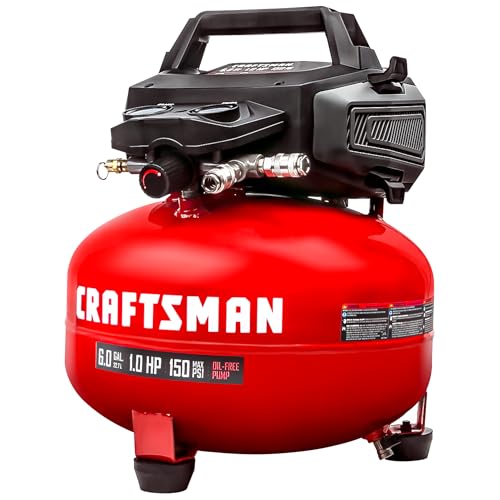

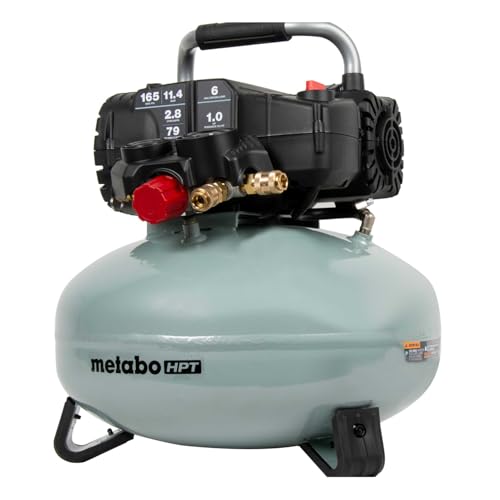
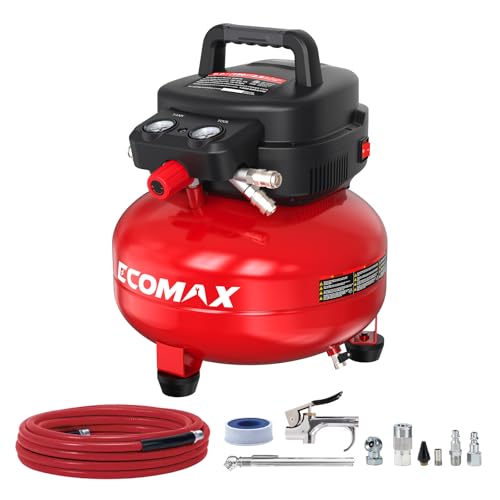
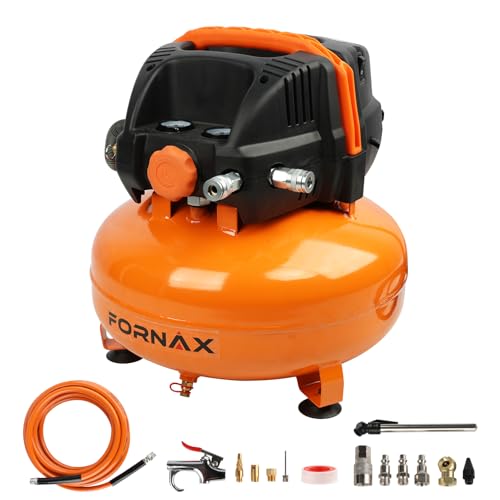
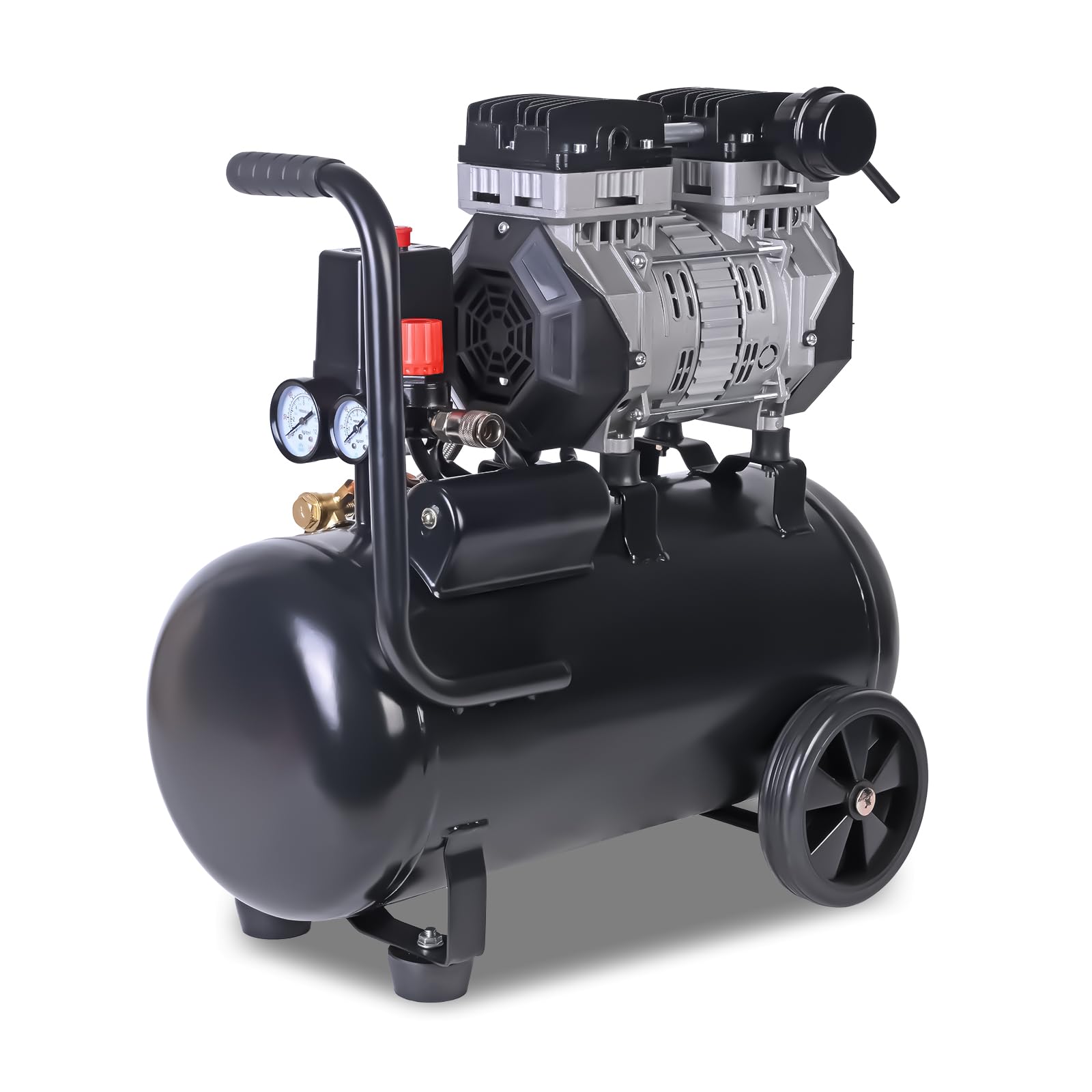
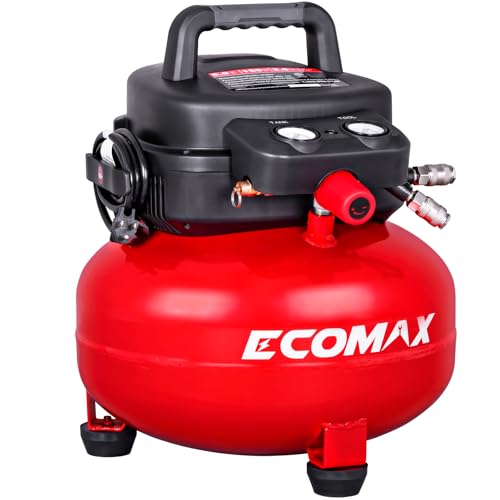

Types Compared at a Glance
Most 6 gallon models fall into three broad types. Pancake models sit low and wide, with the tank shaped like a flat disc under the motor, so they store easily and stay stable on a floor or truck bed. Workshop models use a taller tank shape and often add a second coupler, so two tools can share the air. Quiet models use a slower pump design that trades some refill speed for much lower noise.
None of these types is best for everyone. A pancake suits trim work and tire jobs in short bursts, a workshop model suits longer tool sessions, and a quiet model suits indoor projects where a loud pump would end the job early.
Three Types Worth Comparing
Pancake Style for Storage and Stability
The pancake layout is the most common shape in this size, and for good reason. The wide flat tank keeps the center of gravity low, so the unit does not tip when you tug on the hose. Rubber feet grip the floor, the handle sits on top for one hand carrying, and the whole unit slides onto a shelf or into a closet corner. Output is aimed at nailers, staplers, and inflating work, and most pancake models run two couplers so a second hose can stay connected. If storage space is tight, start with our guide to the best pancake air compressor options and compare footprints.
Quiet Models for Indoor and Early Morning Work
Quiet models use a pump that turns more slowly and often has larger cylinders, so each stroke moves air with less harshness. Sound ratings can be far lower than on standard models, and the difference is easy to hear in an enclosed garage. The trade off is refill speed, since a slower pump needs more time to refill the tank after heavy use. For finish nailing and work inside a finished home, that trade off is usually worth it. Check the decibel rating at a stated distance, since brands do not all measure sound the same way.
Higher Output Models for Longer Tool Runs
Some 6 gallon units pair the tank with a stronger motor and a higher max pressure, and these suit tools that run for minutes at a time. A higher pressure ceiling, often around 150 psi rather than 120 psi, stores more usable air in the same tank, so the motor starts less often. Airflow rated at 90 psi is the number to trust, since most air tools list their needs at that pressure. These models weigh and cost more, but the extra headroom keeps work moving in a busy home shop.
How We Chose the Criteria for This Guide
This guide judges 6 gallon models on five practical criteria drawn from maker spec sheets and owner feedback patterns. Power and performance come first, meaning airflow at 90 psi and max pressure. Runtime here means recovery time, how fast the tank refills. Ergonomics and weight cover handle comfort, footprint, and carrying the unit up stairs. Durability covers pump design and tank protection, and warranty terms round out the list.
How to Choose the Right Air Compressor
Size and Form Factor
Tank sizes around this class run from 1 gallon up to 60 gallon stationary units, and each step changes how long a tool runs before the motor starts. A 1 or 2 gallon unit is light but cycles almost nonstop beyond nailer work. At 6 gallons you get a useful buffer for nailing, inflating, and short grinding bursts, while keeping the unit portable. Larger 20 or 30 gallon tanks suit paint spraying and long sanding runs but need a fixed spot. The overview at best air compressor shows how the bigger classes compare.
Pump Type and Lubrication
Most models in this size use an oil free pump, which needs no oil changes and can sit on its side in a vehicle without leaking. The trade off is a shorter pump life in heavy daily use and, on many models, more noise. Oil lubricated pumps run smoother and often last longer, but they need oil checks and level storage. Form factor matters too, since pancake, hot dog, and twin stack shapes hold similar air in different footprints. For upkeep and lifespan on each side, read our oil vs oil free compressor comparison.
Features Worth Paying For
A second coupler is worth paying for if you swap between a nailer and a blow gun often, since it saves constant hose changes. A ball valve drain is far easier to open than a small wing style valve, especially with gloves on. Skip paying extra for large bundled nail kits if you already own the tools, since the kit often drives the price more than the compressor itself.
Corded, Cordless, or Gas Power
Nearly all true 6 gallon models plug into a standard household outlet, and corded power gives steady output with no runtime limit beyond the tank. Startup draw matters, since a motor can pull heavy current for a moment and trip a weak circuit or a long thin extension cord. Cordless units exist in smaller tank sizes and suit a single nailer where there is no power, but battery cost climbs fast. Gas models serve remote work, yet they add exhaust, noise, and fuel storage most home users do not need.
Battery Platform Notes
If you look at cordless options in smaller sizes, your existing battery platform should drive the choice more than small spec gaps. Sticking with batteries you own keeps chargers, spares, and costs under control, and a bare tool price can mislead once you add a large battery. Runtime claims vary with the tool too, since a nailer sips air while a die grinder drains a tank fast. For this class, treat battery models as a special case rather than the norm.
Brushless Motors
Brushless motors appear on some newer cordless and compact models, and their main gains are efficiency and low upkeep, since there are no brushes to wear out. On corded 6 gallon units, motor design matters less than pump airflow and build quality, so do not pay a large premium for the label alone.
Accessories and Warranty
A basic accessory kit with a blow gun, tire chuck, and a few fittings gets you working on day one, and a hose of about 25 feet covers most garage tasks. Check what the warranty covers, since some plans cover the pump for a shorter period than the tank or motor. Keep your receipt, as proof of purchase is often required for a claim. Before your first project, a walkthrough such as how to use an air compressor will help you set the regulator and check fittings in the right order.
How Much Should You Spend?
At under $100 you are mostly looking at smaller tanks, so a true 6 gallon model at this level usually means a sale price or a basic kit with modest airflow. In the about $100 to $200 range, most home buyers find the sweet spot, with solid pancake models, two couplers, and max pressure around 150 psi. Spending about $200 to $400 buys quieter pumps and stronger output. Above that, home users gain less, since the money buys capacity you may never use. Our air compressor buying guide covers these tiers in more depth.
Is a 6 Gallon Air Compressor the Right Size for You?
Choose this size if your work is mostly nailing, stapling, inflating tires, blowing dust off parts, and running small tools in short bursts. A finish or framing nailer is a natural match, since each shot uses little air and the tank recovers between bursts. Homeowners setting up a first shop will find this class easy to store and move, which is why it anchors so many lists of the best air compressor for home garage setups.
Think bigger if you plan to spray paint with a conventional gun, run a sander for long stretches, or use a large impact wrench for more than a few seconds at a time. Those tools consume air faster than a small pump can replace it, so the tool slows while the motor runs nonstop. A larger tank with a stronger pump will serve you better than any model in this class.
Safety belongs in this decision too. Wear eye protection when blowing debris, never point an air nozzle at skin, and keep the tank drained so moisture does not weaken it from inside. Get professional help if a tank shows deep rust or a damaged weld, since a pressure vessel is not a part to repair with guesswork.
FAQ
What size air compressor do I need for my tools?
Start with the tool that uses the most air, and find its airflow need listed at 90 psi. Add a margin of about one third above that number, since ratings are measured in ideal conditions and fittings cost you some flow. Then check that your tank size lets that tool work in your pattern, in bursts or nonstop. This method beats shopping by tank size alone, since a big tank with a weak pump still falls behind on steady work.
How long does an air compressor last?
Service life depends more on duty pattern and moisture control than on age alone. A home unit used a few weekends a month can serve for many years, while the same unit run hot every day wears its pump far sooner. Watch for warning signs such as refill times that keep growing or pump noise that turns harsh. Those signs mean the pump is working harder than it should, and planning a service visit beats waiting for a full failure mid project.
Is an air compressor worth it if I only inflate tires now?
It can be, if you expect your task list to grow. A small inflator is cheaper and simpler for tires alone, and it stores in a glove box. A 6 gallon unit earns its shelf space once you add a blow gun for cleanup or a nailer for trim and fencing repairs. Buy for the jobs you will do within the next year or so, not for someday projects, since unused capacity still costs money and storage room.
How do you clean an air compressor?
Unplug the unit, release all tank pressure, and wipe the outside with a dry or slightly damp cloth so dust does not bake onto the motor housing. Clean or replace the intake filter on the schedule in your manual, since a clogged filter makes the pump strain and run hot. Check the safety valve ring with a gentle pull to confirm it moves freely. Never wash the unit with a hose or pressure washer.
What makes one air compressor brand more reliable than another?
Look past the name to the support behind it. Reliable lines tend to stock wear parts such as filters, valves, and pressure switches for years, publish clear manuals, and honor warranty claims through a reachable service network. Consistent owner reports about the same model over several years tell you more than a single strong launch. If parts lists are hard to find for a model, treat that as a signal about long term support.
Final Thoughts
The right choice in this class comes down to matching airflow, noise, and shape to your real work. Pancake models win on storage and stability, quiet models win on comfort indoors, and higher output models win when your tools run longer. Whichever type fits, the best 6 gallon air compressor for you is the one whose specs cover your hungriest tool with room to spare. Compare your short list against the product table above and buy with confidence.