Best 54 Inch Ceiling Fan: Buying Guide (2026)
Disclosure: We may earn a commission when you buy through links on this page, at no extra cost to you. As an Amazon Associate I earn from qualifying purchases. Learn more

For rooms of about 225 to 400 square feet: compare mount types, motors, blades and lights for a 54 inch ceiling fan.
A 54 inch fan sits in a tricky spot. It is larger than the standard 52 inch size in most bedrooms, yet smaller than the wide spans built for great rooms, so listings alone rarely tell you whether it will move enough air. Choosing the best 54 inch ceiling fan comes down to matching the sweep to your room, then comparing light output, motor type, and mounting style.
This guide walks through those decisions in order, from room size and ceiling height to blade pitch, controls, and installation. Use the comparison table below to see how common 54 inch types differ, and if your room could suit a smaller or larger sweep, start with our broader guide to the best ceiling fan first.





Is a 54 Inch Ceiling Fan the Right Size for You?
Fan size is the blade sweep, the full circle the blades trace from tip to tip. A 54 inch sweep suits rooms of roughly 225 to 400 square feet, which covers most primary bedrooms, family rooms, and open living areas. In that range it moves air across the whole room instead of stirring only the space beneath the motor.
Under about 225 square feet, a 52 inch fan usually gives the same comfort with less visual weight and often a lower price. Above about 400 square feet, or in a long room with two seating zones, step up to 60 inches or larger, or plan on two fans spaced evenly.
Ceiling height matters as much as floor area. Blades should sit at least 7 feet above the floor, and airflow feels strongest at about 8 to 9 feet up. A standard mount with a short downrod fits ceilings of 9 feet or more, while 8 foot ceilings call for a flush mount design.
Types of 54 Inch Ceiling Fans Compared
Shopping by type is the smarter way to start. The three families below cover nearly every 54 inch fan you will see. Match the type to your ceiling and room first, then compare features within that family.
Standard Mount Fans for Taller Ceilings
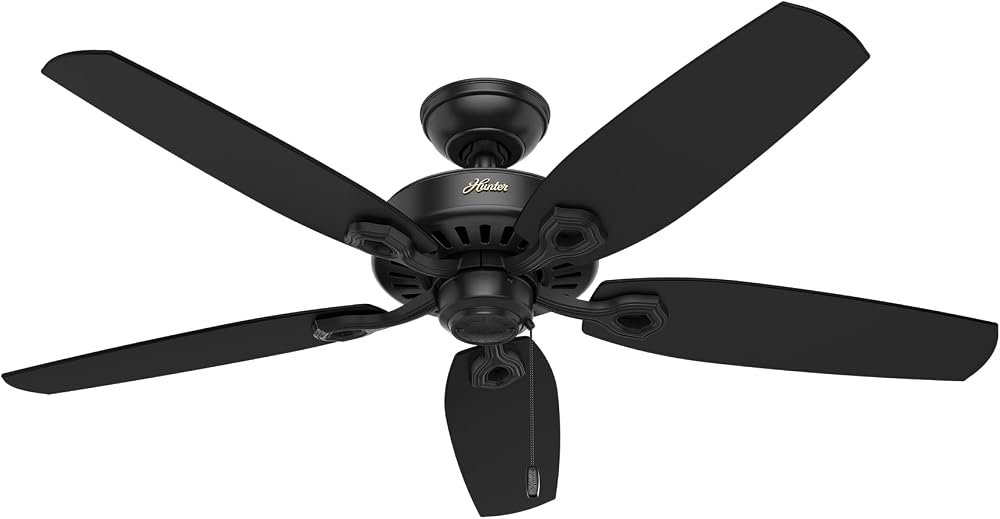
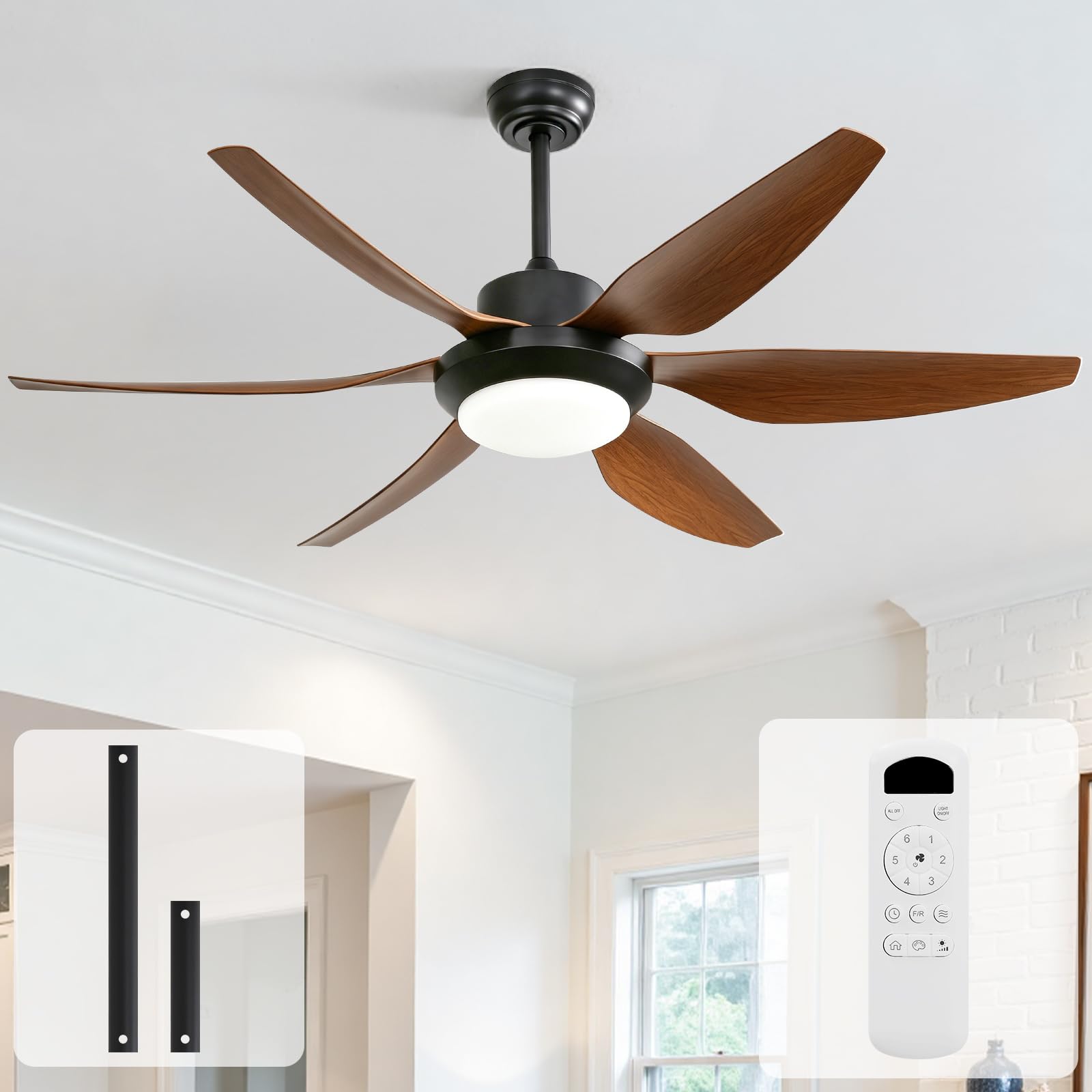
A standard mount fan hangs from a downrod, a metal tube that drops the motor below the ceiling. The extra distance helps the blades pull in air from above and push it down without the choppy feel you get when blades spin too close to a ceiling. Rods come in several lengths, so you can set blade height precisely below ceilings of 9 to 12 feet.
Flush Mount and Low Profile Fans
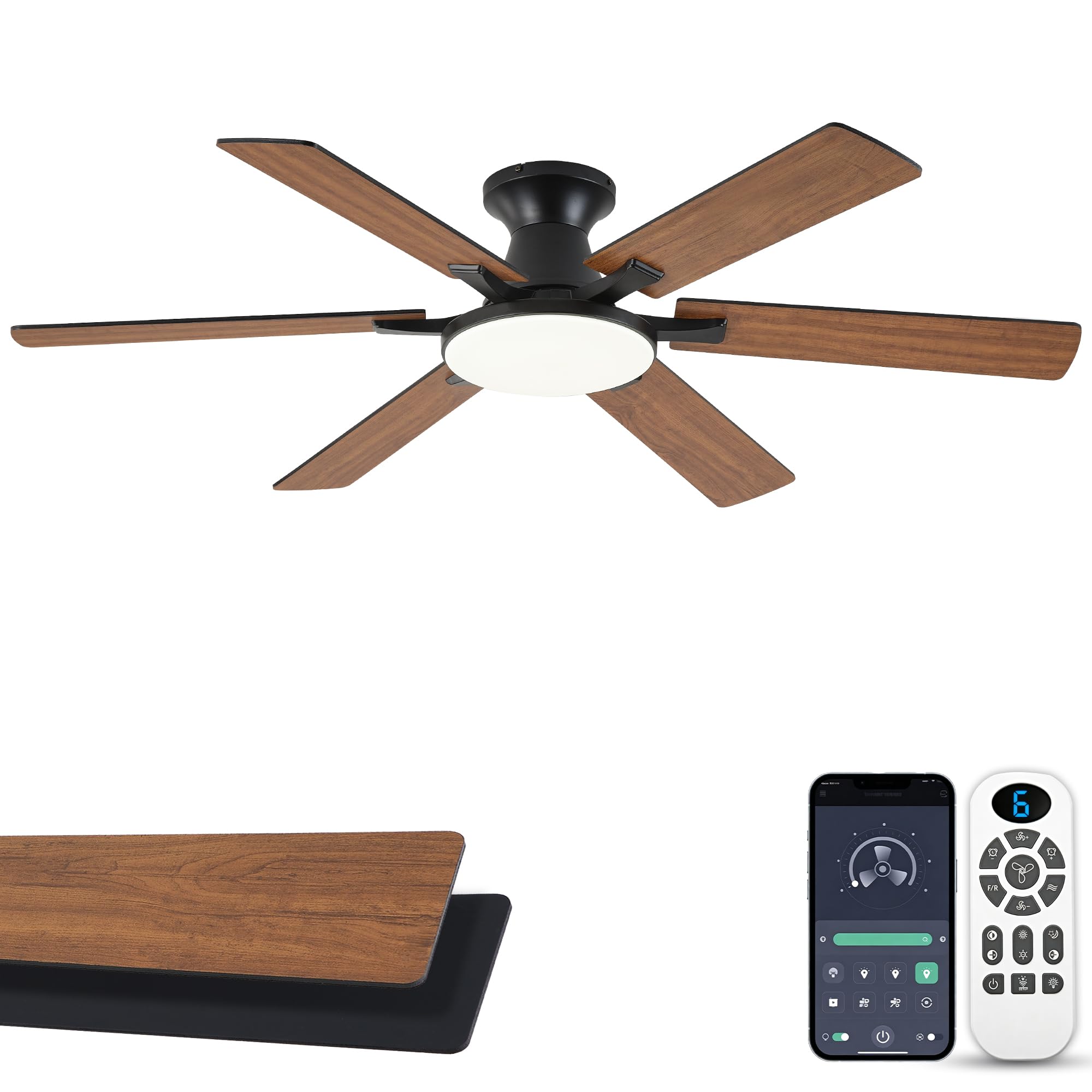
Flush mount fans attach directly to the ceiling with no rod, keeping the whole unit compact. That design is the safe choice for 8 foot ceilings, where a hanging fan could drop the blades too close to heads and tall furniture. The trade off is airflow, since blades near the ceiling have less room to draw air in, so these models often feel a touch weaker on the same speed. Measure your ceiling height before ordering, because no speed setting can fix a fan mounted at the wrong height.
Outdoor Rated and Smart Fans
Outdoor rated fans use sealed motors and blades that resist moisture, with a damp or wet location rating for porches and patios. A damp rating covers spaces shielded from direct rain, while a wet rating is required where water can reach the fan. Smart fans add app and voice control plus scheduling. For an outdoor install, our guide to the best outdoor ceiling fan explains those ratings.
Key Features to Compare
Airflow and Motor Type
Airflow is rated in cubic feet per minute, shown as CFM, and many 54 inch fans list about 4,000 to 6,500 CFM on high speed. Rooms near the top of the size range feel better with output near the higher end. Motor design shapes noise and energy use too. AC motors are the older standard with three speeds and lower prices, while DC motors draw less power, run more quietly, and often offer six speeds. Our explainer on dc vs ac ceiling fan motors breaks down the differences.
Blade Pitch, Count, and Material
Blade pitch is the angle of each blade, and about 12 to 14 degrees is a common sweet spot for moving air without straining the motor. Count matters less than most shoppers expect, since three blade and five blade fans can deliver similar airflow when pitch and motor are matched. Material affects weight and placement. Wood blades are light and quiet indoors, ABS plastic resists warping in damp spaces, and metal can sound louder at high speed. All blades in a set should match in weight, because imbalance is the most common cause of wobble.
Light Brightness and Color Temperature
Most 54 inch fans include a light kit, and two numbers describe it. Lumens measure brightness, and about 800 to 1,600 lumens covers general room lighting, with the lower end fine for a bedroom and the higher end better for a living room. Color temperature, in kelvins, describes tone. Around 2,700 to 3,000 kelvins looks warm, about 4,000 looks neutral, and higher values look cool like daylight. Many fans let you switch temperature from the remote, and dimmable output helps in rooms where you relax.
Controls and Smart Options
A handheld remote is the most flexible control, letting you change speed and light from a bed or sofa. Wall controls keep everything in one fixed place and suit households that lose remotes, while pull chains cost the least but require reaching the fan, which grows tiresome with nightly bedroom adjustments. Smart options add app control, voice commands, and schedules that start the fan before you get home, though they raise the price and rely on your WiFi.
Style, Finish, and Room Fit
White and brushed nickel finishes blend into most ceilings, black and bronze make a stronger statement, and wood tones pair with farmhouse and modern rooms. Style labels mainly describe blade shape and hardware detail rather than performance, so pick the look after size and mount are settled. Room role matters too. For a sleeping space, quiet operation and a timer matter most, as our guide to the best ceiling fan for bedroom covers. For a gathering space, airflow and bright light lead, as the best ceiling fan for living room guide shows.
Installation and Placement
Every ceiling fan needs an electrical box rated to support a moving fan, which is not the same as a standard light fixture box. A fan rated box is braced to a joist or support bar and lists the weight it can hold. If your box is not rated for a fan, replace it first, because fan vibration can loosen a light box over time.
Center the fan over the main seating or sleeping area, and keep blades at least 18 inches from walls and sloped surfaces. On a sloped ceiling, check the maximum angle the mount allows and use a longer downrod so blades clear the slope. Our step by step guide on how to install a ceiling fan covers wiring, balancing, and mounting in detail.
Most 54 inch fans are hardwired to the ceiling wiring and run from a switch, remote, or both. True plug in ceiling fans are rare at this size, so plan on wiring. Turn power off at the breaker before any work, and hire a licensed electrician if the wiring looks damaged or the box needs replacing.
How Much Should You Spend?
Budget models at about $100 to $150 usually pair an AC motor with a pull chain or basic remote and a simple light kit. Spending about $150 to $300 typically adds a quieter DC motor, more speeds, a better remote, and selectable light color. Above about $300, you mostly pay for smart controls, premium finishes, outdoor ratings, and longer warranties rather than more airflow. Value sits in the middle for most homes. Prices and availability can change, so check the product page before ordering.
Common Mistakes to Avoid
- Buying by looks alone and skipping the room size check, which leaves large rooms underpowered.
- Mounting a downrod fan on an 8 foot ceiling, which drops the blades below a safe height.
- Using a standard light fixture box, which can loosen under fan vibration over time.
- Ignoring the outdoor rating and placing an indoor only fan on a damp porch.
- Choosing blade count as a power shortcut, when pitch and motor design matter more.
- Forgetting to check slope limits, so the blades crowd a sloped ceiling.
How to Make Your Ceiling Fan Last Longer
Wipe the blades with a damp cloth every few weeks during heavy use, since a dust layer adds weight and can start a wobble. An old pillowcase slipped over each blade traps dust so it does not fall on the furniture below. Clean the light cover at the same time so output stays bright.
Once or twice a year, switch the fan off and check that blade screws and mounting hardware are snug, tightening gently with hand tools only. Run the fan in reverse in cold months at low speed to push warm air down without a draft. Stop using a fan that shakes hard or grinds until it is inspected.
FAQ
What size room does a 54 inch ceiling fan cool best?
A 54 inch fan serves rooms of about 225 to 400 square feet most evenly, including most primary bedrooms and family rooms. Shape matters too, because a long narrow room may feel uneven even at the right square footage. In that case, placing the fan over the main seating area rather than the exact center usually gives better comfort where people actually sit.
Can a 54 inch ceiling fan go on an 8 foot ceiling?
Yes, but only in a flush mount or low profile design that keeps the blades at least 7 feet above the floor. A downrod model would hang too low for safety and comfort. Also check local building codes, since some areas set their own minimum blade height. Measure from floor to ceiling before ordering, not from memory.
Does a 54 inch ceiling fan use a lot of electricity?
No, a ceiling fan uses far less power than an air conditioner, often drawing about as much as a single bright light bulb on medium speed, and DC motor models draw the least. Fans cool people rather than rooms, though, so turn the fan off when you leave. Running it in an empty room wastes energy without making anyone more comfortable.
How long does a ceiling fan usually last?
A well kept ceiling fan often runs for about 10 years or more, with the motor usually outlasting switches, remotes, and light kits. Warranty length varies by price, and motor coverage is often longer than coverage on electronics and finishes. Keep your receipt and model details, since a failed remote or receiver can often be replaced on its own without buying a whole new fan.
Why does my ceiling fan wobble, and can I fix it?
Wobble usually comes from a loose blade, blades set at uneven heights, or a mounting bracket that is not fully tight. Turn the power off, check each blade screw, and measure the distance from the ceiling to each blade tip, adjusting gently until they match. Many fans include a balancing kit with small weights for fine tuning. A fan that still shakes hard after these steps should be checked by an electrician.
Should a ceiling fan spin counterclockwise in summer?
Yes, in warm weather the blades should spin counterclockwise when you look up at the fan, which pushes air straight down and creates the breeze you feel on your skin. Set the direction while the fan is stopped, because flipping the switch while blades spin can strain the motor.
How can I tell the best 54 inch ceiling fan from a merely larger fan?
A good 54 inch fan pairs the wider sweep with a well balanced blade set, a motor that stays quiet and a mount that keeps the blades at a safe height. Size alone does not make a fan cool better.
Final Thoughts
Start with the room, not the listing. Confirm that your square footage and ceiling height fit this sweep, pick the mount that keeps the blades at a safe height, then compare airflow, light output, and motor type within your budget. The product table above pulls those details together so you can weigh types side by side.
Get those basics right and the best 54 inch ceiling fan for your home stops being a guess. It becomes the fan that fits your ceiling, lights the room the way you like, and runs quietly enough that you forget it is there until the air goes still.