Best 50 CFM Bathroom Exhaust Fan: Buying Guide (2026)
Disclosure: We may earn a commission when you buy through links on this page, at no extra cost to you. As an Amazon Associate I earn from qualifying purchases. Learn more

Fits rooms of about 50 square feet: compare simple, budget and quiet 50 CFM fans by sound, duct size and installation.
A small bathroom can fog up fast, yet a fan that is too large for the room wastes money and can sound harsh in a tight space. Choosing the best 50 cfm bathroom exhaust fan means matching that modest airflow to a small room, a quiet motor, and a housing that fits your ceiling. This guide explains the main fan types, the specs that matter, and the fit checks to make before you order, and the comparison table below sums up the key differences.
A fan rated at 50 CFM moves 50 cubic feet of air per minute. That rating suits many powder rooms, half baths, and small full baths, where moisture loads are lower. If your room is larger or your shower runs long and hot, check the sizing section carefully before you commit.

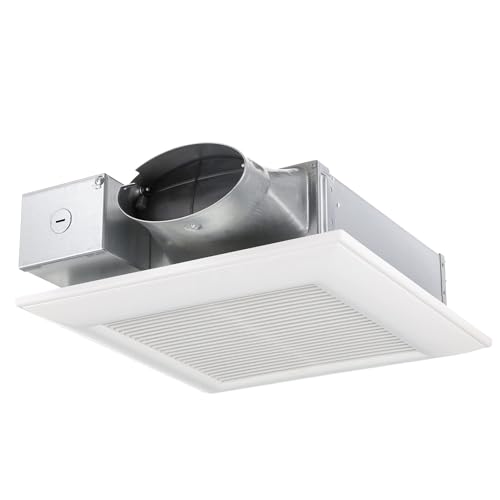

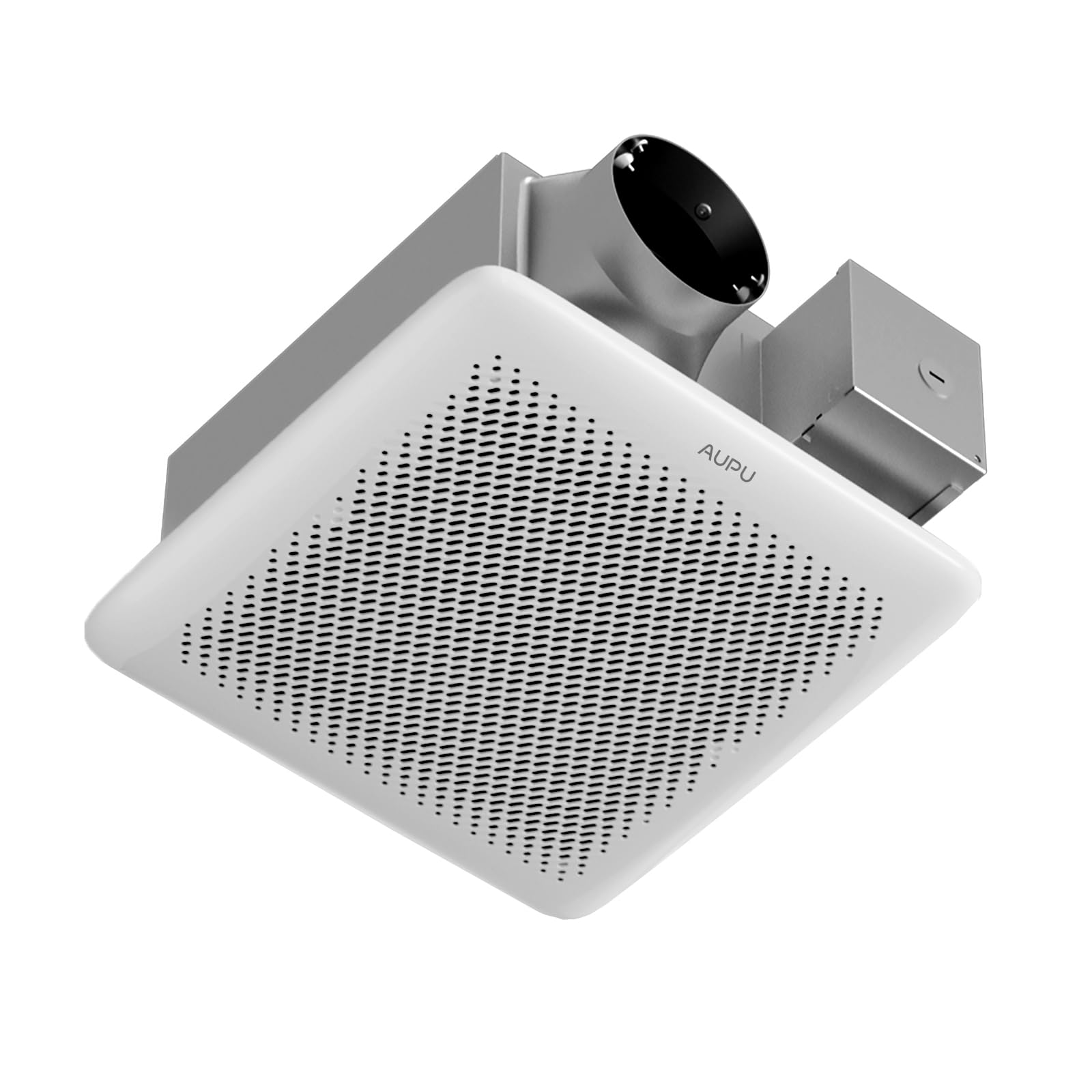


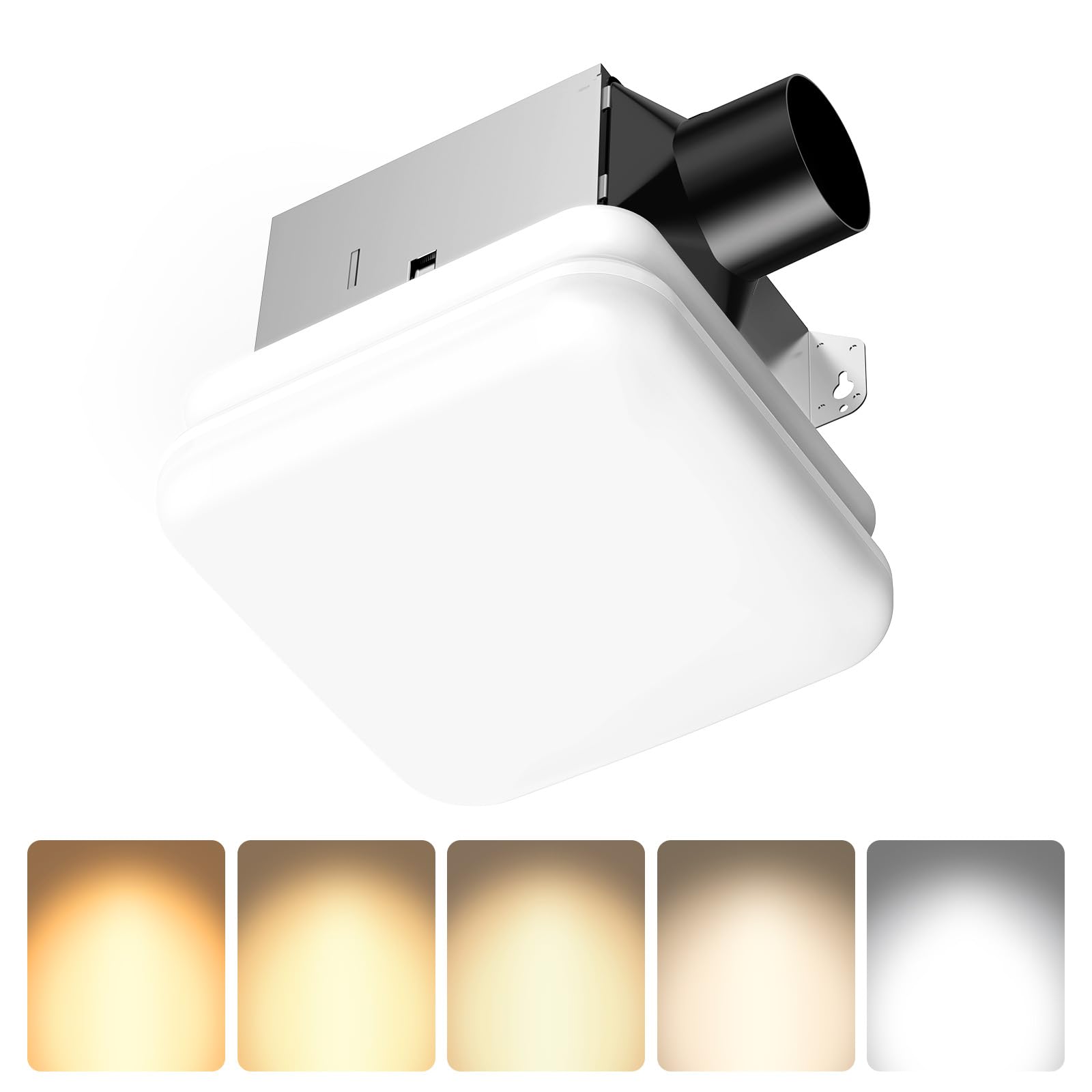

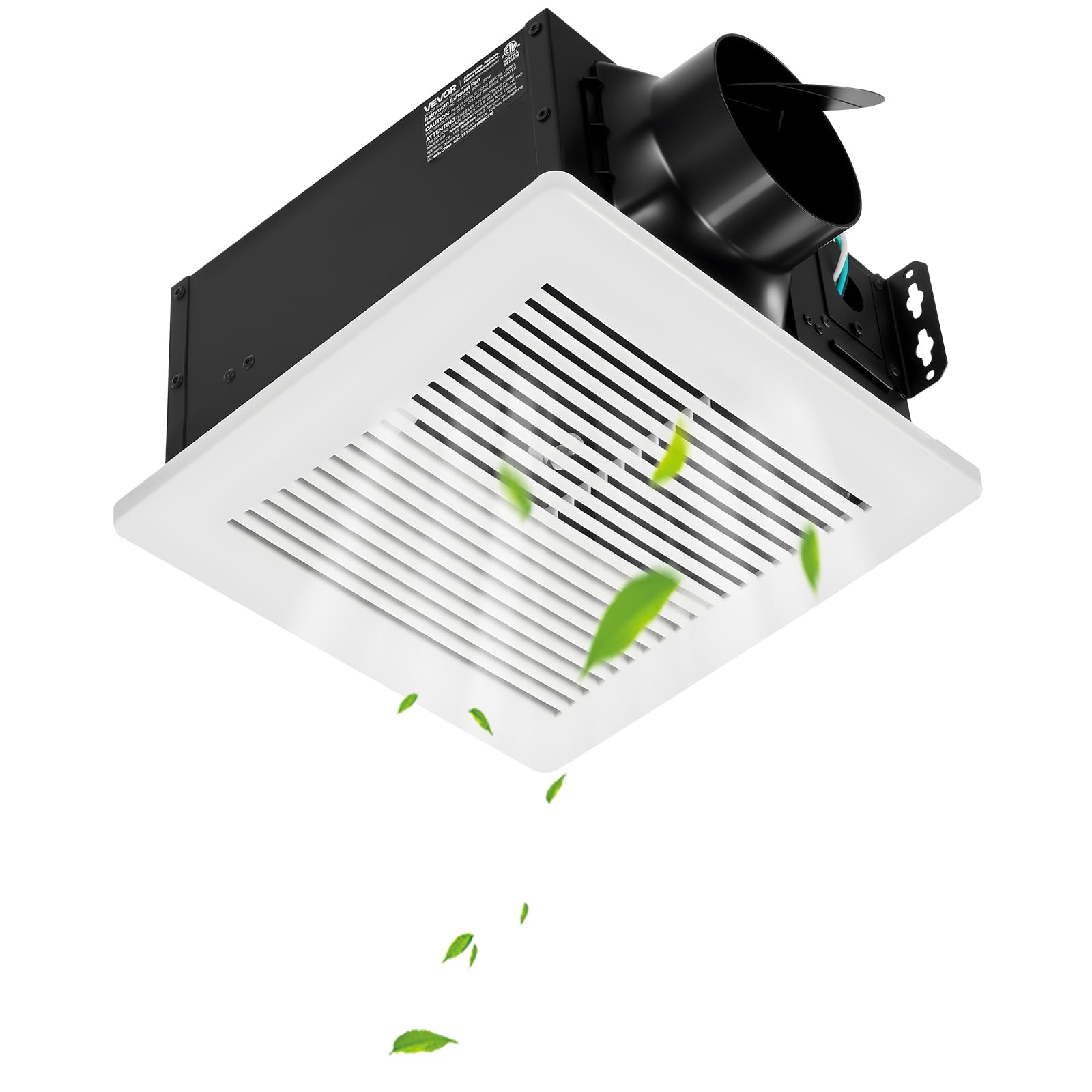

Fan Types at a Glance
Most fans at this airflow fall into three groups. A basic ceiling fan without a light costs the least and suits a room that already has good lighting over the mirror. A fan with a built in light combines two fixtures in one ceiling opening, which helps in small rooms with limited ceiling space. A quiet fan with added controls costs more but lowers sound and can run only when humidity rises.
Your choice should follow your room, not the longest feature list. A powder room with no shower needs simple odor and moisture removal. A small full bath with a daily shower needs steadier control and a duct path that lets the fan reach its rated airflow.
Three Fan Types Compared
Simple Ceiling Fan Without a Light
This is the straightforward option for a powder room or a small bath with separate lighting. You get a compact housing, a plain grille, and a motor sized for light duty, often at the lowest price in this class. Sound levels vary widely in this group, so compare sone ratings closely. A rating near 2.0 sones is easy to hear, while a rating below 1.0 sone is much softer. Choose this type when your wiring is simple, your light is already covered, and you want the easiest swap for an old basic fan.
Compact Budget Fan for Light Use
Budget fans at 50 CFM focus on the essentials: a small housing, a standard duct size, and a grille that removes for cleaning. They make sense for a guest half bath that sees a shower rarely or not at all, where the fan clears odor and light steam rather than heavy daily moisture. Build quality is the main trade off here. Thinner housings can transmit more vibration, and shorter warranties are common, so plan on careful mounting to keep sound down.
Quiet Fan With Light and Humidity Control
The upgrade group pairs low sound with extras that suit a small full bath. An integrated light removes the need for a second ceiling fixture, and a humidity sensor can start the fan when steam builds and stop it after the room dries. Look for a sone rating at or below 1.0 if the bath sits near a bedroom, and compare our guide to the best quiet bathroom exhaust fan if low sound is your top priority. Expect to pay more for the light, the sensor, and the quieter motor.
How to Evaluate a 50 CFM Fan
Start with fit and airflow, then judge build quality, features, certifications, and warranty. Manufacturer spec sheets give you CFM, sones, duct size, and housing dimensions, and verified buyer reviews can flag grille rattle, weak draft, or confusing wiring. Weight those reports for small rooms like yours, since a fan praised in a large bath faced very different moisture loads. A warranty of at least a few years also signals a maker that supports the fan after install.
How to Choose the Right Bathroom Exhaust Fan
Size and Form Factor
Airflow is the first filter. A common sizing guide is about 1 CFM for each square foot of floor area, so a 50 CFM fan fits a room of about 50 square feet, such as a room that measures about 5 feet by 10 feet. Fans rated at 80 CFM, 110 CFM, or 150 CFM serve larger rooms or baths with high ceilings and heavy shower use. Form factor matters too. Most models at this size mount in the ceiling, a few mount in the wall, and inline fans place the motor away from the room for lower sound.
Type
Ceiling mount fans are the default for most small baths because the duct can run up and out through the roof or over to an outside wall. Wall mount fans help when there is no space above the ceiling, though they need a clear path through an exterior wall. If you want light and ventilation from one opening, compare models in our guide to the best bathroom exhaust fan with light and check that the light output matches what your mirror area needs. Humidity sensing and Bluetooth speaker versions exist, but at 50 CFM they are niche picks for small rooms.
Features Worth Paying For
A humidity sensor earns its cost in a small full bath because it runs the fan based on moisture, not on whether you remember the switch. A built in light is worth paying for when ceiling space is tight or the room feels dim. A night light can help in a hall bath used at night. Heat is different: most heated models move far more air than 50 CFM, so read our guide to the best bathroom exhaust fan with heater if warmth matters more than staying at this size. Skip a speaker if you value quiet and simple wiring.
Measurements and Compatibility With Your Setup
Measure the old housing before you shop, including its length, width, and height between joists, and note the duct diameter, often 3 inches or 4 inches at this size. A new fan that matches the old opening and duct can turn a swap into a short job, while a larger housing means cutting drywall and changing duct parts. Check the joist spacing, the direction the duct runs, and whether the existing switch controls the fan alone or the fan and light together. Also confirm the grille size covers the old ceiling cutout.
Certifications
Look for an HVI certified airflow and sound rating, because that means the CFM and sone figures were measured under a shared standard rather than stated without a method. A UL listing signals that the fan passed electrical safety checks for use in a home. Many models rated for use above a tub or shower carry a note that they must sit on a GFCI protected circuit, so read that line closely. An Energy Star certified model uses less electricity than a basic fan, which matters if the fan runs for long periods each day.
Do It Yourself or Pro Installation Cost
A like for like swap, with the same housing size, duct, and wiring, is a realistic project if you are comfortable turning off power at the breaker and working in the ceiling. New duct runs, new wiring, or a first fan where none existed usually call for a pro and can add permit and patching costs. Our breakdown of bathroom exhaust fan installation cost explains what drives the total, and our step guide on how to replace a bathroom exhaust fan walks through the swap itself.
How Much Should You Spend?
Basic fans in this size often cost under $50, and they cover a powder room well if sound is not a concern. Models at about $50 to $100 usually add lower sones, a better grille, and a longer warranty. Quiet fans with a light or a humidity sensor often sit at about $100 to $200. Spending above that range at 50 CFM rarely buys more airflow, so put extra money toward correct duct parts and a clean install instead.
Is a 50 CFM Bathroom Exhaust Fan the Right Size for You?
It is the right size if your room is about 50 square feet or smaller, the ceiling is near standard height, and moisture comes mainly from a sink, a toilet, and short showers. A powder room is the clearest fit, since there is no shower steam at all. A small full bath can also work well if you run the fan during each shower and for about 20 to 30 minutes after, and the duct run is short with few bends.
Step up in size if the room is larger, the ceiling is high, or the bath holds a jetted tub that adds a lot of steam. Each bend and each extra foot of duct also lowers the air a fan actually moves, so a borderline room with a long duct run often does better one size up. If you are comparing sizes for a bigger space, start with our broader guide to the best bathroom exhaust fan and size from your room measurements rather than from habit.
FAQ
What is the best 50 CFM bathroom exhaust fan?
The best pick for you is the fan that matches your ceiling opening, duct size, and sound limit, not the one with the longest feature list. For a powder room, a simple quiet model is usually enough. For a small full bath, a fan with a humidity sensor adds real value. Check the grille dimensions against your old cutout before ordering, since a grille that is too small can leave an unfinished edge that no other spec can fix.
What size bathroom exhaust fan do I need?
Measure the room length and width and multiply them to get square feet, then look for a fan rated near that number in CFM. Add capacity if your ceiling is above standard height or your tub has jets that release extra steam. A separate enclosed toilet area can also need its own small allowance. When your math lands between two sizes, the duct run decides: a short straight run favors the smaller fan, while a long run with bends favors the larger one.
How long does a bathroom exhaust fan last?
Many fans in this class run for about ten years, and a well kept motor can last longer. Life shortens when dust coats the blades or the duct stays partly blocked. A new rattle, a slower start, or a grille that stays damp long after a shower can signal wear. Replacing a worn unit is usually a simple swap if the housing and duct still match current models.
Is a bathroom exhaust fan worth it?
Yes, even in a small room, because trapped moisture can loosen paint, swell a wood vanity, and feed mildew on grout and caulk. A fan also clears odor in a half bath that has no window, which is common in interior floor plans. The cost to run a small fan is low, and a window alone rarely moves air as steadily on a still or cold day.
How do you clean a bathroom exhaust fan?
Turn off power at the breaker, pull the grille down, and vacuum dust from the grille, blades, and housing with a brush attachment. Wash a plastic grille in warm soapy water, dry it fully, and snap it back in place. Clean the fan about twice a year, or more often in a dusty home. While the grille is off, look through the housing to confirm the damper flap moves freely, since a stuck flap can cut airflow even when the motor sounds fine.
What is the most reliable bathroom exhaust fan brand?
No single brand wins for every home, and reliability at this size depends more on the specific model line than on the name on the box. Favor lines with an HVI certified rating, a warranty that covers the motor for several years, and parts that are easy to order. Avoid judging by one review, since install quality and duct condition shape results as much as the fan itself.
Final Thoughts
For most powder rooms and small baths, the best 50 cfm bathroom exhaust fan is a quiet, correctly sized model that fits your existing opening and duct. Pick the simple type for light use, the light equipped type for a dim room, and the sensor equipped type for a daily shower. Before you order, compare your short list against the product table above and confirm the sone rating and housing size one last time.