Best 5/8 Inch Garden Hose: Buying Guide (2026)
Disclosure: We may earn a commission when you buy through links on this page, at no extra cost to you. As an Amazon Associate I earn from qualifying purchases. Learn more
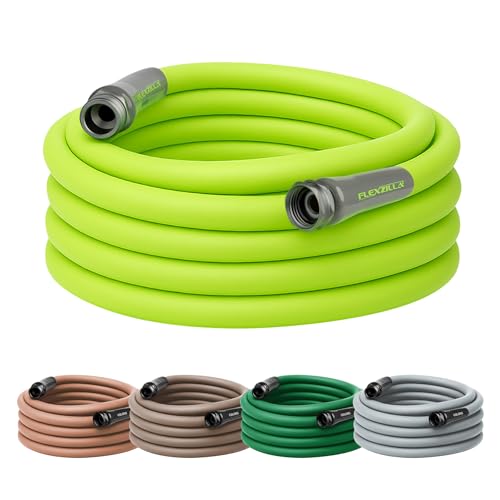
The most common home hose size: compare rubber, vinyl and hybrid builds, lengths and brass fittings for a 5/8 inch garden hose.
A hose that is too narrow leaves sprinklers weak and fills buckets slowly, while an oversized hose can feel stiff and heavy to drag around the yard. The best 5/8 inch garden hose sits in the middle, giving you strong flow for watering, washing, and sprinklers without the bulk of a larger line. This guide compares hoses by build materials and weather resistance, size and capacity, and fittings and assembly, so you can match one to your yard. The comparison table below sums up the main types side by side.
The 5/8 inch size is the most common diameter sold for home use in the United States, and that popularity helps you. Replacement washers, nozzles, and repair couplings in this size are easy to find almost anywhere. If you want the wider view of every diameter and style before you decide, start with our guide to the best garden hose options and then come back here for the size specific details.


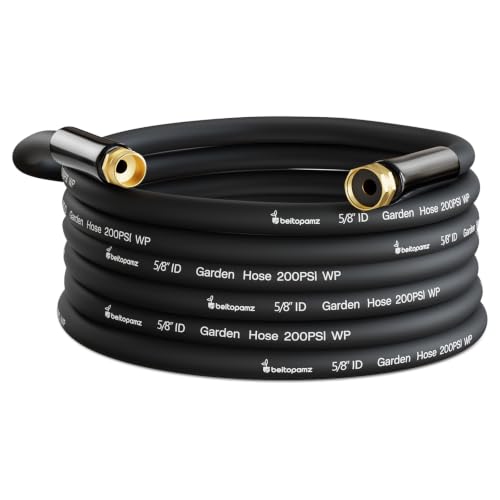
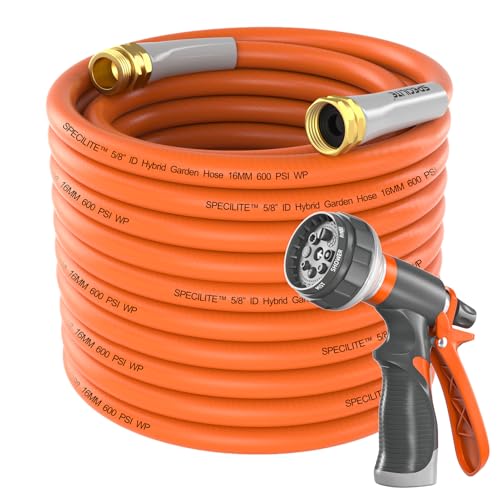


Who Should Buy a 5/8 Inch Garden Hose?
Homeowners Watering Lawns and Garden Beds
If you run a sprinkler, a soaker line, or a watering wand for beds and borders, this diameter delivers enough volume to keep pressure steady at the nozzle. A 1/2 inch hose often drops pressure over long runs, and a 3/4 inch hose adds weight you rarely need for routine watering. For most single family yards, 5/8 inch is the size that covers daily tasks without feeling like work.
People Who Want Power Without Extra Weight
A full 50 foot hose in this diameter holds a fair amount of water, and thick rubber versions can get heavy once filled. If you have limited grip strength, sore shoulders, or a long path to coil and carry, look at lighter constructions in the same diameter. Our roundup of the best lightweight garden hose styles shows how much weight the newer materials save while keeping the same inside diameter.
Renters and Small Yard Owners
If your outdoor space is a patio, a side yard, or a small plot with a few raised beds, a shorter 25 foot hose in this size is usually plenty. You get full flow for filling, rinsing, and hand watering, and storage stays simple on a small hook or in a deck box. Buying the standard diameter also means the hose still works well if you move to a bigger yard later.
Key Features to Compare
Inside Diameter and Water Flow
The 5/8 inch figure refers to the inside diameter of the hose, and that opening controls how much water can move through it. At typical home water pressure, this size delivers roughly double the flow of a 1/2 inch hose over the same distance, which is why sprinklers throw farther and sprayers feel stronger. A 3/4 inch hose moves even more water, but the gain matters mainly for very long runs or filling large tanks. For most homes, 5/8 inch gives you the flow you notice without the stiffness you do not want.
Length and Size for Your Space
Measure from your outdoor faucet to the farthest point you water, then add a little slack for corners and raised beds. Common lengths are 25, 50, 75, and 100 feet, and every extra foot adds weight and some pressure loss. Resist buying the longest hose just in case, because a coil you fight with daily gets left in the sun and ages faster. If your beds truly sit far from the faucet, compare the best 100 ft garden hose options, which are built to limit pressure drop over that distance.
Build Materials and Weather Resistance
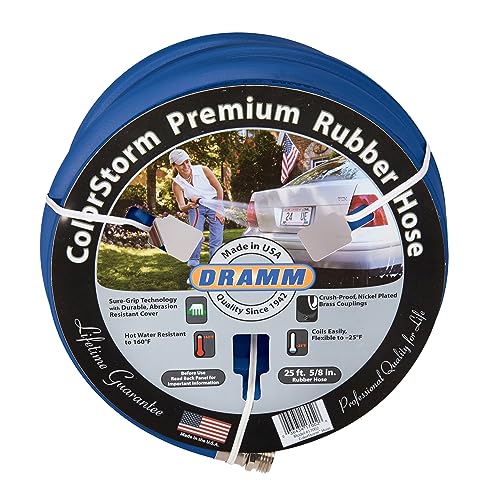
Rubber hoses tolerate heat, sun, and dragging across rough ground, and they stay flexible in cool weather, but they are the heaviest choice. Vinyl costs less and weighs less, yet it stiffens in cold weather and kinks more easily. Hybrid and reinforced designs blend the two, aiming for flexibility with better kink control. Our explainer on rubber vs vinyl hose materials walks through how each one ages. Whichever material you pick, look for UV resistant jackets and a stated temperature range if your hose will live outdoors through summer heat or early frosts.
Fittings, Couplings, and Assembly
The fittings decide how the hose feels at the faucet and whether it leaks at the ends. Solid brass couplings resist corrosion and survive being dropped on concrete, while thin stamped metal ends can bend and start dripping. Standard garden hose threads in the US are 3/4 inch at the coupling, even on a 5/8 inch hose, so your new hose should connect to existing nozzles and splitters without adapters. Assembly is simple: hand tighten the coupling onto the faucet with a fresh rubber washer inside, then snug it with a quarter turn of pliers only if it seeps. Crush resistant coupling sleeves add protection where the hose bends near the faucet, which is the spot that fails first on many cheap hoses.
Hose Types Compared
Standard hoses in rubber, vinyl, or hybrid form are the default choice, with steady flow and no special care beyond draining. Expandable hoses shrink when empty and suit small patios, but their inner tube and fabric jacket dislike high pressure and sharp edges. Coiled hoses spring back on their own for balcony watering, though they pull against you as you stretch them. Metal sheathed hoses resist punctures and chewing, yet they can feel less flexible in cold weather. Flat hoses roll up like a ribbon for RV and boat storage, but they must be fully unrolled before the water runs well.
Features Worth Paying For
A good spray nozzle with several patterns covers watering, rinsing, and washing with one tool, so a bundled nozzle can be worth a small premium. A reel or storage pot pays off if it means the hose actually gets put away out of the sun each day. Drinking water safe construction matters if you fill pet bowls, kiddie pools, or an RV tank from the hose. Reinforcement layers, often listed as ply count, are worth paying for on long hoses that will be dragged over gravel or pavement.
Is a 5/8 Inch Garden Hose the Right Size for You?
Choose this size if your main jobs are sprinklers, hand watering, washing a car, or running a pressure washer feed line within about 100 feet of the faucet. A 1/2 inch hose is lighter and fine for a balcony or a few pots, but it limits sprinkler reach. A 3/4 inch hose suits long rural runs, fast tank filling, and contractors who need maximum volume. For pressure washer supply, steady flow matters more than raw pressure, so check the guidance in our guide to the best garden hose for pressure washer setups if your machine needs a higher feed rate than average.
Common Mistakes to Avoid
- Buying far more length than you need: extra footage adds weight and pressure loss on every single use.
- Judging by outside thickness: a fat jacket can hide a narrow inner tube, so read the inside diameter on the label.
- Leaving the hose pressurized in full sun: heat and pressure together swell the tube and shorten its life.
- Skipping the washer: a missing or worn faucet washer causes drips that no amount of tightening will fix.
- Dragging by the nozzle: pulling the hose from the spray end strains the far coupling and bends it over time.
- Storing it full of water: trapped water adds weight, grows slime, and can split the hose if it freezes.
How to Make Your Garden Hose Last Longer
Drain the hose after each use by walking the water out toward the open end, then coil it in loose loops and store it in shade. Sunlight breaks down vinyl and rubber jackets over time, so even a simple covered reel extends the service life noticeably. Keep the hose off hot pavement during long watering sessions when you can, and avoid driving over couplings, which cracks the threads. Before the first hard freeze, follow the steps in our guide on how to winterize a garden hose so trapped water does not expand and split the wall. In spring, flush a short burst of water through the hose before attaching your nozzle, which clears out dust and insects that settled inside over winter.
FAQ
What is the best 5/8 inch garden hose for most homes?
For most homes it is a reinforced hybrid or rubber hose in the 50 foot length, with solid brass fittings and a burst pressure rating well above your home water pressure. Check the warranty length as a tiebreaker, because makers tend to back better built hoses for more years. Match the length to your farthest bed rather than defaulting to the longest coil on the shelf.
What size garden hose do I need for my yard?
Start with a simple bucket test. Time how long your faucet takes to fill a 5 gallon bucket with no hose attached, then repeat through the hose at the far end. If the second time is much longer, the hose is limiting flow and a wider or shorter line will help. Most yards do well with 5/8 inch, while tiny patios can use 1/2 inch and very long runs may need 3/4 inch.
How long does a 5/8 inch garden hose last?
A basic vinyl hose often lasts about 3 to 5 years, while a well kept rubber or reinforced hybrid hose can serve 8 to 10 years or more. Replace yours when you see bulges along the wall, cracks that show the inner layer, or a coupling that still leaks after a fresh washer. Those signs mean the structure is failing, not just the seals.
Is a 5/8 inch garden hose worth the cost over a thinner one?
Usually yes, because the price gap between a 1/2 inch and a 5/8 inch hose of similar build is small, often only a few dollars. Spread over years of use, that difference costs very little per season, and you gain stronger sprinkler reach and faster filling every time you water. The upgrade is harder to justify only for a few pots on a small balcony.
How do you clean the inside of a garden hose?
Disconnect the hose, stretch it out straight, and flush it with a strong stream from the faucet until the water runs clear. For mineral scale or a musty smell, fill the hose with a mix of one part vinegar to four parts water, cap both ends, and let it sit for a few hours before flushing again. Scrub the coupling threads with an old toothbrush while you work, because grit in the threads is a common cause of slow leaks.
Final Thoughts
The right hose comes down to matching diameter, length, and material to the way you actually water. For most yards, the best 5/8 inch garden hose is a mid length, reinforced model with brass fittings, stored out of the sun and drained after use. Look back at the product table above to compare the main types once more, then pick the build that fits your space, your water pressure, and your budget.