Best 25 ft Garden Hoses in 2026: Types and Buying Guide
Disclosure: We may earn a commission when you buy through links on this page, at no extra cost to you. As an Amazon Associate I earn from qualifying purchases. Learn more

Compare the best 25 ft garden hose builds by material, brass fittings, weight and storage for patios, balconies and small yards.
A short hose sounds simple, yet the wrong one can kink at the spigot, drag across your beds, or split after one hot summer. The best 25 ft garden hose for your yard depends on build materials and weather resistance, size and capacity, and how the hose connects and stores. This guide compares the main types side by side so you can match a hose to your space, your water pressure, and your budget. You will find the key differences laid out in the types section below.
If you are still deciding between lengths and styles, our overview of the best garden hose options covers the full range. Here we stay focused on the 25 ft size: who it suits, which materials hold up, and which features are worth paying for.


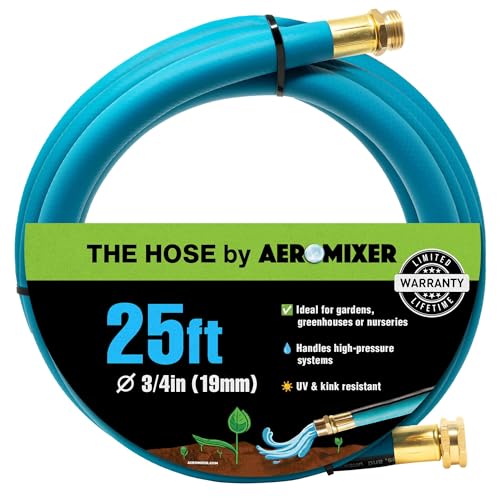

Types of 25 ft Garden Hoses at a Glance
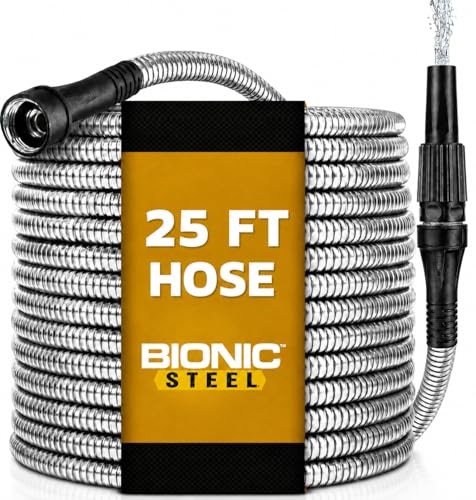
Short hoses come in a few distinct builds, and each one trades weight, durability, and storage in a different way. Standard flexible hoses made from rubber, vinyl, or blended materials keep a fixed length and coil onto a reel or hook. Expandable hoses shrink down when empty and stretch to full length under pressure, so they store in a small pot or bin. Metal hoses use a flexible steel shell that resists punctures from thorns and rough ground. Coiled hoses spring back into a tight spiral, which suits a patio where the hose lives next to the spigot.
For most small yards, a standard flexible hose in a blended or rubber build gives the best balance of flow, strength, and price. Expandable and coiled styles win on storage and light weight. Metal builds win where dogs, tools, or gravel would chew through softer walls. The sections below explain how to weigh those trade offs for your own setup.
How We Chose the Criteria for This Guide
We built this guide around the factors that decide whether a short hose lasts: build materials and weather resistance, size and capacity, fitting quality, assembly, durability, and warranty coverage. The details come from manufacturer specifications and patterns in verified buyer feedback, such as where leaks start and which walls crack in cold weather. Each factor below tells you what to check on a product page and what it means in daily use.
How to Choose the Right Garden Hose
Size and form factor
Length is the first decision, and 25 ft sits at the short end of the range that also includes 50 ft, 75 ft, 100 ft, and 150 ft. A 25 ft hose reaches about two car lengths from the spigot, which covers a patio, a small front bed, or a balcony garden without leaving a heavy pile of spare hose underfoot. Diameter matters just as much. A 5/8 inch bore is the common household size and delivers strong flow for watering and washing. A 3/4 inch bore moves more water per minute and suits filling large containers fast, while a 1/2 inch bore feels lighter but slows flow at the nozzle. Match the diameter to your spigot and fittings so nothing needs an adapter.
Type
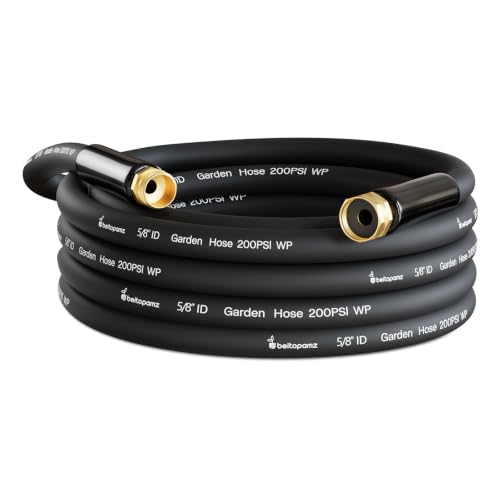
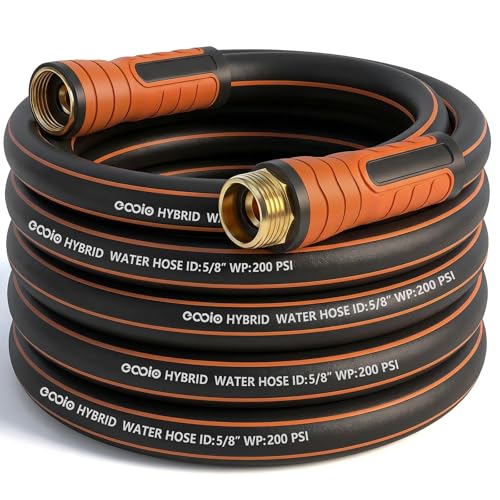
Each hose type solves a different problem. Expandable hoses are the lightest option and shrink for storage, but their inner tube depends on steady water pressure to reach full length. Rubber hoses are heavy and tough, with walls that shrug off hot sun and rough dragging. Hybrid blends pair a rubber like feel with less weight. Vinyl hoses cost the least and work for light duty watering, though they stiffen in cold weather. Flat hoses roll up like a ribbon for tight storage but need full unrolling before use. Coiled and metal styles serve patios and small beds where the hose stays close to the spigot. If weight is your main concern, our guide to the best lightweight garden hose compares the lightest builds in more depth.
Features worth paying for
Three extras earn their cost on a short hose. Solid brass fittings resist corrosion and cross threading far better than thin plastic couplings, and they are the single best predictor of a leak free connection. A bundled nozzle with adjustable spray patterns saves a separate purchase and covers jobs from misting seedlings to rinsing a walkway. A small reel or storage strap keeps the hose off the ground, which prevents the flat spots and abrasion that shorten its life. Features you can skip include decorative finishes and oversized grip handles, which add price without adding function on a hose this short.
Weather resistant materials
Sun and temperature swings age a hose faster than water does. Ultraviolet light breaks down vinyl and cheap blends, leaving the wall chalky and brittle, while rubber and quality hybrid walls include stabilizers that slow that damage. In cold climates, a wall that stays flexible below freezing matters, because a stiff hose cracks when you force it into a coil. Hot climates punish hoses left charged in the sun, where trapped water expands and stresses the fittings. If you are weighing the two classic wall materials, our comparison of rubber vs vinyl hose explains how each one handles sun, cold, and abrasion over several seasons.
Size for your space
Measure before you buy. Walk from your spigot to the farthest plant or corner you water, then add a few feet of slack so the hose is not pulled tight at full reach. A stretched hose drags its fitting sideways, which wears the threads and pulls on the spigot. For a small patio or a front bed near the faucet, 25 ft usually lands in the sweet spot with a little to spare. If your farthest bed sits beyond that reach, stepping up in length beats joining two short hoses, since every extra coupling is a future leak point. Readers with bigger yards can see how the longer sizes compare in our roundup of the best 100 ft garden hose options.
Assembly and anchoring
Setting up a short hose takes minutes, but two details matter. First, thread the coupling onto the spigot by hand and snug it with a quarter turn of a wrench only if it weeps, because over tightening crushes the rubber washer that makes the seal. Second, anchor the storage point near the spigot: a wall hook, a small reel, or a hose pot keeps the coil off soil and pavement. Before first use, unroll the hose fully in the sun for an hour so the factory coil relaxes, then connect it and flush a few seconds of water through to clear any loose debris from manufacturing.
Care and off season storage
Drain the hose after the last watering of the season and store it indoors, looped in large loose coils rather than tight bends. Water left inside can freeze, expand, and split the wall or crack a fitting. Keep the stored hose out of direct sun and away from sharp tools that could nick the cover. If your winters drop below freezing, our step by step guide on how to winterize a garden hose walks through draining, drying, and storing in detail. During the season, avoid leaving the hose pressurized in full sun for days at a time, and rewind it after use instead of leaving it stretched across a hot driveway.
How much should you spend?
Short hoses cluster into three price bands. For under $20, expect basic vinyl or thin expandable builds with plastic fittings, fine for light watering near the house. Paying about $20 to $50 buys stronger walls, brass fittings, and better kink resistance, where most small yard owners should shop. Paying about $50 to $100 covers premium rubber, polyurethane, and metal builds with long warranties, worth it if the hose lives outdoors year round. Spending more mainly buys wall strength and fitting quality, not extra length.
Is a 25 ft Garden Hose the Right Size for You?
A 25 ft hose is the right size when everything you water sits close to one spigot. Patio gardeners with container plants, herbs, and a small bed get full coverage with almost no hose left to store. Townhouse and condo owners with a compact front yard avoid the tripping hazard and visual clutter of a long coil. RV and boat owners value the short length because it fills tanks and rinses decks while taking up little storage space. Gardeners who hand water a few raised beds near the house also fit this size well.
Choose a longer hose instead if your beds spread across a deep lot, if you wash a car parked far from the spigot, or if one hose must serve both the front and back of the house. A hose that falls short tempts you to yank it around corners, and that pulling is what kinks walls and loosens fittings. When in doubt, size up one step to 50 ft and store the extra loop on a reel.
FAQs
What is the best 25 ft garden hose?
The best choice is the one whose build matches your yard: a rubber or hybrid wall with brass fittings for daily use and sun exposure, or an expandable build if storage space is your top concern. Check the diameter against your spigot, confirm the burst pressure rating suits your home water pressure, and favor a warranty of several years. No single model suits every patio, so weigh wall material and fittings first and treat brand names as a tie breaker.
What size garden hose do I need?
Measure the distance from your spigot to the farthest point you water, then add slack so the hose never runs taut. Most small patios and front beds land between 15 and 25 ft of true reach. Also think about diameter rather than length alone: a 5/8 inch bore covers nearly every home task, while a wider bore only helps if you regularly fill big containers or run a sprinkler that demands high flow.
How long does a garden hose last?
A basic vinyl hose often lasts about 2 to 3 seasons, while a rubber or polyurethane hose that is drained and stored indoors can serve 5 to 10 years. The usual failure points are the fittings and the first foot of wall near the spigot, where bending stress concentrates. Replacing a worn washer costs pennies and fixes most drips, so check the washer before assuming the hose itself has failed.
Is a short garden hose worth it if I already own a long one?
Yes, for daily tasks near the house. Dragging 100 ft of hose out to water two planters wastes time and wears the long hose at its bends. A short hose stays light, fills and drains fast, and leaves your long hose stored for the jobs that truly need its reach. Many gardeners keep both and find the short one handles most of their weekly watering.
How do you clean a garden hose?
Flush the inside by running water through the unrolled hose for a minute, then wipe the outside with a cloth and a mild soap solution to remove soil and algae film. Let the hose dry fully before coiling it, because a damp coil stored in shade can grow mildew on the outer wall. If the inside smells stale after storage, a flush with a diluted vinegar rinse followed by clear water usually clears it.
Can a 25 ft garden hose run a sprinkler?
Yes, as long as the sprinkler sits within reach of the spigot. A short hose actually delivers slightly stronger pressure at the sprinkler than a long hose of the same diameter, because less water friction builds up along the way. Small oscillating and stationary sprinklers sized for a patio or a single bed pair well with this length. Large rotary sprinklers meant for wide lawns still work, but their coverage circle may exceed what a small yard needs.
Final Thoughts
The best 25 ft garden hose is the one that reaches your farthest plant with slack to spare, carries brass fittings that seal without force, and uses a wall material matched to your climate. Pick the type that fits how you store and carry it, spend in the middle band unless your yard demands a premium build, and use the product table above to compare the key specs side by side before you order.