Best 4 Quart Ice Cream Makers (2026): Types, Batches and Care
Disclosure: We may earn a commission when you buy through links on this page, at no extra cost to you. As an Amazon Associate I earn from qualifying purchases. Learn more
Pick the best 4 quart ice cream maker: electric, hand crank and compressor options explained.
A summer birthday in a full house is where a small machine runs out fast. One batch serves the kids, the second batch never quite happens, and the adults get a spoonful each. That is the moment the best 4 quart ice cream maker earns its place, since one churning fills about sixteen cups and covers a crowd in a single round. This guide helps you choose by room in your home, group size, and budget.
The sections below walk through capacity, machine types, power, safety, storage, and running costs. Skim the comparison table below first, then read the parts that match your household.





Quick Answer: What a 4 Quart Machine Does Best
A 4 quart model sits at the family and gathering end of home churning. It turns out one gallon per batch, which suits cookouts and holidays where a 1.5 quart or 2 quart machine would need two or three rounds. The trade is size. The canister, bucket, ice, and salt take more room than a compact countertop unit, and the batch only turns out well when the freezer and storage plan are ready before you start.
Three broad styles cover most homes. Electric salt and ice models do the steady work for large batches and cost the least to buy. Hand crank models give you full control and need no outlet, which suits porches and campsites. Compressor and freezer bowl designs in this size are far less common, and the ones that exist tend to be large and heavy.
Before You Buy: A Quick Checklist for Choosing an Ice Cream Maker
Size: Match It to Your Space
Capacity names can mislead, since a 4 quart canister should only be filled about two thirds full so the mix can expand as it freezes and the dasher can fold in air. That means a realistic yield of about 2.5 to 3 quarts of finished ice cream, still far more than a 1.5 quart or 2 quart bowl gives you. If four to ten people eat dessert at your table, 4 quarts is the sweet spot between one batch and leftovers that linger.
Which Type Fits Your Routine
Salt and ice models chill the canister with ice and rock salt packed around it, and a motor or a hand crank keeps the dasher turning. Freezer bowl models ask you to chill a gel filled bowl in the freezer for many hours ahead, and most stop at 2 quarts. Compressor models chill on their own with no prep, yet at 4 quart size they are rare and bulky. Match the type to your patience for prep and how often you plan to churn.
If you are still weighing styles, our overview of the best ice cream maker types lays out how each method changes texture, prep, and cleanup.
Wattage, Power, and Energy Use
The motors on salt and ice models are small. Wattage alone tells you little, since torque matters more when the mix thickens near the end of churning. A motor that stalls against a dense batch leaves you with soft, uneven texture. Look for a motor that can pause safely when the ice cream reaches thickness.
Safety Features and Certifications
Look for a motor housing that stays clear of the salt and ice bath, a lid that locks or sits firmly while the dasher turns, and a listing from UL or ETL on the label, which shows the electrical parts meet a recognized safety standard. Keep cords away from the melt water under the bucket. Stop the motor before you lift the lid. Children love to help add ice, so assign them pouring jobs and keep hands away from the dasher.
Counter Space and Dimensions
A 4 quart bucket is wide, and it needs working room around it for adding ice and salt in layers while it churns. Measure the spot where it will run, often a porch or kitchen counter with a few inches of clearance on every side. Then measure where it will live the rest of the year, since the bucket, lid, motor, and canister rarely nest as neatly as the box suggests. A deep pantry shelf suits many homes better than prime counter space.
For households weighing capacity against daily kitchen life, see the guide to the best ice cream maker for home use.
Realistic Budget Ranges
Basic hand crank and simple electric salt and ice models often cost about $50 to $100. Sturdier electric models with stronger motors land around $100 to $200. Large compressor units can run about $300 to $500 or more, though few true 4 quart home models sit in that band. Hold back a little for rock salt and storage tubs. Spending more mainly buys durability, quieter running, and parts that are easier to replace.
Types Compared: Three Ways to Churn at 4 Quarts
Electric Salt and Ice Models for Most Homes
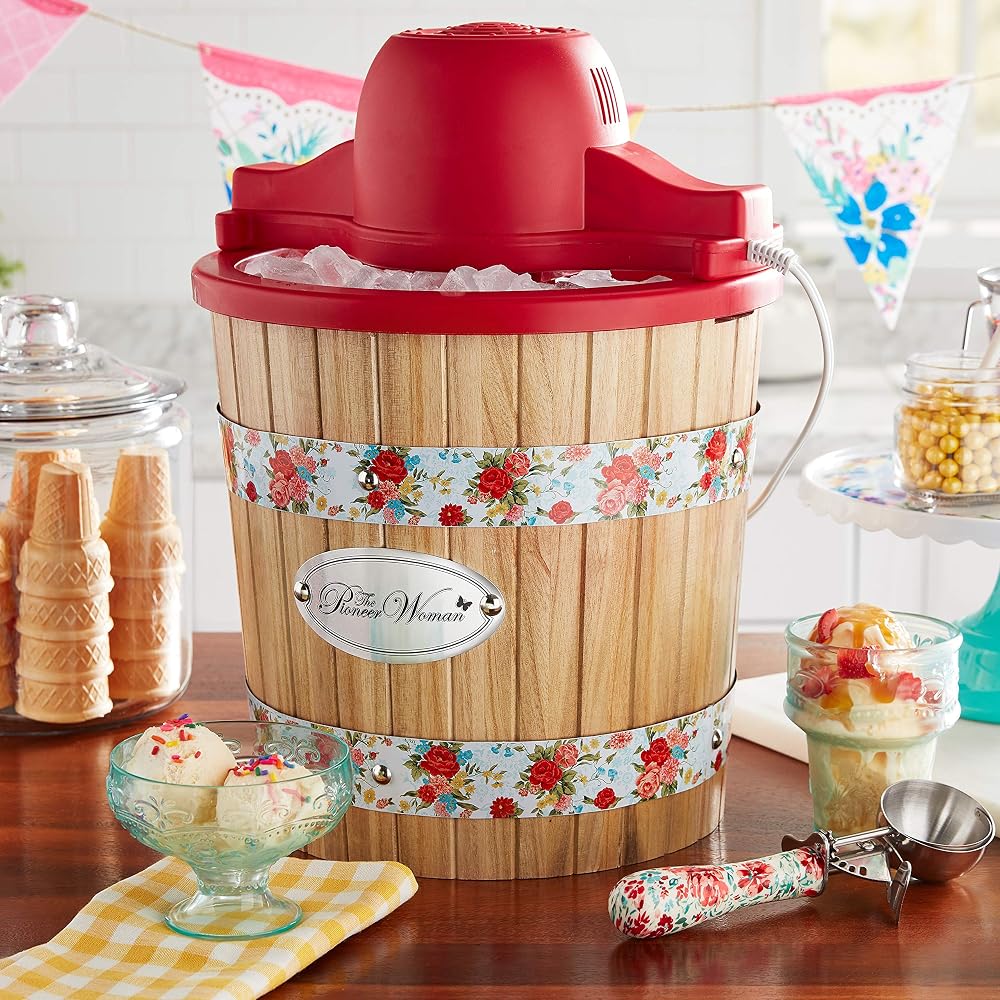
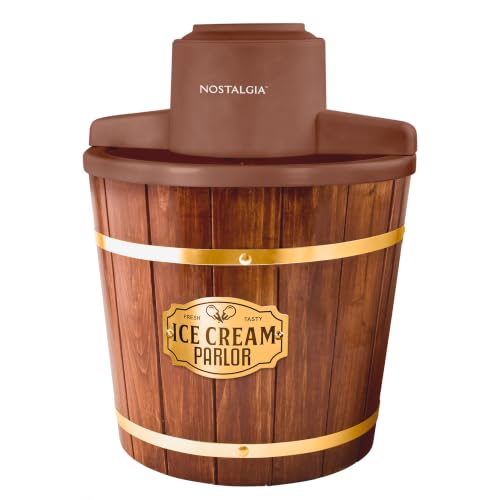
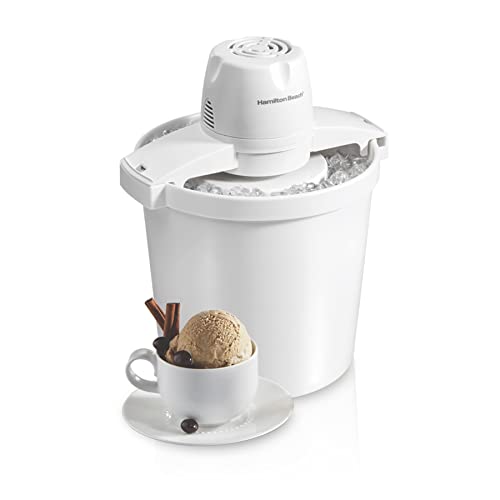
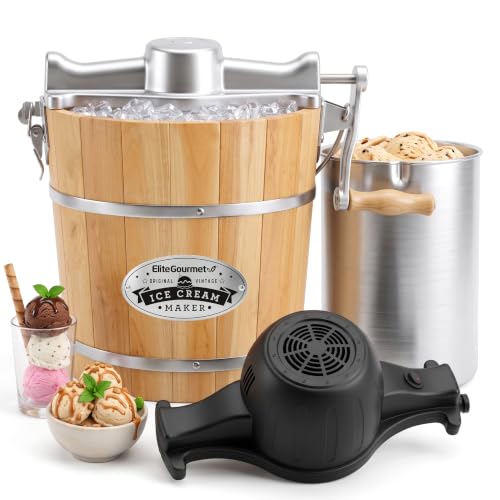
This is the classic 4 quart format. A metal canister sits inside a bucket, you layer ice and rock salt around it, and a motor turns the dasher until the mix firms up. It suits most homes since the buying cost is modest, the method handles custard bases and fruit mixes alike, and parts such as dashers and lids are widely sold. The chores are real, though. You buy ice and salt, drain salty melt water after each batch, and the motor is loud enough that many families run it on the porch.
Hand Crank Models for Control and Off Grid Use
A hand crank version uses the same canister and salt and ice bath but replaces the motor with your arm. Cranking lets you feel the mix thicken, and that feedback helps you stop at a texture you love. It needs no outlet, so it travels well to cabins and campsites. The effort is the drawback. A full batch can take 30 minutes or more of steady turning, and one person rarely wants the whole job alone. Split the cranking among family members and it becomes part of the event.
Compressor and Freezer Bowl Models at This Size
Shoppers who love churning with no ice and no salt often look for a compressor model first. At 4 quarts, though, the cooling hardware adds so much bulk and cost that most makers cap their home compressor lines at smaller sizes. Expect the salt and ice route to give you the widest choice at this capacity. Readers set on the self chilling route can see how the smaller sizes compare in our guide to the best compressor ice cream maker options.
If soft serve nights are the real goal, the rundown of the best soft serve ice cream maker styles explains the different setup those desserts need.
How to Judge a 4 Quart Ice Cream Maker
Judge a machine on the factors that decide daily satisfaction: honest capacity, churning performance as the mix thickens, ease of use during a busy gathering, cleaning effort, noise level, and safety and warranty support. The reading behind it draws on maker specifications, care manuals, and patterns in verified buyer feedback. A model earns a place on your shortlist when its parts look replaceable and its size claims match what owners actually scoop out.
Is a 4 Quart Ice Cream Maker the Right Size for You?
Choose this size if you regularly feed six or more dessert eaters, host summer gatherings, or like making one large batch to portion into tubs for the week. A 4 quart ice cream maker also suits church suppers and reunions where a second batch would mean a second bag of ice. It is the wrong size if your freezer is already packed, or if most nights involve two or three scoops for a couple of people.
Size for your last three dessert occasions, not the biggest party you might throw once a year.
Common Buying Mistakes to Avoid
- Buying capacity for a crowd you rarely host: an oversized bucket then sits in storage while a smaller machine would have been used weekly.
- Forgetting the ice and salt supply: a 4 quart batch can use a large bag of ice plus several cups of rock salt, and running short mid churn gives you soup.
- Ignoring the fill line: mix expands as it freezes, so an overfilled canister churns poorly and can lift the lid.
- Skipping the storage plan: bulky parts bought without a shelf in mind end up in the way between uses.
- Chasing features over parts support: fancy add ons matter less than being able to buy a new dasher or gasket years later.
Cost of Ownership and Care
Running costs stay modest but they are not zero. Each batch needs ice and rock salt, and a summer of weekly churning adds up to a noticeable grocery line. Electricity use is minor. Keep spare gaskets in mind as the machine ages, since a cracked lid or a worn dasher scraper can end an otherwise sound unit.
Care is simple and mostly about salt. Rinse the bucket and the outside of the canister after every use, since salt residue corrodes metal and stains wood over time. Wash the canister, lid, and dasher in warm soapy water, dry every part fully, and never leave the canister sitting in melt water. Store the bucket with the lid off so moisture can escape.
Technique matters as much as upkeep, and habits like chilling your base overnight change the finished texture. The walkthrough in how to use an ice cream maker covers fill levels and knowing when a batch is done.
Your Questions, Answered
What is the best 4 quart ice cream maker for a large family?
For most large families, an electric salt and ice model fits best, since the motor keeps churning through a thick batch while you handle everything else a gathering demands. Prioritize a sturdy bucket, a motor that will not stall as the mix firms, and parts you can reorder. The electric route wins on busy weeknights and party days.
How do you clean a 4 quart ice cream maker after a batch?
Empty the melt water promptly, then wash the canister, lid, and dasher in warm soapy water and dry them right away. One point many manuals stress is the canister rim, where salt and mix collect in the seam and can corrode the metal if left unwashed. Rinse the bucket until the water runs clear of salt.
How long does a 4 quart ice cream maker usually last?
The bucket and canister can serve for many years, and the motor is usually the part that sets the real lifespan. A practical sign of aging is a motor that grows much louder or stops mid batch even with a correct fill level. Storing parts dry and indoors slows wear on the motor cord and the bucket. When a maker stops selling the motor or dasher for your style, that is often the true end of the machine.
What size ice cream maker do I need for a party of twelve?
Twelve modest servings of about half a cup each need roughly 1.5 quarts of finished ice cream, but party servings rarely stay modest and second helpings are common. A 4 quart canister, filled correctly, gives you about 2.5 to 3 quarts finished, which covers twelve guests with room for seconds. That margin is why this size exists.
Can a 4 quart ice cream maker make frozen yogurt and sorbet?
Yes, and both churn faster than custard based ice cream since the mixes carry less fat and freeze more readily. Sorbet benefits from a fully chilled base and ripe fruit, since the fruit provides most of the body. Frozen yogurt keeps a brighter tang when you stop churning as soon as it holds soft peaks, then firm it in the freezer. Watch the clock, since extra churning can turn these batches icy once they harden.
Final Thoughts
The right machine matches your group size, your storage, and your patience for ice and salt. For most homes, the best 4 quart ice cream maker is a sturdy electric salt and ice model with replaceable parts and a bucket you have a shelf for. Use the product table above to compare styles, and your first gallon will be ready before the next gathering.