Best 2 Quart Ice Cream Maker in 2026: Buying Guide and Top Picks
Disclosure: We may earn a commission when you buy through links on this page, at no extra cost to you. As an Amazon Associate I earn from qualifying purchases. Learn more

What to look for in the best 2 quart ice cream maker: the main types, key features, realistic price ranges and mistakes to avoid before you order.
Picture a Saturday afternoon when the kids want dessert, the freezer is already full, and your kitchen counter has about one square foot to spare. A best 2 quart ice cream maker only earns its place in that home if it fits the counter, fits the freezer, and makes enough for everyone in one batch. This guide helps you choose by household size, storage space, routine, and budget, and the product table below lets you compare current models side by side.





Quick Answer: The Three Types in 30 Seconds
If you want the short version, start with how you plan. A freezer bowl model costs the least and stores in a cabinet, but you must freeze the bowl before every batch. A compressor model costs more and weighs more, yet it is ready whenever you are and can run batch after batch. A manual model that uses ice and rock salt needs no outlet and suits a porch or picnic, though it asks for steady cranking and a bag of ice each time.
Before You Buy: A Quick Checklist for Choosing an Ice Cream Maker
Size: Match It to Your Space and Your Table
Capacity names describe the bowl, not the finished yield, because a base expands as it churns and you should never fill the bowl to the brim. A 2 quart bowl usually turns out about 6 to 7 cups of finished ice cream once you leave room for expansion and mix ins. That suits a family of four to six with modest scoops, or a smaller household that likes leftovers. Our broader guide to the best ice cream maker for home can help if your head count points you to a different size.
Which Type Fits Your Routine
Your routine matters more than any single spec. Freezer bowl models reward planners who keep the bowl in the freezer at all times, so a spontaneous craving still works if the bowl never left the cold. Compressor models reward spontaneity, since the cooling is built in and you can start with a room temperature base. Manual models reward patience and company, turning dessert into an activity rather than an appliance task.
Wattage, Power and Energy Use
Motor wattage on these machines is modest, and a higher number does not mean colder or faster results. What matters is whether the motor keeps the dasher turning as the base thickens near the end of a cycle, when resistance is highest. A motor that stalls leaves you with uneven texture and a half frozen edge. Compressor models draw more power while the cooling unit runs, yet a typical batch still uses a small amount of electricity overall.
Safety Features and Certifications
Look for a listing mark such as UL or ETL on the label, which means an independent lab has checked the electrical safety of that model. A lid lock or a motor that stops when the lid opens keeps curious fingers and loose spoons away from the moving dasher. Stable feet matter too, because a machine that walks across the counter as it churns can pull its cord toward a sink full of water.
Counter Space and Dimensions
Measure before you fall for a listing photo, since product images rarely show scale. Compressor models are the bulkiest, often taking a footprint close to a stand mixer and standing tall enough to clash with upper cabinets. Check the height with the lid open, not just closed, and leave a few inches around the vents so warm air can escape during a cycle. Freezer bowl models are smaller on the counter but claim freezer space instead, and the bowl needs a flat, level spot where it can sit upright while it freezes.
Realistic Budget Ranges
Budget in tiers and tie each tier to what it buys. Under about $50, you will mostly find simple freezer bowl and manual models with basic motors and shorter warranties. Around $100 to $200, freezer bowl models gain stronger motors, better lids, and sometimes a second bowl. Above about $300, compressor models dominate, and the extra money buys built in cooling and back to back batches rather than better flavor. If you are still weighing the purchase itself, our page asking is an ice cream maker worth it walks through the math.
Three Types Compared: How 2 Quart Models Differ
Compressor Models for Spontaneous Batches
A compressor model carries its own cooling system, so there is nothing to freeze ahead and no ice to buy. You pour in the base, press start, and the machine chills while it churns, usually finishing in about 45 to 60 minutes. If this style sounds right, compare it with the options in our guide to the best compressor ice cream maker before you settle on a size.
Freezer Bowl Models for Planned Treats
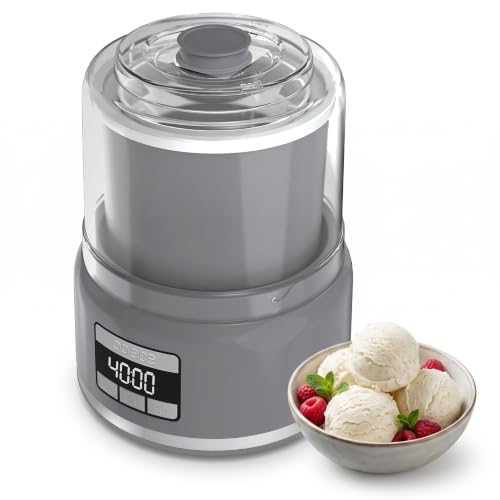
A freezer bowl model uses a bowl with liquid sealed inside its walls. You freeze that bowl for roughly 12 to 24 hours, assemble the machine, and churn while the frozen walls pull heat from the base. Batches often finish in about 20 to 30 minutes, faster than a compressor cycle, as long as the bowl started fully frozen. The catch is planning, plus the freezer room the bowl claims between uses. For many homes this is the sensible middle path, and it anchors most lists of the best ice cream maker for everyday buyers.
Manual and Ice and Salt Models for Gatherings
The oldest style surrounds the canister with ice and rock salt, and you turn the crank by hand or with a small motor. The salt lowers the melting point of the ice, which makes the mixture cold enough to freeze the base as it churns. These models shine at gatherings where cranking becomes part of the fun, and they work on a porch with no outlet nearby.
How to Compare Options Without Guesswork
Start with the spec sheet items you can verify. Confirm the stated capacity is the bowl size, check the bowl or canister material, and read the stated churn time and noise level if the maker publishes one.
Is a 2 Quart Ice Cream Maker the Right Size for You?
Run a quick serving test. A typical scoop is about half a cup, so 6 to 7 cups of finished ice cream gives you roughly 12 to 14 scoops. That covers a family dessert with seconds for some, or a small dinner party where ice cream tops pie rather than standing alone. It falls short for a birthday party of fifteen unless you run a compressor model twice or freeze a batch the day before. It is more than a couple needs for one sitting, though leftovers stored well keep for about a week before texture fades. The 2 quart size earns its popularity because it sits right at that family sweet spot.
Common Buying Mistakes to Avoid
- Buying the bowl size without checking the yield. Filling past the stated line leaves no room for expansion, and the base overflows or stays soupy.
- Forgetting the freezer test. A freezer bowl that does not fit your freezer, or a freezer that never gets cold enough, makes the whole machine useless.
- Ignoring the storage footprint. A compressor model with no cabinet or counter home will end up in the garage and out of your routine.
- Paying for settings you will not use. Extra timers and modes add cost, while most home recipes need one simple churn cycle.
- Skipping the parts check. If replacement bowls and dashers are hard to find for a model, one small break can end its useful life.
Cost of Ownership and Care
Ongoing costs stay low if you plan for them. Freezer bowl owners may buy a spare bowl, which lets you churn a second flavor while the first bowl goes back to freezing. Compressor owners should budget nothing for ice, but should keep the vents clean so the cooling system does not work harder than it must. Our overview of how to use an ice cream maker covers basic technique if you are new to churning.
For care, wash the bowl, lid, and dasher in warm soapy water once they reach room temperature, since sudden hot water can stress a frozen bowl. Dry every part fully before storage so no stale odor moves into your next batch. Wipe the base with a damp cloth only, and never submerge the motor housing.
Your Questions, Answered
What is the most reliable ice cream maker brand?
Reliability tracks build and support more than a name. Makers with metal gears, a warranty of at least a year, and spare parts you can actually order tend to outlast cheaper builds with sealed parts and no service options. Read recent buyer comments for repeated motor or bowl failures on the specific model, not the brand as a whole. A mid priced model with a real parts catalog is usually the safer long term bet.
How do you clean an ice cream maker?
Scrape the bowl with a silicone or wooden tool, never a metal spoon that can scratch the surface and leave grooves where old mix can hide. Let a frozen bowl warm up before washing, then use warm water and mild soap and dry it fully. One detail many owners miss is the underside of the lid, where splashes collect around the opening. Wipe that area every time, because dried mix there can sour between uses.
Is an ice cream maker worth it for a small household?
It can be, if you eat ice cream weekly and like controlling sugar and ingredients. A two person household often does better freezing a full batch and storing it in two smaller containers, pulling one out at a time so the rest stays firm. The machine earns its cost more slowly with fewer eaters, so be realistic about how often dessert happens at your table. If it is a monthly treat, a borrowed or manual model may suit you better.
How long does an ice cream maker last?
A cared for machine often serves for many seasons, and the bowl or canister usually ages faster than the motor. Freezer bowls slowly lose their punch if they are dropped or stored in a warm spot, and a bowl that no longer freezes solid after a full day in the freezer is telling you it is done. Keep the receipt and warranty details in a kitchen drawer, since a claim years later often fails only because the paperwork is gone.
What size ice cream maker do I need for frozen yogurt and sorbet?
The same 2 quart bowl works, but watch the fill line more closely than with ice cream. Sorbet bases have no cream to stabilize them, and fruit mixtures with a lot of water can expand and freeze harder at the edges. Fill a little lower than you would for a custard base, and chill the mixture thoroughly first so the churn stays short. A fully chilled base also keeps the texture smooth rather than icy.
Final Thoughts
The right choice comes down to three honest answers: how many people you serve, where the machine and its bowl will live, and whether you plan dessert ahead or decide on the spot. Match the type to those answers and the best 2 quart ice cream maker for your home stops being a guess. Go back to the product table above, compare the types against your kitchen and your routine, and pick the one you will still be using happily next summer.