Best 3D Printers for Models: Budget, Midrange, and Premium Picks for 2026
Disclosure: We may earn a commission when you buy through links on this page, at no extra cost to you. As an Amazon Associate I earn from qualifying purchases. Learn more

Learn how to choose the best 3d printers for models by detail, build volume, and price tier, with a practical checklist for kits and display pieces.
Model builders ask a printer to do two hard things at once: capture fine detail like panel lines, rivets, and fabric texture, and produce parts big enough for satisfying display pieces. Machines that manage both exist at several prices, but the listings blur the tiers together, and the jump from around $200 to over $1,000 is hard to judge from spec sheets alone.
This guide sorts the best 3d printers for models by budget level, explaining what each tier realistically delivers for scale models, dioramas, and replica parts. You will see which upgrades change finished results and which only change convenience. Read it alongside the product table below, and let the kind of models you build set your tier.


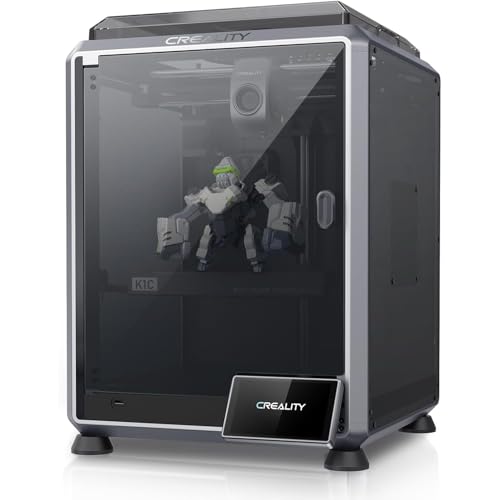

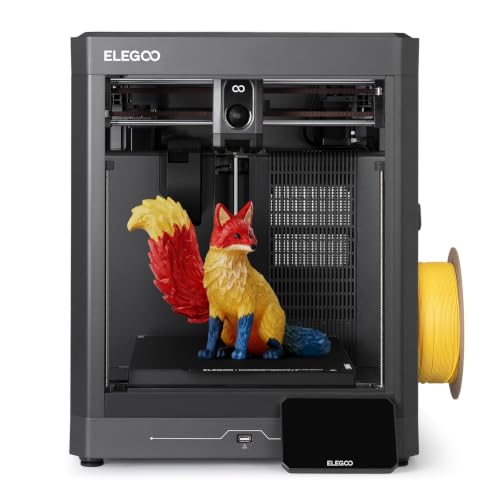

Choosing by Budget: What to Prioritize First
Budget Tier Checklist
On a budget, decide first whether detail or size matters more, because cheap machines rarely give both. For small scale figures and detail parts, a compact resin printer under about $300 captures remarkable detail for the money.
For larger but simpler shapes, an entry FDM machine prints vehicle bodies and scenery cheaply. Whichever route you take, insist on auto bed leveling for FDM or a proven screen for resin, and accept that finishing work, sanding, filling, and priming, is where budget builds earn their looks. Your skills substitute for money at this tier, which many traditional modelers honestly enjoy.
Midrange Tier Checklist
The midrange, about $300 to $700, is where model printing becomes smooth. Prioritize a larger resin plate for batching parts, or an enclosed FDM machine with a build volume near 250 mm to 300 mm for bigger kits.
Faster, more reliable printing matters because model projects chain many parts together; one failure stalls the whole build. Look for mature software, good preset profiles, and easy access to replacement screens, nozzles, and vat film. Most builders who print models monthly will find this tier covers everything except very large or engineering grade work.
Premium Tier Checklist
Premium spending, above about $700, should buy capability you can point to. Very large build volumes print hulls, airframes, and architectural models in few pieces.
High resolution large format resin holds fine detail across big parts instead of forcing a choice between size and sharpness. Enclosed, temperature controlled FDM machines run strong materials for working replicas and outdoor display pieces. Buy at this level when you sell finished models, print for clubs or clients, or simply refuse to split every large subject into a jigsaw of segments.
What Your Money Gets You at Each Price Tier
Budget Tier: What to Expect
Expect honest tools with manual edges. Compact resin printers at this level genuinely rival expensive ones on small part detail, because pixel size, not price, sets sharpness.
Entry FDM machines need more setup attention and print more slowly. Finishing supplies do heavy lifting here: primer filler hides layer lines on FDM parts beautifully. The tradeoff is time and batch size rather than final quality, so patient builders do very well at this tier.
Midrange Tier: The Sweet Spot for Most Buyers
Midrange money buys reliability and room. Resin plates grow large enough for several parts or one substantial component per run, and FDM enclosures stabilize the big flat panels that warp on open machines. Auto calibration, quieter operation, and better screens or motion systems all reduce the friction between idea and shelf. For the typical modeler printing a project or two each month, output quality at this tier matches premium results on most subjects, because paint and finishing hide the remaining differences.
Premium Tier: When Spending More Pays Off
Premium machines repay builders who print large, often, or for income. One piece large parts remove seam filling entirely, heated chambers make demanding filaments routine, and industrial grade motion systems hold accuracy across very long prints. Time is the real currency here: a premium machine can halve the calendar time of a complex model. If your builds are occasional and modest in size, this tier buys capacity that mostly sits idle, so judge it against your actual project list.
Features Worth Paying For in 3D Printers for Models
Features That Matter for Models
Model work rewards detail and dimensional accuracy above raw speed. On resin machines, small pixel size and layer heights near 0.025 mm to 0.05 mm preserve panel lines and texture.
On FDM machines, a rigid frame and precise motion keep long parts true, which decides whether kit sections align or fight you at assembly. Accurate scaling in the slicer matters too, since a part that is two percent off will not mate with its partner. Builders browsing the best 3d printers for model work should rank accuracy and detail first, exactly as they would when choosing an airbrush or a set of files.
Build Volume for Model Parts
Build volume decides how you divide a subject. A volume around 200 mm per side suits most scale vehicles, figures, and diorama elements whole, while larger subjects split into sections joined with pins and filler. Splitting is a normal modeling skill, not a failure, and pinned joints often end up stronger than one piece prints. Judge a machine by its three build dimensions against your largest planned part, and remember that resin plate depth limits part height just as FDM height does.
Printer Type: FDM or Resin for Models
Resin owns fine detail: small parts, figures, and textured surfaces look superb and need little cleanup beyond washing and support removal. FDM owns size and toughness: large bodies, terrain, and functional replicas print cheaply and survive handling. Many modelers start with the type matching their main subject, then add the other later, since the two complement rather than replace each other. If you can only own one and your models are display pieces under about 200 mm, resin usually satisfies more often; for big or working models, FDM is the safer single choice.
Cost per Print and Material Costs
Material math favors printing strongly. An FDM model body may use about $5 to $15 of filament, while a resin figure uses a few dollars of resin plus alcohol and gloves.
Failed prints are the hidden cost, so reliable machines quietly lower cost per finished model even when their material rates look similar. Subscription style material programs rarely beat simply buying standard filament and resin on sale. Track cost per finished model, including failures and finishing supplies, and compare that honestly with commercial kit prices before claiming savings.
Reliability and Support
Model projects stretch across weeks, so a printer must behave identically on part one and part thirty. Choose makers with stable firmware, available screens, films, and nozzles, and active user communities sharing proven settings. The communities around the best hobby 3d printers are full of scale builders whose exposure and support settings can save you days of trial and error. A slightly slower machine with deep community knowledge often out prints a faster orphan model over a full project.
Choosing 3D Printers for Your Situation
Best 3D Printers for Models Kits
The phrase best 3d printers for models kits points at a specific need: printing complete kits, meaning many interlocking parts that must fit together precisely. Kit work adds three criteria beyond ordinary model printing. First, dimensional repeatability across separate print sessions, so favor machines known for stable calibration.
Second, a build area that fits the largest single kit component without splitting load bearing joints. Third, batch efficiency, since kits may need dozens of parts; a larger resin plate or a dependable FDM machine that runs overnight unattended turns kit printing from a chore into a routine. First time kit builders often start from the best starter 3d printers and graduate once fit and finish demands grow.
Long Term Costs to Factor In
Beyond the machine, budget for the finishing bench: primer, filler, sandpaper, glue, and paint often exceed material costs on display models. Resin owners add washing alcohol, gloves, replacement vat film, and eventually a new screen.
FDM owners add nozzles and build surfaces. Electricity stays minor even on long prints. Shoppers eyeing the best inexpensive 3d printers should remember that a cheap machine plus a well stocked finishing bench beats an expensive machine with nothing left for supplies, while owners of detail focused setups may also add capacity from the best resin 3d printers range over time.
Frequently Asked Questions
What features matter most in 3d printers for models?
Detail and accuracy matter most: small pixel size on resin machines, rigid and precise motion on FDM machines. Build volume comes next, sized to your largest typical part. Speed matters least for display work, since a model spends far longer in painting and assembly than in printing. Choose the machine whose strengths match your subjects, not the one with the longest feature list.
FDM or resin: which is cheaper long term for models?
FDM is cheaper per large part, since filament costs little and needs no processing supplies. Resin is cheaper per small detailed part when the alternative is buying commercial detail sets, even after alcohol and gloves are counted. Most modelers who own both find total spending balances out, with each technology handling the jobs where it is most economical.
Are larger build volumes worth it for scale models?
Only if your subjects demand them. Many classic scales fit comfortably in midsize volumes, and splitting larger parts is a routine modeling skill with pinned, filled joints. A larger machine costs more, takes more space, and uses more resin per run on big plates. Buy size for a named project on your bench, not for a hypothetical one.
Which 3D printer type is easiest for beginners building models?
A compact resin printer is easiest for small display models because presupported files remove most setup decisions and detail arrives immediately. An enclosed FDM machine with auto leveling is easiest for larger or functional models. Either way, traditional modeling skills you already own, sanding, filling, priming, and patience, transfer directly and matter as much as the machine.
What does cost per print mean for model builders?
Cost per print is the material, consumables, and power inside one finished part. For modelers the honest figure includes failed prints and finishing supplies, since a primed and painted part is the real product. Even counted strictly, printed parts usually cost a fraction of equivalent commercial kits or detail sets, which is why printers spread so quickly through the hobby.
The Bottom Line
Match the technology to your subjects, resin for detail and FDM for size, then let your build volume and budget tier follow. Finishing skill closes most of the remaining gap between tiers, so buy the machine you will run often and support well. Chosen that way, the best 3d printers for models become a natural extension of your workbench, and the product table above will show you exactly which tier your next project belongs in.