
Best 3 Drawer Filing Cabinets (2026): Drawer Types, Locks and Sizing
Disclosure: We may earn a commission when you buy through links on this page, at no extra cost to you. As an Amazon Associate I earn from qualifying purchases. Learn more
How to choose the best 3 drawer filing cabinet: metal, wood finish and mobile types, plus lock and rail tips.
Paper has a way of spreading across a desk until bills, tax forms, and school records all compete for the same small pile. The best 3 drawer filing cabinet gives that paper one fixed home, with enough room for active files plus a drawer left for supplies or personal records. The third drawer is what makes this size so practical for most households and small offices.
This guide compares the main types by drawer action, build quality, and size. Use the comparison table below to line up the types side by side, then read on for the sizing and material details that decide how well a cabinet works day after day.


Types Compared at a Glance
Three cabinet types cover nearly every buyer. Metal vertical cabinets suit daily filing and hold the most weight. Wood finish cabinets blend into living rooms and bedrooms where a steel box would look out of place. Mobile pedestals roll under a desk and move with you, but they hold less. Your room, your paper volume, and how often you open the drawers should drive the choice.
Three Main Types of 3 Drawer Filing Cabinets
Metal Vertical Cabinets for Daily Filing
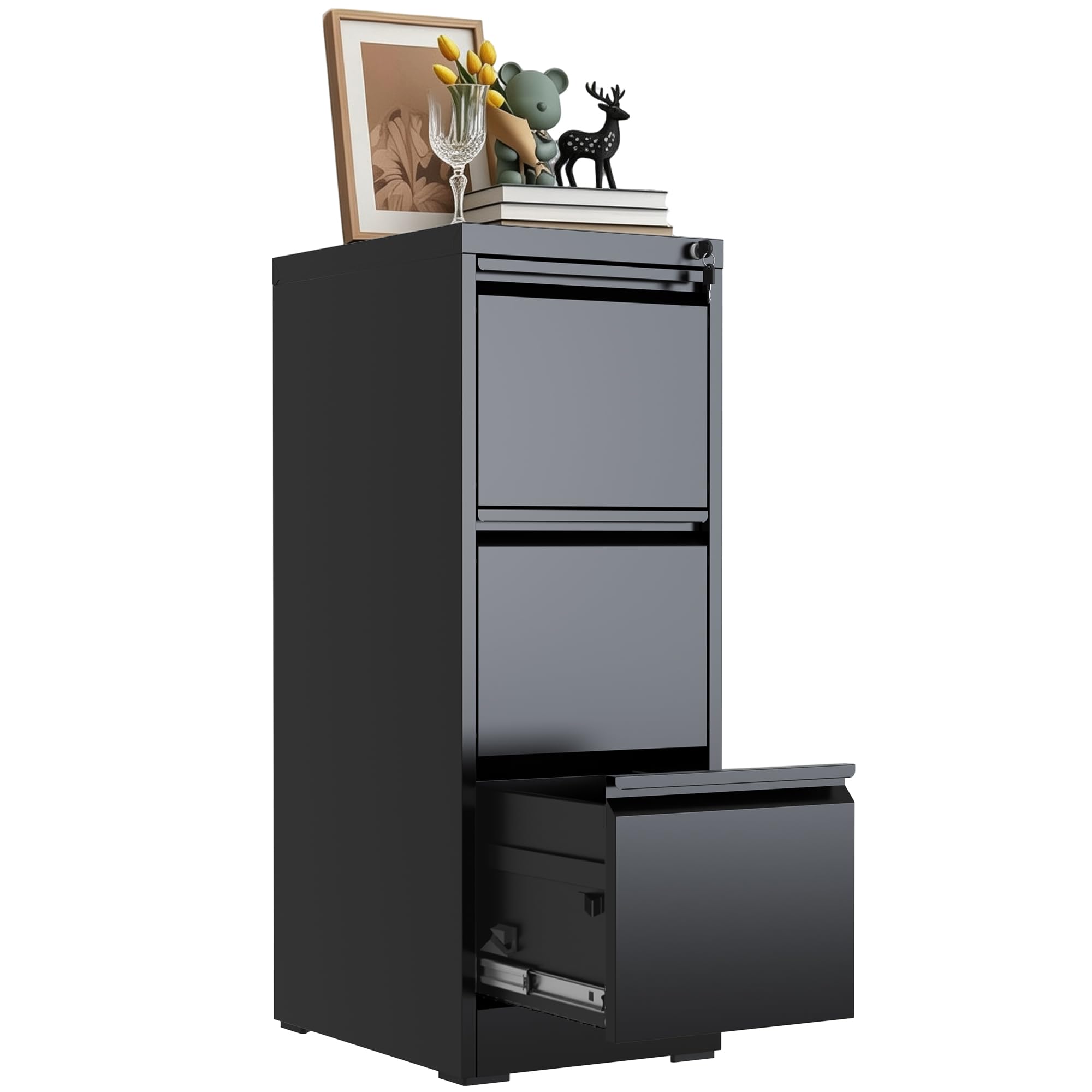
Steel vertical cabinets are the workhorse option, built for drawers that open many times a day. Look for smooth ball bearing slides and drawers that pull out far enough to reach files at the back without bending folders. A tall and narrow footprint, often about 15 to 18 inches wide, fits beside a desk or inside a closet. Most steel models accept both letter and legal files once you set the hanging rails, and many include a single lock for all three drawers.
Wood Finish Cabinets for Visible Rooms
Cabinets built from engineered wood or finished with a wood look surface suit rooms where the cabinet stays on display. They often add a flat top that doubles as a printer surface or a shelf. Drawer slides on these models vary more in quality, so check the stated weight limit for each drawer before you load one with dense tax archives. Handles also matter here, since wide bar handles are easier to grip than small decorative knobs.
Mobile Pedestals That Roll Under a Desk
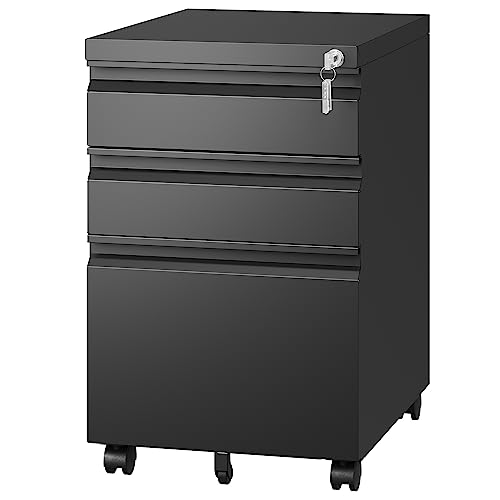
A mobile pedestal is a short cabinet on casters that slides under most desks and rolls out when you need a file. Many designs pair two smaller supply drawers with one deeper file drawer, though true three file drawer versions also exist. Casters should lock at the front so the unit stays put when you pull a drawer open. Measure the clear height under your desk first, including any crossbar, because a pedestal even half an inch too tall will not fit.
How to Evaluate a 3 Drawer Filing Cabinet
Start with the factors you can verify from manufacturer specifications: steel thickness or panel material, drawer slide type, stated load per drawer, outer dimensions, and warranty length. Then weigh how the cabinet fits your routine, such as whether you file daily or only at tax time. If you are comparing this size against the wider market, our guide to the best filing cabinet shows how three drawer models sit alongside larger designs.
How to Choose the Right Filing Cabinet
Size and Form Factor
Vertical cabinets stack three drawers in a tall and narrow column, so they use floor space sparingly and suit closets and corners. Lateral cabinets spread files across a wide and shallow body, but true three drawer lateral models are uncommon and need a broad wall. Under desk pedestals trade capacity for mobility. Count your current hanging folders, then add room for growth. A cabinet that is already full on day one forces a second purchase far too soon.
Type
Metal cabinets give you strength and slim walls, so more of the footprint goes to files. Wood cabinets give you looks and a useful top surface, at the cost of thicker panels and lower load limits. Fireproof models add heavy insulation for vital records, and if that protection matters most, see our guide to the best fireproof filing cabinet before you buy. Locking and rolling are features layered onto any type, so decide the body first and the extras second.
Features Worth Paying For
A lock earns its cost when you store tax returns, passports, or client records, and a lock that secures every drawer with one key turn is the most convenient form. An anti tip device matters for safety, since an open and loaded top drawer can pull a tall cabinet forward. Full extension slides let you reach the back file without removing folders in front. A sturdy top that works as a printer stand is worth paying for only if you lack other printer space.
Body Size and Weight Capacity
Outer width and depth tell you where the cabinet fits, but inner drawer depth tells you what it holds. Most file drawers offer about 15 to 17 inches of usable filing length once the hanging frame is in place. Check the load rating per drawer, since a drawer packed with files can weigh 40 pounds or more. Place a fully loaded steel cabinet on a level and solid surface rather than thick carpet.
Adjustability for Letter and Legal Files
Adjustability in a filing cabinet means movable hanging rails and dividers, not the height settings you would find on a chair. Rails that slide or reposition let one drawer hold letter size folders and the next hold legal size folders, which is ideal if you keep both contracts and standard mail. Some drawers use a fixed frame sized for one paper type only, so confirm the rail setup before ordering. Removable dividers also help a supply drawer stay tidy.
Materials and Durability
Steel thickness is often given as a gauge, and a lower gauge number means thicker and sturdier steel that resists dents and drawer racking. Powder coated finishes guard against scratches and light rust in normal indoor use. Engineered wood cabinets depend on panel density and edge banding, and their weak point is moisture, so keep them away from damp basements. On any material, drawer corners and slide mounts take the most stress, so solid joinery there predicts a longer life.
Assembly and Warranty
Many steel cabinets arrive fully assembled, while most wood and pedestal models need some work with a screwdriver, mainly attaching handles, casters, and rails. If building flat pack furniture puts you off, read how to assemble a filing cabinet to see the steps involved before you order. Warranty terms vary from about one year to much longer coverage on the frame and slides. Keep the receipt, since casters and locks are often excluded.
How Much Should You Spend?
Basic metal and small pedestal models often cost about $80 to $150, with lighter slides and thinner panels. The middle range, about $150 to $300, usually brings smoother full extension drawers, a working lock, and sturdier construction for daily use. Above about $300 you pay for thicker steel, fire protection, or furniture grade wood finishes rather than extra filing room. Set your budget by how often the drawers will open each day.
Common Mistakes to Avoid
- Measuring the room but not the drawer. A cabinet can fit your wall perfectly while its drawers are too short for legal folders you already own.
- Ignoring the load rating. Overloading one drawer makes slides sag and can leave the drawer stuck shut with your records inside.
- Skipping the anti tip check. Opening a loaded top drawer on an unsecured tall cabinet can pull the whole unit forward onto the floor.
- Buying a lock that locks only one drawer. Sensitive papers stored in the other two drawers stay open to anyone who walks up.
- Placing wood cabinets in damp rooms. Moisture swells engineered panels and loosens joints, which shortens the life of the cabinet.
How to Make Your Filing Cabinet Last Longer
Keep drawer loads balanced, with the heaviest files in the bottom drawer so the cabinet stays stable. Wipe slides clean of dust and paper scraps once or twice a year, and add slide lubricant only if the manufacturer allows it. Open drawers one at a time and use the handle rather than pulling on a folder. Set the cabinet level, since a leaning body makes drawers drift open and wears one side of each slide faster.
Is a 3 Drawer Filing Cabinet the Right Size for You?
Choose three drawers when you have outgrown a single file box but do not yet fill a tall cabinet. A typical setup uses one drawer for household records, one for work papers, and one for supplies. If two drawers would honestly cover your paper, our guide to the best 2 drawer filing cabinet covers the smaller option. Households setting up a dedicated workspace may prefer our guide to the best filing cabinet for home office, where desk pairing gets fuller treatment.
FAQ
What is the best 3 drawer filing cabinet for most households?
For most households, the right choice is a steel vertical cabinet with full extension slides, movable rails, and one lock for all drawers. That mix handles daily use and mixed paper sizes without taking much floor space. One detail buyers often miss is the drawer stop, which keeps a pulled drawer from sliding all the way out onto your feet. If a listing does not mention stops or slide type, treat that silence as a reason to keep looking.
What size filing cabinet do I need for my papers?
Measure your folders first, then count how many linear inches they occupy when hanging side by side. Add about a third more room for new files over the coming years. Also check the doorway and any tight turns on the delivery path, since a tall assembled cabinet cannot fold to fit. If your total comes close to filling three drawers, pick the model with the deepest drawers rather than stepping up to a four drawer unit you have no floor space for.
How long does a 3 drawer filing cabinet last?
A steel cabinet in normal indoor use can serve for decades, because the body rarely wears out and slides can often be replaced. Wood cabinets tend to give a shorter service life, especially where joints loosen after repeated moves between rooms. The first sign of real wear is usually a drawer that needs a lift before it will close. Replacing a slide pair at that stage costs far less than a new cabinet and restores smooth action.
Is a 3 drawer filing cabinet worth it for a small home?
Yes, if loose paper currently lives in more than two places, because one cabinet ends the search for documents at tax time and during school or insurance deadlines. It is less worth it if nearly all your records are digital and you keep only a slim folder of originals, since a small document box handles that load. Think about retrieval speed as much as storage, because a labeled drawer you open weekly earns its floor space quickly.
How do you clean a 3 drawer filing cabinet?
Start by taking everything out of the top drawer and working downward, so dust falls onto drawers you have not cleaned yet. Wipe inner walls with a cloth that is slightly damp, then dry each drawer fully before refiling, since trapped moisture can spot paper and dull steel. Vacuum the slide tracks with a narrow nozzle to lift grit that a cloth pushes deeper in. Finish by wiping the outer top, where dust gathers fastest above warm office equipment.
What makes a filing cabinet brand reliable?
Reliability shows up in clear specifications, spare parts you can actually order, and warranty claims the maker honors without a fight. Brands that publish steel gauge, slide type, and load per drawer let you judge the product before it arrives. Longevity in the market also counts, because a maker selling cabinets for many years is more likely to stock a matching lock or slide later.
Final Thoughts
Match the type to your room, confirm the drawers fit your paper sizes, and spend into the middle range if you file every day. The product table above pulls those tradeoffs together so you can compare types at a glance. Chosen with care, the best 3 drawer filing cabinet turns scattered paper into a system you can search in seconds for years.


