Best 15x56 Binoculars Made Simple: A Clear Buying Guide for 2026
Disclosure: We may earn a commission when you buy through links on this page, at no extra cost to you. As an Amazon Associate I earn from qualifying purchases. Learn more

Shopping for the best 15x56 binoculars for the first time? Learn the terms, compare options, and avoid rookie mistakes with this easy guide.
A 15x56 binocular looks intimidating on a spec sheet, yet the format is simple once you know what the two numbers control. This guide explains best 15x56 binoculars shopping in plain language, starting with the basics and ending with a confident choice. You will learn how exit pupil, tripod mounting, weight, and glass quality shape what you actually see.
The 15x56 format serves viewers who need reach: open country wildlife, distant shorelines, range targets, and bright night sky objects. It asks for steady support and honest expectations in return. The product table lines up current options, and this guide teaches you which specs to compare.




Best 15x56 Binoculars 101: The Basics
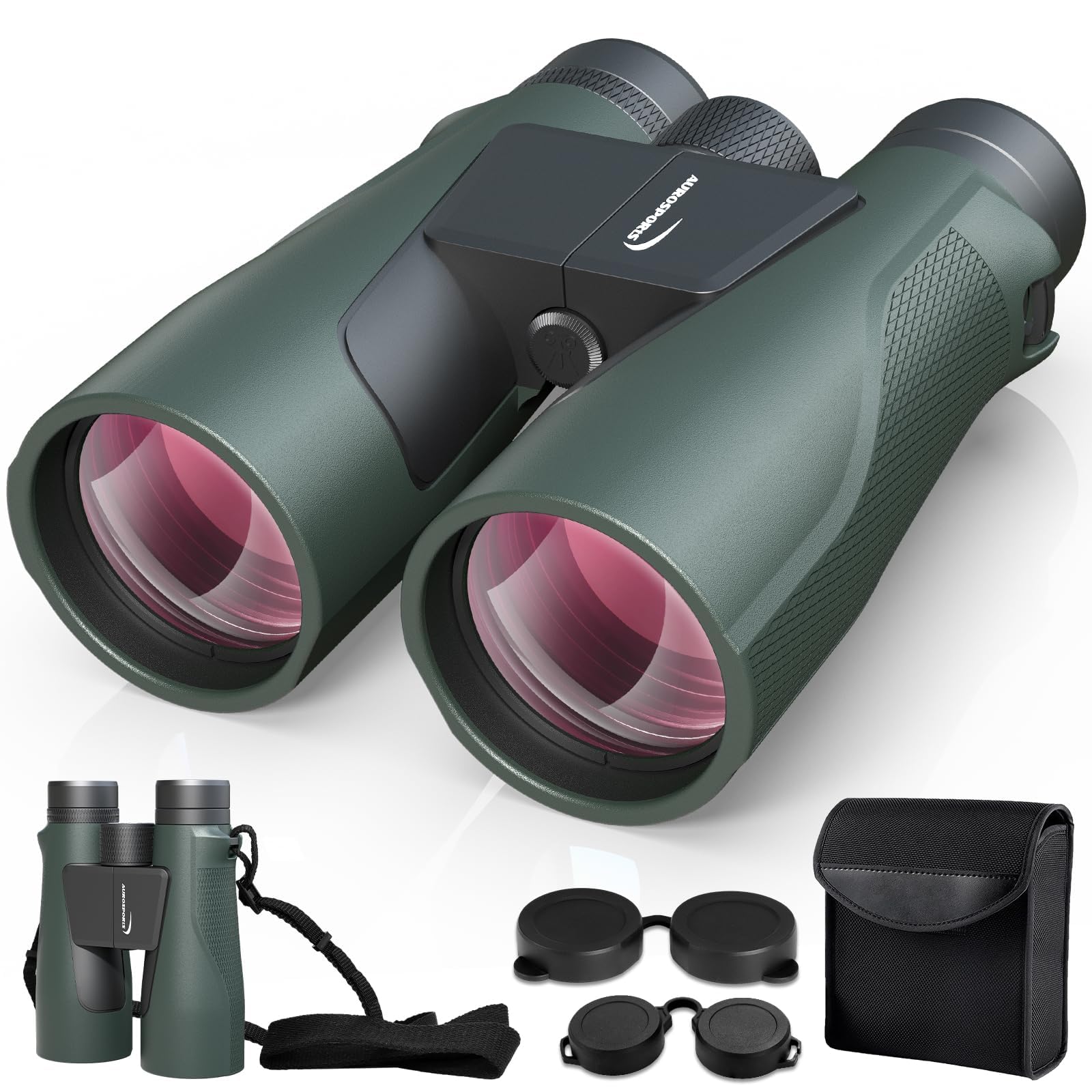
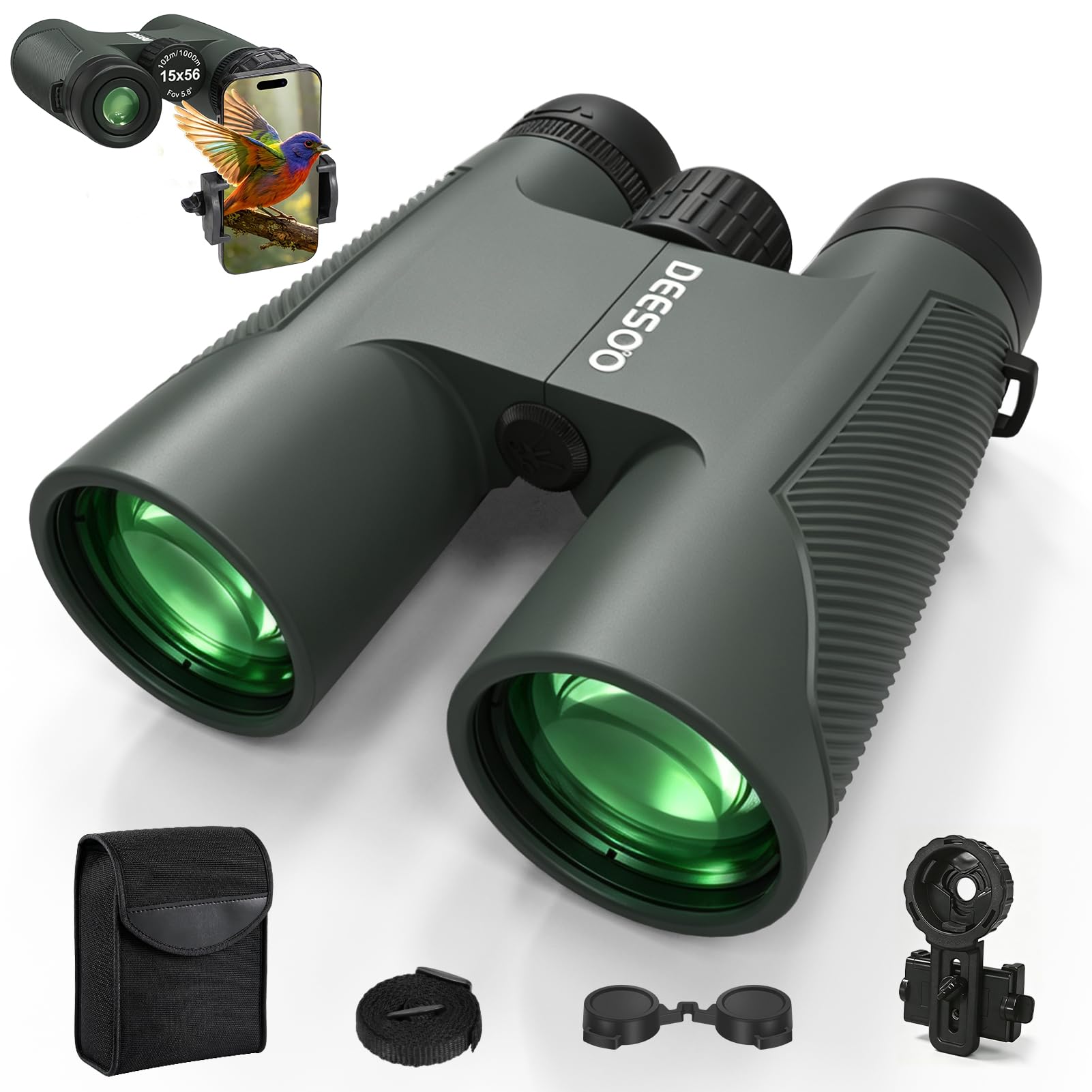
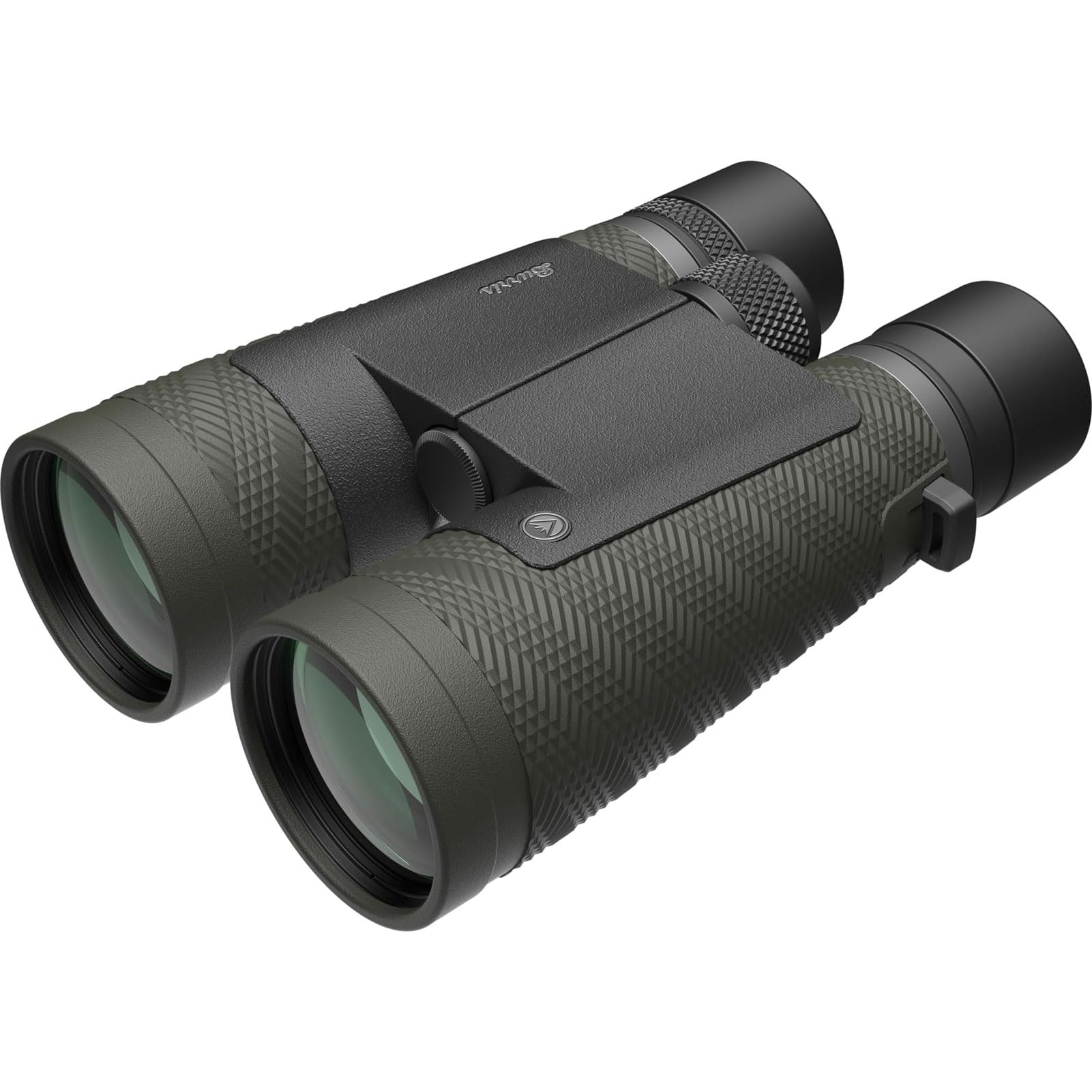
The first number, 15x, is magnification: a subject 150 yards away appears as if it stood 10 yards away. The second number, 56, is the diameter of the front objective lenses in millimeters, and bigger front lenses gather more light. Together the pair trades portability for reach, so this format sits at the strong end of handheld sizes.
Readers who glass open basins and far ridgelines usually start with our guide to best 15x56 binoculars for hunting, which covers dawn and dusk scanning in detail. For closer work in woods and gardens, lower powers rule, and our guide to best binoculars for birdwatching explains why an 8x or 10x pair suits that job.
Key Specs Explained in Plain English
Six specs decide whether a 15x56 pair earns its keep, and they are worth checking on every pair in the product table.
Exit Pupil and Low Light Performance
Divide the objective size by the magnification and you get the exit pupil, the width of the light beam that reaches your eye. A 15x56 pair gives an exit pupil of about 3.7 millimeters, which sets how bright the view looks at dawn and dusk. That beam is smaller than the roughly 5 millimeters a dark adapted young eye can accept, so a 15x56 looks dimmer at last light than a 10x56, even though both gather the same light. In full daylight the difference vanishes, because your pupil shrinks to about 2 to 3 millimeters.
Tripod Mounting and Hand Shake
At 15x, every tremor in your hands grows fifteen times as well, so any viewing longer than a quick look calls for a tripod. Most 15x56 binoculars accept a tripod adapter that screws into the front hinge, and the adapter is often sold separately, so budget about $15 to $30 for one. Braced against a vehicle or fence you may manage minutes of useful viewing, while free standing viewing blurs fine detail. A monopod or a window mount is a fair middle step for mobile viewers.
Size, Weight, and Carry
Most 15x56 binoculars weigh about 2 to 2.5 pounds, roughly double a compact travel pair. A padded neck strap spreads that load for short carries, while a chest harness keeps the pair still and ready on hikes. Length runs about 7 to 8 inches, so the pair wants a real case rather than a jacket pocket. If your viewing spot sits miles from the road, weigh the reach against the carry honestly before choosing this format.
Glass, Prisms, and Coatings
Inside, roof prisms keep the body straight and compact, and phase coating on those prisms keeps contrast high. ED glass, short for extra low dispersion glass, reduces the colored fringes that appear around bright edges at high power. Fully multi coated lenses pass more light and cut glare, which matters when you look toward a low sun. At 15x these glass choices show up fast, because magnification enlarges soft focus and fringing along with the subject.
Field of View and Close Focus
Magnification narrows the view: most 15x56 pairs show about 230 feet at 1,000 yards, so scanning for a moving subject takes practice and a steady sweep. Close focus usually starts around 15 to 20 feet, which rules out butterflies and feeder birds at arm length. Center focus wheels on this class turn smoothly but need many turns to cross the full range. Buyers who follow fast action often accept the narrower view as the price of reach.
Weather Sealing and Build
A waterproof, fogproof body protects the optics when weather turns during a long sit. Nitrogen purging keeps internal fog from forming when you move from a warm vehicle into cold air. Rubber armor adds grip with gloves and absorbs small bumps against the tripod head or pack frame. Check that the focus wheel and diopter ring still turn smoothly with cold hands, because stiff controls ruin dawn sessions.
Owner scores describe satisfaction, not optical performance, so treat any list of best rated binoculars as a popularity signal and judge pairs by the specs above instead.
Rookie Mistakes to Avoid
- Expecting steady handheld views, because at 15x shake blurs detail fast, so plan on a tripod or solid rest from day one.
- Judging brightness by objective size alone, because the 3.7 millimeter exit pupil sets how bright the view looks at dusk.
- Forgetting the tripod adapter, because many pairs ship without one and the mount you need may cost extra.
- Choosing 15x for close range woods, because the narrow field and long close focus make near subjects hard to find and harder to frame.
- Skipping the eye relief check, because glasses wearers need about 15 millimeters or more of eye relief to see the full field.
Getting Started: Setup and First Use
A few minutes of setup on day one saves frustration on every outing after. Work through these steps in order before your first real session.
- Slide the barrels until the two circles merge into one clean image with no dark edges.
- Cover the right lens, focus on a distant sign with the center wheel, then cover the left lens and set the diopter ring until the same sign looks sharp.
- Twist the eyecups down if you wear glasses, or up if you do not, so your eyes sit at the right distance.
- Screw on the tripod adapter, mount the pair, and check that the focus wheel stays easy to reach.
- Clean lenses only with a lens cloth or blower, never your shirt, and store the pair in its case with caps on.
Frequently Asked Questions
What does 15x56 mean on a pair of binoculars?
It means the binoculars magnify the view 15 times and carry front lenses 56 millimeters wide. The first number tells you how much closer a subject appears, and the second tells you how much light the lenses can gather. Together they describe a high power, long range format built for distant subjects rather than close ones. Smaller formats like 8x42 trade some reach for a wider, steadier, brighter view.
Can I use 15x56 binoculars without a tripod?
Yes, for short looks, but detail suffers the longer you hold them freehand. Sitting with your elbows braced on your knees steadies the image far better than standing, and leaning the barrels against a fence post or vehicle window helps even more. Many owners scan handheld to find a subject, then switch to the tripod for a long, careful study. If most of your viewing happens from one spot, treat the tripod as part of the purchase, not an extra.
Are 15x56 binoculars any good in low light?
They are usable at dawn and dusk, though not the brightest choice for the darkest minutes. Their twilight factor sits near 29, a figure makers use to suggest detail in dim light, and the large lenses do pull in plenty of light. The limit is the narrow exit pupil, which cannot fill a fully widened eye. If last light viewing is your main goal, a 10x56 or 8x56 pair of similar quality will look brighter.
How much should a first time buyer spend on 15x56 binoculars?
Most first time buyers land between about $150 to $300 for a sound entry pair, about $300 to $700 for stronger glass and coatings, and about $700 to $1,500 for premium builds. Shoppers comparing best 15x56 binoculars for the money usually settle in the middle band, where phase coated prisms and ED glass first appear. Spread over ten years of use, even a mid priced pair costs only a few dollars per outing.
Are 15x56 binoculars good for birdwatching?
They suit distant, fairly still birds, such as shorebirds on mudflats, raptors on far snags, and waterfowl across a lake. They struggle with small birds moving through close branches, because the view is narrow and the closest focus is far away. A tripod also anchors you to one spot, which clashes with walking a woodland trail. Our guide to best binoculars birding covers the lighter formats most birders carry daily.
The Bottom Line
Choose by support first, glass second, and comfort third: steady mounting, honest exit pupil expectations, and a carry setup you will actually use matter more than small spec gaps. Match the format to open country and distant subjects, and the reach will reward you every outing. The best 15x56 binoculars for you are the pair you can hold steady at your spot, so compare the finalists in the product table before you order.