
Best 15 Inch Cast Iron Skillets (2026): Buying Guide
Disclosure: We may earn a commission when you buy through links on this page, at no extra cost to you. As an Amazon Associate I earn from qualifying purchases. Learn more

What to check before you buy the best 15 inch cast iron skillet: weight, finish and storage, and which type fits your home.
A 15 inch skillet sounds simple until you picture it in your actual kitchen. It may crowd a small cooktop, hang past the edge of a cabinet, or feel far heavier than you expected once it is full of food. Choosing the best 15 inch cast iron skillet for your home comes down to space, household size, and how much lifting and upkeep you will do each week. The comparison table below sums up the main types.
This guide looks at the size from a home angle. You will see how rim size differs from usable cooking space, which finishes suit busy weeknights, and what storage a pan this wide demands. If you are still weighing cast iron more broadly, our overview of the best cast iron skillet options gives useful background first.


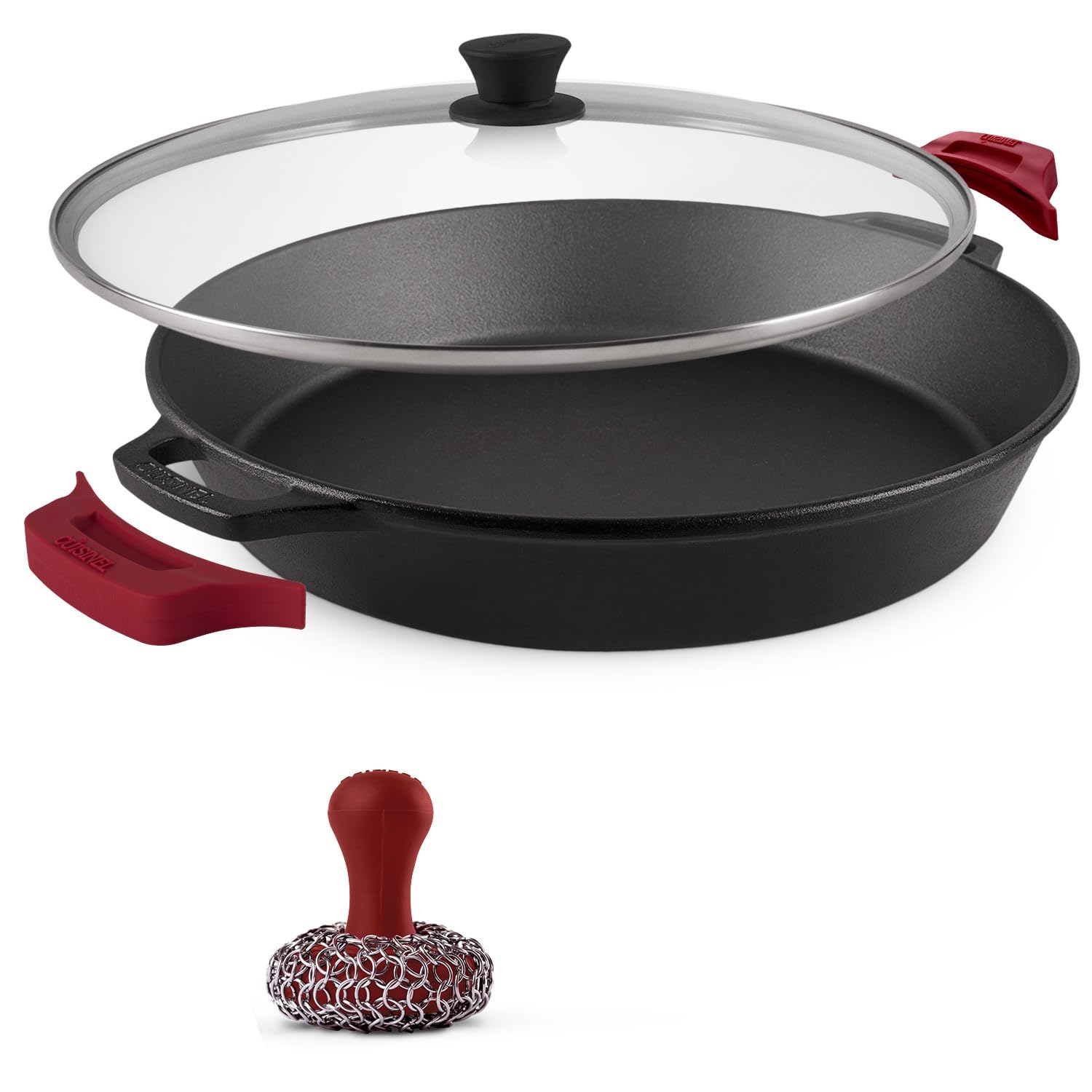


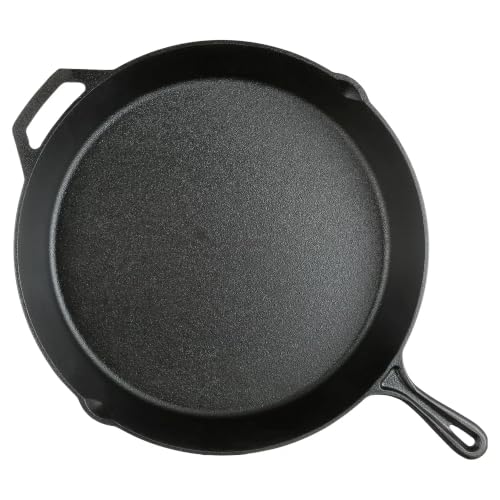
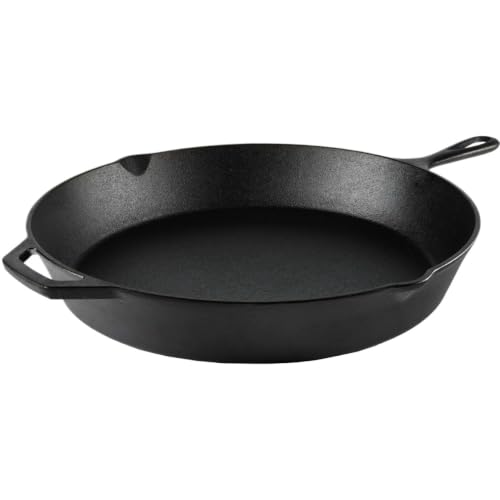
Quick Answer: The Main Types in 30 Seconds
Three types cover most homes. A traditional pre seasoned skillet is the classic choice, with a bare iron surface you maintain yourself and the lowest cost of entry. An enameled skillet coats the iron in glass, so it needs no seasoning and handles tomato sauces calmly, but it costs more and chips if knocked hard. A lightweight machined skillet has thinner, smoother walls that cut the lifting strain, though the price climbs.
Before You Buy: A Quick Checklist for Choosing a Cast Iron Skillet
Size: Match It to Your Space
Manufacturers measure a skillet across the top rim, so a 15 inch label describes the widest point, not the flat cooking area. The sloped walls mean the usable base is closer to 12 or 13 inches across. That is still a big gain over a 12 inch pan, giving you room for four large chicken thighs or a full batch of cornbread without crowding. Before you buy, check that your largest burner can heat most of the base, confirm the pan fits inside your oven with the door closed, and measure the cabinet or shelf where it will live. A pan that cannot be stored flat or hung securely tends to end up buried and unused.
Which Type Fits Your Routine
Pre seasoned iron arrives coated with baked on oil and improves with use, and it suits cooks who fry, sear, and bake often. Enameled iron skips seasoning entirely and wipes clean with soap and water, which fits households that want cast iron heat without the ritual. Lightweight and machined pans have ground smooth surfaces and thinner walls, so they feel closer to a regular frying pan in the hand. Deep sided versions hold more sauce and reduce splatter, while square pans use corners well for sandwiches but heat less evenly on a round burner.
Features Worth Paying For, and Ones to Skip
A helper handle opposite the main handle is close to essential at this size, since a loaded 15 inch skillet can weigh well over 10 pounds and really needs both of your hands. Pour spouts on both sides help you drain fat without a spill. A fitted lid earns its cost if you braise, though a large baking sheet works as a stand in. A silicone handle cover is a cheap comfort if you move the pan often. Skip novelty shapes and bundled accessory kits full of scrapers and gloves you may never use. Spend on wall thickness, a comfortable main handle, and a smooth flat base instead.
Is Cast Iron a Coating Free Choice?
Bare cast iron has no synthetic nonstick layer at all. Its surface is iron plus seasoning, which is simply oil baked into a hard film, so there is no PFAS or PTFE coating to wear out or peel into food. Enameled cast iron uses a glass based coating that is also free of those compounds, though it can chip if struck. With cast iron, the material itself is the cooking surface, and you rebuild the seasoning rather than replacing the pan when it dulls.
Induction, Gas, and Glass Top Compatibility
Cast iron works on gas, electric coil, and induction because the iron responds to a magnetic field, and nearly every skillet in this size is induction ready. The catch on a glass top is weight and roughness. A heavy pan set down hard can crack the surface, and a rough base dragged sideways can scratch it, so lift the pan instead of sliding it. On gas, the wide base may extend past the grate on compact ranges, which wastes heat up the sides. On induction, a flat base matters most, since a warped bottom reduces the connection.
Oven Safe Temperature and Handles
Bare cast iron skillets are generally oven safe to very high temperatures, including under the broiler, because pan and handle are a single piece of iron. Enameled versions can carry limits based on their coating and any knob on a matching lid, so read the rating for the exact model. Silicone handle covers are only safe to a moderate oven temperature and should come off before broiling. At 15 inches, also confirm oven width, since a long handle can push the total length past 20 inches.
Realistic Budget Ranges
Most 15 inch cast iron falls between about $30 and $250, and size alone pushes prices above smaller pans. At about $30 to $60 you get traditional pre seasoned iron with a rougher texture and honest performance. Between about $60 and $120 you will see smoother machining, better finishing, and some lightweight designs. Enameled and premium machined pans often run about $120 to $250, buying easier cleanup or lower weight rather than better browning. Because a sound skillet lasts decades, cost per year stays low even at the top tier.
Three Types Compared: Which 15 Inch Skillet Suits Your Home
Traditional Pre Seasoned Iron for Most Homes
This is the default recommendation for families who cook often and want the lowest total cost. The seasoning builds as you fry and roast, the surface tolerates metal utensils and high heat, and repairs are free because you simply cook through minor wear. It is also the heaviest type and asks for prompt drying after washing. If this route appeals to you, our guide to the best pre seasoned cast iron skillet range explains what good factory seasoning looks like. Choose it if you have the storage space and a household that will use the pan several times a week.
Enameled Iron for Low Upkeep Kitchens
Enameled skillets suit homes where several people cook and nobody wants to own the seasoning routine. The glass surface will not react with wine or tomato, it tolerates soap, and it can go from stove to table looking presentable. The trade offs are price, weight that matches or exceeds bare iron, and a surface you must protect from hard knocks. Pick enameled if your household values easy cleanup and shared use more than the lowest price.
Lightweight Machined Iron for Easier Lifting
Thinner walls and a machined smooth finish can trim meaningful weight from a pan this wide, which matters if you cook for a crowd but dislike hauling a heavy skillet from a low cabinet. The smooth surface also releases eggs and fish sooner than rough textured iron. The cost is higher, and a lighter base loses heat a bit faster when you add a large load of cold food. Our roundup of the best lightweight cast iron skillet options covers how makers cut weight without giving up durability. Choose this type when lifting comfort decides whether the pan gets used at all.
Our Selection Process for Large Cast Iron Skillets
We compared types using maker specifications and patterns in verified buyer feedback. The criteria were heat distribution, durability, material safety, stovetop and oven compatibility, and how much cleaning each type demands in a normal week. We weighted home fit heavily, so storage size and loaded weight counted as much as searing power.
Is a 15 Inch Cast Iron Skillet the Right Size for You?
Choose 15 inches if you regularly cook for four to six people, batch cook proteins for the week, or bake skillet cornbread for a group. The wide base keeps food in a single layer, which is what browning needs. It also shines for steak night, since two large steaks fit without touching, a point our guide to the best cast iron skillet for steak explores in more depth. Step down to 12 inches if you cook for one or two or own a compact range. A smaller pan heats faster and weighs far less. If the big pan only fits your largest meals, it should still earn its storage space at least weekly.
Common Buying Mistakes to Avoid
- Buying by rim size alone and discovering the cooking base is smaller than your burner pattern handles well.
- Ignoring loaded weight, then dreading the pan every time a full meal needs to move from stove to oven.
- Skipping a helper handle, which makes a wide and heavy pan awkward and less safe to carry with oven mitts.
Cost of Ownership and Care
Ownership costs stay modest. Budget for a stiff brush or a chain mail scrubber and a bottle of neutral cooking oil for occasional touch ups, which together cost far less than replacing a coated pan every few years. There are no parts to reorder. Wash the pan warm, dry it on low heat so no water sits in the texture, and wipe on the thinnest film of oil while it is still warm. Our step by step guide on how to clean a cast iron skillet walks through stuck on food and light rust. Store it dry, with a cloth between pans if you stack.
Your Questions, Answered
Can a 15 inch cast iron skillet go on a standard home burner?
Yes, it can sit on a standard large burner, and the thick base spreads heat outward from the ring of flame or coil. Give it a longer preheat than a small pan, about five to eight minutes on medium, and rotate it once if your burner runs uneven. Food at the edges cooks a little slower, so arrange thinner pieces toward the center.
How heavy is a 15 inch cast iron skillet when it is full of food?
An empty pan in this size commonly lands in the region of 11 to 13 pounds for traditional iron, and a full load of food can add several more. Plan on a two hand lift with the helper handle every time. If that total sounds like a strain, a lightweight model or a 12 inch pan is the smarter daily choice.
Does a 15 inch cast iron skillet need special storage?
It needs dry storage with enough width, which is the part many kitchens lack. A deep cabinet, a sturdy wall hook rated for the weight, or the oven itself all work if the pan stays dry. Avoid stacking other pans directly on an enameled surface, and never store cast iron with a lid sealed on while moisture remains inside, since trapped damp air invites rust.
How long does a cast iron skillet last in a family kitchen?
The iron itself can last for generations because there is no coating to exhaust and no moving part to fail. What wears is the seasoning, and that is renewable at home whenever the surface looks dull or food starts to stick more than usual. The full method in our guide on how to season a cast iron skillet restores it in an afternoon. Cracks from a drop onto a hard floor are the one damage you cannot repair.
Is a 15 inch cast iron skillet worth it for a small household?
For one or two people it is worth it only if you batch cook, host often, or bake large skillet dishes you truly enjoy. Otherwise the weight, storage, and slower preheat work against you on ordinary weeknights, and a 10 or 12 inch pan will see far more use. Buy the size that matches your most common meal, not your biggest annual one.
The Bottom Line
For most homes, a traditional pre seasoned skillet offers the best balance of price, durability, and cooking room, while enameled iron suits shared kitchens that want easy cleanup and lightweight machined iron suits cooks who lift with care. Measure your burner, oven, and storage first. The right best 15 inch cast iron skillet fits your space and your strength, so compare the options in the product table above.


