Best 12x14 Gazebos (2026): Buying Guide
Disclosure: We may earn a commission when you buy through links on this page, at no extra cost to you. As an Amazon Associate I earn from qualifying purchases. Learn more

What to check before you buy the best 12x14 gazebo: roof type, frame material and anchoring, and which type fits your home.
A 12x14 footprint sounds simple until you start comparing frames, roofs and fabrics, and the differences matter more than the size on the box. A steel hardtop, a fabric soft top and a wood frame can all measure 12 by 14 feet, yet they differ a lot in cost, assembly time and how they handle wind and snow. Choosing the best 12x14 gazebo means matching the build type to your yard, your climate and how you plan to use the space.
This guide walks through the three main build types, the features that change daily comfort, and the measuring and anchoring steps that keep a large gazebo safe. The comparison table below sums up the main options side by side, and if you want the broader picture first, our guide to the best gazebo covers smaller and larger sizes too.



The Three Build Types at a Glance
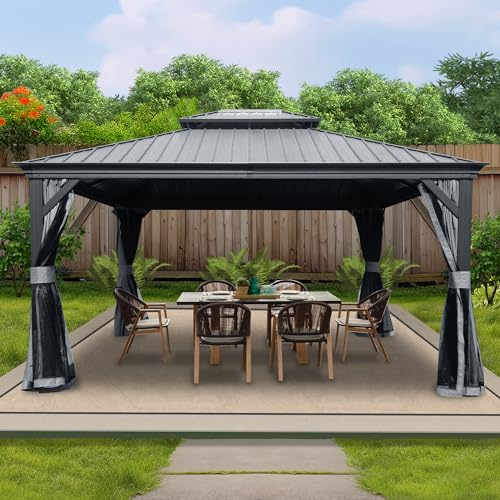
Every 12x14 model falls into one of three build types, and the type decides most of your ownership experience. A hardtop uses rigid roof panels, usually metal or polycarbonate, on a metal or wood frame. A soft top stretches fabric over a metal frame and costs far less. A pop up frame folds open in minutes but treats 12x14 as an event size rather than a permanent one.
- Hardtop: the longest lasting roof, best for snow country and year round use, but the heaviest and slowest to build.
- Soft top: the lowest cost entry, light parts and a gentler look, but the canopy needs replacing every few seasons.
- Pop up: the fastest setup for parties and markets, yet the frame is not built to stay outside through storms.
12x14 Gazebo Types Compared
Hardtop Models for Permanent Shade
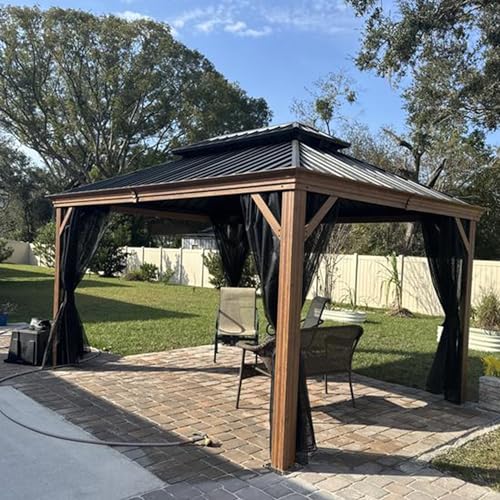
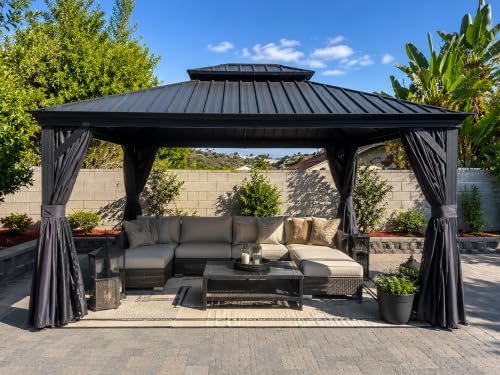
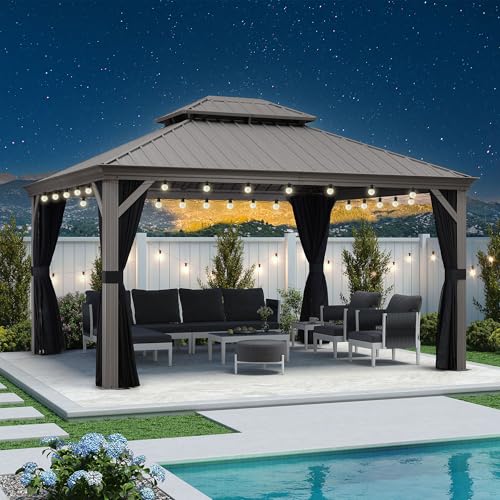
A hardtop 12x14 gazebo is the pick when the structure will stay in place for years. Rigid roof panels shed rain without pooling, hold up better under snow, and do not flap in the wind the way fabric does. The trade off is effort and price: panels and beams are heavy, assembly takes a full weekend with two or three helpers, and the frame must be anchored to a slab or footings. Choose this type for a dining space you use from spring through fall, or for covering a hot tub you want sheltered in winter too.
Soft Top Models for Flexible Budgets
A soft top model pairs a powder coated steel or aluminum frame with a fabric canopy, and it is the most affordable way to cover 168 square feet. The lighter parts make assembly faster, and you can remove the canopy before a storm or for winter storage, which extends its life. Expect the fabric to fade and thin after a few seasons of sun, so check the cost and availability of replacement canopies before you buy. This type suits renters, new homeowners testing the layout, and anyone in a mild climate with little snow.
Pop Up Models for Events and Short Stays
A pop up gazebo at this size is really an oversized event canopy with an accordion frame that opens without tools. It earns its place at garden parties and weekend gatherings where shade goes up in the morning and comes down the same day. The legs and joints are lighter than on permanent frames, so wind is a real limit, and the structure should never be left standing in gusty weather. If you host often but lack a spot for a permanent build, a pop up gives you the same footprint with none of the commitment.
How to Compare 12x14 Gazebos
Start with the frame and roof materials, since they drive durability more than any accessory. Then check the stated wind and snow ratings from the maker, the true inside dimensions between the posts, and the warranty length on frame and fabric. Weigh total cost of ownership too: a soft top bought cheaply may need two replacement canopies over the life of one hardtop roof. For a closer look at roof styles, see our breakdown of hardtop vs soft top gazebo designs.
How to Choose the Right 12x14 Gazebo
Size and Form Factor
The 12x14 size sits in the middle of the common range, which runs from 10x10 up to 12x20 and beyond. It gives you 168 square feet of nominal coverage, enough for a dining table for six to eight people or a lounge set with room to walk around it. Rectangular footprints suit rectangular patios and decks better than square ones, and the long side gives you a natural place for a serving table or grill station just outside the posts. If your gatherings regularly pass ten people, step up to a 12x16 or 12x20 instead of crowding this size.
Type and Frame Materials
Frames come in aluminum, steel and wood, and each behaves differently over time. Aluminum is light and naturally resistant to rust, which helps near pools and in coastal air. Steel is strong and often cheaper, but it depends on its powder coat, so scratches need prompt touch ups to keep rust away. Wood brings the warmest look and real heft against wind, though it needs sealing or staining on a regular cycle. Our comparison of aluminum vs wood gazebo frames digs into upkeep and lifespan for the two most debated options.
Features Worth Paying For
Mosquito netting is the feature owners praise most, because it turns the gazebo into a room you can use at dusk when insects come out. Privacy curtains add shade on the low sun side and shelter from light wind, and many models bundle both with double tracks so each layer moves on its own. A double roof vent improves airflow and reduces uplift in gusts. Gutters, hooks for lights and a ceiling hook for a fan or heater are smaller touches that add daily convenience. Skip built in solar lights if the price jump is steep, since separate string lights cost less and are easier to replace.
Weather Resistant Materials
Sun and water do most of the damage to any gazebo. Look for canopy fabrics with a stated UV rating and water resistant coating, and for polycarbonate roof panels with UV protection on the outer face. In snow country, check the roof load rating and favor steeper pitches that shed snow instead of holding it. Coastal buyers should favor aluminum frames and stainless hardware, because salt air attacks steel fasteners first.
Fitting the Gazebo to Your Space
Measure the patio or lawn area, then add at least two feet of open space on every side for assembly access and airflow. The listed 12x14 size usually describes the roof edge, while the posts sit several inches inside that line, so check the post to post measurements against your slab before ordering. Watch for roof overhang near house walls and tree branches, and confirm the peak height clears any low limbs. On a deck, plan anchor points that land on solid boards over the framing.
Assembly and Anchoring
Plan on two or three adults, a ladder, and most of a day for a hardtop build at this size. Lay out and label every part first, keep bolts loose until the frame is square, then tighten in sequence. Anchoring is not optional on a 12x14: the roof acts like a sail, so bolt the posts to a concrete slab, set footings in lawn, or use heavy duty stakes plus guy lines for a pop up. Our step by step guide on how to assemble a gazebo walks through the process in order. Check local rules too, since some areas require a permit for permanent structures of this size.
Care and Off Season Storage
Wash fabric canopies with mild soap and water, let them dry fully, and store them indoors over winter to slow fading and mildew. Hardtop roofs mainly need leaf and branch clearing plus a check of the panel seals each spring. Tighten frame bolts once a year, because wind vibration loosens them slowly. Before the first snow, follow the steps in our guide on how to winterize a gazebo so the structure enters the cold months ready. Wood frames need a fresh coat of sealant whenever water stops beading on the surface.
How Much Should You Spend?
Soft top 12x14 models run about $250 to $600 and cover the basics well for mild climates. Mid range hardtop models cost about $900 to $1,800 and add rigid panels, better hardware and longer warranties. Premium hardtop and wood builds run about $2,000 to $4,000 and bring thicker posts, stronger snow ratings and cleaner finishes. Pop up models at this size sit around $200 to $450. Spend toward the top of your tier if the gazebo will face snow or open wind, and toward the bottom if it sits in a sheltered yard.
Is a 12x14 Gazebo the Right Size for You?
This size fits the way most families actually use a backyard. It covers a six to eight seat dining set with walking room, or a sofa and chairs with a coffee table and space to spare. A hot tub fits under it with room for steps and a towel bench. If you only need shade for two loungers, a 10x10 or 10x12 will feel less imposing and cost less. If you host parties of twelve or more, the 12x14 starts to pinch, and a 12x20 gives guests room to spread out. Still weighing a more open structure? Our gazebo vs pergola comparison explains how the two differ in shade and shelter.
FAQ
What is the best 12x14 gazebo for a windy yard?
Choose a hardtop model with a vented double roof, thick posts and a stated wind rating, and bolt it to a slab or footings. The vent lets gusts pass through the peak instead of lifting the whole roof. Avoid leaving curtains closed on a fabric model in high wind, because closed panels catch air like sails and strain the frame joints.
Can a 12x14 gazebo stay up all year?
A hardtop model anchored to a solid base can stay up year round in most climates, provided its snow rating matches your area. Soft top canopies should come down before snow season, since wet snow is heavy and pooled meltwater stretches fabric. Pop up models should never stay up unattended overnight, even in calm weather, because a single storm can fold the light frame.
How many people are needed to assemble a 12x14 gazebo?
Plan on two people at minimum and three for a hardtop, since the long beams and roof panels are awkward to hold while another person starts the bolts. Professional assembly services typically charge by the hour, and a large hardtop often takes a crew half a day.
Does a 12x14 gazebo need a concrete slab?
No, but it does need a level, stable base and firm anchoring. Grass installations can use concrete footings poured at each post or ground anchors rated for the frame. Decks work when the posts bolt through the boards into the framing below. Loose gravel and bare soil without anchors are unsafe at this size, because wind uplift can shift or topple the whole structure.
How long does a 12x14 gazebo last?
A hardtop roof and metal frame commonly serve ten years or more with yearly bolt checks and basic cleaning. Wood frames last just as long when resealed on schedule. Fabric canopies are the short lived part, usually needing replacement after two to four seasons of strong sun. Storing fabric indoors each winter is the single habit that adds the most life to a soft top model.
Can you put a fire pit under a 12x14 gazebo?
Most makers advise against any open flame under the roof, because heat and sparks can damage fabric and polycarbonate and can stain metal panels. A safer setup places the fire pit outside the posts, at the distance the fire pit maker specifies, with seating partly under cover. If warmth is the goal, an electric heater rated for outdoor use and mounted per its instructions is the lower risk option.
Final Thoughts
The right choice comes down to how permanent you want the structure to be: hardtop for years of service, soft top for value and flexibility, pop up for events. Match the frame material to your climate, anchor the posts properly, and the best 12x14 gazebo for your yard will earn its space every season. Before you order, glance back at the product table above to compare the key specs side by side.