Best 12x12 Gazebos (2026): Buying Guide
Disclosure: We may earn a commission when you buy through links on this page, at no extra cost to you. As an Amazon Associate I earn from qualifying purchases. Learn more

What to check before you buy the best 12x12 gazebo: roof type, frame material and anchoring, and which type fits your home.
A 12 by 12 footprint sounds simple until you start comparing roofs, frames, and anchoring, and realize how differently two gazebos of the same size can behave in wind and rain. Choosing the best 12x12 gazebo means matching the roof type and frame to your climate, then confirming the structure fits your space with room to walk around it. This guide walks through those decisions in order.
The comparison table below lines the main types up side by side on build materials, weather resistance, size and capacity, and assembly effort. If you are still weighing sizes rather than settling on this one, our overview of the best gazebo options in other footprints is a useful starting point before you narrow your search down.






The Main Types of 12x12 Gazebos Compared
The three groups below cover nearly every 12 by 12 model you will find, and each trades cost, durability, and setup effort differently.
Hardtop Gazebos
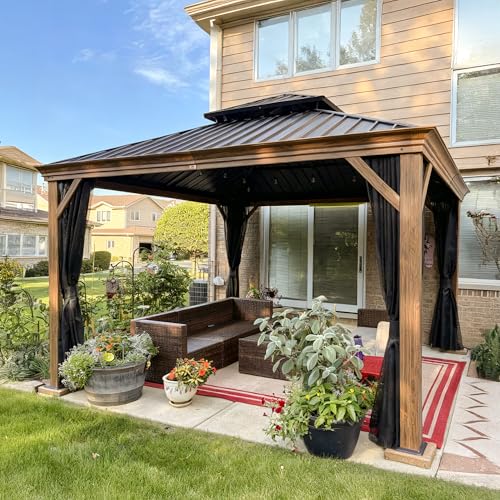
A hardtop model uses rigid roof panels, usually metal or polycarbonate, on a fixed frame that stays in place through the year. This is the sturdiest group and the best match for regions with heavy rain or snow, since a sloped rigid roof sheds water and carries a snow load that fabric cannot. The trade off is effort and cost. Assembly takes the longest of the three types, and the structure is effectively permanent once anchored, so choose its position with care.
Soft Top Gazebos
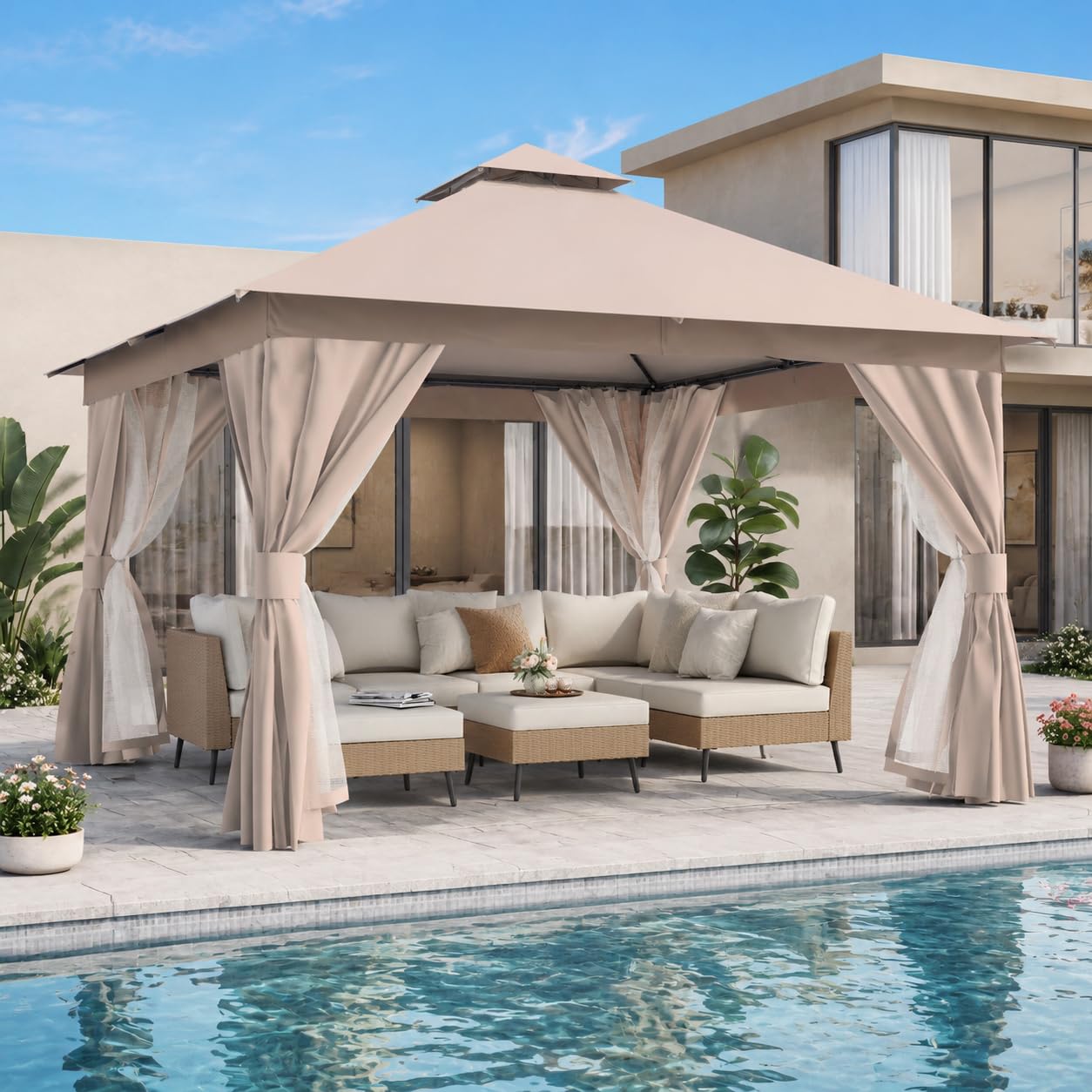
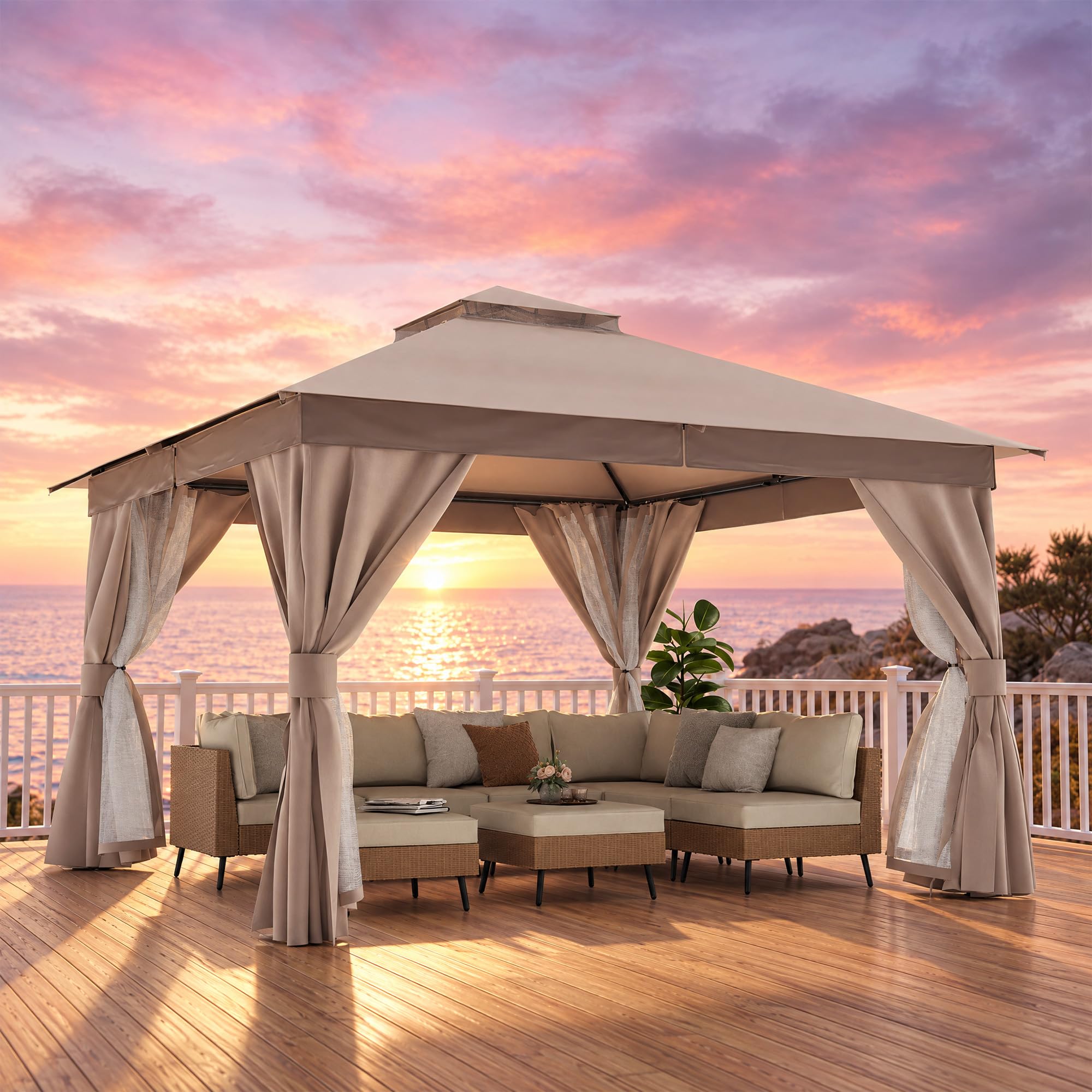
A soft top model stretches a fabric canopy over a metal frame, and it costs far less than a rigid roof design. The canopy blocks sun and light rain well, and you can remove it for storage when the season ends, which extends its life. The limits are weather and wear. Fabric flutters and pools water in storms if the pitch is shallow, and sun exposure slowly weakens it, so plan on a replacement canopy after some seasons. For the full contrast between the two roof styles, read our breakdown of hardtop vs soft top gazebo designs before you decide.
Pop Up Gazebos
A pop up model folds open from a single frame, so two people can raise it in minutes without tools. That speed makes it ideal for occasional shade at gatherings, markets, or a weekend event rather than daily use all season. The folding frame is lighter and less rigid than a fixed frame, so it needs staking at every use and should come down before strong wind arrives. Fabric is usually thinner as well. Treat this type as portable shelter that you store indoors, not as a permanent yard structure.
What Matters Most When Comparing 12x12 Gazebos
Five criteria separate a gazebo that lasts from one that frustrates you by its second summer. Judge every model on build materials and weather resistance first, then on size and capacity, assembly, durability, and the warranty backing the frame and roof. Manufacturer specifications tell you panel thickness, frame material, and stated wind or snow ratings, and verified buyer reports help spot recurring issues such as leaking seams or missing hardware. Weight those patterns over any single review.
How to Choose the Right Gazebo
Size and Form Factor
The 12 by 12 size gives you 144 square feet of covered ground, which sits in the middle of the common range. Smaller footprints such as 10 by 10 or 10 by 12 suit a compact seating set, while 12 by 14, 12 by 16, and larger sizes swallow a full dining table plus a grill zone with space to spare. Shape matters as well as area. Most models are square, which suits corners and symmetrical layouts, while rectangular and oval designs fit long narrow yards better. Pick the form that leaves clear paths around the posts.
Type and Roof Style
Beyond the three main types above, you will see variations worth knowing. A grill gazebo is smaller, with shelves and a vented roof for cooking, so it does not substitute for a full size shade structure. A screened model adds mesh walls to a standard frame. Freestanding designs anchor anywhere on a flat surface, while lean to styles save space against a house but cover less ground. Roof shape also counts. A two tier roof vents rising hot air and catches less wind than a single flat canopy.
Features Worth Paying For
Netting is the feature most buyers use daily, since mesh walls keep mosquitoes out during evening meals without blocking the breeze. Curtains add privacy and block low sun or light wind, and many models let you zip netting and curtains independently so you can run one or both. A screen door panel or zippered entry on more than one side makes coming and going easier with full hands. Built in solar lights are convenient but modest, so many owners add string lights to hooks under the roof instead.
Weather Resistant Materials
Frame material decides how a gazebo ages outdoors. Powder coated steel is strong and affordable but can rust at scratches and joints if the finish fails. Aluminum weighs less, resists rust naturally, and suits coastal air, though very light frames flex more in gusts. Wood looks warm and feels solid, yet it needs sealing and can check or split over time. Our comparison of aluminum vs wood gazebo frames covers that choice in depth. For roofs, galvanized metal panels handle snow best, polycarbonate panels cut weight and diffuse light, and canopy fabrics should list a UV rating and water resistant coating.
Size for Your Space
Measure the site before you order, and measure more than the footprint. Mark the 12 by 12 outline with tape or a hose, then check that doors, paths, and garden beds stay clear and that you can walk around all four sides for cleaning and anchoring. Overhead clearance matters too, since most models stand about 9 to 10 feet tall at the peak and tree branches or eaves can interfere. On a patio slab, also confirm the slab drains away from the posts so water does not pool at the feet.
Assembly and Anchoring
Expect assembly to take two to four people most of a day for a hardtop model, and far less for the other types. Lay out every panel and hardware bag before you start, keep bolts loose until the frame is square, and tighten in sequence so holes align. Anchoring is not optional. Bolt the posts to concrete or deck footings where you can, or use heavy duty stakes and straps on soil, following the method our walkthrough of how to assemble a gazebo sets out. An unanchored gazebo can lift and topple in a gust.
Care and Off Season Storage
Routine care is simple but steady. Sweep leaves and standing water off the roof, rinse pollen and dirt with mild soap and water, and check bolts each spring because temperature swings loosen them. Inspect fabric canopies for mildew at seams and let them dry fully before storage. In snowy regions, brush snow off a soft top promptly or remove the canopy for winter, and store fabric indoors. Hardtop owners should clear heavy snow loads rather than letting weight build across several storms.
How Much Should You Spend?
Budgets sort neatly by type. Under about $200 you are in pop up and basic canopy territory, fine for events but not for leaving up all season. About $200 to $500 buys a sturdier soft top frame with netting. About $500 to $1000 steps up to stronger frames, better fabrics, and entry level hardtop panels. About $1000 to $2000 covers most quality hardtop models, and about $2000 to $3000 reaches heavy gauge structures and wood builds. Spending more mainly buys frame thickness, roof material, and warranty length.
Is a 12x12 Gazebo the Right Size for You?
For most families, yes. A 12 by 12 comfortably holds a dining table for six to eight people, or a conversation set with a coffee table and room to move between pieces. It also fits a hot tub with a small margin for steps, though you should confirm the tub dimensions plus service access before ordering. If your gatherings regularly exceed ten people, or you want dining and lounging zones under one roof, step up to a 12 by 16 or larger. Tight yards may do better with a 10 by 12 that leaves planting room intact.
Placement shapes the answer as much as headcount does. A lawn installation needs level ground and soil anchors, while a deck installation demands attention to joist strength and rail clearance. Our notes on the best gazebo for backyard layouts walk through siting for afternoon shade. Also consider whether you want a full roof at all. If you prefer filtered light and an open sky feel, the comparison in gazebo vs pergola will help you pick the right structure.
FAQ
What is the best 12x12 gazebo for a windy yard?
The strongest choice for a windy yard is a hardtop model with a heavy frame, a vented two tier roof, and posts bolted into concrete or deep footings. Wind problems usually start at the anchoring rather than the roof, so follow local building codes where permits apply, and ask your insurer whether a fixed gazebo needs listing on your policy. Soft top and pop up models should come down before forecast storms, whatever their stated ratings say.
What size gazebo do I need for a dining set?
Start from the table, not the gazebo. Measure your table and chairs pushed out to seating position, then add about 3 feet on every side so guests can slide chairs back and hosts can pass behind them. A table for six usually lands near a 10 by 12 or 12 by 12 footprint, while a table for eight with armchairs often needs 12 by 14. Round tables use space more efficiently than rectangular ones of the same seat count, so shape can save you a size step.
How long does a gazebo last?
Lifespan follows the roof more than the frame. A metal frame can serve for a decade or longer, a metal hardtop roof often lasts about as long, polycarbonate panels may cloud sooner in strong sun, and fabric canopies commonly need replacing after a few seasons. One point buyers miss is parts availability. Brands that sell replacement canopies, panels, and netting by model number make a long life realistic, while a discontinued line can end a sound frame over one torn canopy.
Is a gazebo worth it for a small yard?
It can be, if the structure earns its footprint by hosting meals, work, or play several days a week rather than shading empty chairs. In a small yard, a 12 by 12 may crowd out planting and paths, so tape the outline and live with it for a few days before ordering. Also check sight lines from your windows. A tall roof close to the house can darken indoor rooms, and shifting the site a few feet often fixes that.
How do you clean a gazebo roof and frame?
Work from the top down with a soft brush, a garden hose, and mild soap, and never use a pressure washer on canopy fabric or polycarbonate panels, since the jet can strip coatings and force water through seams. Bird droppings and tree sap come off more easily if you soak the spot first instead of scrubbing hard. Rinse mesh walls and leave them hanging open until fully dry so trapped moisture does not leave a musty smell.
What is the most reliable gazebo brand?
No single brand wins on reliability across every type, because a maker strong in hardtop kits may offer ordinary pop up models. A more useful test is support after the sale. Check how long the frame and roof warranties run separately, whether the company stocks spare parts for older models, and whether manuals and hardware lists are easy to download. Consistent answers to those three checks predict a good ownership experience far better than a famous name on the box, and they cost you only a few minutes to verify.
Final Thoughts
The right choice comes down to three honest answers: how harsh your weather gets, how many people you seat, and whether the structure stays up all year. Match those answers to the types and criteria above, and the best 12x12 gazebo for your yard will be clear. Before ordering, look back at the product table above to compare your finalists on frame material, roof type, and warranty.