
Best 12 Piece Cookware Sets (2026): Buying Guide
Disclosure: We may earn a commission when you buy through links on this page, at no extra cost to you. As an Amazon Associate I earn from qualifying purchases. Learn more

What to check before you buy the best 12 piece cookware set: material, stove fit and what the pieces really include, and which type fits your home.
A first apartment or a worn out set of pans leads to the same question: which cookware set actually fits the way your household cooks? A best 12 piece cookware set should cover weeknight dinners and weekend projects without filling every cabinet you own. This guide helps you choose by kitchen space, household size, and budget, and the comparison table below sums up the main types side by side.
Twelve pieces sounds generous, but lids count toward that number, so the real value sits in which pots and pans you get. If you are also weighing larger or smaller sets, our guide to the best cookware set options covers the full range of sizes and materials.

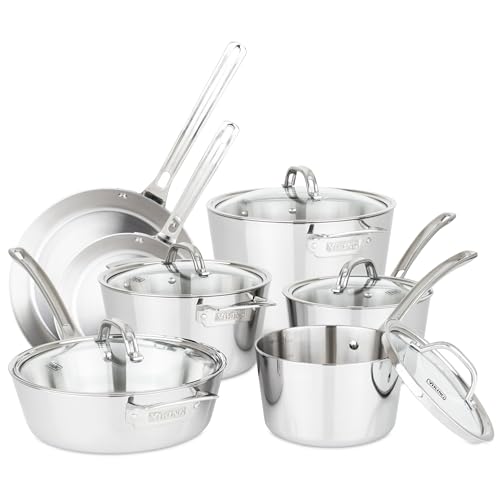


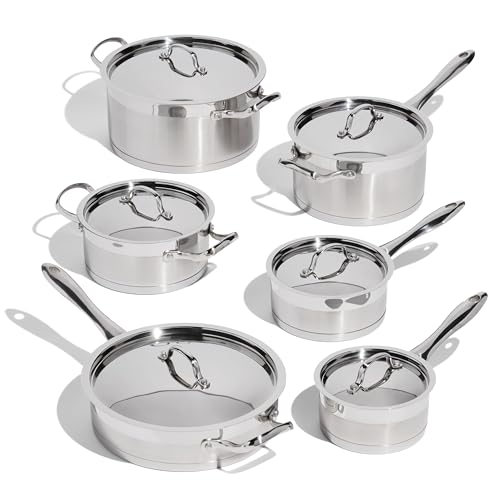


Quick Answer: The Three Types Worth Comparing
Most 12 piece sets fall into three camps. Stainless steel sets suit cooks who sear, deglaze, and want cookware that tolerates high heat and metal utensils for decades. Nonstick and ceramic coated sets suit households that cook eggs, fish, and sauces often and value fast cleanup over browning power. Hybrid and fully clad sets blend the two ideas, pairing a steel body with an easy release surface or layered metals.
None of the three is right for every home. Your stove type, household size, and scrubbing tolerance matter more than any feature list.
Before You Buy: A Quick Checklist for Choosing a Cookware Set
Size: Match It to Your Space
A typical 12 piece set includes two skillets, two saucepans with lids, a saute pan with a lid, and a stockpot with a lid, sometimes with a steamer insert or utensils filling the last slots. Count the pieces you will use weekly, not the headline number. A 10 piece set may serve a couple better if cabinet space is tight, while a large family may outgrow 12 pieces and need a separate roasting pan alongside.
Storage matters as much as cooking capacity. Deep cabinets hold nested sets easily, but shallow drawers and small apartment kitchens punish bulky handles and tall stockpots. Measure your deepest cabinet and your largest burner before ordering.
Which Type Fits Your Routine
Stainless steel browns meat well and goes from stove to oven without worry, but eggs stick and cleanup takes soaking. Nonstick releases delicate food with almost no fat and wipes clean, yet the coating wears over time and limits high heat searing. Ceramic coated pans behave like nonstick with a different surface chemistry, while cast iron and carbon steel demand seasoning and reward patient cooks with strong heat retention.
Copper and hard anodized aluminum sit between these poles, offering fast, even heating with more care or more cost attached. If you keep going back and forth between the two most common choices, our comparison of ceramic vs stainless steel cookware lays out how each surface handles daily cooking.
Features Worth Paying For (and Ones to Skip)
Glass lids earn their keep because you can watch rice or soup without lifting the lid and losing steam. Riveted handles, flared rims that pour without dripping, and lids that fit more than one pan all add daily convenience. A storage rack sounds appealing but often wastes counter space, so skip it unless your cabinets are truly full.
Detachable handles help small kitchens because pans nest flat, but confirm the locking mechanism feels solid before you trust it with a full pan. Utensil bundles packed into the piece count rarely match tools you already own, so value a set for its cookware first.
Is the Cookware Non Toxic?
Stainless steel, cast iron, and carbon steel contain no applied coating, so there is nothing to wear off into food, which is why many cautious buyers start there. Traditional nonstick uses a PTFE coating that is stable at normal cooking temperatures but should never be heated empty on high heat. Ceramic coated cookware uses a silica based surface often marketed as free of PFAS and PTFE.
Once any coated pan chips or scratches down to the base metal, retire it and cook on the undamaged pieces instead. If material safety is your top concern, buy the simplest surface you will actually maintain.
Induction, Gas, and Glass Top Compatibility
Induction burners need a magnetic base, so bring a fridge magnet when you shop in person and check that it sticks firmly to the bottom of each pan. Thick, flat bases also matter on glass top electric stoves, where a warped pan rocks and heats unevenly. Gas stoves forgive almost any base shape but reward pans with enough weight to sit steady on the grate.
Read the set description for an explicit induction rating rather than assuming a steel set qualifies, because some stainless alloys are not magnetic and need a bonded base layer to work. Treat compatibility as the first filter, not a detail to confirm after checkout.
Oven Safe Temperature and Handles
Manufacturers rate cookware and lids separately, and the lid rating is usually lower, especially for glass lids. Steel handles tolerate higher oven heat than silicone wrapped or phenolic handles, which can cap the whole pan at a modest temperature. If you finish steaks under the broiler, confirm the skillet rating covers broiler use, since some pans allow oven heat but exclude the broiler.
Handle shape affects daily comfort more than ratings suggest. A helper handle on large skillets makes draining pasta water or lifting a full saute pan far safer for smaller hands.
Realistic Budget Ranges
Sets under $100 usually rely on thinner metal and coated surfaces, fine for a first kitchen but unlikely to be your last set. Spending about $100 to $250 buys thicker bases, better handles, and surfaces that hold up to daily use for years. In the range of about $250 to $500, fully clad construction and stronger warranties become common.
Above that level you pay for premium materials and brand support rather than a leap in cooking results. Decide your ceiling before you shop, and remember that one replacement skillet bought later costs less than overspending now on pieces you never lift.
Three Cookware Set Types Compared
Stainless Steel Sets for Most Homes
A tri ply stainless set, with an aluminum core bonded between steel layers, gives you searing power, oven freedom, and a surface that shrugs off metal utensils. It suits households that cook proteins often, make pan sauces, and want one purchase to last a decade or more. Shoppers who land here usually start by comparing the best stainless steel cookware set options for clad quality and lid fit.
Nonstick and Ceramic Sets for Easy Everyday Cooking
Coated sets shine at breakfast and on tired weeknights, when eggs, pancakes, and reheated leftovers must release without a soak in the sink. They suit smaller households that cook gently, use wooden or silicone tools, and accept replacing a skillet every few years as part of the bargain. Keep heat at medium and skip aerosol sprays that leave residue. If that routine sounds like your kitchen, the best nonstick cookware set picks and the best ceramic cookware set options show how the two coatings differ in feel and lifespan.
Hybrid and Premium Clad Sets as a Long Term Investment
Hybrid pans etch a raised steel pattern into a coated surface, aiming to sear like steel and release like nonstick, while premium clad sets add extra layers for steadier heat. Both make sense for cooks who host often, run multiple burners at once, and would rather buy once than cycle through replacements. The tradeoff is price and weight, since heavier pans tire wrists when they are full.
Our Selection Process
We compared sets on heat distribution, durability, material safety, stovetop and oven compatibility, and cleaning effort, using manufacturer specifications and patterns in verified buyer reviews. We favored sets whose piece counts reflect real cookware rather than utensil padding, and weighed cost of ownership alongside purchase price.
Is a 12 Piece Cookware Set the Right Size for You?
For households of three to five people who cook most dinners at home, 12 pieces hit a comfortable middle: enough pans to run a main dish, a side, and a sauce at once. Solo cooks and couples who eat simply may find a 7 or 10 piece set easier to store, and nothing stops you from adding one specialty pan later.
Frequent entertainers face the opposite gap, because a single stockpot and one large skillet bottleneck big meals. In that case a 12 piece set still works as the core, paired with an oversized roasting pan bought separately. Judge the set on the four or five pieces you will use constantly.
Common Buying Mistakes to Avoid
- Counting lids and utensils as cookware: a set with five lids and three tools may hold fewer pans than a leaner set with a lower headline count.
- Ignoring your stove type: a non magnetic set on an induction stove means returns and weeks of cooking on a single borrowed pan.
- Buying for rare meals: choosing a set around a holiday feast instead of your Tuesday dinner leaves bulky pieces crowding out daily tools.
- Skipping replacement costs: coated sets need fresh skillets over time, so a low sticker price can cost more across five years than steel bought once.
Cost of Ownership and Care
Ongoing costs stay modest when you match care to material. Steel pans need only a soak, a scrub, and an occasional paste clean to remove heat tint, and our guide on how to clean stainless steel cookware covers stuck on food without harsh methods. Coated pans cost more over time because the skillets wear first, so budget for one replacement pan every few years.
Store pans nested with felt or cloth protectors, hang lids on a door rack, and keep cast iron or carbon steel pieces dry and lightly oiled if your set includes them. Hand washing coated and clad pieces takes minutes and extends their working life, while steel tolerates the dishwasher when you are short on time.
Your Questions, Answered
What pieces should a 12 piece cookware set have?
A useful set centers on two skillets in different sizes, two lidded saucepans, a lidded saute pan, and a lidded stockpot, since those pieces cover frying, simmering, braising, and boiling. Watch for sets that swap a needed saucepan for a novelty item you already own. One extra worth wanting is a lid that fits both a skillet and the saute pan, which saves storage space.
What size cookware set does a family of four need?
Most families of four cook comfortably with a 10 or 12 piece set, provided the stockpot holds at least 6 quarts and the large skillet spans about 12 inches. The deciding factor is how often two large dishes cook at the same time. If your family doubles recipes for leftovers, prioritize pot capacity over total piece count.
Can a 12 piece cookware set go in the dishwasher?
Plain stainless steel usually tolerates the dishwasher, though detergent can dull the finish over time and hand washing keeps it brighter. Coated, ceramic, and clad pieces do better washed by hand, because harsh detergents and rattling racks shorten coating life. Check the rating for each piece rather than the set as a whole, since lids and coated skillets often carry different guidance than steel pots.
How long should a 12 piece cookware set last?
Clad stainless sets commonly serve for decades because the cooking surface does not wear away. Coated sets have a shorter horizon, with skillets typically tiring after a few years of daily use while the saucepans last longer under gentler heat. Buy steel for permanence or coated pans for convenience, and budget accordingly.
Is ceramic cookware safe to cook with every day?
Ceramic coated cookware is generally considered safe for daily use because the surface is inert and free of PTFE, and it performs best at low to medium heat. The coating degrades gradually, so daily cooks notice release fading sooner than weekend cooks do. Once the surface stains deeply or food sticks in patches, treat that pan as worn out and replace it.
Final Thoughts
The right choice comes back to your space, your stove, and the meals you repeat every week. Stainless steel rewards cooks who want permanence, coated sets reward cooks who want easy cleanup, and premium clad sets reward cooks who run a busy stove nightly. Whichever direction you take, the best 12 piece cookware set is the one whose core pieces you reach for daily, so check the product table above before you order.


