
Best 10x42 Binoculars for Birding by Budget in 2026
Disclosure: We may earn a commission when you buy through links on this page, at no extra cost to you. As an Amazon Associate I earn from qualifying purchases. Learn more

Compare the best 10x42 binoculars for birding by budget, with focus speed, close focus, field width, and exit pupil explained so you spend where it counts.
Prices for a 10x42 binocular run from under $100 to well over $2,000, and that spread confuses many shoppers comparing best 10x42 binoculars for birding for the first time. The format itself never changes, since ten power magnification through 42 millimeter objectives is fixed by the name. What your money really buys is focus speed, glass quality, weather sealing, and build strength. This guide sorts the spending into three budget tiers so you can see what each step up adds in the field.
Use the product table to compare the current lineup, then read on for the features that separate a sharp dawn view from a dim and frustrating one. Birding rewards fast handling more than raw power, because most birds give you seconds rather than minutes. A binocular that finds focus quickly and shows a wide field will put more birds in view than a heavier glass with slightly better optics on paper.


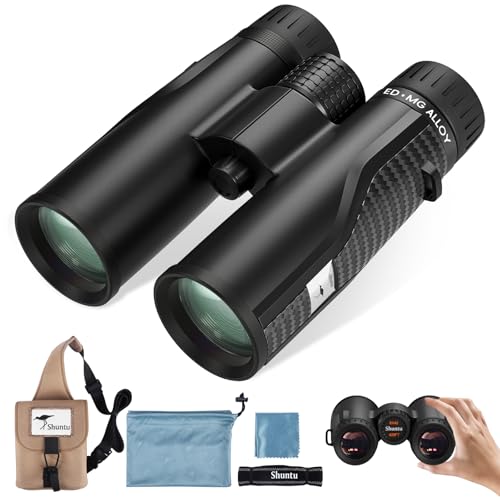


What the Best 10x42 Binoculars for Birding Offer at Each Price Tier
All three tiers share the same basic format, so choosing among the best 10x42 binoculars for birding comes down to how the optics and mechanics improve as prices climb. Shoppers who want a primer on the format itself can read our guide to best binoculars 10x42 before deciding how much to spend. The tiers below describe typical offerings on the US market, and individual models vary, so treat the bands as guidance rather than guarantees.
Budget Tier: Honest Glass for Getting Started
Expect to pay up to about $200 for an entry level 10x42 with respectable clarity in good light. Most models at this level use BaK 4 prisms and multi coated optics, which means some lens surfaces carry coatings and some do not. Focus wheels tend to feel stiffer, and close focus distances often stop around 10 feet, which limits butterfly and warbler work at close range.
Our guide to best budget binoculars for birding walks through the trade offs in this tier in more detail. For casual lists and feeder watching, this tier is genuinely enough.
Midrange Tier: Where Most Birders Settle
Between about $200 and $500, the gains become easy to see in the field. Fully multi coated glass is standard, ED elements appear in many lines, and focus wheels turn with the smooth, quick action that fast moving flocks demand. Waterproofing with nitrogen purging is common, so internal fogging after a cold morning walk stops being a worry.
Newer birders who plan to keep their binocular for years often land here, and our guide to best birding binoculars for beginners explains how starter habits shape that choice. This is the tier where price and performance balance best for most people.
Premium Tier: When the Extra Cost Shows
Above about $500 and rising past $2,000 at the very top, premium glass buys edge to edge sharpness, faithful color in flat light, and mechanics built for daily use over decades. Field flattening lenses keep the outer view crisp, and dielectric prism coatings push brightness higher at dawn and dusk. Focus travel is precise, close focus often reaches about 6 feet, and warranties usually include strong service support. The improvements are real, yet they refine a view rather than transform it, so buy this tier for heavy use and personal enjoyment rather than necessity.
Key Features to Compare
Focus Speed and Close Focus Govern Birding
Focus is the feature that governs birding success more than any other, because a bird in brush rarely waits while you hunt for sharpness. A center focus wheel that travels from close range to distance in roughly one full turn lets you follow a warbler moving through branches. The focus system should be read as a close focus class as well, since the minimum distance tells you how near a subject can sit and still sharpen. Look for close focus of about 8 feet or less if you also watch butterflies, dragonflies, and birds at feeders from a porch.
Exit Pupil and the Dawn Chorus
The exit pupil is the beam of light that leaves the eyepiece and enters your eye, and on a 10x42 it measures about 4.2 millimeters. That figure comes from dividing the 42 millimeter objective by the ten power magnification. An 8x42, by the same math, delivers an exit pupil of about 5.3 millimeters, which looks brighter in deep shade and at dusk but gives up some reach. For birders who start at dawn or work forest interiors, the 4.2 millimeter beam of a 10x42 is adequate in most light, yet it explains why the view dims sooner than a lower power glass when clouds gather.
Field of View: Width Wins Birds
Field of view is best read as a width class, since it describes how much of the scene you see at once rather than how far you can see. Most 10x42 models show about 315 to 340 feet of width at 1,000 yards, and the wider end of that range makes scanning treelines and following flight much easier. A narrow field forces more panning, and panning loses birds.
When two models cost the same, the wider field usually helps a birder more than a small jump in glass grade. Our broader guide to best binoculars birding covers how field width interacts with habitat choice.
Glass, Prisms, and Coatings
Roof prism designs dominate this format because they keep the barrels straight and compact, while ED glass elements reduce the purple and green fringing that can appear around a backlit heron. Fully multi coated optics, meaning every air to glass surface carries several coating layers, transmit more light than partially coated sets. Phase correction coatings on roof prisms keep contrast high, and their absence is a common budget tier shortcut. None of these terms guarantees a great view on its own, so weigh them together with focus feel and field width instead of chasing a single buzzword on the box.
Eye Relief, Weight, and All Day Comfort
Eye relief is best read as a glasses class, because the distance your eye can sit from the eyepiece decides whether eyeglass wearers see the full field or a cropped circle. Glasses wearers should look for about 16 millimeters of eye relief or more, with twist up eyecups that hold intermediate positions. Weight matters on long walks, and most 10x42 models run about 22 to 28 ounces, light enough for a neck strap yet better on a harness. If bulk is your main obstacle, our guide to best small binoculars for birding covers compact alternatives for travel days.
Long Term Costs to Factor In
The purchase price is only part of ownership, so budget for a padded harness or strap at about $20 to $50, a cleaning kit with a lens cloth and blower at about $10 to $20, and replacement eyecups or objective covers over the years. Premium tiers often include longer warranty coverage and cheaper service, which lowers lifetime cost for heavy users. A dropped binocular that loses alignment needs a paid repair or a replacement, so a protective case earns its shelf space. Keep the product table in mind when comparing sticker prices, because a midrange model with a strong warranty can cost less over a decade than a cheap model replaced twice.
10x42 Binoculars: Questions Answered
What does 10x42 mean on a binocular?
The first number is magnification, so subjects appear ten times closer than with the naked eye, and the second number is the objective lens diameter in millimeters. A larger objective gathers more light and usually adds weight, which is why 42 millimeters became the balance point for birding. The pair of numbers also sets the exit pupil when you divide the second by the first. Knowing this math helps you compare any format on the shelf, including 8x42 and 10x50, without relying on marketing labels.
Is 10x42 too much magnification for woodland birds?
Ten power works in woodland, but it magnifies hand shake and narrows the field, so close and fast birds take more practice to track. Bracing your elbows against your ribs or a tree trunk steadies the view more than any feature on the box. Many forest birders keep a second, wider 8x42 for dense trails. If most of your birding happens under canopy at short range, weigh that habit honestly before paying for reach you may not enjoy using every day.
How important is waterproofing for birding binoculars?
Waterproofing matters because internal fogging cannot be wiped away, and a sealed, nitrogen purged barrel prevents moisture from condensing inside when you move between cold air and a warm car. External rain resistance alone only protects the surface. Sealed models also keep out dust and pollen, which slowly degrade unsealed optics in dry regions. Check that the maker states full submersion resistance rather than splash resistance, since the two ratings describe very different levels of protection.
Can I use 10x42 binoculars for watching other wildlife?
Yes, a 10x42 serves well for deer, shorebirds at distance, and raptors riding thermals, and the same reach helps at sporting events. The main check is close focus, because insects and frogs sit nearer than most birds, and a model that focuses to about 6 feet handles them comfortably. Weight also matters more on long wildlife walks than at a feeder. One good 10x42 can cover most outdoor watching, which is why this format outsells more specialized sizes.
When should I repair or replace a birding binocular?
A doubled or shadowed image signals lost collimation, which is a repair job for the maker rather than something to tolerate, since it strains your eyes within minutes. Stiff focus, cracked eyecups, and peeling armor are also service items worth pricing before you shop for a replacement. Coating scratches that sit outside the center of view rarely affect what you see. If repair quotes approach the price of a modern midrange model with better glass, replacement usually makes more sense.
Final Thoughts
Spend first on focus speed and field width, then on glass, because those two traits decide how many birds you actually see on a given morning. The midrange tier suits most birders who walk weekly, while heavy daily use justifies premium glass and service. Whichever tier you choose, the best 10x42 binoculars for birding are the pair you carry without thinking about the weight. Compare your shortlist against the product table, match it to your budget tier, and get outside at dawn.


