BenQ e-Reading LED Desk Lamp Alternatives: Cheaper & Comparable Picks (2026)
Disclosure: We may earn a commission when you buy through links on this page, at no extra cost to you. As an Amazon Associate I earn from qualifying purchases. Learn more
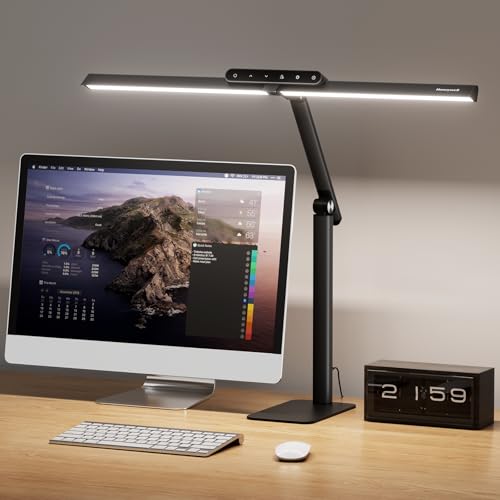
Cheaper and comparable BenQ e-Reading LED desk lamp alternatives, with pros, cons and who each lamp type suits.
The BenQ lamp earned its following for one reason. It throws a wide, even field of light across a desk while keeping glare off your screen, and that combination is rare in an ordinary desk lamp. If the price or the fit puts you off, a good benq e-reading led desk lamp alternative has to copy that wide beam and glare control first. Everything else, from sensors to color settings, comes second.
This guide compares lamp types rather than naming specific models, so you can judge any lamp you find against the same standards. It covers why readers look elsewhere, which type suits which desk, and the features that actually separate a close match from a basic lamp. Start with the comparison table below, then read the type that fits your setup.


Why Look for a BenQ e-Reading LED Desk Lamp Alternative?
Price is the most common reason. The BenQ lamp sits in the premium tier for desk lighting, and many readers and students only need part of what it offers. A lamp with a wide beam and simple dimming often costs about $40 to $90, while lamps that add an ambient light sensor and a broad color range tend to run about $90 to $180. Paying for features you will never adjust is money that could go toward a better chair or monitor arm.
Fit is the second reason. The original design uses a weighted base and a tall arm, which works well on a roomy desk but eats space on a narrow one. If your desk is shallow, a clamp mount lamp frees the surface for a keyboard and notebook. If your monitor already has a light bar above the screen, a smaller task lamp aimed at paper may serve you better than another wide beam source competing for the same area.
Sometimes the goal is not desk work at all. A lamp bought for soft light beside a sofa or bed follows different rules, since reach and beam width matter less than shade style and warmth. For that kind of lighting, start with our guide to the best table lamp instead, and keep this page for focused reading and computer work where glare control decides comfort.
The Best Alternatives
Three lamp types cover nearly every reason for shopping beyond the original. They differ mainly in beam shape, controls, and price, so match the type to your desk before you compare individual listings.
Best Overall Alternative: The Wide Beam Task Lamp
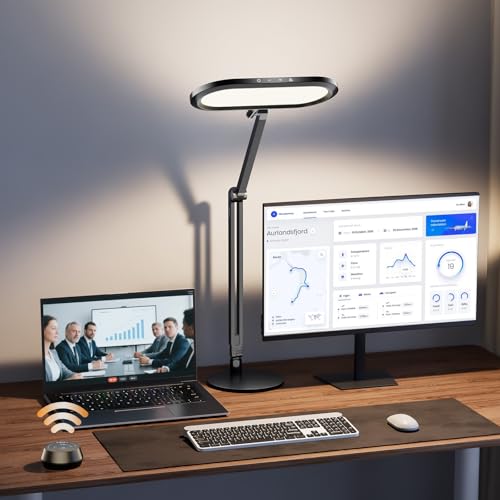
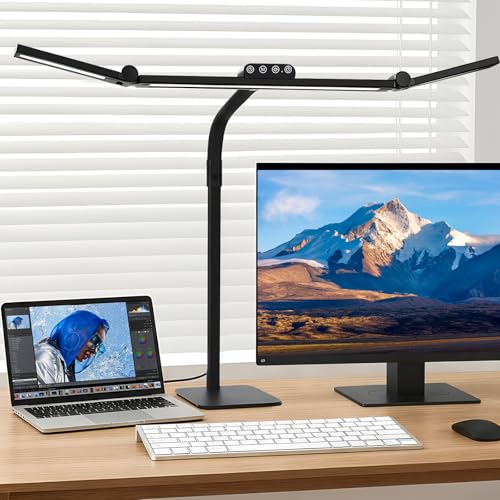
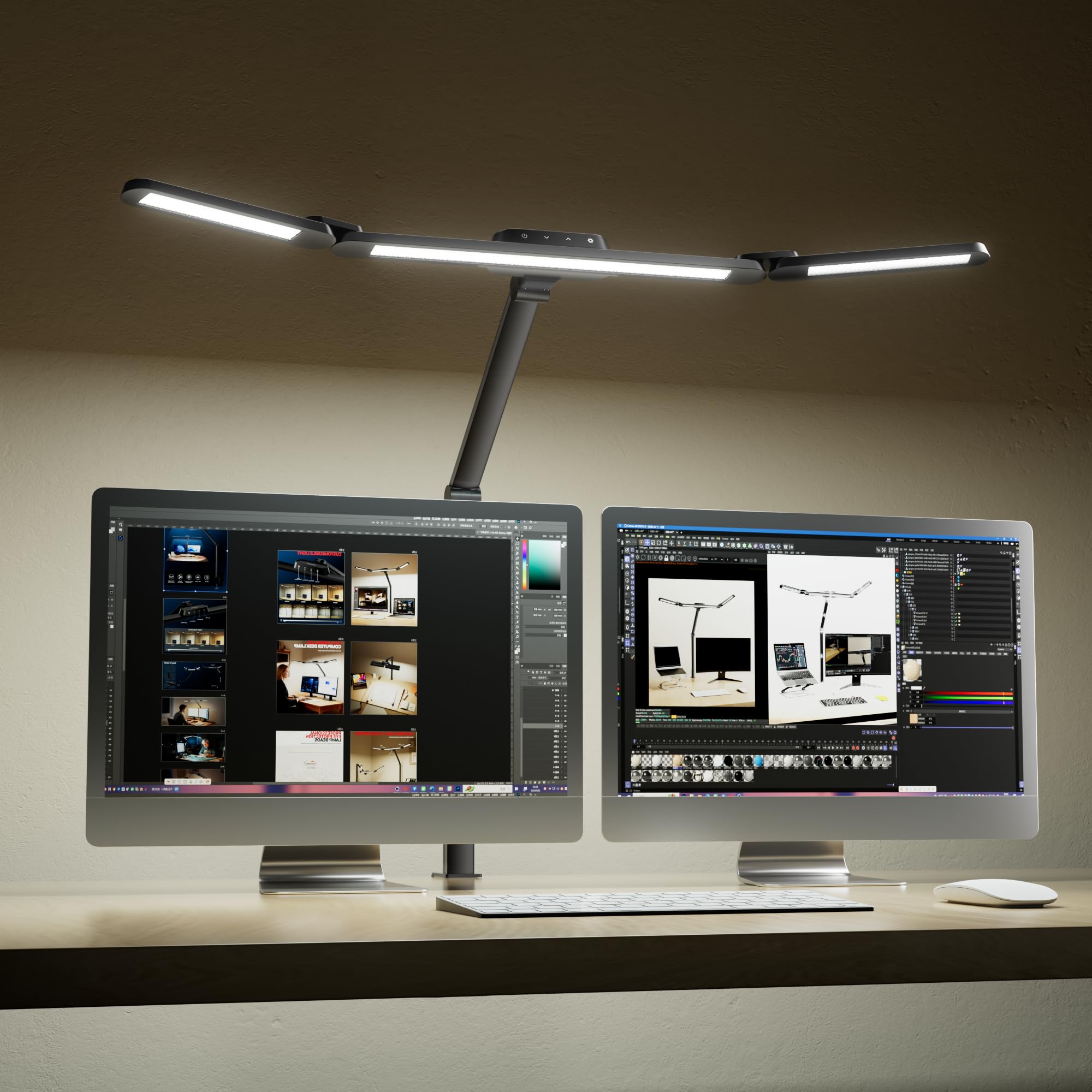
This type copies the core idea most closely. A long or curved head spreads light across the full width of a desk instead of pooling it in one bright circle, and the beam is shaped to favor the area in front of you rather than the wall behind. Most offer several brightness levels and a choice of warm or cool light. Choose this type if you split time between paper and a screen and want one lamp to cover both without moving it all evening.
- Strengths: broad and even coverage, less need to reposition the head, good for wide desks and dual tasks.
- Trade off: the long head and tall arm need clearance, and this type rarely sells at true budget prices.
Best Cheaper Alternative: The Adjustable Arm Lamp With Dimming
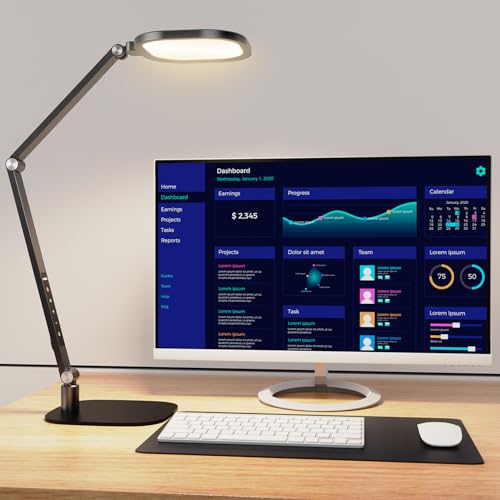
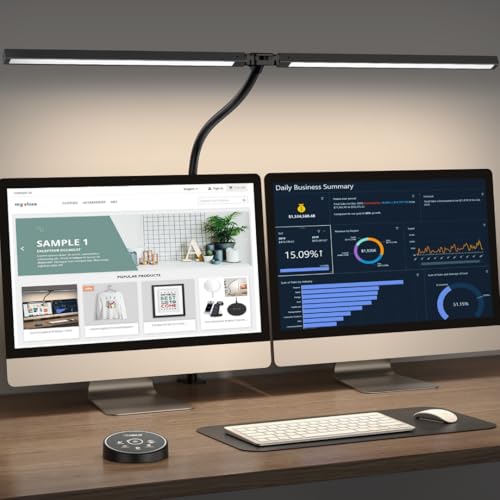
A jointed arm lamp with a dimmer gives up the shaped wide beam but keeps the two things budget buyers use most, namely aim and brightness control. You swing the head close for small print, pull it back for general work, and dim it late at night. Look for a metal arm that holds its angle without drifting and a head wide enough to light an open book. Choose this type for a student desk, a craft table, or a first home office where cost matters more than automation.
- Strengths: lowest cost of the three types, compact clamp or base options, simple controls anyone can use.
- Trade off: a round beam leaves desk corners dim, and cheap hinges can sag after months of daily adjustment.
Best Premium Alternative: The Lamp With an Ambient Light Sensor
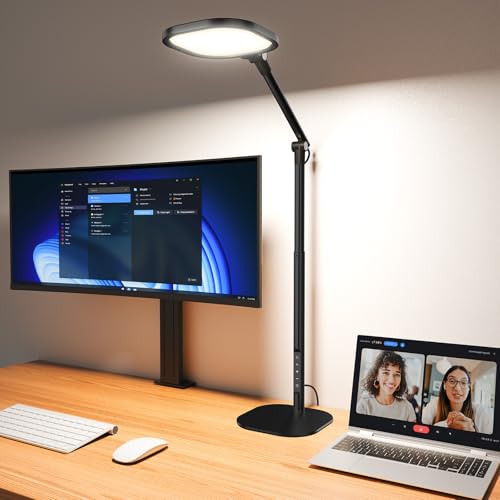
This type adds a sensor that reads the light already in the room and adjusts output on its own, so the desk stays at a steady brightness as daylight fades or overhead lights switch on. Better versions pair the sensor with a wide head, a tall reach, and a full range of color settings from warm to daylight tones. Choose this type if you work long and varied hours at the same desk and you are tired of reaching for the dimmer every time the room changes around you.
- Strengths: steady brightness with little input from you, wide coverage, refined controls and sturdy build.
- Trade off: it can cost nearly as much as the original, and a sensor placed poorly will react to your monitor instead of the room.
How We Picked the Alternatives
We judged every lamp type against the traits that made the original popular, in the order a buyer feels them during a normal work session.
Beam Shape and Coverage
A desk lamp for reading and screen work should light the whole work zone, not just the spot under the head. A wide or oval beam covers a keyboard, an open book, and a notebook at once, so your eyes stop readjusting between bright and dim patches. Check the stated beam width at desk height, and picture your own desk under it. If the lit area is narrower than your work zone, you will move the lamp constantly, and a lamp you keep moving is a lamp you will stop using.
Brightness and Color Temperature
Brightness should range from a low glow for evening reading to a strong level for detailed paper work, with smooth steps between the two and no flicker you can notice on a phone camera or with your eyes. Color choice matters because warm light feels restful for books at night, while cooler light helps many people stay alert and read fine print during the day. A useful lamp offers both ends of that range and remembers your last setting when you switch it back on.
Glare Control and Lamp Position
The best desk lamps aim light at the desk and keep it out of your eyes and off your screen. A head that tilts and a shade that recesses the LEDs both help, because direct sight of the diodes is what creates harsh reflections. Place the lamp to the side opposite your writing hand, angled down at the page. If a listing shows the bare diodes facing the viewer in normal use, expect glare no matter how bright or dim the lamp runs.
Controls, Sensors, and Build
Controls should work without looking. A dial, a touch strip with clear stops, or buttons with distinct shapes all beat a single button you tap through every level. Sensors earn their cost only when they react smoothly and can be switched off. For build, weigh the base against the arm length, since a long arm on a light base tips forward. Metal joints, a firm clamp, and a cord long enough to reach your outlet without crossing the desk complete the picture.
Should You Just Buy the BenQ e-Reading LED Desk Lamp?
Sometimes, yes. If you want the shaped wide beam, the sensor driven brightness, and the tall reach in one proven package, and your desk has room for the base, the original still sets the standard the other types chase. Before deciding, read our benq e-reading led desk lamp review for a close look at how that lamp handles daily reading and screen work, including the points owners praise and the ones they question.
Choose an alternative when one clear need points elsewhere. A clamp lamp wins on a shallow desk. A simple jointed lamp wins when your budget is firm and your tasks are mostly paper. A sensor lamp from another line wins when it fits under your shelves and the original does not. The right call is the lamp whose beam, mount, and controls match your desk, not the lamp with the longest feature list.
FAQs
What is the best alternative to the BenQ e-Reading LED Desk Lamp?
For most desks, the wide beam task lamp type is the closest match, since beam shape does more for comfort than any extra control. Look for a long head, a tilt range that points light down at the desk, and brightness memory. One point buyers miss is head length relative to monitor size. On a desk with a wide monitor, a longer head lights the areas beside the screen where papers usually sit, which a short head leaves in shadow.
Is there a cheaper version of the BenQ e-Reading LED Desk Lamp?
There is no budget twin with the same shaped beam and sensor, but a jointed arm lamp with dimming covers everyday reading for about $20 to $70. You give up the wide even field and the automatic brightness, and you gain a smaller footprint. Spend part of the savings on checking hinge quality instead. Tighten each joint when the lamp arrives and again after a week of use, since new joints often settle and begin to drift once they carry the head daily.
Is the BenQ e-Reading LED Desk Lamp worth the price?
It is worth the price if you work at a screen for many hours daily and eye comfort is your main concern, because the wide glare controlled beam is the feature cheaper lamps copy least well. It is harder to justify for light reading a few evenings a week, where a simpler lamp feels much the same. Consider also how long you keep desk gear. A lamp used daily for years spreads its cost thin, while one bought for a short course does not.
How wide should the light field be on a desk lamp for reading and screen work?
Measure the area you actually use, from the far edge of your book or keyboard to the other side, and choose a lamp whose lit field covers that span at your normal head height. For a typical single monitor desk, that span often runs about 24 to 36 inches. Do a quick check on arrival by laying a newspaper open under the lamp at night. Text at both edges should read as clearly as text in the center, without moving the page.
Can a desk lamp alternative reduce screen glare as well as the BenQ lamp does?
It can come close if the head aims light downward and slightly forward, away from the screen surface, and the diodes sit recessed behind a diffuser. Position does half the work. Set the lamp beside the monitor rather than behind your keyboard pointing up the screen, and tilt the head until the reflection on a dark screen disappears. If glare stays after repositioning, the beam angle is wrong for your desk, and no brightness setting will fix it.
Final Thoughts
The original lamp is popular because its beam solves two problems at once, wide coverage and low glare, and any substitute should be judged on those two points before price or extras. Match the type to your desk size, your mount space, and how much you enjoy adjusting controls. Use the product table above to compare your shortlist against the beam, color, and sensor points in this guide, and the right benq e-reading led desk lamp alternative will stand out quickly.