
All-Clad vs Viking Roasting Pans: Which One Fits Your Home Better? (2026)
Disclosure: We may earn a commission when you buy through links on this page, at no extra cost to you. As an Amazon Associate I earn from qualifying purchases. Learn more
All-Clad vs Viking Roasting Pans: see how they differ in everyday use, features and value, and which one makes more sense for your home and budget.
The week before a big family dinner, you pull out the roasting pan you use twice a year and realize it barely fits your oven, crowds your storage cabinet, and takes up half the sink when you wash it. If you are weighing all-clad vs viking roasting pan options, the better choice depends less on bragging rights and more on your kitchen space, the size of your household, and how much upkeep you will tolerate. This guide compares both brands through that everyday lens, so you can match a pan to your home, your usual headcount, and your budget. Start with the comparison table below for the quick view.




All-Clad vs Viking Roasting Pans at a Glance
Read the matchup as a question of fit first and metal second. Both brands build roasting pans from stainless steel with bonded layers, and both include a rack in most sets. Where they separate is price, weight in the hand, and how fussy the care routine feels week after week. The all-clad vs viking roasting pan decision usually comes down to whether you want a lighter spend now or a pan you plan to hand down later. The table sums up the practical split.
| Criterion | All-Clad | Viking | Edge |
|---|---|---|---|
| Typical price range | Higher, often about $200 and up | Lower, often about $100 to $200 | Viking |
| Construction | Bonded stainless steel with aluminum core | Bonded stainless steel, several layer counts | Tie |
| Weight and handling | Solid, on the heavier side | Solid, often a touch lighter | Viking |
| Care routine | Hand washing preferred to keep the finish bright | Hand washing preferred, tolerates more casual care | Viking |
| Long term value | Strong resale and heirloom appeal | Good value for the money spent | All-Clad |
Meet the Contenders: All-Clad and Viking
All-Clad Overview
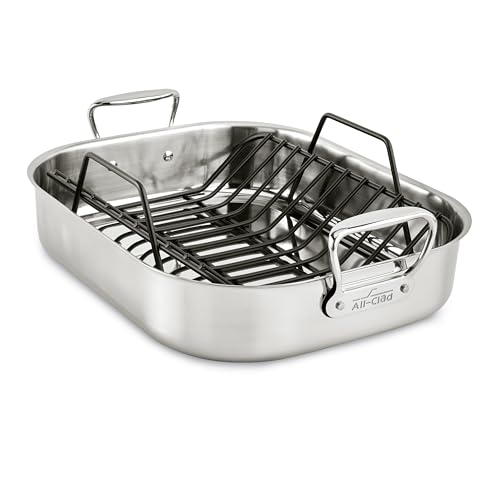
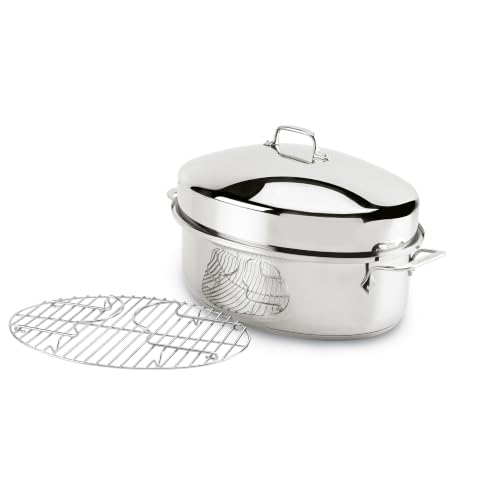
All-Clad built its name on bonded cookware made in the United States, and its roasting pans follow the same formula: stainless steel inside and out with an aluminum core running through the base and walls. The pans feel dense and steady, with tall sides, upright loop handles, and a fitted rack that keeps a turkey or roast lifted above the drippings. For a household that hosts often and keeps cookware for decades, that solid feel is the appeal. Expect to pay a premium for it, and expect a pan that asks for a little care in return.
Viking Overview
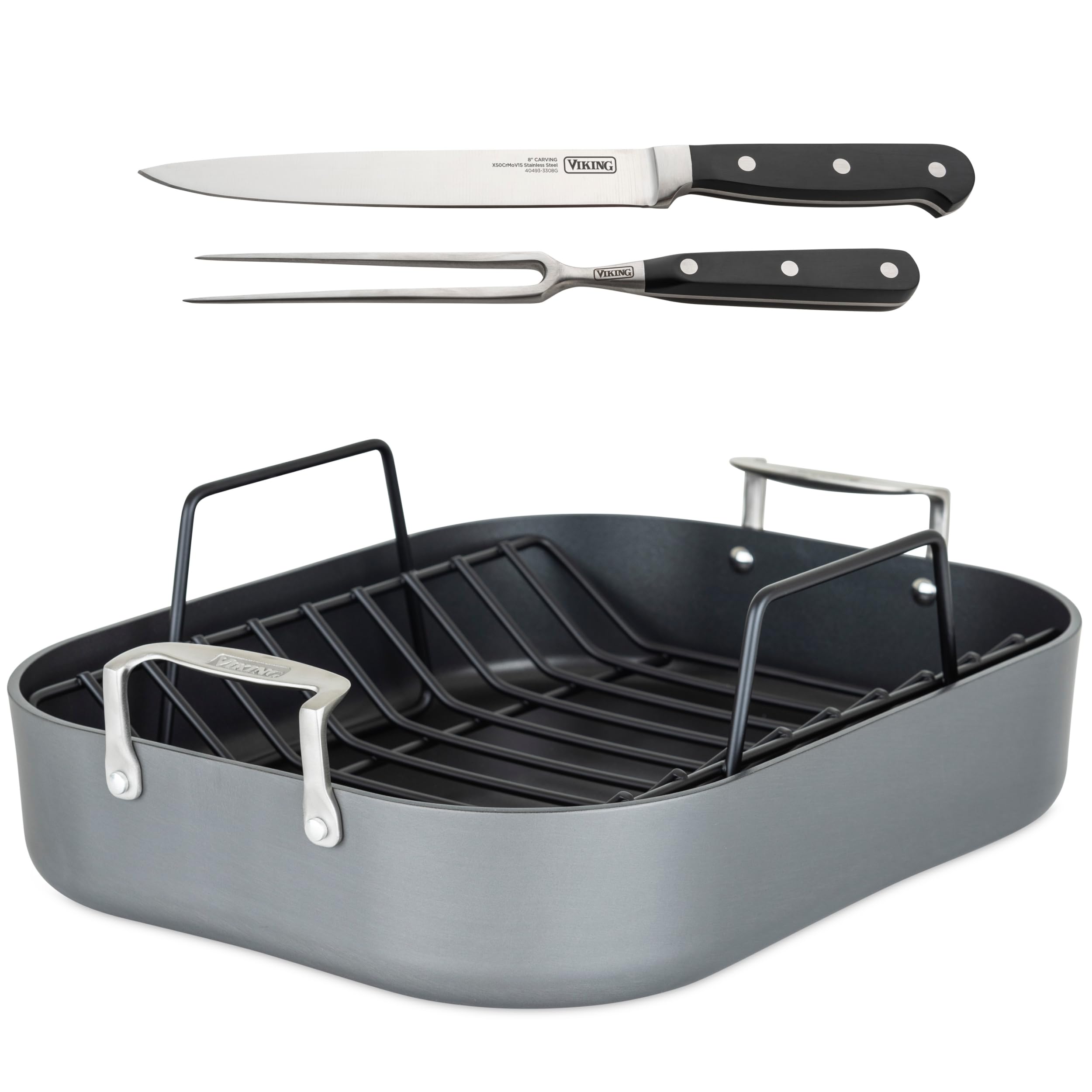
Viking came to cookware from the world of professional style ranges, and its roasting pans carry that sturdy, no nonsense look. You will find stainless steel bodies with bonded layers, riveted handles, and racks sized for large birds and roasts. The lineup spans more than one construction style and price point, so a smaller household can pick a modest pan while a big family can size up without jumping to the highest tier. Owners tend to describe Viking as the practical buy: serious metal, honest weight, and a price that leaves room in the budget for the rest of the meal.
Head to Head: Where They Really Differ
Heat Distribution: All-Clad vs Viking
Even heat matters most at the bottom of the pan, where vegetables sit under a roast and where drippings collect for gravy. All-Clad spreads heat smoothly because its aluminum core runs through the full body, so the corners cook at close to the same pace as the center and browning stays uniform. Viking pans with fully bonded construction perform in a similar way, while simpler builds can show small hot spots you work around by rotating the pan once during cooking. In a home oven that already runs uneven, the All-Clad approach forgives more. If your oven is reliable and you rotate pans out of habit, the gap shrinks to almost nothing.
Durability: All-Clad vs Viking
Both brands use stainless steel that shrugs off acidic foods, metal utensils, and years of holiday duty. The real enemies at home are warping on a hot burner and dents from being knocked around a crowded cabinet. All-Clad pans resist warping well thanks to their thick bonded walls, and the cooking surface keeps its smooth finish through years of scrubbing. Viking pans are also sturdy, though thinner versions can flex slightly when a cold pan meets high heat, so warming the pan gradually is a smart habit. Handles on both are riveted and stay tight. Either brand should outlast the thin disposable pans many families replace every few seasons.
Material Safety: All-Clad vs Viking
If you are asking which pan is the safer choice for your family, the answer starts with what touches the food. Both brands line the cooking surface with stainless steel, a stable and non reactive material that adds nothing to your meal and handles tomato based sauces or wine deglazing without complaint. Neither relies on a nonstick coating, so there is no surface to scratch, peel, or retire after a few years. The aluminum in both pans sits sealed between steel layers rather than against the food. For families cooking for kids or anyone avoiding coatings, that simple steel interior is a calm and lasting choice.
Stovetop and Oven Compatibility: All-Clad vs Viking
A roasting pan earns its keep when it moves from oven to burner for gravy, and both brands handle that trip. All-Clad roasting pans work on gas, electric, and induction cooktops, and the steel exterior tolerates high oven heat, including a short finish under the broiler on many models. Viking pans cover the same ground, with broad induction compatibility across the lineup and oven ratings that suit roasting and browning. Check the rating printed for the exact size you buy, since larger pans and lids can carry different limits. Also measure your oven width before ordering, because a pan that fits on paper can still crowd the door or walls.
Cleaning: All-Clad vs Viking
Roasting leaves the toughest mess in the kitchen: baked on juices, browned bits, and grease that sets as the pan cools. Stainless steel from both brands cleans up best with a soak in hot soapy water, after which most residue lifts with a sponge and a paste of baking soda for stubborn spots. All-Clad asks for hand washing to protect its polished finish, and hard water can leave cloudy marks that need a vinegar wipe to clear. Viking surfaces tend to hide water spots a little better and feel less precious about casual care. Both brands call many pans dishwasher safe, yet repeated cycles dull any stainless finish over time.
Price and Value
All-Clad sits at the top of the price ladder, with large roasting pans often costing about $200 to $300 or more. Viking usually lands lower, often about $100 to $200 for a comparable size, and sales bring it down further. Value depends on your calendar. A family that roasts monthly and hosts every holiday can spread the All-Clad cost across hundreds of meals, while a household that roasts twice a year gets more from the Viking price and can put the savings toward a good carving knife or thermometer. Neither pan needs costly upkeep, so the purchase price is nearly the whole cost of ownership.
Our Recommendation for Your Home
Pick All-Clad if
Choose All-Clad if your household cooks for a crowd often, your storage can give a large pan a permanent home, and you like buying once and keeping gear for decades. The even heat forgives a temperamental oven, the finish rewards gentle care, and the pan still looks presentable when it comes to the table for serving. It also suits cooks who make pan gravy on the stove every time, since the bonded base handles burner heat without drama.
Pick Viking if
Choose Viking if you want serious stainless steel without the top tier bill, or if a lighter handling pan matters for whoever lifts it out of the oven. It fits homes where the roasting pan works hard a handful of times a year, shares cabinet space with sheet pans and stockpots, and gets washed by whoever is on dish duty without a lecture. The money you save can cover the bird, the sides, and dessert, and the pan still delivers browning and gravy you will be proud to serve.
Not Sold on Either? One More Option
Maybe stainless steel is not the only route for your kitchen. Enameled cast iron roasting pans offer a different kind of home fit: they hold heat beautifully, move from oven to table with real presence, and come in colors that suit an open shelf. They are heavier than either steel pan here and cost as much as the premium tier, so weigh that tradeoff honestly. If you want to see the full field across materials and sizes before deciding, our guide to the best roasting pan walks through every style worth considering for your space and headcount.
Your Questions, Answered
Which roasting pan lasts longer, All-Clad or Viking?
Both can last for decades because stainless steel does not wear out the way coatings do. All-Clad holds a small edge in long term shape, since its thick bonded walls resist warping through years of high heat cycles. Viking pans also endure well, especially the heavier builds. The deciding factor at home is storage: a pan stored without other cookware stacked inside keeps its cooking surface smooth far longer, whichever brand you own.
Which is easier to clean, All-Clad or Viking?
Viking gets the nod for most households. Its finish shows fewer water spots after washing, so the pan looks clean with less polishing effort. All-Clad cleans just as fully with a soak and a soft sponge, but its bright polish reveals every cloudy mark from hard water until you wipe it with vinegar. If several people share dish duty and nobody wants special steps, the more forgiving surface saves small frustrations all year.
What is the main difference between All-Clad and Viking roasting pans?
Beyond price, the difference you feel daily is how the pan asks to be treated. All-Clad behaves like a long term fixture: heavier in the hand, polished, and happiest with careful washing and its own storage spot. Viking behaves like a hard working tool: a bit more relaxed about care, easier on the budget, and content in a busy cabinet. Cooking results overlap a great deal, so the daily ownership experience is the honest dividing line for most homes.
Is All-Clad better than Viking for a roasting pan?
Better depends on the home it lands in. All-Clad earns its premium for frequent roasters who value even heat and a finish that stays handsome with care. Viking is the smarter buy when roasting is occasional, storage is tight, or the budget needs to stretch across the whole holiday table. A household that roasts a turkey twice a year will rarely taste the difference, while a weekly roast cook may appreciate what the extra money buys.
The Bottom Line
Set the all-clad roasting pan vs viking roasting pan debate against your own kitchen and the answer gets simple. Pick All-Clad for a buy it for life pan that forgives a tricky oven and rewards careful owners, and pick Viking for sturdy stainless performance that respects your budget and your cabinet space. Look back at the product table above, picture who will lift the pan and who will wash it, and choose the one your household will still be glad to own years from now. Either way, the all-clad vs viking roasting pan choice ends with a pan that handles holiday birds and Sunday roasts with confidence.


