
All-Clad vs Cuisinart Roasting Pans: Which One Fits Your Home Better? (2026)
Disclosure: We may earn a commission when you buy through links on this page, at no extra cost to you. As an Amazon Associate I earn from qualifying purchases. Learn more
All-Clad vs Cuisinart Roasting Pans: see how they differ in everyday use, features and value, and which one makes more sense for your home and budget.
The turkey is bought, the guests are coming at four, and your only roasting pan is a thin sheet pan with sides too low for drippings. That moment is when the all-clad vs cuisinart roasting pan choice stops being abstract. One brand asks you to pay more for heavy bonded metal and decades of service. The other asks far less and still gets dinner done well.
This guide compares the two through the lens of your actual home. We look at oven and cabinet space, how many people you feed, how the pan feels in daily use, and what each one costs you over time in money and upkeep. Start with the comparison table below, then read the sections that match your kitchen.




All-Clad vs Cuisinart Roasting Pans at a Glance
Both brands sell rectangular metal pans with raised sides and a rack option, and both can handle a holiday bird or a tray of vegetables. The gap shows up in construction, weight, and price rather than in basic shape. This quick view sums up the trade before the detail that follows.
| Criterion | All-Clad | Cuisinart | Edge |
|---|---|---|---|
| Construction | Bonded layers through the whole pan | Often a base layer or lighter gauge steel | All-Clad |
| Weight in hand | Heavy and solid | Lighter and easier to lift | Depends on you |
| Price range | Premium | Budget friendly to moderate | Cuisinart |
| Cleaning effort | Soaking and scrubbing after roasting | Similar, with some coated options | Cuisinart, slightly |
| Best home fit | Frequent roasting, large gatherings | Occasional roasting, smaller kitchens | Depends on use |
Neither column wins on every row, and that is the honest picture. A pan you roast with twelve times a year rewards different strengths than a pan that comes out twice each winter.
Meet the Contenders: All-Clad and Cuisinart
All-Clad Overview
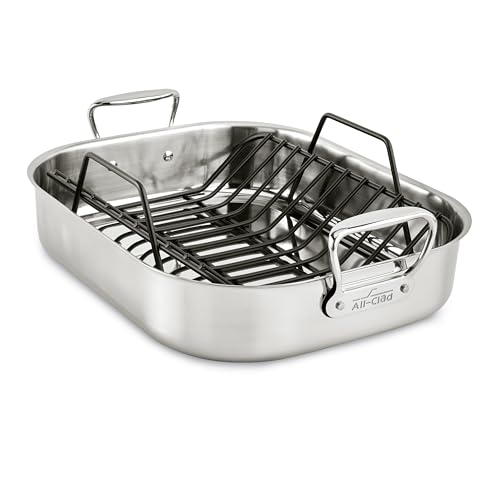
All-Clad built its name on bonded cookware, where layers of stainless steel wrap a core of aluminum so heat travels through the base and up the sides. Its roasting pans follow that same idea, with tall sides, sturdy upright handles, and a steel rack in many sets. The pans feel dense when you pick them up, and the finish is plain polished steel with no coating to protect. In a home kitchen, that translates to a pan you buy once, store in a prime cabinet spot, and reach for whenever a roast matters.
Cuisinart Overview
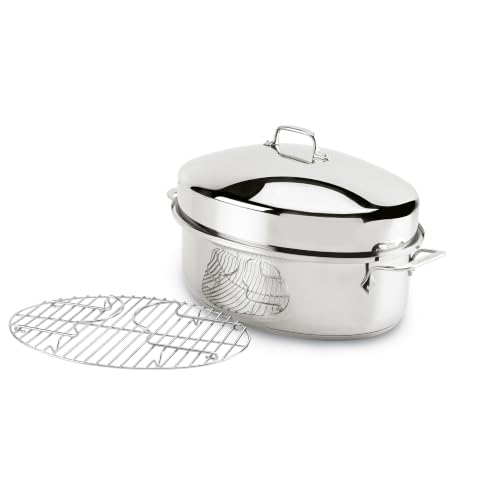
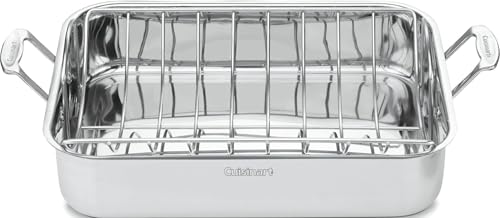
Cuisinart sells roasting pans across a wider spread of prices and builds, from stainless steel pans with an aluminum base layer to lighter options aimed at casual cooks. Most come with a rack and handles that fold or sit lower, which can help in tight storage. The steel tends to be thinner than the premium rival, so the pan feels easier to move from oven to counter. For many households, that lighter build and lower price match real life, where the roasting pan works hard on holidays and rests in a cupboard the rest of the year.
Head to Head: Where They Really Differ
Heat Distribution: All-Clad vs Cuisinart
Bonded construction is the core reason All-Clad pans brown food so evenly. Because the aluminum core runs through the entire pan, the corners and sides heat at close to the same rate as the center, so potatoes at the edge crisp instead of steaming while the middle scorches. Cuisinart stainless pans often place the heat spreading layer in the base only. The bottom still heats well, but the side walls can lag, which shows up as softer skin on the parts of a bird that sit high in the pan. If you roast whole chickens often and care about even color, this gap is real and repeatable.
Durability: All-Clad vs Cuisinart
Thick bonded steel resists warping when a cold pan meets a hot oven, and it shrugs off the knocks of cabinet storage and heavy birds. All-Clad pans also tend to keep their flat base over years of stovetop gravy making, which matters if your stove has small burners. Cuisinart pans hold up well under normal roasting, but thinner steel is more likely to flex or develop a slight rock on the burner after repeated high heat cycles. Handles tell a similar story. Riveted upright handles on the premium pan feel fixed for life, while lighter handles ask you to check for looseness now and then.
Material Safety: All-Clad vs Cuisinart
Stainless steel is the safe common ground here. Both brands offer steel pans whose cooking surface does not react with tomato based sauces or wine, and neither surface sheds a coating into food. Where Cuisinart lines include coated options, the rules change. You should keep coated pans at or below the maker stated heat limit, use wood or silicone tools, and retire the pan if the surface chips or peels. With plain steel from either brand, your main safety habit is simpler. Let the pan cool a little before washing, and use oven mitts with a dry grip, since wet cloth on a hot handle can send steam onto your hand.
Stovetop and Oven Compatibility: All-Clad vs Cuisinart
A roasting pan earns extra value when it moves from oven to burner for gravy, and both brands sell steel pans that can do that on gas and electric stoves. Induction is the point to check. A pan works on induction only if its base is magnetic, and some lighter Cuisinart builds and coated models vary on this, so test the listing for your exact size before you order. Oven limits differ by line as well, and racks sometimes carry a lower limit than the pan itself. Measure your oven cavity too. A large pan plus its handles needs about an inch of clearance on each side for air to circulate and for your hands to get in safely.
Cleaning: All-Clad vs Cuisinart
Roasting leaves baked on drippings no matter which logo is stamped on the base, and plain steel from both brands cleans the same basic way. Fill the warm pan with hot water, let it sit while you eat, and most residue lifts with a nylon brush. All-Clad steel can take a gentle abrasive paste for stubborn spots, which helps it look new again after a dark roast. Coated Cuisinart pans release food with less soaking, but you trade that ease for gentler washing and no metal scrubbers. Racks are the fussy part for both, since drippings bake into the joints where the wires cross.
Price and Value
Expect All-Clad roasting pans at about $150 to $300 depending on size and whether a rack is included, while Cuisinart pans more often sit at about $50 to $150. The smarter way to judge that gap is cost per roast. A household roasting twice a month spreads the premium price across hundreds of meals, and the pan may be the last one they buy. A household roasting twice a year pays a lot for strength it rarely uses, and the saved money covers a good carving knife and a reliable thermometer instead. Factor in storage as a cost too, since a large heavy pan claims cabinet space all year.
Our Recommendation for Your Home
Pick All-Clad if
Choose the premium pan if you roast at least once a month, cook for eight or more people at holidays, and make pan gravy on the stovetop as part of your routine. It also suits you if your kitchen has the cabinet depth to store a large pan flat and you are comfortable lifting a heavy loaded pan with both hands. Buyers who keep cookware for decades and dislike replacing gear will feel the price was fair within a few years of steady use.
Pick Cuisinart if
Choose Cuisinart if roasting is a seasonal event in your home, your household is two to four people, and a smaller or lighter pan fits your oven and shelves better. It also fits cooks who would rather put money toward other tools and who value easy lifting over maximum browning at the edges. If your stove is induction, confirm the base of the size you want before ordering, and you will have a capable pan at a gentle price for the way you actually cook.
Not Sold on Either? One More Option
If both brands miss your needs, look at the wider field before you settle. Enameled cast iron roasters hold heat beautifully for slow roasts but weigh even more, while plain aluminum pans cost little and suit cooks who roast under a rack and never make stovetop sauce. Our roundup of the best roasting pan options walks through those types by size, material, and budget, so you can compare shapes beyond these two brands. Take your oven measurements and your usual bird size with you when you browse, since fit decides more purchases than finish does.
Your Questions, Answered
Which roasting pan lasts longer, All-Clad or Cuisinart?
The All-Clad pan usually lasts longer because its thicker bonded steel resists warping and its surface has no coating to wear out. Storage damage matters too. Stacking other pans inside any roaster can scratch the interior over time, so store it with a cloth or paper sheet between layers. Treated that way, a heavy steel pan can serve for decades, while a lighter pan used gently can still give many good years.
Which roasting pan is easier to clean, All-Clad or Cuisinart?
A coated Cuisinart pan is easier to clean on the night, since food releases with a sponge and little soaking. Plain steel pans from both brands need similar effort. One extra trick helps with the rack, which is always the hardest part. Spray the rack lightly with oil before the food goes on, and baked drippings release far more easily later. If you hate scrubbing and roast only a few times a year, that small ease may matter more than steel you can scour without worry.
What is the main difference between All-Clad and Cuisinart roasting pans?
The main difference is where the heat spreading metal sits and how much of it you get. All-Clad bonds aluminum through the whole pan, while many Cuisinart steel pans concentrate that layer in the base. A practical result that follows from this is carrying comfort. The heavier pan stays planted when you carve in it, while the lighter pan can slide a little on a smooth counter unless you set it on a damp towel. Think about where you carve and serve, not only where you roast.
Is All-Clad better than Cuisinart for a roasting pan?
All-Clad is better on even heating, warp resistance, and long service life, and Cuisinart is better on price, weight, and choice of sizes at low cost. Better only has meaning against your habits. One test worth using is the rental test. If you would happily borrow the heavy pan from a friend four times a year, you roast often enough to own the premium one. If you would borrow it once each winter, the value pick serves you just as well at your table.
The Bottom Line
There is no wrong door here, only a better fit for your kitchen. All-Clad rewards frequent roasters with even browning, a flat stable base for gravy, and a pan that can anchor holiday cooking for decades. Cuisinart gives occasional roasters a lighter, kinder priced tool that still turns out a fine bird. Match the pan to your household size, your storage space, and how often you truly roast, and use the product table above to check sizes and current prices before you order your all-clad vs cuisinart roasting pan winner.


