
All-Clad HA1 Nonstick Review: Honest Pros, Cons & Who It's For (2026)
Disclosure: We may earn a commission when you buy through links on this page, at no extra cost to you. As an Amazon Associate I earn from qualifying purchases. Learn more

Thinking about the All-Clad HA1 Nonstick? Our honest All-Clad HA1 Nonstick review covers everyday pros and cons, who it suits.
Eggs for two on a weekday morning and a full pan of chicken on Sunday ask very different things from the same cookware. This all-clad ha1 nonstick review looks at the HA1 line through the lens of daily home life: how the pans fit your stove, your cabinets, your household size, and your budget over years of use.
Below you will find the key specs, the build details that matter at home, the honest strengths and trade offs, upkeep costs, and answers to common owner questions. Use the comparison table below to see how the HA1 pieces line up by size and role.




All-Clad HA1 Nonstick: Key Specs
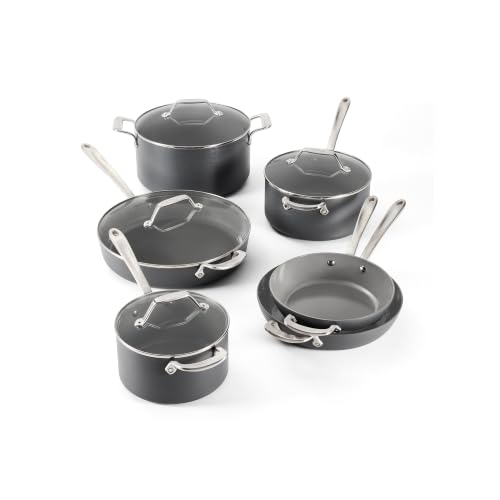
The HA1 line covers fry pans, saucepans, saute pans, and sets, all built on the same basic design, so the specs below apply across the range.
- Construction: hard anodized aluminum body with a bonded stainless steel base
- Coating: PTFE nonstick, made without PFOA
- Handles: riveted stainless steel, shaped for a secure grip
- Compatibility: all stovetops, including induction
- Oven use: safe to about 500 degrees Fahrenheit
- Care: dishwasher safe, though hand washing is recommended to protect the coating
- Warranty: limited lifetime warranty from the maker
Two details stand out for home cooks. The aluminum body keeps each pan light enough for daily lifting, and the bonded base opens the line to induction owners, who are often shut out of basic nonstick.
First Impressions and Build
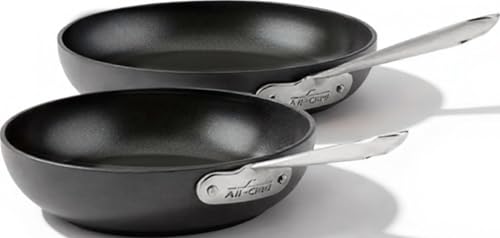
Out of the box, the HA1 feels like a serious pan without the wrist strain of clad stainless cookware. The base sits flat and steady on the burner, and the walls feel thick rather than tinny. The handle is long and firmly riveted, with room for an oven mitt grip.
Two practical points are worth checking first. The rivet heads sit inside the cooking surface, so they interrupt an otherwise smooth pan, and the long handles need deep drawers if you store pans flat. Measure your storage space before you buy.
How the HA1 Performs in Everyday Home Use
What matters at home is how the pan behaves on a rushed Tuesday, with a hungry family and a sink already half full.
Heat Distribution
Aluminum is a strong heat conductor, and the HA1 body spreads warmth across the cooking surface instead of concentrating it in one scorching ring above the burner. Pancake batter browns at a similar pace in the center and near the edges, and eggs set evenly instead of cooking fast at the rim. Aluminum also responds quickly when you lower the flame, so you can pull back the heat before a delicate sauce breaks.
Durability
The hard anodized body is the durable half of this design. It resists dents and the casual knocks of daily storage far better than thin stamped pans, and the bonded base helps it keep a flat shape over time. The coating is the wear part, as on every PTFE pan, so treat durability as two stories: a sturdy body that can serve for many years, and a slick surface whose lifespan depends on your heat and tools.
Material Safety
The coating is PTFE made without PFOA, the processing aid that raised concerns in older nonstick generations. In normal home cooking, the main safety habit is simple: never leave an empty nonstick pan blazing on high heat. An overheated dry pan can damage its own coating, and fumes from severely overheated PTFE are a known hazard for pet birds, so run your vent fan and keep birds out of the kitchen. If a coating ever flakes heavily, retire the pan.
Stovetop and Oven Compatibility
The bonded stainless base makes the HA1 work on gas, electric, ceramic glass, and induction cooktops, which matters if you plan to change stoves while keeping your pans. Many budget nonstick pans fail that test, because plain aluminum does not respond to an induction burner. Oven tolerance to about 500 degrees Fahrenheit lets you start a frittata on the stove and finish it under the broiler. Glass lids carry a lower oven limit, so check the lid rating first.
Features You Will Actually Use
The fry pans have flared sides, and that shape earns its keep daily. Food slides toward the rim when you tilt the pan, omelets roll out onto a plate without a fight, and a spatula gets under fish at a shallow angle. Larger pieces add a short helper handle opposite the main handle, so you can lift a full pan with two hands.
Sets add a quieter convenience: lids are sized to fit more than one piece in the range, so you are not hunting for the one lid that matches, and the main handles have a hanging hole for rail storage.
Living With It: Setup, Cleaning and Upkeep
There is almost no setup. Wash a new pan in warm soapy water, dry it, and it is ready to cook, with no seasoning routine to learn. For daily cooking, stay at low to medium heat for most tasks, and reach for silicone, nylon, or wood tools at the stove.
Cleaning is a short job when the pan is still slightly warm: warm water, a drop of dish soap, and a soft sponge. Skip aerosol cooking sprays, because their additives bake into a sticky film that makes food cling. When you stack pans, slip a cloth or pan protector between them so one base cannot scuff the coating below.
What We Like and What Could Be Better
- Even heating from a light aluminum body that is easy to lift with one hand
- Induction ready base, which many lower priced nonstick lines leave out
- Oven tolerance that covers broiling and finishing work, not just warming
- A limited lifetime warranty standing behind the body and workmanship
- The coating is still a wear item, so the premium price buys years of use, not a lifetime surface
- Rivet heads inside the pan can trap bits of egg and need a brush now and then
- Hand washing is recommended, so the dishwasher rating is a backup, not a daily plan
Is the All-Clad HA1 Nonstick Right for Your Household?
Small households that cook eggs, fish, and vegetables most days will feel the value quickly, because the release surface saves oil, time, and scrubbing on every meal. Induction owners are another strong match, since the HA1 gives them a genuine nonstick option without an adapter plate. Families who want one coordinated set for breakfast through Sunday sauce will also find it easy to live with.
Skip it if your cooking leans on hard searing at maximum heat, where stainless steel or cast iron belongs. Skip it as well if every pan goes straight into the dishwasher each night, or if you need the lowest cost per pan and accept replacing budget pans more often.
How the All-Clad HA1 Nonstick Compares
The closest rivals split by coating style. If you prefer to avoid PTFE altogether, read the greenpan valencia pro review to see how a ceramic coated rival handles daily use; ceramic surfaces feel very slick when new, though they tend to lose their release sooner than PTFE does. For a tougher coated surface aimed at higher heat, the ninja neverstick review covers a premium rival whose coating is bonded at far higher temperatures during manufacturing.
The HA1 sits between those two paths: the proven release of a classic PTFE surface, a light and responsive aluminum body, and a long warranty behind it. For most homes, that middle ground is exactly the appeal.
Price, Deals and Warranty
The HA1 sits in the premium nonstick tier: above store brands and basic aluminum pans, below clad stainless lines. Sets usually soften the per piece cost, so price a set against the two or three single pans you would actually buy. Holiday sales events are the natural moments to check, because this line is discounted on a regular cycle.
The limited lifetime warranty covers defects in materials and workmanship. It does not promise that a nonstick coating will stay slick forever, and damage from overheating sits outside its scope. Read it as a quality signal about the body, not insurance for the surface.
Common Buying Mistakes to Avoid
- Buying the largest set on sale when your household only cooks in two or three pan shapes, so the extra pieces crowd your cabinets for years.
- Picking a pan diameter that dwarfs your burner, which leaves the outer ring of food cooking slower than the center.
- Preheating on high to save a minute, which ages the coating faster than any other habit.
- Reading dishwasher safe as dishwasher proof, then watching detergent dull the exterior and shorten coating life.
- Budgeting only for the purchase price and forgetting that every nonstick pan is eventually a replacement item.
Cost of Ownership and Care
Ongoing costs are low and mostly optional. There are no filters, pads, or refills to buy. The real expenses are small tools that protect your investment: pan protectors, soft sponges, and heat safe silicone utensils, which most kitchens already own. Buying pieces singly as old ones wear out spreads replacement cost across years.
Care habits are where the money is saved or lost. A pan treated gently can serve through thousands of breakfasts, while the same pan overheated weekly may need replacing in a fraction of that time. Keep your proof of purchase in case a genuine defect ever calls for a warranty claim.
Your Questions, Answered
How do you clean the All-Clad HA1 Nonstick when food film builds up?
For stubborn film, soak the cooled pan in warm soapy water for about fifteen minutes, then apply a paste of baking soda and water with a soft sponge and rinse well. Never use steel wool, scouring powders, or oven cleaner, because each one damages the coating. Dry the pan fully before stacking it, since trapped moisture can dull the dark exterior finish over time.
What is a cheaper alternative to the All-Clad HA1 Nonstick?
Basic hard anodized pans from value focused lines cost less and cook in a similar style, and ceramic coated pans are another lower cost route. The trade offs show up as thinner bases that heat less evenly, shorter warranties, and coatings that may lose release sooner. A smart middle path is to buy one good fry pan for eggs and fish, then fill the rest of your rack with lower cost pieces for soups and boiling.
How long does the All-Clad HA1 Nonstick last?
Plan on several years of daily use before the coating release noticeably fades, with the body itself lasting much longer. A pan used gently a few times a week can stay slick well past that range. Replace a pan when food starts sticking in the center despite careful washing, when scratches cut through to bare metal, or when the coating flakes, because those signs mean the surface has finished its working life.
What are common All-Clad HA1 Nonstick problems?
Most problems owners describe trace back to heat and handling rather than defects. A hot pan plunged into cold water can warp slightly and start rocking on a glass cooktop. Sticky patches usually come from spray oil residue or repeated high heat cooking. Dishwasher detergent can fade the exterior finish over many cycles. Loose handles or a base that never sat flat point to a defect and belong in a warranty claim.
Is the All-Clad HA1 Nonstick worth it?
It depends on how often the pan earns its place on your stove. Spread the premium price across several years of weekday breakfasts and the cost per use drops to very little, which makes the even heating and easy cleanup feel well bought. If you cook eggs or fish only now and then, a cheaper pan covers that job and the extra money serves you better elsewhere.
Final Thoughts
The HA1 makes the most sense as daily cookware for real households: light in the hand, even on the burner, welcome on induction, and backed by a warranty that treats the body as a long term purchase. If you are still weighing the wider field, our guide to the best nonstick pan compares the main types side by side. Read the product table above once more, match a size to the meals you cook most, and the all-clad ha1 nonstick review case is simple: buy it for daily ease, treat the coating gently, and it will repay you at breakfast for years.


