Airthings View Plus Alternatives: Cheaper and Comparable Picks (2026)
Disclosure: We may earn a commission when you buy through links on this page, at no extra cost to you. As an Amazon Associate I earn from qualifying purchases. Learn more
An Airthings View Plus alternative can cover the readings you need for less. See which type fits your home and budget.
The Airthings View Plus earns its fans by tracking radon, fine particles, carbon dioxide, humidity, temperature, pressure, and volatile organic compounds in one unit. Its price, though, sits well above most home air monitors, and that gap sends many shoppers looking for an airthings view plus alternative that covers the readings they actually need for less money. If that sounds like you, start with our wider guide to the best air quality monitor options, then use the comparison table below to see how the main types of alternatives stack up.
The honest answer is that no cheaper monitor matches every sensor in that list. The smart move is to decide which two or three readings matter most in your home, then buy the type that measures those readings well and skip paying for the rest.

Why Look for an Alternative to the Airthings View Plus?
Price is the most common reason. A monitor with seven sensors, a calm display, and both battery and cable power costs more to build than a simpler unit, and many homes simply do not need all seven readings. If your main worry is stuffy bedrooms, carbon dioxide is the reading that guides your ventilation habits, and a monitor built around that single gas can cost far less while doing that one job very well.
Availability and fit matter too. Stock comes and goes, and some shoppers want a screen they can read at a glance from across the room, a smaller unit that travels between rooms, or an app that stores longer history without extra steps. Others live in a home where radon is not a local concern, so paying for a radon sensor buys them nothing they will ever act on.
There is also the running cost to think about. Battery powered units need fresh batteries on a schedule, and monitors that lean on cloud features depend on your home WiFi staying up. A simpler alternative with local readings on the device itself keeps working during an internet outage, which some buyers value more than remote access from their phone.
The Main Types of Alternatives Compared
Alternatives fall into three broad types, and the comparison table above groups them that way. Each type trades sensor coverage against price in a different place, so the right choice depends on which readings will change what you do at home, such as opening windows, running a purifier, or testing for radon.
Full multi sensor monitors as the closest match
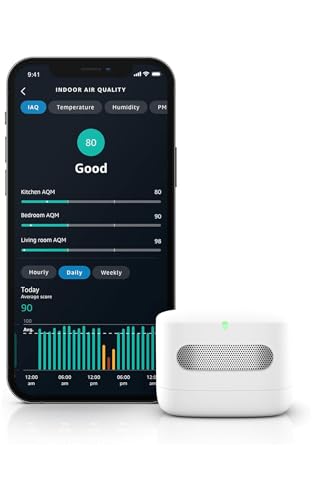
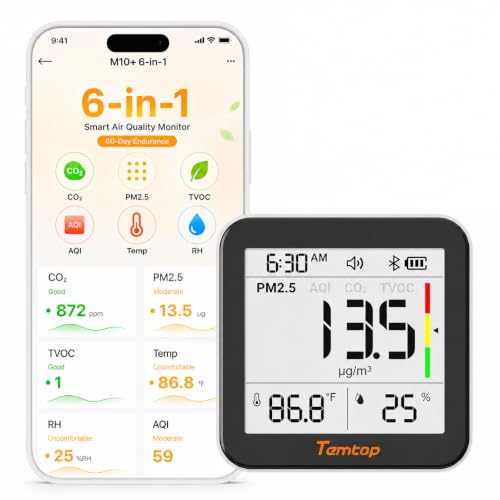
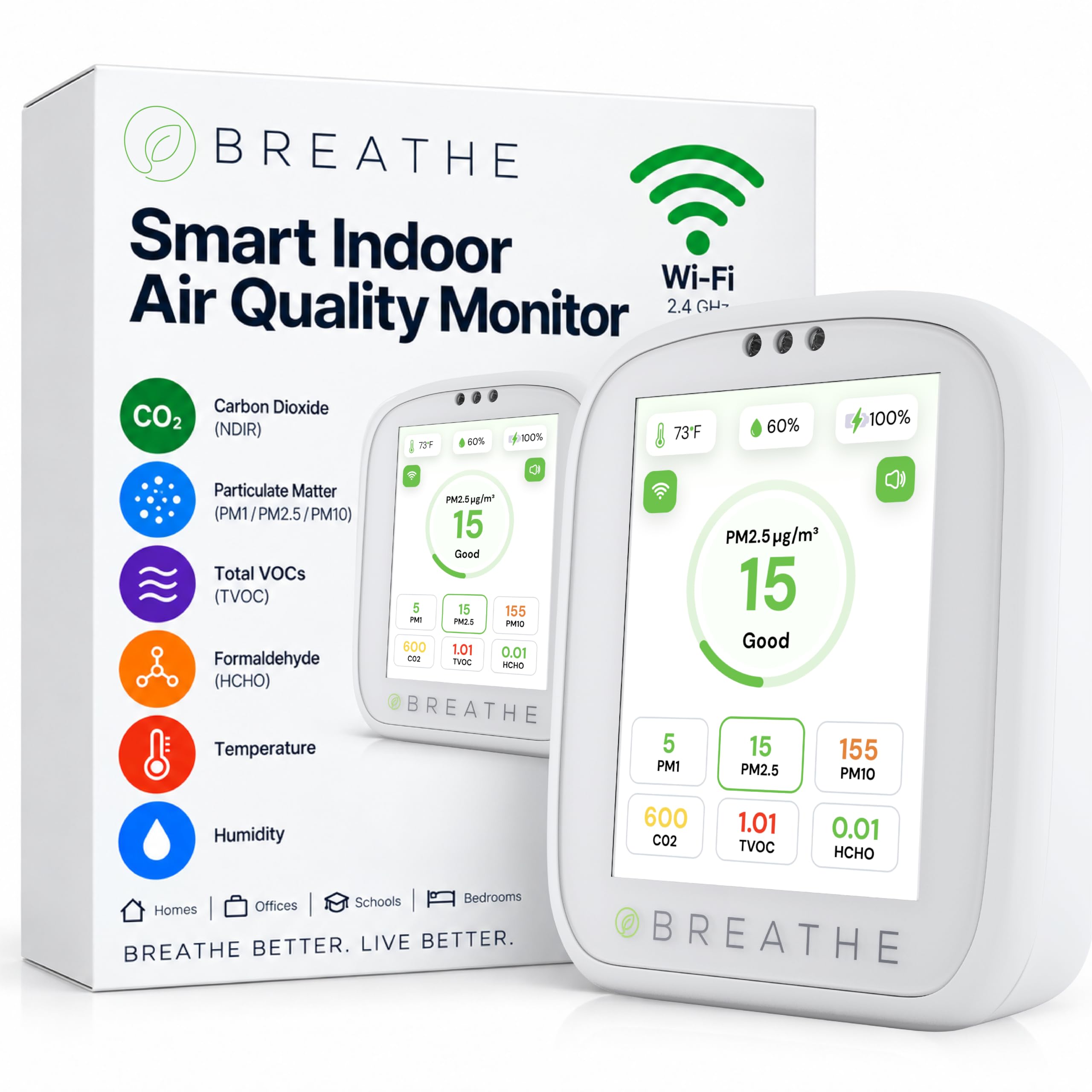
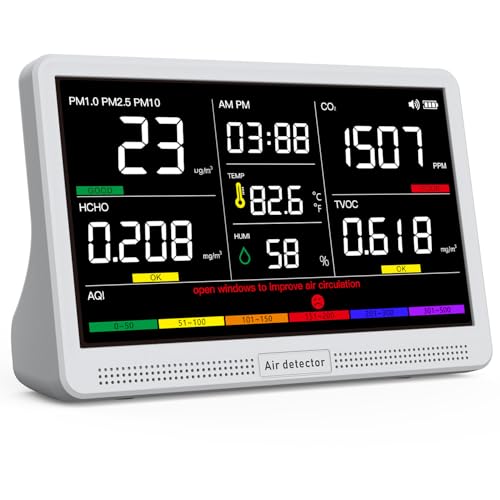
This type tracks the widest set of readings after the View Plus itself, usually fine particles, carbon dioxide, volatile organic compounds, humidity, and temperature in one unit. You give up the radon sensor in most cases, and the display and app polish may be a step simpler. Choose this type if you want one device on a shelf that gives you a broad picture of indoor air and you are willing to handle radon with a separate test, which is how many households approach it anyway.
Carbon dioxide focused monitors for a lower price
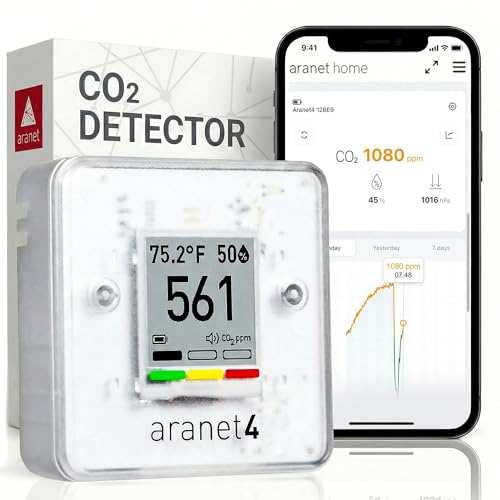
These monitors build everything around one gas, and they often do it with a proper nondispersive infrared sensor, the same sensing method used in far pricier units. Readings respond quickly, screens tend to be large and clear, and the price drops because there is no particle or radon hardware inside. Our aranet4 review covers one popular example of this style in detail. Pick this type if stuffiness, sleep quality, and knowing when to air out a room are your real goals.
Radon focused monitors for homes with radon concerns
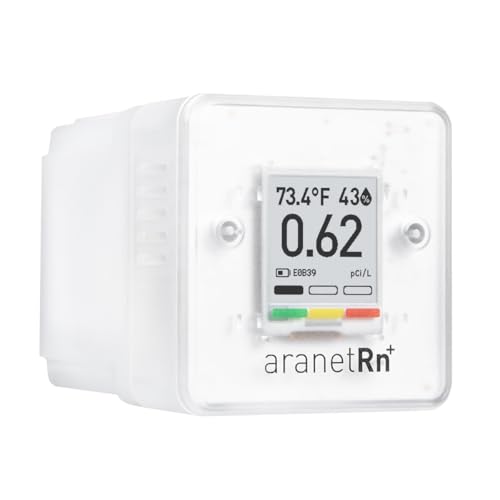
Radon builds up slowly, so this type reports averages over days and weeks rather than instant readings, and long term averages are what health guidance is based on. A dedicated radon monitor skips particles and gases entirely, which keeps the price moderate while covering the one risk that the cheaper types above leave out. Choose this type if your home has a basement, sits in a known radon area, or has never been tested, and treat general air readings as a separate, later purchase.
How We Picked the Alternatives
We judged each airthings view plus alternative type against the same criteria: sensor coverage, accuracy where makers publish it, how the readings reach you, power options, and total cost over a few years of use. A type earned its place here only if it covers at least one major reading properly rather than bundling many weak sensors into one low price.
Sensor coverage and what each reading tells you
Fine particles, called PM2.5, point to smoke, cooking fumes, and dust that you can cut with ventilation or filtration. Carbon dioxide tracks how much exhaled air is building up, so it tells you when a room needs fresh air. Volatile organic compounds rise with paints, cleaners, and new furniture. Radon is different from all of these: it seeps in from the ground, has no smell, and only a radon sensor or a lab test can find it. Match the sensor list to the actions you are actually willing to take.
Accuracy, calibration, and sensor type
For carbon dioxide, look for a true infrared sensor and a stated accuracy figure, and check whether the unit calibrates itself against fresh outdoor air or lets you calibrate it by hand. Particle sensors estimate counts with light scattering, so treat their numbers as trends rather than lab values. Radon sensors need long averaging periods to settle, and a reading taken over a few hours means little. Any monitor that hides its sensor type or accuracy figures is asking you to trust numbers it will not explain.
Display, app, and how you read the data
A built in display lets anyone in the house check the air without opening an app, and e ink screens stay readable in bright rooms while sipping power. Apps add history graphs, alerts when a reading crosses a level you set, and access from outside the home. Decide which you will use daily. Many buyers find that a clear screen changes habits, since a number you walk past is harder to ignore than a notification you swipe away. Check also whether history stays on the device or needs a cloud account.
Power source and placement freedom
Battery power lets you move a monitor from bedroom to living room and learn how each space behaves, but batteries add a recurring chore and cost. A unit that runs on a USB cable never sleeps, yet it ties you to a spot near an outlet, away from the breathing zone you care about. Some monitors offer both, and that flexibility is worth having if you plan to survey several rooms before settling on a permanent spot at about table height, away from windows, stoves, and direct breath.
Price tiers and what the extra money buys
Simple carbon dioxide or particle monitors often cost about $80 to $150. Broader multi sensor units tend to run about $150 to $250. Models that add a radon sensor and a polished display move above that range, which is exactly where the View Plus sits. Spending more mainly buys extra sensors and convenience, not better accuracy on the readings the cheaper types already cover, so a focused monitor is not a lesser monitor. It is a narrower one, and narrow is fine when it matches your concern.
Should You Just Buy the Airthings View Plus?
Sometimes, yes. If you want radon, particles, carbon dioxide, and chemical readings from one device, with a calm screen and the option to run on batteries, the original still has few true equals, and buying two narrower monitors to cover the same ground can cost nearly as much. Our airthings view plus review walks through its strengths and limits in full. It also makes sense if you plan to act on every reading it offers.
Staying in the same family is another route: a smaller sibling model keeps the radon sensor and drops some of the extras, and our airthings wave plus review explains what you give up and what you save. On the other hand, if you know radon is not a concern in your area or you only care about one or two readings, an alternative will serve you just as well and leave money for the purifier or ventilation fix the readings point to.
FAQs
What is the best alternative to the Airthings View Plus?
There is no single best choice, because the right type depends on the readings you need. For broad coverage in one unit, a multi sensor monitor without radon comes closest. For stuffy rooms and sleep, a carbon dioxide focused monitor does that one job at a much lower price. For an untested home with a basement, a radon focused monitor covers the risk the others miss. Start from your concern, not from the longest sensor list.
Is there a cheaper version of the Airthings View Plus?
Not an exact copy at a low price, since the radon sensor and the wide sensor set are what drive the cost. Cheaper options get their price by narrowing the job: fewer sensors, a simpler display, or cable only power. That trade is often a good one. If your home has already tested low for radon, a monitor without a radon sensor is not a downgrade for your situation, it is simply money not spent on a reading you no longer need to watch daily.
Is the Airthings View Plus worth the price?
It is worth it if you will use most of its sensors and act on what they show, such as mitigating radon, filtering particles, or ventilating when carbon dioxide climbs. It is harder to justify if the unit will sit unread after the first month, or if only one reading matters to you, since a focused monitor covers that reading for far less. The value sits in the decisions the data changes, not in the number of sensors on the box.
Can one alternative monitor replace a radon test?
A continuous radon monitor gives you ongoing averages and shows how levels shift with seasons and weather, which a single short test cannot. A mail in lab test, though, remains a cheap and accepted way to get a first reading, and local health guidance often suggests acting on the long term average either way. If levels come back high, follow your state or local radon program advice on mitigation, and keep monitoring after any fix to confirm levels stay down.
Where should you place an air quality monitor for honest readings?
Place it in the room where you spend the most time, at roughly the height of your head when you sit or sleep, and at least a few feet from windows, doors, stoves, and humidifiers, which can skew single readings. Keep it out of direct sunlight and away from spots where people breathe straight onto it, since a breath can spike the carbon dioxide number for minutes. Leave it in place for several days before judging a room, because daily patterns matter more than single peaks.
Final Thoughts
The View Plus sets a high bar by combining radon with the everyday readings most homes care about, but plenty of households need only part of that picture. A focused airthings view plus alternative that measures your main concern accurately will guide better decisions than a broad monitor bought out of habit. Revisit the product table above, match the type to the actions you will actually take, and spend the savings on fixing what your readings reveal.