
Best Stainless Steel Work Table: What to Know Before You Buy
Disclosure: We may earn a commission when you buy through links on this page, at no extra cost to you. As an Amazon Associate I earn from qualifying purchases. Learn more

If you have ever tried to prep a big meal on a wobbly counter or wished you had a surface in the garage that would not stain, scratch, or scorch, a metal work surface probably crossed your mind. A stainless steel table solves all three problems at once, but the options out there range wildly in thickness, grade, and price. Picking the best stainless steel work table for your home really comes down to a handful of specs that most shoppers never think to check. In this guide, you will learn what steel grade and gauge actually mean, how to size a table for your space, and which base and add-ons are worth paying for.




Steel Grade and Gauge: What Actually Determines Durability
Every stainless steel table is defined by two numbers most listings barely explain: the steel grade and the gauge. Together they tell you how well the table will resist rust, dents, and everyday wear, and they are the first thing worth checking before you look at size or price.
304 vs. 430: Which Grade Fits a Home Setting
Grade 304 stainless steel contains more nickel and chromium, which makes it resistant to corrosion even in humid rooms, near sinks, or anywhere moisture sits for long periods. Grade 430 costs less and holds up fine in dry areas, but it can develop rust spots if it stays wet or gets exposed to salty or acidic spills often. A quick way to tell them apart in a store is a magnet test: 430 is magnetic, while 304 is not.
For a garage or laundry room table that mostly sees dust and tools, 430 is usually good enough. For anything near a kitchen sink, a canning station, or an outdoor-adjacent space, 304 is worth the extra cost since it will not need replacing as soon.
Why Gauge (Thickness) Matters More Than People Expect
Gauge describes thickness, and confusingly, a lower number means a thicker sheet. Tables run from about 14 gauge (thick, heavy duty) up to 18 or 20 gauge (thinner, lighter). A thin top might look identical to a thick one in photos, but it will flex, dent, and dull faster once you start setting down cast iron pans or hand tools.
If you plan to chop, pound, or drop heavy items on the surface regularly, look for 16 gauge or thicker. For light use like folding laundry or staging craft supplies, an 18 gauge top saves money without much downside.
Sizing a Work Table to Fit Your Space and Task
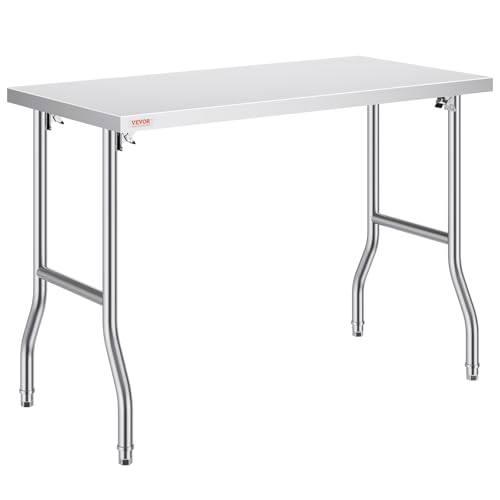
There is no single best stainless steel work table size that works for every room. Standard tables run anywhere from about 24 to 96 inches long and 18 to 36 inches deep, so measuring your space before you shop matters more than picking a specific model.
Standard Length, Depth, and Height Ranges
A 24 to 36 inch depth suits most kitchens and garages without eating up too much walking room, while length should match the task. A shorter table around 30 to 48 inches works well for a compact prep or hobby station, while anything past 60 inches suits a dedicated canning, baking, or workbench setup. Height typically sits around 34 to 36 inches, which matches standard counter height and keeps your back comfortable during longer sessions.
How Much Weight It Needs to Hold
Weight capacity depends on both gauge and leg construction, not just the tabletop itself. Most home-use tables safely hold 300 to 500 pounds spread across the surface, which covers heavy mixers, cast iron cookware, or a stack of tool boxes. If you plan to mount a vise, set up power tools, or store dense equipment underneath, look for a model rated closer to 600 pounds or more.
Where You'll Use It Changes What You Need
Most buying guides for these tables are written for restaurant kitchens, but plenty of home shoppers want one for a completely different reason. Thinking through where the table will actually live changes which specs matter most.
Kitchen Prep and Canning
In a kitchen, a stainless steel table gives you a heat-safe, non-porous surface for rolling dough, setting hot pans, or running a full canning session without worrying about staining or absorbing odors. Pairing it with solid pantry storage containers nearby makes it easier to portion and store what you preserve right at the table instead of hauling jars back and forth across the kitchen.
Garage, Laundry, and Craft Spaces
In a garage or workshop, the same table becomes a workbench that will not warp from spilled oil or grease the way wood does. Good overhead garage lighting above the table makes a real difference here, since stainless steel can throw glare under the wrong fixture and make close work harder on your eyes.
If you run tools that need steady airflow, such as sanders or spray equipment, having a reliable air compressor for home garage use set up near the table keeps your workflow in one spot instead of scattered around the space. In a laundry room or craft area, the same table works as a folding station or a cutting surface that wipes clean in seconds.
Base and Mobility: Casters, Wheels, or Fixed Feet
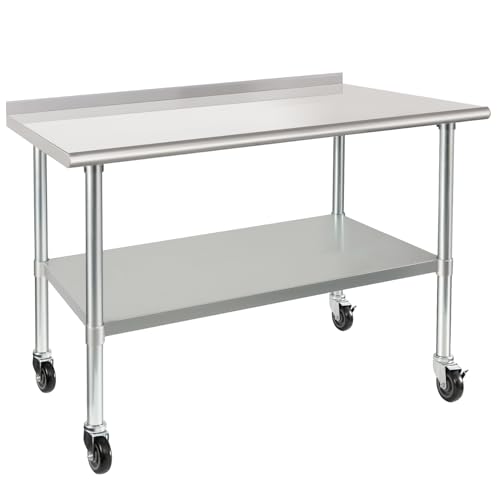
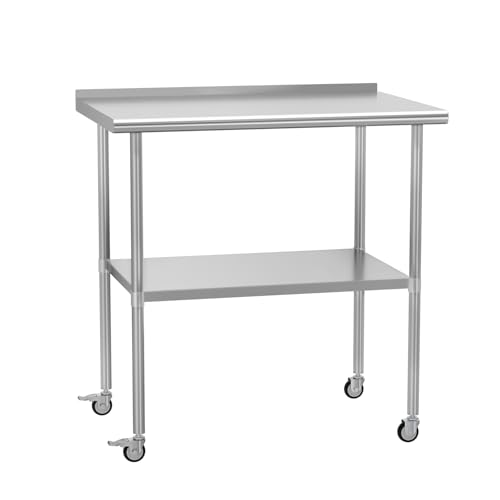
Locking casters make sense if you need to move the table between tasks, roll it out of the way, or reposition it for cleaning underneath. Look for casters with a built-in brake so the table stays put once you park it, since an unlocked wheel base can shift under pressure while you are working. If your kitchen already leans on a mobile setup, something like kitchen islands on wheels shows how useful that flexibility can be for a small footprint.
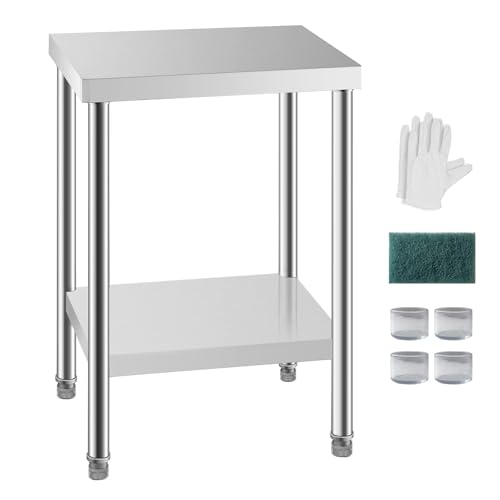
Adjustable feet are the better call if the table will stay in one spot permanently, especially on an uneven garage floor or older kitchen tile. Most bullet feet adjust up to an inch, which is enough to level out minor floor dips and stop the table from rocking. Some tables offer both, letting you roll it during setup and then lock it level once it is in place.
Add-Ons and Care Worth Paying Attention To
A handful of extras separate a basic tabletop from one that actually earns its keep over years of use.
Undershelves, Backsplashes, and Other Extras
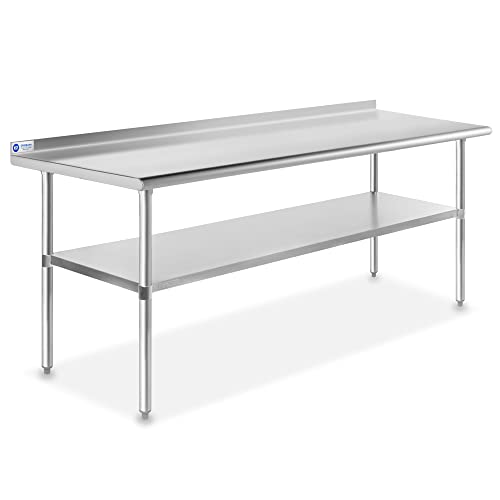
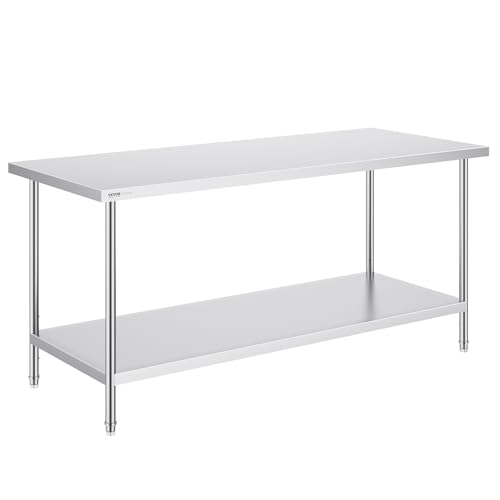
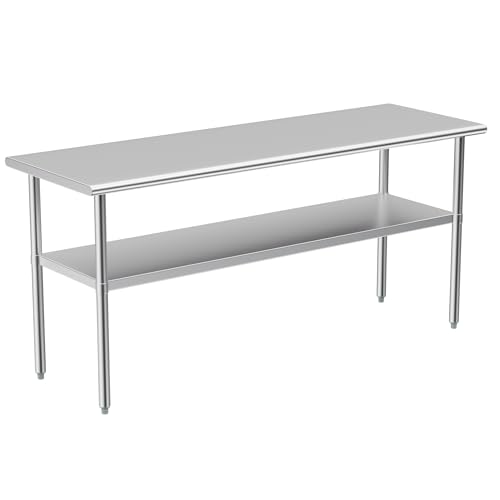
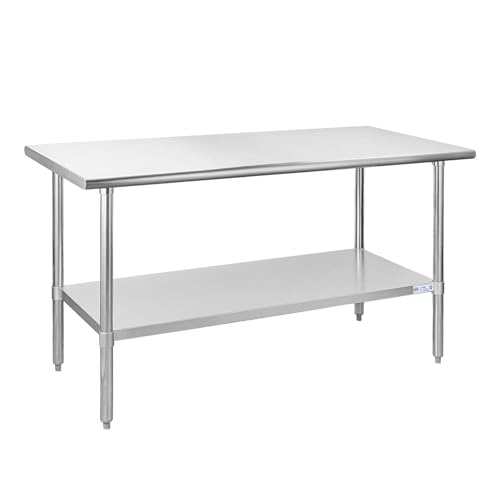
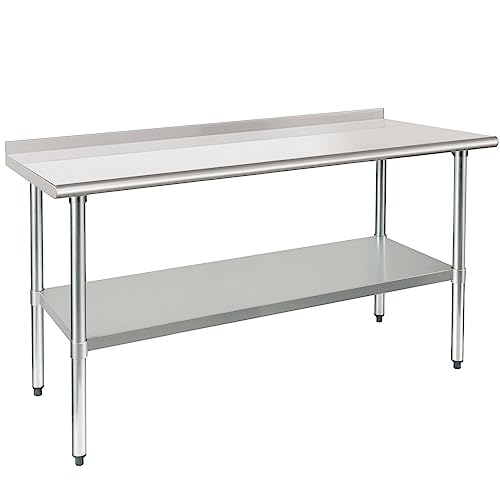
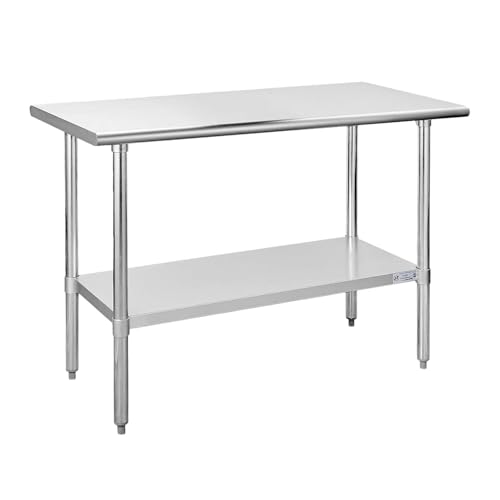
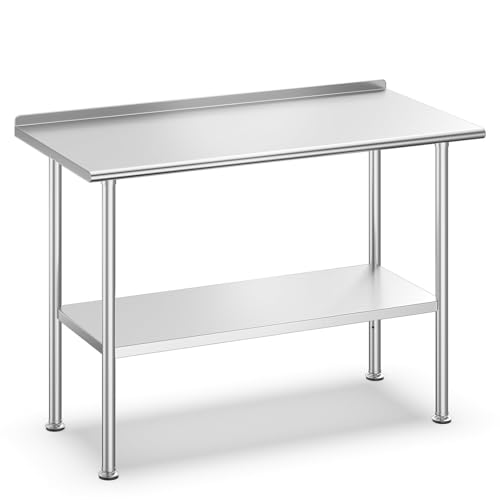
An undershelf adds storage for bins, small appliances, or tools without taking up floor space elsewhere, while an open base with rear cross braces suits anyone who wants to slide bulkier items underneath instead. A backsplash, usually one to two inches tall, protects the wall behind the table from spills and splatters and is worth adding if the table sits against drywall or paint. Drawers and sink cutouts exist too, but they mostly matter for a dedicated prep or utility station rather than general-purpose use.
Keeping It Rust-Free and Scratch-Free
Stainless steel resists stains and bacteria, but it is not scratch-proof or entirely rust-proof. Wipe up salty, acidic, or bleach-based spills promptly, since prolonged contact with chlorides is what causes rust spots even on 304 steel. Avoid steel wool or abrasive scrubbers, which can leave tiny scratches that trap grime over time; a soft cloth with mild soap or a stainless-specific cleaner works better. Using cutting boards and pot trivets instead of working directly on the surface keeps it looking newer for much longer.
Frequently Asked Questions
What is the difference between 304 and 430 stainless steel work tables?
304 contains more chromium and nickel, giving it better resistance to rust and corrosion in humid or wet conditions. 430 is more budget friendly but better suited to dry areas since it can develop rust spots over time with regular moisture exposure.
What gauge stainless steel is best for a work table?
For heavy daily use, such as chopping or dropping tools, 14 to 16 gauge holds up best. For lighter use like folding laundry or staging supplies, 18 gauge is thinner but still durable enough and typically costs less.
What size stainless steel work table do I need?
Measure your available space first, then match the depth (usually 24 to 36 inches) and length to your task. A compact 30 to 48 inch table suits most prep or hobby stations, while longer setups fit dedicated canning or workshop use.
Should a stainless steel work table have wheels or fixed feet?
Choose locking casters if you need to move the table often or want easier access for cleaning underneath. Choose adjustable feet if it will stay in one place, especially on an uneven floor, since they keep the table from rocking.
How much weight can a stainless steel work table hold?
Most home-use tables handle 300 to 500 pounds distributed across the surface, which covers typical kitchen and garage tasks. Heavier-duty models built for tools or dense equipment can be rated for 600 pounds or more.
Does a stainless steel work table need a backsplash?
Not always. A backsplash is worth adding if the table sits against a wall you want to protect from spills and splatters, but it is unnecessary for a table positioned away from walls or used mainly for storage and staging.
How do you clean and maintain a stainless steel work table?
Wipe spills promptly, especially anything salty, acidic, or bleach-based, and clean with a soft cloth and mild soap rather than steel wool or abrasive pads. Using cutting boards and trivets instead of working directly on the surface helps prevent scratches and keeps the finish looking newer for longer.
Making the Right Call for Your Space
Grade, gauge, and size matter more than any other spec on the label, so start there before you compare prices. Once you know how the table will be used and where it will sit, choosing the best stainless steel work table becomes a much shorter list to work through. Match the base to whether it needs to move, add the extras that fit your routine, and it should hold up for years with minimal upkeep.