Best Shaped Teepee Swing Chair for Indoor Use: A Complete Buying Guide
Disclosure: We may earn a commission when you buy through links on this page, at no extra cost to you. As an Amazon Associate I earn from qualifying purchases. Learn more
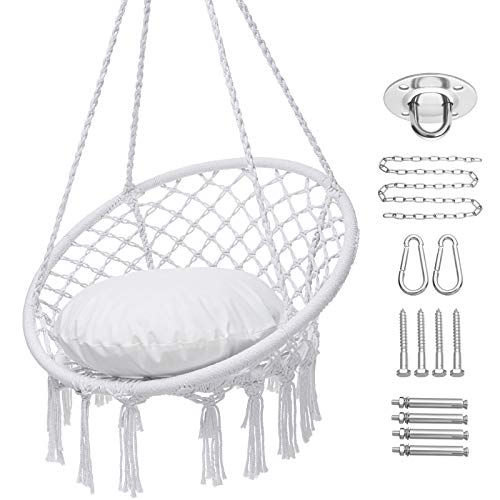
A teepee swing tucked into a bedroom corner does something an egg chair on a patio stand can't: it turns unused vertical space into a hideaway a kid actually wants to sit in. The cone shape closes in on three sides, which is exactly why it reads differently from the rounded pod chairs parents usually see marketed for adults. Picking the right one, and hanging it the right way, comes down to a handful of decisions that have nothing to do with color or fabric pattern.
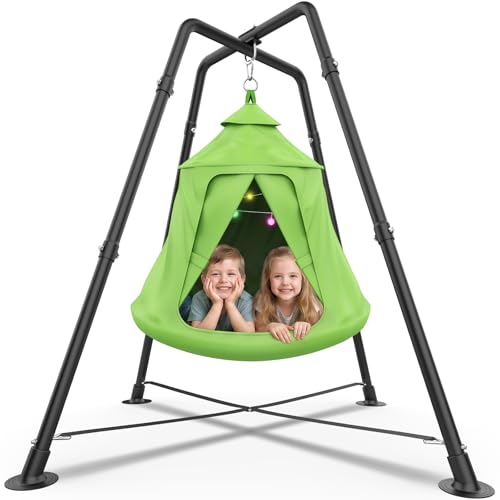

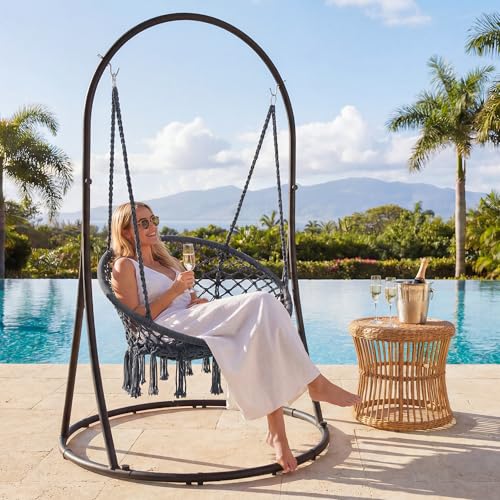
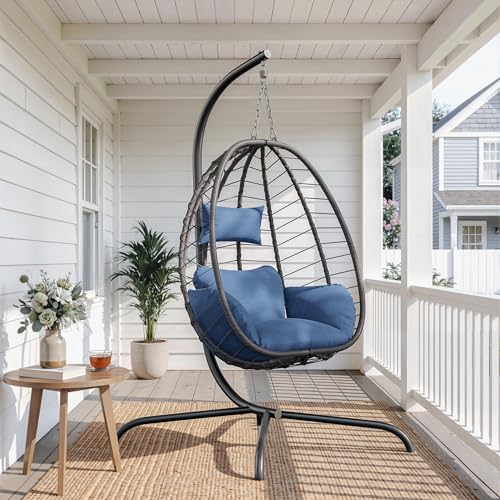
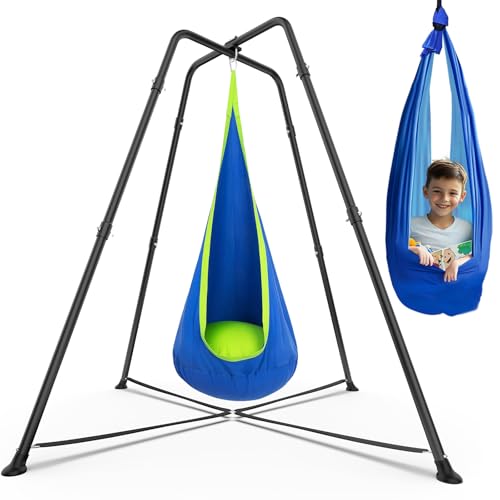
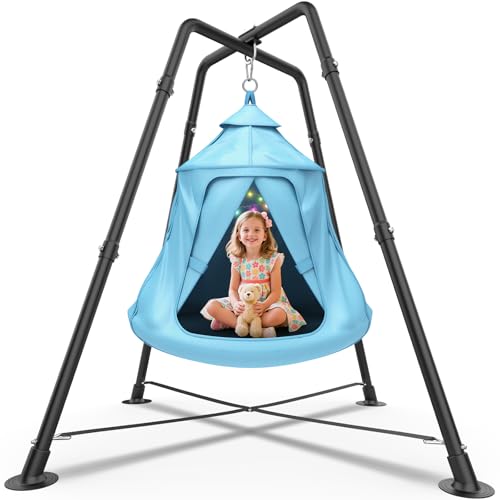
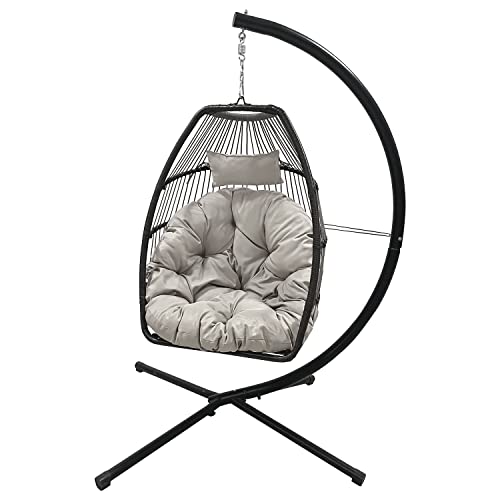
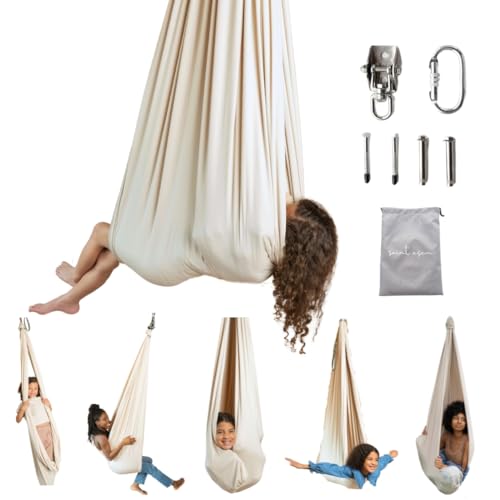


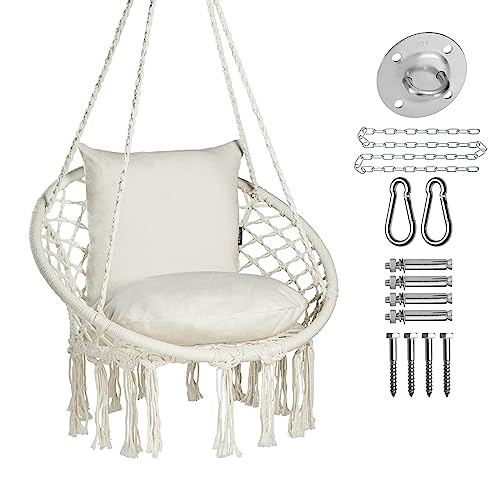
Teepee Chairs vs. Egg and Pod Seats: What's Actually Different
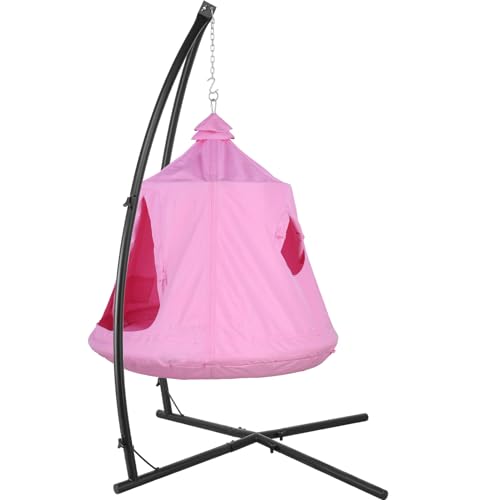
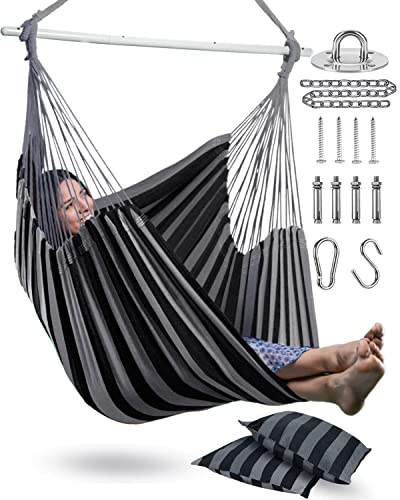
Egg chairs and pod swings are built around a standalone metal frame that sits on a patio or in an open living room. They're sized for teens and adults, and most rely on a heavy base rather than a ceiling anchor. A egg swing chair or a rounded pod swing seat makes sense when floor space is open and the seat needs to hold an adult's weight.
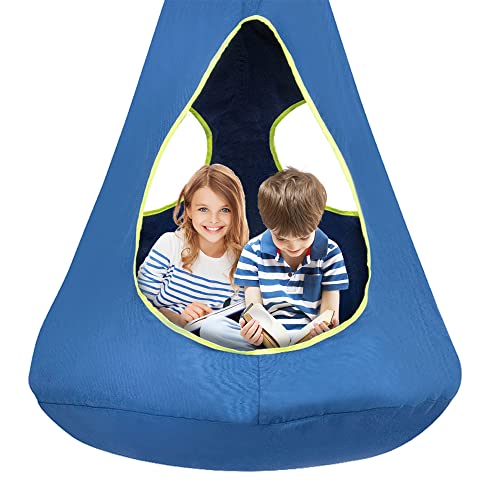
A teepee swing solves a different problem. It's scaled for a child, hangs from a single point overhead, and tapers to a peak that gives the seat a tent-like enclosure. That smaller footprint is what lets it fit into a bedroom corner or a playroom nook where a freestanding egg chair frame simply wouldn't fit. The tradeoff is that a teepee swing depends entirely on what it's hanging from, which makes the mounting choice the most important decision in the whole purchase.
Where to Mount It: Joist, Doorway Frame, or Freestanding Stand
Three mounting options come up again and again for indoor kids' swings, and each has a different risk profile. Drilling into a ceiling joist is the strongest option, but only if the joist itself can take the load. A standard 2x4 joist can handle a light child's weight in theory, but most contractors recommend a 2x6 or larger joist before trusting it with a swinging seat, since the repeated motion adds stress a static load never would.
A doorway-mounted frame skips the ceiling question entirely. It clamps or bolts into the door frame itself, which is usually built from denser lumber than a single joist, and it's the option most parents in older homes or apartments end up choosing because it avoids drilling overhead at all. The downside is that it only works in a doorway you're willing to give up, and it can restrict how the door swings.
A freestanding stand is the least committal choice. It has its own base and frame, so nothing about the room's structure matters, and it can move to a different corner or a different house entirely. It takes up more floor space than the other two options, which matters in a smaller bedroom. Whichever route you pick, leave a foot or more of clearance between the seat and any wall or piece of furniture, since a full swing arc needs room the chair looks like it wouldn't use at rest.
Weight Limits and the Margin That Matters More Than the Number
Every listing shows a maximum weight rating, but that number by itself doesn't tell you much. What matters is the safety margin behind it, meaning how much stronger the hardware is than the number printed on the box. A swivel hook, mounting bracket, or hanging strap rated at exactly your child's weight has no room for the extra force a swing generates in motion, and that force is higher than a still, seated weight would suggest.
Look for hardware rated well above what the seat itself claims to hold, and treat the printed weight limit as a ceiling for a single child rather than a target. If siblings tend to pile into the same swing together, the combined weight needs to stay under that ceiling too, not just each child individually. A seat rated for a wide age range, roughly three to nine years old, usually has more margin built in than a smaller, toddler-specific design.
The Squeak Problem: Why It Happens and How to Stop It
A creak that shows up weeks after installation is almost always friction at a connection point, not a sign the swing is failing. Rope fibers rubbing against a metal hook, a swivel that's gone dry, or a chain link twisting against its mount are the usual culprits. A drop of silicone spray at the swivel joint, applied sparingly and wiped clean afterward, quiets most of these without leaving residue on fabric nearby.
What a squeak should never mask is a loosening bolt or a fraying strap. Before reaching for lubricant, give the mounting hardware a visual check and a firm tug. If the noise comes with any wobble in the hook itself, that's a sign to retighten or replace the hardware, not to spray it and move on.
Sensory Benefits and When Supervision Still Matters
Occupational therapists have used swinging as a calming tool for years, and the enclosed shape of a teepee seat adds to that effect for kids who get overstimulated easily. The gentle back-and-forth motion delivers steady vestibular input, and some therapists note the effects of a short swinging session can carry over for several hours afterward. That's part of why these chairs show up so often in sensory-friendly bedroom setups, sometimes alongside soft furnishings like a kids rug or room-darkening touches such as nursery blackout curtains that round out a calming corner.
None of that removes the need for supervision, especially in the first few weeks. Young kids are still learning how to climb in and out without tipping the seat, and a swing that feels stable while occupied can feel very different mid-transition. Keep an eye on the first several uses, and revisit that once your child has clearly gotten the hang of it.
Questions Parents Ask Before Buying
Is a teepee swing chair safe to hang in a bedroom?
Yes, as long as the mounting point, whether a joist, a doorway frame, or a standalone stand, is rated to hold the seat's weight with a solid safety margin. The chair itself is rarely the weak link; the anchor point is.
What age is a teepee swing chair meant for?
Most models are built for children roughly three to nine years old, though the exact range depends on seat size and the manufacturer's own weight rating.
Can I hang one without drilling into the ceiling?
Yes. A doorway frame or a freestanding stand avoids ceiling installation entirely and works well in rentals or rooms where drilling overhead isn't an option.
Why does my child's swing creak?
Creaking usually comes from friction at the swivel or hook rather than a structural problem. A small amount of silicone spray at that joint typically resolves it, though any wobble alongside the noise is worth checking before moving on.
How is a teepee swing different from an egg chair for kids?
An egg or pod chair usually stands on its own frame and is sized for teens or adults. A teepee swing hangs from a single overhead point and is scaled down specifically for younger children, which is what lets it fit into a bedroom corner.
Should I supervise my child on the swing?
Close supervision matters most during the first few weeks, while a child is still learning to climb in and out safely. After that, how much oversight is needed depends on your child's age and balance.
Getting the mount right and matching the weight rating to your child solves most of what goes wrong with an indoor teepee swing. Everything past that, fabric, cushioning, or the exact shade of the canopy, comes down to what fits the room and what your kid actually wants to climb into.