
Best Round Outdoor Daybed with Canopy: A Complete Buying Guide
Disclosure: We may earn a commission when you buy through links on this page, at no extra cost to you. As an Amazon Associate I earn from qualifying purchases. Learn more

A round daybed with a canopy looks like a simple upgrade for a patio corner. It is not. The circular frame takes up more real floor space than a rectangular lounger seating the same number of people, and the canopy adds moving parts that a plain sofa or chaise never has to deal with. Shoppers who skip past those two facts usually end up with a piece that crowds the yard or a canopy that jams within a season. This guide covers the specific tradeoffs tied to the round shape and the overhead canopy, not the generic advice that applies to any outdoor seating.

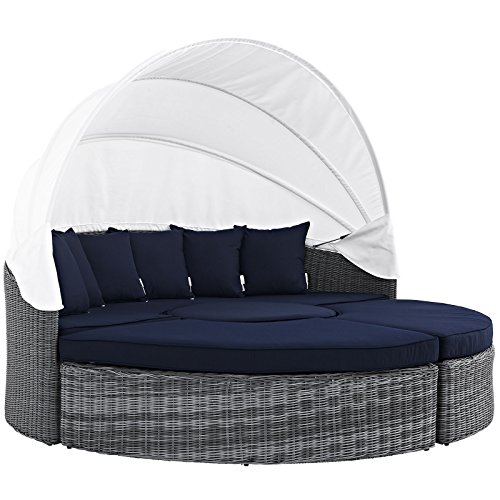

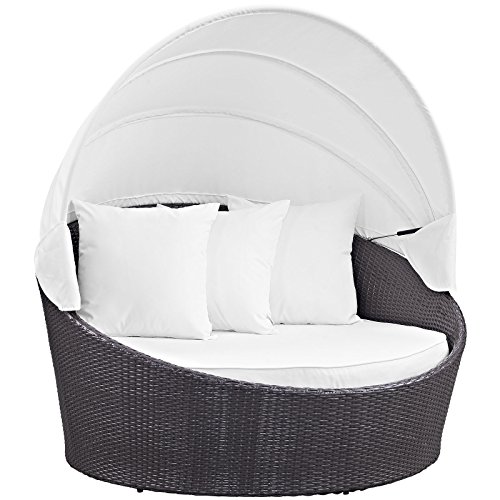
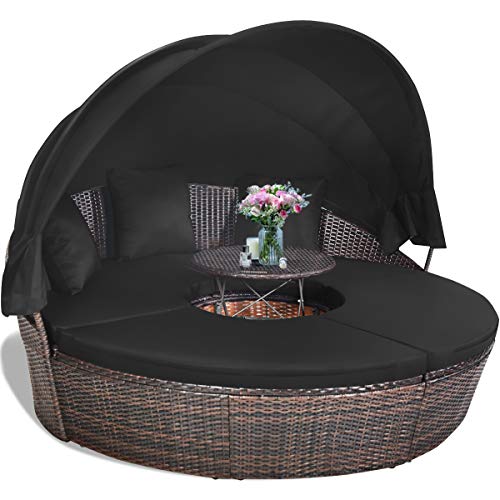
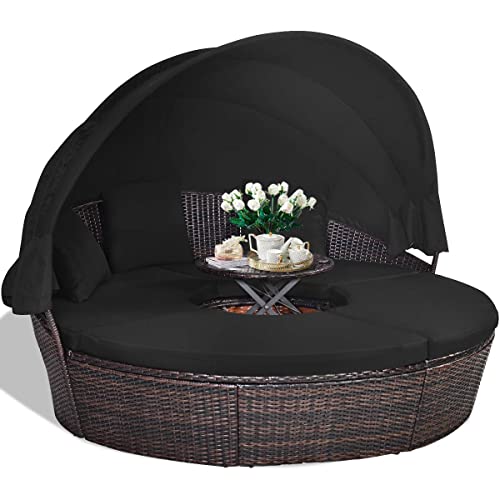
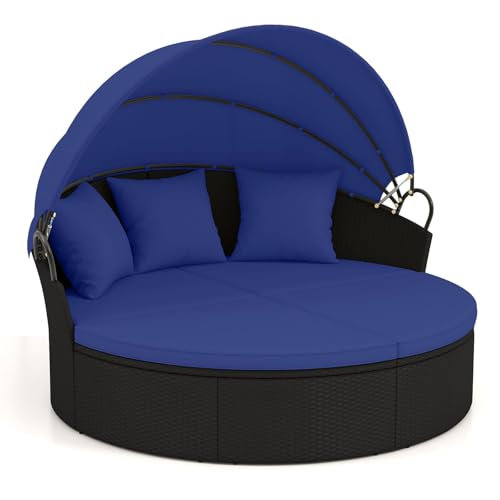
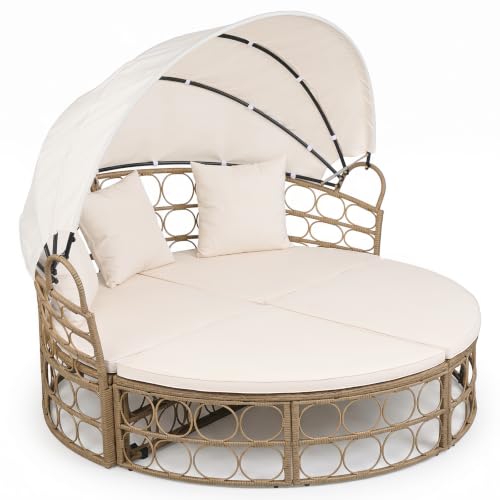
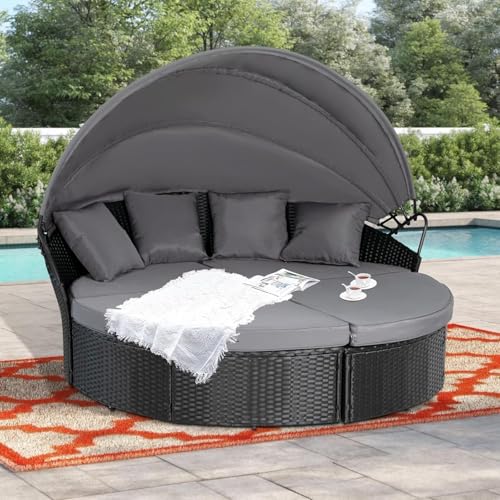
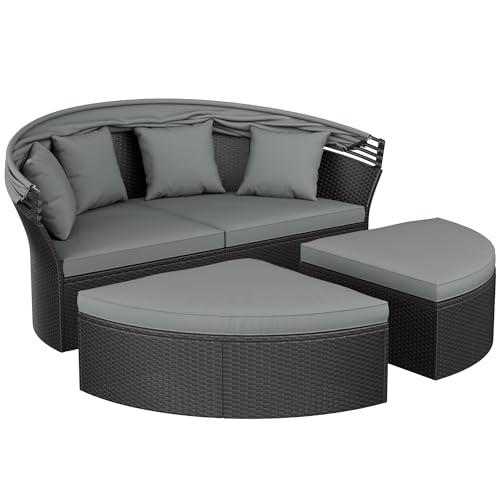
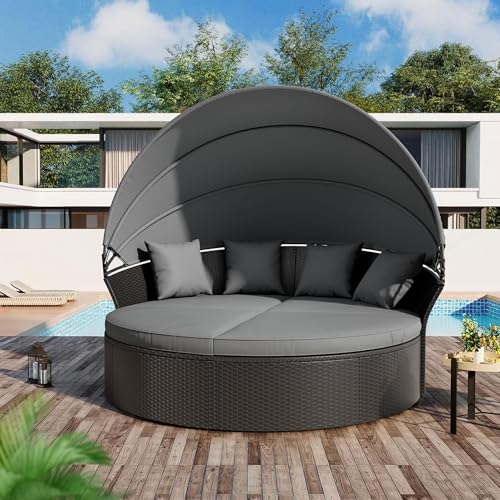
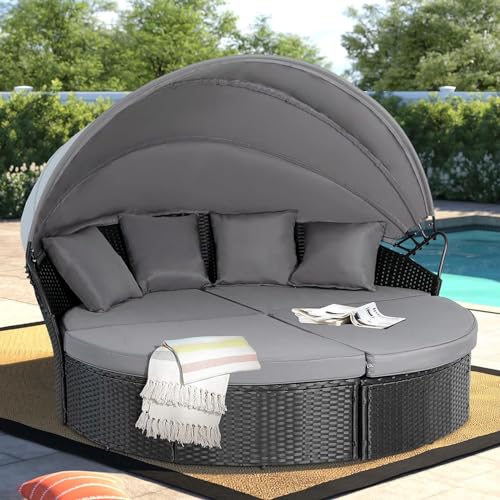
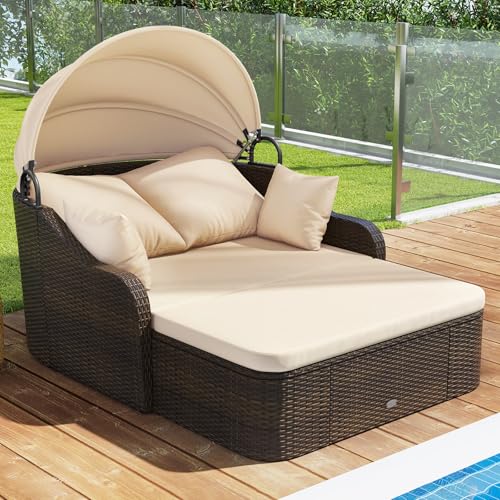
The Round Shape Eats More Floor Than You Think
A circle needs walking room on every side, not just at the front like a bench or loveseat. A model listed at 70 inches across can end up needing a clear 8 to 9 foot square once you add the 18 to 24 inches of buffer most people want for walking past it comfortably. That is a bigger commitment than a rectangular sectional with the same seat count, because the corners of a rectangle can often sit flush against a wall or railing while a round frame cannot.
Before shopping, tape out the actual diameter on the patio floor with painter's tape. Walk around it for a day or two. Pieces that look modest in a product photo often swallow a small patio once the tape is down, and a wall placement changes the usable clearance math compared to a piece floating in the open.
What Actually Fails First on a Canopy Frame
Retractable canopy mechanisms take more abuse than most buyers expect. The pole, hinge, and sliding track flex every time the canopy opens or closes, and daily adjustment on top of wind gusts wears down cheap hardware within two or three seasons. Once the hinge starts to bind, the fabric around it takes the strain instead, and that is usually where the first tear shows up. A canopy that only tilts on a fixed pole, rather than sliding on a track, has fewer parts that can bind in the first place, which is worth trading for a bit less flexibility on where the shade falls.
The fabric itself matters just as much as the hardware. Solution dyed acrylic and Sunbrella style canopy fabric hold their color and strength far longer than basic polyester blends. If a canopy fabric already feels stiff or slightly rough to the touch on a showroom sample, it has likely lost some of the coating that blocks UV damage, and it will fade or crack faster once it lives outside full time. Seams under the pole mount take the most repeated stress, so run a hand along that stitching before buying rather than judging the fabric only by how it looks from a few feet away.
Wind, Weight, and Why Some Frames Shift
A flat canopy roof catches wind like a sail. A curved or sloped canopy top sheds that same gust more evenly across the fabric, which is one reason domed and cone shaped canopies tend to outlast flat panel versions on an exposed patio. Unsecured canopy structures can start to lift or shift once winds climb past roughly 20 to 35 miles per hour, so a heavy base alone is not always enough protection during a real storm.
Weight distribution around a circular frame also differs from a rectangular one. Four legs on a rectangle spread load predictably, but a round base often relies on a center pole or a ring of shorter legs, so ground contact and leveling matter more here than on a standard sofa frame. Wide, flat feet or an adjustable foot pad on each leg help keep the whole piece from rocking on an uneven paver surface.
The Cushion Problem Nobody Mentions at the Store
Round cushions are built from curved segments stitched together, and that means more seams than a simple rectangular cushion has. Every seam is a place where water can work its way inside during a storm, so a round daybed cushion can trap moisture in more spots than a standard sofa cushion of the same size. Quick dry foam cores help water escape rather than pool, and covers with sealed or taped seams resist wicking better than plain stitched ones.
Removable, zip off covers are worth paying extra for on a piece this size, since washing beats replacing an entire cushion set. Anyone furnishing the rest of the seating area at the same time should look at options built around quality outdoor cushions made with the same fade resistant, quick drying materials, so the whole setup ages at a similar rate.
Finding the Right Spot on Your Patio
Corner and wall placements save the most usable floor space on a small patio, since a round frame pushed against a fence or exterior wall only needs clearance on the open sides instead of all the way around. A daybed floating in the middle of a small space almost always feels tighter than the same piece tucked into a corner.
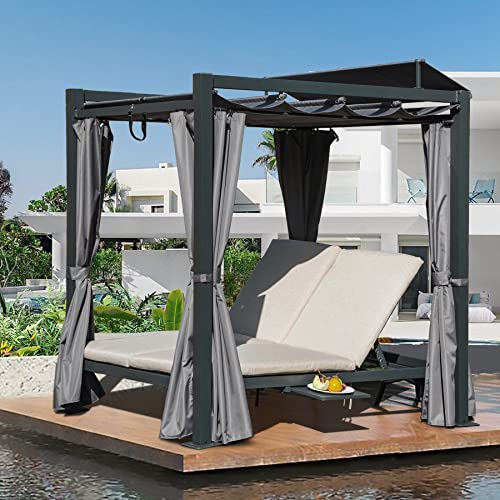
Partial shade from a nearby structure also takes pressure off the canopy fabric even when the built in canopy stays open most of the day. A spot near an aluminum pergola cuts down on direct UV exposure during the harshest afternoon hours. For patios that want a single large shade structure over more than just the daybed, a freestanding patio gazebo can cover the whole seating area instead of relying on the canopy alone. A small side surface within reach also keeps drinks and books off the cushions, and compact outdoor side tables tend to fit next to a curved frame without crowding the walkway.
Matching Diameter to How Many People Actually Sit Down
Round daybeds generally run from around 58 inches across on the small end up to 90 inches or more on models built for three or four people. Weight capacity follows a similar range, from roughly 330 pounds on single person designs up to 800 pounds on the largest frames. A diameter that looks right for two people lounging separately can feel cramped the moment three people sit down together, so match the size to how the piece will actually get used rather than how many it is marketed to seat. Sitting upright versus lounging flat also changes how much of that diameter each person actually needs, so try the floor plan both ways before deciding on a size.
Getting the Canopy and Frame Through a Full Season
Wipe down the frame and canopy fabric after heavy rain so water does not sit in the seams or hinge joints. Fold or retract the canopy during storms rather than leaving it extended, since wind load on an open canopy is what usually damages the hinge first. Clean mildew spots on fabric with a mild vinegar and water mix instead of straight bleach, which breaks down weatherproof coatings faster than it should.
Store cushions somewhere dry and ventilated during the off season rather than in a sealed bin, since trapped moisture in plastic containers encourages mold growth even on foam that looked dry when it went in. A breathable, waterproof cover over the whole frame handles the pieces too large to store indoors, as long as it fits snugly enough that moisture cannot collect underneath.
Quick Answers Before You Buy
How much clearance does a round daybed actually need?
Plan for the full diameter plus at least 18 to 24 inches of walking space on every open side, not just the front.
Do retractable canopies fail faster than fixed ones?
Retractable canopies have more moving parts, so hinges and tracks are the first things to wear out, usually within two to three seasons of regular use. A fixed canopy has fewer failure points but no flexibility to fold away.
Is a round frame less stable in wind than a rectangular one?
Not necessarily, but weight distribution works differently. Check for wide feet or adjustable pads, since a round base often depends on fewer contact points than a four legged rectangular frame.
Why do round daybed cushions mildew faster than other outdoor cushions?
The curved shape requires more stitched seams, and each seam is a potential entry point for water. Quick dry foam and sealed seams reduce the risk significantly.
Can a round canopy daybed replace a gazebo for shade?
It shades the daybed itself well, but a gazebo or pergola covers a wider seating area if shade matters for a table or extra chairs nearby.
Does a round daybed need a permanent base or pad underneath it?
Not always, but a paver, deck board, or small platform under each leg stops the frame from sinking into grass or soft soil over time, especially on the side that carries a center pole.
The round shape and the overhead canopy are what make this style of daybed different from any other patio seating, and they are also where most of the buying mistakes happen. Get the diameter, the hardware, and the fabric right, and the rest of the piece tends to take care of itself.


