Best Aluminum Pergolas (2026 Buying Guide)
Disclosure: We may earn a commission when you buy through links on this page, at no extra cost to you. As an Amazon Associate I earn from qualifying purchases. Learn more

Aluminum has become the default frame material for higher-end backyard pergolas for a simple reason: unlike wood, it never rots, warps, or needs annual staining, and unlike steel, it won't rust even in humid or coastal climates. The tradeoff is that aluminum pergolas span a huge price range — from budget retractable-canopy kits under $300 to fully motorized louvered structures well over $1,500 — and the features that justify that gap aren't always obvious from photos alone.
This guide breaks down the real differences between styles (louvered vs. retractable-canopy vs. fixed), what actually affects wind and rain performance, and what to check before buying so you don't end up with a structure that's the wrong size, style, or durability for your space.





Louvered vs. Retractable Canopy: The Core Style Decision
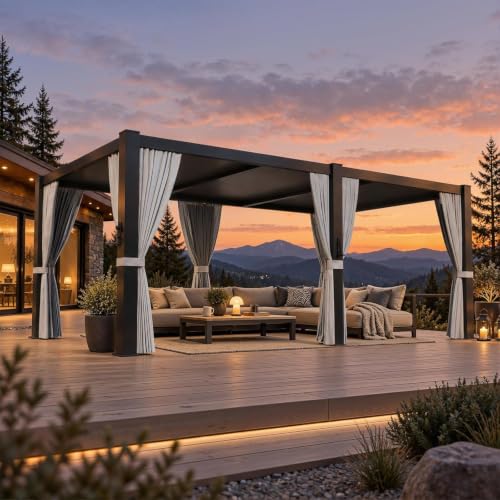
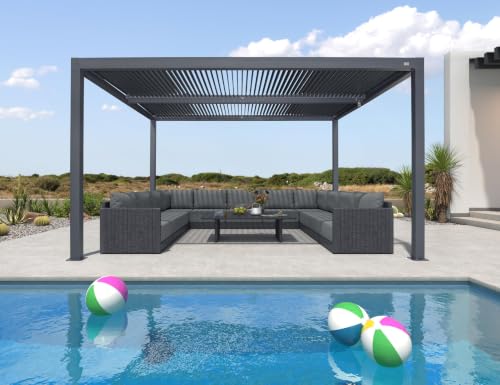
Louvered pergolas have solid aluminum slats (louvers) that tilt open and closed, usually by hand crank or motor, giving you full control over shade versus sun and — critically — a way to close the roof completely during rain. Retractable-canopy pergolas use a fixed aluminum frame with a fabric canopy that slides open or closed along tracks. Louvered systems cost more but handle rain properly when closed; retractable-canopy systems are more affordable and simpler mechanically, but the fabric isn't meant to be closed during a real downpour and needs replacing eventually (typically every 5-10 years depending on sun exposure).

The PURPLE LEAF 10x12 Louvered Pergola represents the higher end of this category — adjustable aluminum louvers let you dial in shade throughout the day and close fully before rain, and PURPLE LEAF has built a solid reputation specifically in the pergola space (rather than being a general outdoor-furniture label that also happens to sell pergolas), which tends to show up in more consistent hardware quality and parts availability.
Wind and Weight Ratings
Aluminum's strength depends heavily on wall thickness and frame engineering, not just the fact that it's aluminum — a thin-gauge budget frame and a reinforced structural frame can look nearly identical in photos but perform very differently in a storm. Check the listing for a specific wind rating or post thickness (measured in inches, often 3-4+ inches on sturdier models) rather than assuming "aluminum" alone guarantees durability. If you're in a region with regular high winds, prioritize models that explicitly mention reinforced corners or cross-bracing.
Size and Footprint Planning
10x10 feet comfortably covers a small dining set; 10x13 or 12x12 fits a full outdoor dining table plus some lounge space; 12x16 and larger start to function as a genuine outdoor room. Unlike a gazebo, most aluminum pergolas — especially louvered ones — are freestanding structures without side walls, so measure your usable patio footprint including a few feet of clearance on each side for chairs to slide out comfortably.

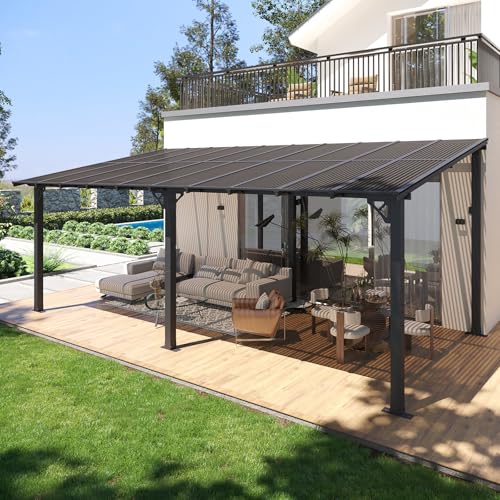
The Tangkula 10x13 Retractable Canopy Pergola is a good example of the more budget-conscious end of this category done well — a solid aluminum frame at a fraction of the cost of a motorized louvered system, with a manually retractable canopy that still gives real control over sun exposure. It's a sensible entry point if you want the look and durability of aluminum without the cost of a fully adjustable roof.
Motorized vs. Manual Louvers
Motorized louvered pergolas (often controlled by a remote or an app, sometimes with rain sensors that auto-close the roof) cost significantly more but add real convenience if you're not always home to close it before a storm. Manual crank or lever systems cost less and have fewer electronic parts to eventually fail, which matters for long-term reliability in a structure that lives outside year-round. If budget allows, a rain sensor specifically is worth prioritizing over other motorized conveniences — it's the one feature that actually protects the space (and anything under it) when you're not there.
Attached vs. Freestanding Installation
Some aluminum pergolas are designed to attach to your house on one side (often called lean-to or wall-mounted styles), which can be more stable and typically costs less than a fully freestanding four-post structure of the same size. Freestanding pergolas give more placement flexibility — you're not limited to a spot against the house — but need a solid, level base (concrete or pavers) on all four corners for proper anchoring.

The AirWire 12x16 Louvered Pergola is one of the larger freestanding footprints available in aluminum, sized for a full outdoor living setup rather than just a dining nook. At this size, confirm your base surface and anchor points before ordering — a structure this large needs a genuinely level, solid foundation across all four posts to stay stable long-term.
Curtains, Netting, and Add-Ons
Many mid-to-premium louvered pergolas include or offer optional side curtains and mosquito netting, which extend usable hours into the evening (bug protection) and add a windbreak on cooler days. These are usually removable, so you're not stuck with an enclosed look if you'd rather keep the sides fully open in summer.
Maintenance: Why Aluminum Wins Long-Term
Beyond the initial purchase, ongoing upkeep is where aluminum's advantage really compounds over years of ownership. A rinse with a garden hose and mild soap a couple of times a year handles pollen, dust, and general grime — there's no staining, sealing, or rot-checking the way wood requires. Powder-coated finishes (standard on most quality aluminum pergolas) resist chipping and fading far better than raw paint, though it's still worth touching up any scratches down to bare metal promptly to prevent oxidation at the exposed spot. For retractable canopy fabric specifically, closing it during severe storms (even though it's not a true rain barrier) reduces wind stress on the fabric and extends its lifespan.
FAQs
Is aluminum better than wood for a pergola?
For low-maintenance, long-term durability, yes — aluminum won't rot, warp, crack, or need re-staining the way wood eventually does. Wood pergolas still have appeal for a more natural, rustic look, but require ongoing maintenance that aluminum simply doesn't.
Do louvered pergolas actually keep rain out?
When fully closed, yes — quality louvered systems are engineered to shed water effectively, often with a built-in gutter or drainage channel along the frame. Cheaper louvered systems may still let some water through gaps, so check reviews specifically for rain performance if that's a priority.
Can I install an aluminum pergola myself?
Most kits are designed for DIY assembly with 2-3 people over the course of a weekend, especially freestanding fixed-roof models. Motorized louvered systems with electrical wiring for remote/app control are more complex and some buyers opt for professional installation for those specifically.
How much does a quality aluminum pergola cost?
Budget retractable-canopy models start around $250-350; mid-range fixed or manually-louvered pergolas typically run $400-900; motorized louvered systems with premium features (rain sensors, integrated lighting, larger footprints) commonly run $1,000-2,500+.
Conclusion
If budget is the priority, a retractable-canopy aluminum pergola gets you real shade control and a rot-proof frame for a fraction of the cost of a louvered system. If rain protection and hands-off convenience matter more, a motorized louvered pergola with a rain sensor is worth the higher price — it's genuinely a different category of usability, not just a nicer-looking version of the same thing. Either way, prioritize checking the actual frame gauge and wind rating over the size numbers alone, since that's what determines whether the structure survives its first real storm.