Best Robotic Pool Cleaner Under $3,000: Complete Buying Guide
Disclosure: We may earn a commission when you buy through links on this page, at no extra cost to you. As an Amazon Associate I earn from qualifying purchases. Learn more
A pool with a sun shelf, an attached spa, and a set of curved steps will humble most entry-level robots within a single lap. Debris collects in the corners the unit never reaches, the app freezes mid-cycle, and the filter clogs before the far end of the pool gets touched. Spending closer to $3,000 changes what a cleaner can physically handle, but it does not turn a household robot into a commercial machine. This guide covers what that budget realistically buys for a large or oddly shaped residential pool, where the real gains show up, and where the price ceiling still stops short of what pool service companies run.
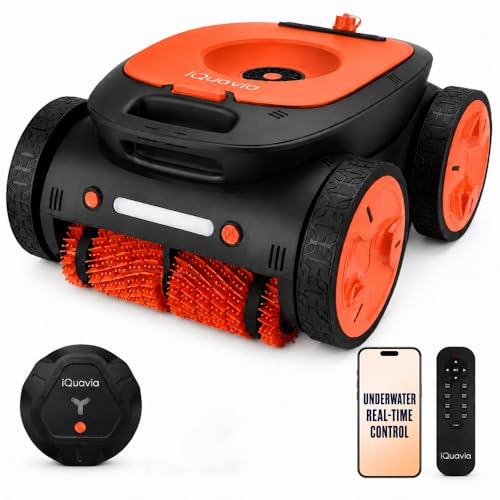
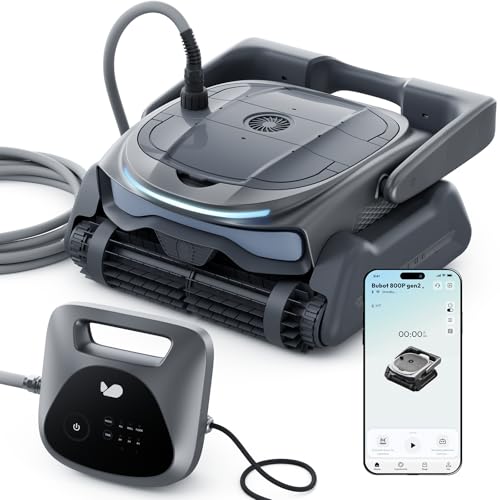


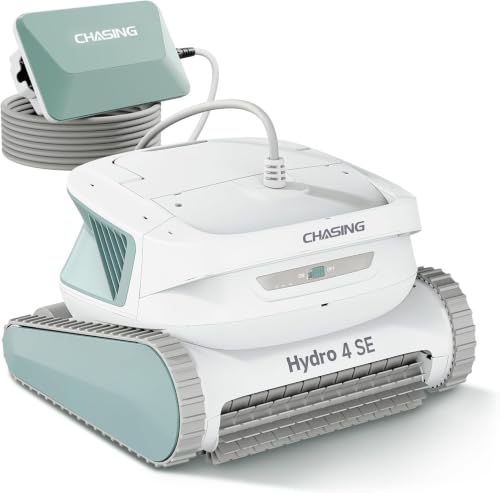
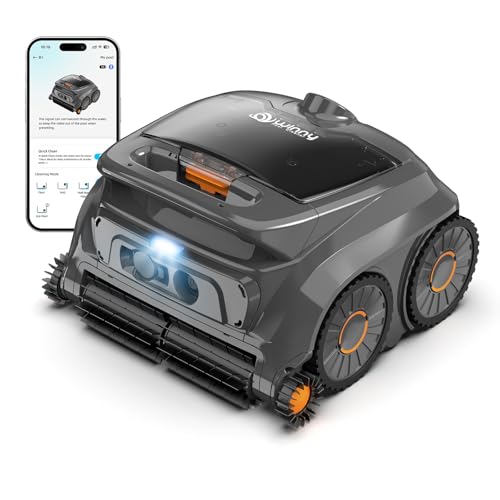

![[2026 New] AQUVII K2 Pool Robotic Pool Cleaner, 120-Min Runtime, Powerful Suction](https://images-na.ssl-images-amazon.com/images/I/31IUB3Srn6L.jpg)
Where This Budget Sits in the Market
Just under $3,000 is close to the top of what a homeowner can spend on a single-unit robotic cleaner before crossing into equipment built for service routes rather than one backyard. Engineering at this level gets pushed harder than anywhere else in the residential lineup: stronger drive systems, denser sensor arrays, and filtration sized for pools that generate more debris per cycle simply because they're bigger. Compared to a robotic pool cleaner under $2,000, the gap shows up mainly in how confidently the unit handles size and complexity rather than in any single flashy feature.
Covering Pools With Steps, Sun Shelves, and Attached Spas
Irregular geometry is the pain point that pushes most buyers into this price range in the first place. A rectangular pool with flat walls is a solved problem for almost any robot on the market. A pool with a raised spa, a tanning ledge, and stairs cut into the deep end is a different challenge entirely, since the unit has to recognize each surface change and adjust its path instead of getting stuck repeating the same lap.
Models near $3,000 typically rely on more advanced onboard mapping, sometimes combining gyroscopic sensors with cameras or sonar to build a working picture of the pool's layout during the first cycle. That mapping is what lets the cleaner treat a sun shelf as a surface to cover rather than an obstacle to avoid. Cheaper units without this level of sensing tend to bounce off ledges and steps, leaving those zones dirtier than the open floor.
What Full App Control Actually Adds at This Level
Nearly every cleaner sold today claims app connectivity, so the real question is how much control that app hands back. At this price, expect zone-specific scheduling, the ability to trigger a spot-clean on a particular section of the pool from the map the unit built, and remote status checks that work from outside the house, not just over local WiFi.
That last point matters more than it sounds. A common complaint with cheaper app-controlled units is that the connection only works standing next to the pool. Full remote control means starting a cycle before a trip home, or checking that the pool is ready before guests arrive, without walking outside first.
The Ceiling That $3,000 Still Doesn't Break
Even at the top of the residential lineup, the specs stop short of commercial equipment in a few specific ways. Corded commercial units built for pool service routes commonly push motor flow rates well above what residential cleaners are rated for, since they're designed to run daily on multiple properties rather than a few times a week on one pool. Continuous-duty motors rated for hours of uninterrupted operation, extra-large filtration meant for high-traffic public or resort pools, and multi-year commercial service contracts all sit above this price tier, not within it.
For a single residential pool, none of that gap actually matters in practice. It's worth knowing about mainly so the marketing language on the box doesn't get confused with what a service company would install. A $3,000 residential robot and a $3,000 commercial robot are not built for the same job, even at the same price point.
Maintenance Costs You'll Face at the Premium Tier
Higher-end units generally use more durable tracks, brushes, and impellers, but those parts also cost more to replace when they eventually wear out. Filter cartridges built for higher debris capacity tend to run more expensive than basic mesh bags, and dual-motor drive systems mean two components that can eventually need service instead of one.
None of this offsets what the cleaner saves on labor and water chemistry stability. A robot that runs a consistent schedule keeps debris from breaking down and feeding algae growth, which cuts down on manual brushing and the kind of chemical firefighting covered in guides like how to get rid of algae in a swimming pool. Budgeting for a replacement filter or brush set once a season is a more realistic ownership cost than the upfront price tag alone suggests.
Does This Price Still Beat Hiring a Pool Service?
Professional pool service typically runs somewhere between $100 and $200 a month, which adds up to well over a thousand dollars a year. A $3,000 robotic cleaner takes longer to break even than a budget model would, generally somewhere between one and two years depending on the service rate being replaced, but the payoff period is still shorter than the unit's expected lifespan of five or more years with reasonable care.
The calculation changes if a pool service is also handling chemical balancing, equipment checks, and seasonal opening or closing, since a robotic cleaner only replaces the physical cleaning portion of that job. For homeowners who mainly pay a service to vacuum and brush a large or awkward pool, the math tends to favor owning the equipment outright well before the warranty runs out.
Questions to Answer Before You Shop at This Price
- What is the pool's actual length and depth compared to the manufacturer's maximum rating, including any buffer for irregular shape?
- Is the pool surface gunite, pebble, tile, vinyl, or fiberglass, and is the cleaner rated for that specific texture?
- Does the household need a corded unit for consistent climbing power, or does a cordless model's shorter runtime still cover a full cycle?
- How large is the filter, and does the cleaner support multiple filter types for fine debris versus leaves and twigs?
- Is a robotic cleaner even the right category, or would a pressure side pool cleaner better suit a pool that already has strong existing pump infrastructure?
Common Missteps at This Price Point
- Assuming a higher price automatically means better wall climbing, when traction still depends on matching drive system to pool surface.
- Skipping the maximum pool length rating and trusting that "premium" specs cover any size.
- Overlooking replacement part pricing until a track or filter cartridge needs swapping out.
- Buying commercial-grade capability that a single household pool will never actually use, when a robotic pool cleaner under $1,000 would have handled a smaller or simpler pool just as well.
- Ignoring app connectivity range and assuming remote control works the same as local WiFi control.
Frequently Asked Questions
Is spending close to $3,000 worth it for a robotic pool cleaner?
For a large pool with an irregular shape, an attached spa, or multiple depth changes, yes. The navigation and coverage gains are real. For a standard rectangular pool under 40 feet, the extra spend mostly buys convenience rather than capability the pool actually needs.
What's the difference between this tier and a true commercial robot?
Motor flow rate, continuous-duty ratings, and filtration sized for daily high-traffic use. Commercial units are built to run pool routes across multiple properties, not to optimize for a single household pool.
Do these cleaners really handle steps and sun shelves well?
Most models at this price use advanced mapping to treat those areas as surfaces to cover instead of obstacles. Performance still varies by brand and by how steep or narrow the feature is.
How much should replacement parts cost over time?
Expect to budget for at least one filter cartridge or brush set replacement per season. Premium parts cost more individually but tend to last longer than budget equivalents.
Can app control really be used away from home?
At this price tier, most units support true remote access rather than local-network-only control. Confirm this specifically before buying, since it varies more than shoppers expect.
Is this price range appropriate for an above-ground pool?
Rarely. This tier is built and priced around large in-ground pools. An above-ground pool almost never needs this level of navigation or filtration capacity.
A pool with real geometry problems and a real debris load justifies the jump to this price range. The gains show up in coverage, mapping, and how little manual correction the unit needs, not in any single spec on the box. Match the features here to the pool's actual size, surface, and shape, and the spending makes sense on its own terms rather than as a default upgrade.