
Best Rated Steak Knives: How to Choose the Right Set for Your Table
Disclosure: We may earn a commission when you buy through links on this page, at no extra cost to you. As an Amazon Associate I earn from qualifying purchases. Learn more
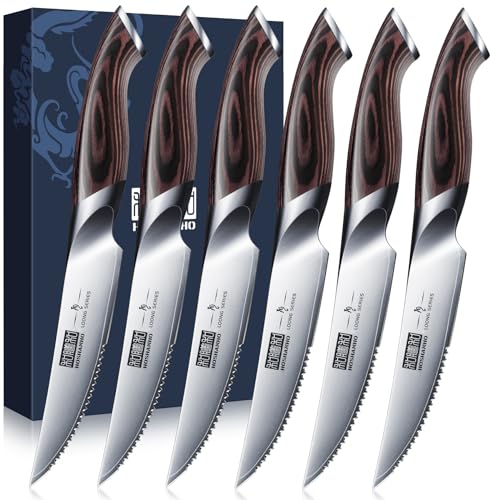
A steakhouse quality dinner can fall flat if the knife on the table tears the meat instead of slicing it. Finding the best rated steak knives for your home comes down to a handful of choices that have nothing to do with brand name: blade edge, construction, set size, and how much upkeep you're willing to do. Cheap sets from a big box store often look identical to pricier ones in a photo, but the difference shows up the first time you try to cut through a rare ribeye. This guide walks through what separates a set that stays sharp for years from one you'll replace after a few dinner parties, plus how to size a set for your table and keep it in good shape.

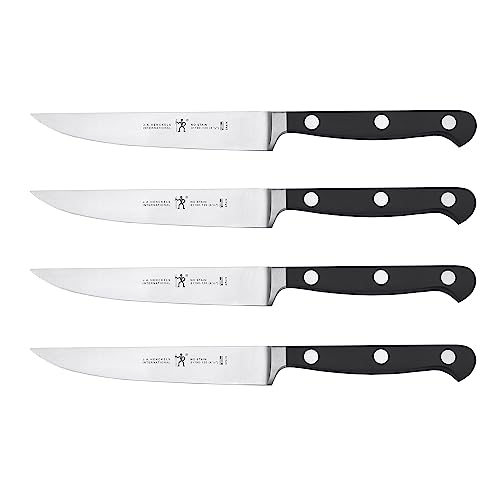

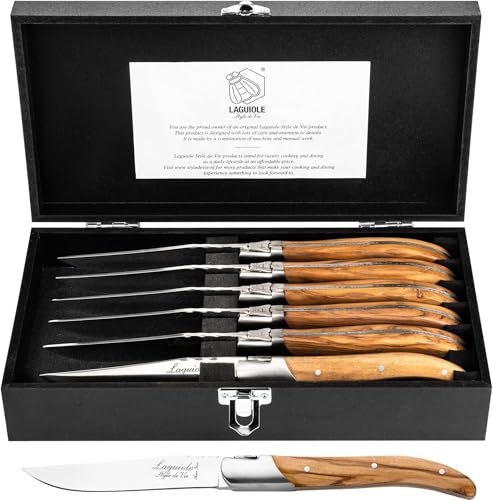
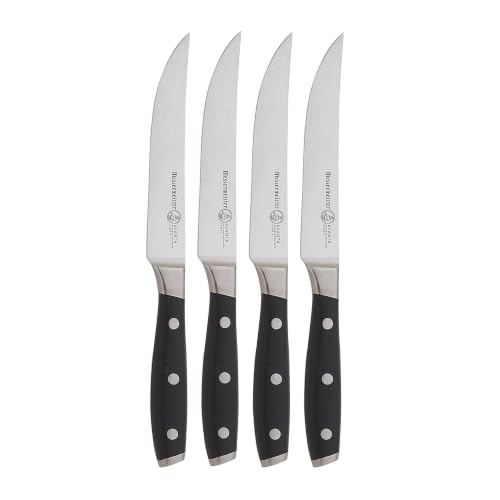

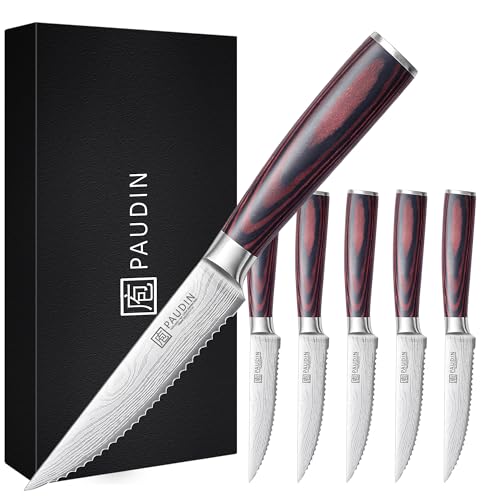
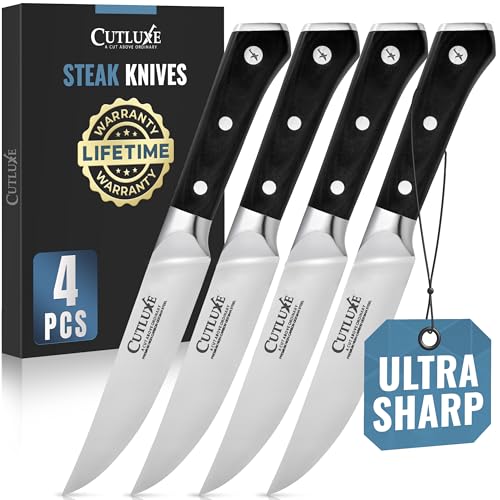
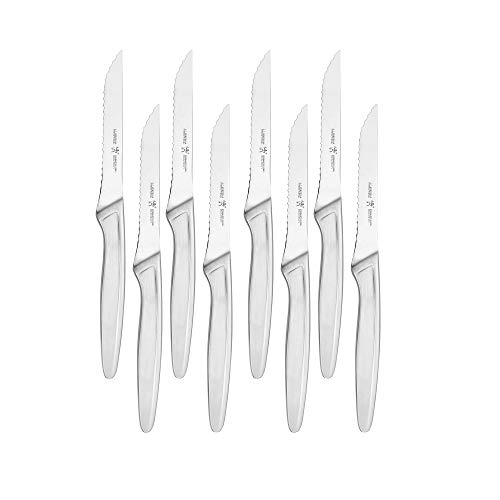

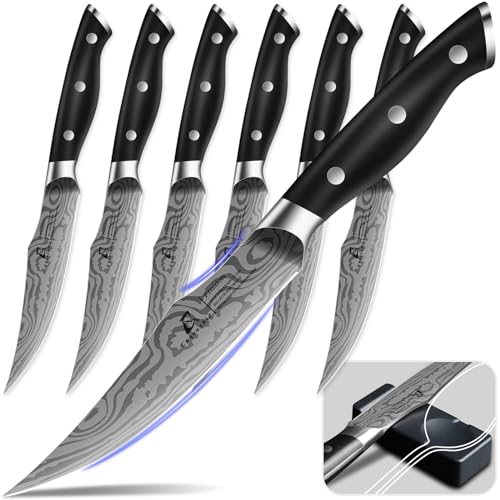

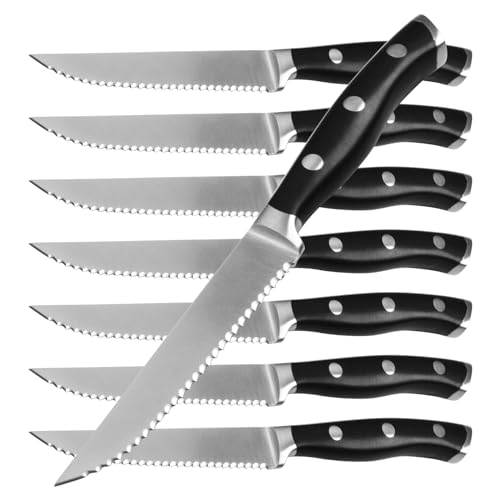
Serrated or Straight Edge: Which Cuts Cleaner at the Table
This is the first fork in the road for anyone shopping for the best rated steak knives, and it's also the most debated. Serrated blades use small teeth to grip and saw through meat, while straight edges rely on a smooth, razor sharp bevel that slices cleanly in one motion. Neither is objectively better. The right pick depends on how often you're willing to sharpen and how you like your steak cut.
Serrated Blades: Forgiving and Low Maintenance
Serrated edges hold a working edge longer between sharpenings because only the tips of the teeth need to stay sharp. That makes them a practical pick for households that don't sharpen knives often, and the teeth grip the surface of the meat well enough that even a slightly dull serrated knife still cuts passably. The tradeoff is texture. Serration can tear muscle fibers instead of slicing them cleanly, which some diners notice more than others, especially on tender cuts. Most of the best rated steak knives sold in sets default to serrated edges for exactly this reason, since they hold up better to inconsistent home sharpening habits.
Straight Edges: Cleaner Cuts, More Upkeep
A well honed straight edge glides through meat rather than sawing, producing a cleaner cut face that many cooks say preserves more juice on the plate. The catch is that straight blades dull faster with regular use and need periodic honing or sharpening to stay effective. If you already own a sharpening stone or steel for your kitchen knives, extending that habit to steak knives is a small addition to your routine, or an electric knife sharpener can shortcut the process for straight edge blades that see frequent use.
Blade Construction: Why Forged and Full Tang Matter More Than the Name on the Box
Once you've settled on an edge style, construction is what actually determines how long a set lasts. Two knives can look nearly identical on a shelf and behave completely differently after a year of regular use, and the difference almost always comes down to how the blade was made. If you're also outfitting your kitchen from scratch, a dedicated kitchen knife set follows similar forged versus stamped logic, though steak knives are built more for table presentation and edge holding than for chef level control at the cutting board.
Forged vs Stamped Blades
Forged blades start as a single bar of steel that's heated and hammered into shape, a process that typically produces a thicker spine, better balance, and a blade that holds an edge longer. Stamped blades are cut from a flat sheet of steel, much like a cookie cutter, which makes them lighter and less expensive but generally quicker to dull and more prone to flexing under pressure. Stamped knives aren't automatically bad, they just tend to need sharpening more often and rarely feel as substantial in the hand.
Full Tang Construction and Handle Material
A full tang means the metal blade extends the entire length of the handle rather than stopping partway, which improves balance and makes the knife far less likely to loosen or snap at the bolster over time. Stainless steel handles wipe clean easily and suit a more modern table setting, while wood handles feel warmer in hand and are a common choice for a classic steakhouse look, though they need to stay dry to avoid warping. Whichever material you land on, a full tang is worth prioritizing over a flashy finish when you're comparing the best rated steak knives side by side.
Picking the Right Set Size and Blade Length for Your Table
Even the best rated steak knives come in the wrong count for your household if you buy on impulse. Sets typically come in four, six, or eight pieces, and the right count depends on your household size plus how often you host. Buying more than you need just to get a better per knife price rarely pays off if half the set sits unused in a drawer.
How Many Pieces Do You Actually Need
Match the count to your table, not to whatever looks like the best deal. A four piece set covers a small household, six pieces works well for most families with occasional guests, and eight pieces makes sense if you regularly host dinner parties or want a spare in case one gets damaged. Open stock sets that let you buy knives individually are worth considering if your household size tends to change.
Blade Length That Matches How You Eat
Most steak knives run between four and five and a half inches of blade, and the difference matters more than it seems. Shorter blades feel nimbler for thinner cuts like flank or skirt steak, while a longer blade handles a thick ribeye or porterhouse with fewer strokes. If your table regularly sees thicker cuts, lean toward the longer end of that range.
Caring for Steak Knives So They Stay Sharp for Years
How you clean and store the best rated steak knives affects their lifespan just as much as how they were made. Even a well forged, full tang knife will dull fast or start to corrode if it's tossed in the dishwasher and left wet in a drawer.
Hand Washing vs the Dishwasher
Dishwasher heat, harsh detergent, and knives knocking against other utensils are hard on any blade, and manufacturers who label a set dishwasher safe are usually referring to the handle material holding up rather than the edge staying sharp. Hand washing with mild soap, drying immediately, and avoiding letting knives soak with other dishes keeps the edge in better shape for longer, even if it takes an extra minute after dinner.
Storage That Protects the Edge
Tossing loose knives into a drawer with other flatware dulls the edge through contact and creates a real safety hazard when reaching in blind. A dedicated knife block, in drawer tray, or blade guards keep the edges protected and separated from the rest of your flatware.
If you already store your kitchen knives on a magnetic knife holder, adding a few slots for steak knives keeps the whole collection organized in one place instead of scattered across drawers.
Frequently Asked Questions
Are serrated or straight edge steak knives better?
Neither is universally better. Serrated blades stay functional longer between sharpenings and suit households that rarely sharpen knives, while straight edges cut more cleanly but need more frequent honing to perform well.
Are steak knives dishwasher safe?
Some are labeled dishwasher safe, but hand washing generally preserves the edge and finish longer. Dishwasher heat and detergent can dull blades and cause corrosion over repeated cycles, even on sets marketed as safe for machine washing.
How many steak knives do I need for a family?
Four knives typically covers a small household, six suits most families who occasionally host, and eight gives you room for guests plus a spare. Choose based on how often you actually seat people at the table.
What is the best blade length for a steak knife?
Most fall between four and five and a half inches. Shorter blades feel nimbler on thinner cuts, while longer blades handle thick cuts like ribeye or porterhouse more efficiently.
What does full tang mean on a steak knife?
It means the blade's steel extends the full length of the handle instead of stopping partway. This improves balance and durability, and it's one of the clearest signs of better construction on the best rated steak knives.
How often should steak knives be sharpened?
Straight edge knives typically need honing every few months with regular use and full sharpening once or twice a year. Serrated knives go much longer between sharpenings since only the tips of the teeth wear down.
Making the Right Call for Your Table
Narrowing down the best rated steak knives for your home really comes down to three questions: do you want a serrated edge that forgives inconsistent sharpening or a straight edge that rewards upkeep, does the construction include a forged blade and full tang, and does the set size match how often you actually host. Get those three right and the finish or handle style becomes the easy, fun part of the decision.