Best Range Hood Under 400: A Complete Buying Guide
Disclosure: We may earn a commission when you buy through links on this page, at no extra cost to you. As an Amazon Associate I earn from qualifying purchases. Learn more
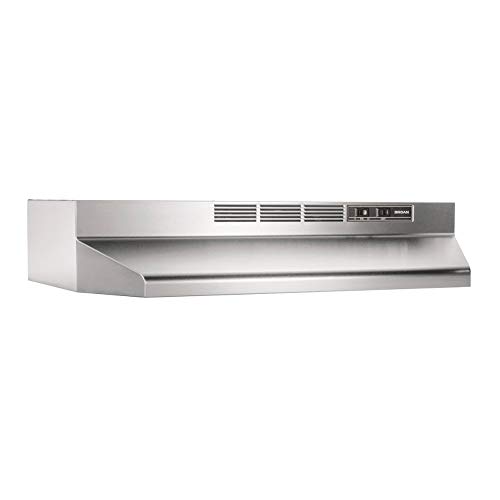
Three hundred dollars gets you a working range hood. Four hundred gets you one that actually keeps up with real cooking. That gap matters more than the extra hundred dollars suggests, because $400 is roughly where hoods stop shipping with basic mesh filters and 300 CFM motors and start offering baffle filters, 600 to 900 CFM blowers, and noise engineering that doesn't force you to shout over dinner prep. If you're deciding whether to stretch your budget past the entry-level tier or hold off for a $500 model, this guide breaks down exactly what changes at the $400 mark and whether it's worth paying for.
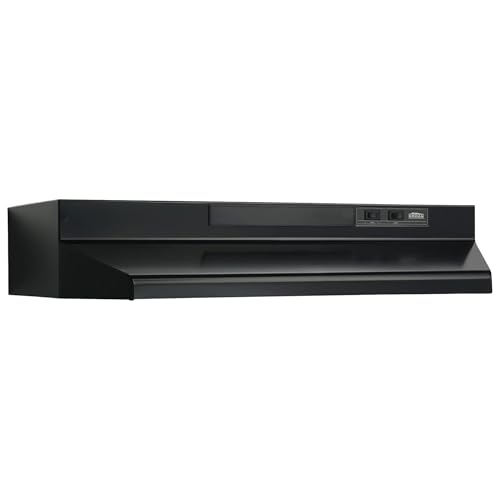
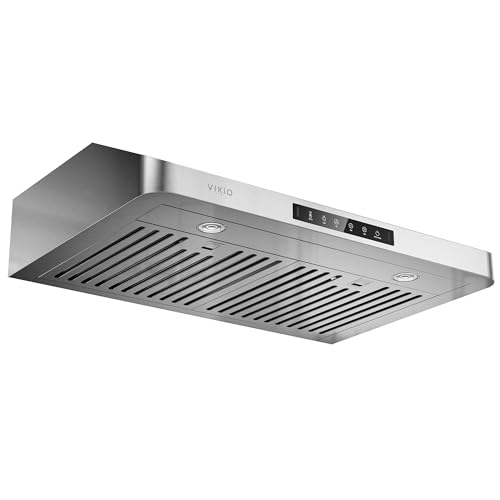
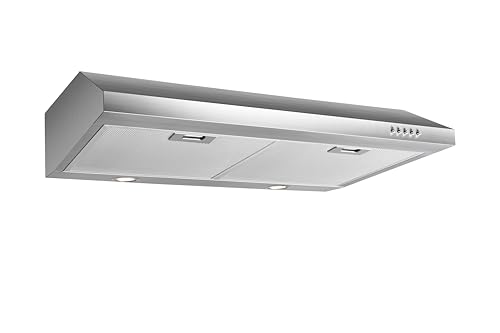
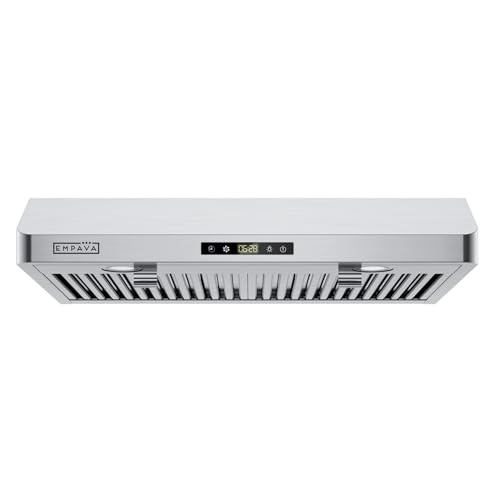
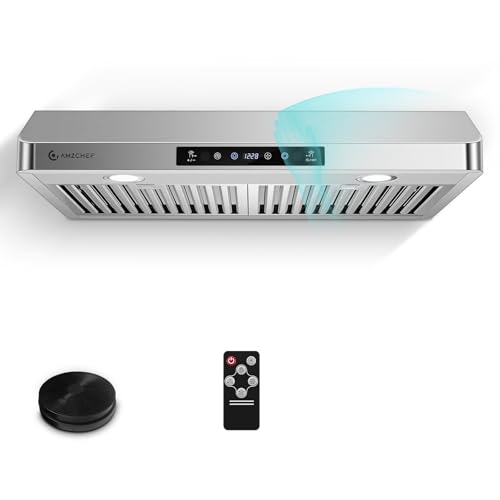
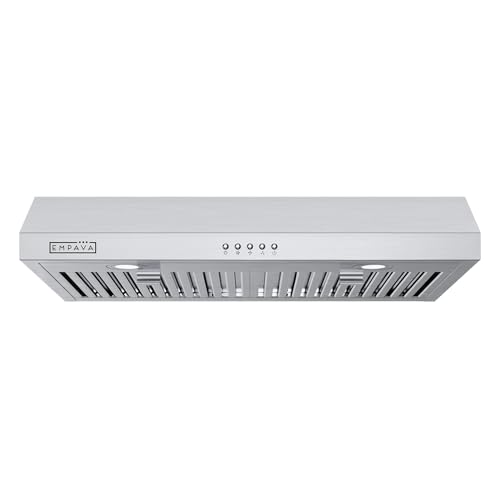


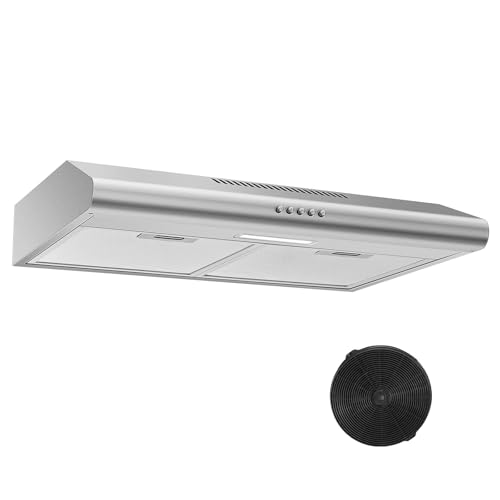
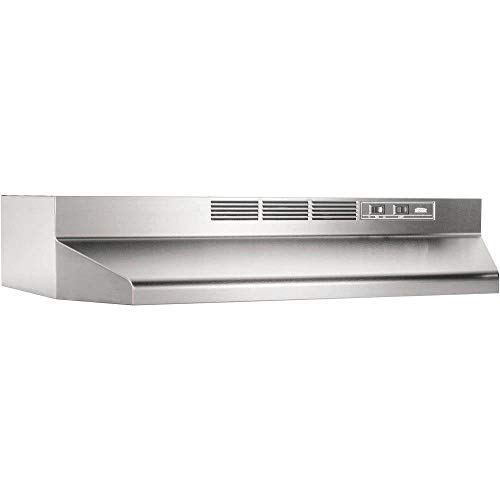
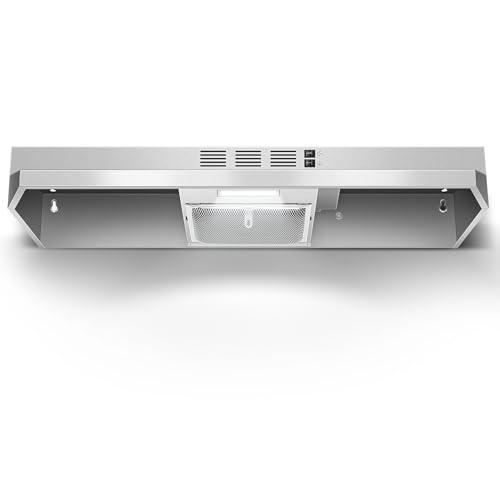
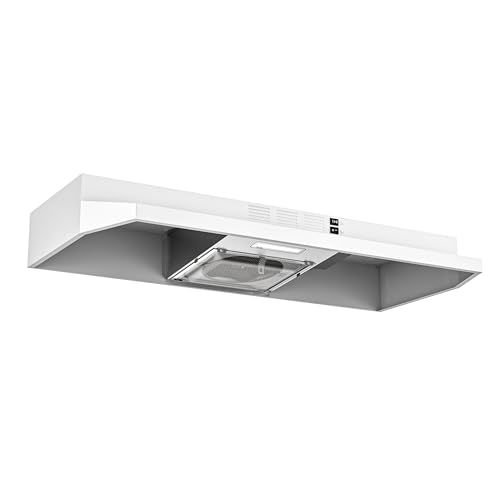
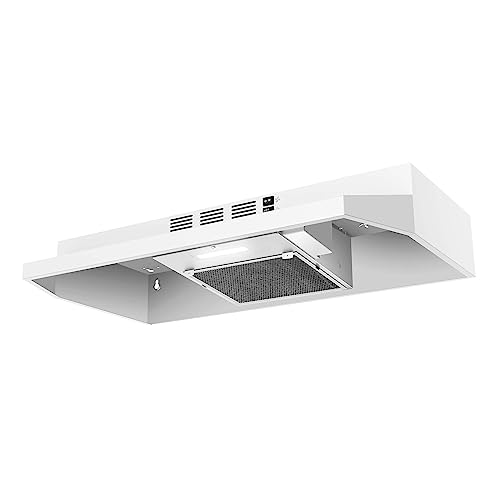
The $400 Jump: Why Airflow Changes at This Price Point
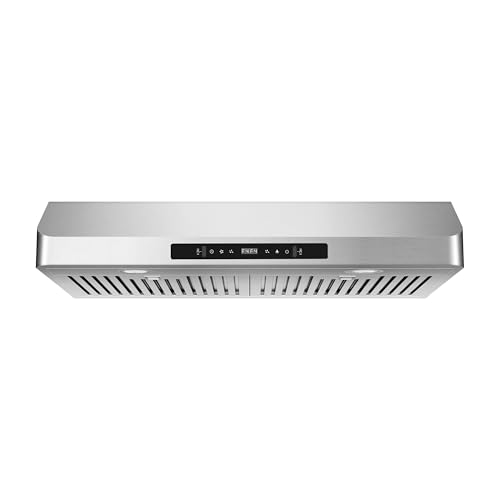
Walk through range hood listings by price and you'll notice a pattern. Below $300, most hoods top out around 300 to 400 CFM with a basic mesh filter and a single-speed or three-speed fan. Cross into the $350 to $400 range, though, and CFM ratings jump noticeably, with several well-reviewed models pushing 600 to 900 CFM at prices as low as $250 to $380. That's a meaningful shift, not a marketing trick.
The reason comes down to blower design. Getting real airflow without excessive noise requires a better motor and often a squirrel-cage blower housing rather than the cheapest axial fan, and that hardware costs more to manufacture. Once a brand invests in a stronger blower, it usually pairs it with a better filter and a more durable housing, since a weak filter would bottleneck the airflow anyway. So the $400 price point isn't just "more expensive," it's the point where several upgrades tend to arrive together. If your budget has some flexibility, comparing a few models against a range hood under $500 can help you see whether the extra hundred dollars buys anything beyond what you're already getting here.
Baffle Filters Start Showing Up Standard
Most sub-$300 hoods rely on mesh filters, which are inexpensive metal screens that trap grease as air passes through. They work fine for occasional electric cooking, but they clog quickly and lose airflow as grease builds up between washes. Once you're shopping near $400, baffle filters become a lot more common, and that switch is worth paying attention to.
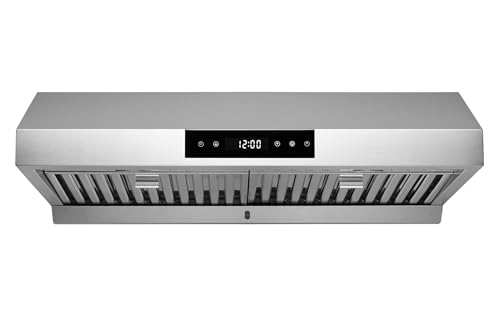
Baffle filters use angled metal panels that force air to change direction repeatedly, which slings grease onto the panel surface through turbulence rather than trapping it in fine mesh. The payoff is that a baffle filter keeps moving close to its rated airflow even when it's dirty, and it only needs cleaning every couple of months instead of every couple of weeks. If you cook with a lot of oil, fry regularly, or run a gas stove with heavy cookware, the difference between a clogged mesh screen and a baffle filter shows up fast in how much smoke actually clears the room.
Matching CFM to a Gas or Electric Range
CFM needs aren't the same for every cooktop, and this is where a lot of shoppers guess wrong. For an electric or induction range, a workable starting point is to multiply the cooktop's width in inches by 10, so a standard 30-inch range calls for roughly 300 CFM minimum. Gas ranges burn hotter and produce more airborne grease and combustion byproducts, so the common formula there is about 100 CFM for every 10,000 BTUs of total burner output. A gas range with 60,000 combined BTUs across its burners would land closer to 600 CFM, which is exactly the range where $400 hoods start to live.
There's also a coverage rule that gets overlooked: the hood should extend a few inches past the cooktop on both sides and reach far enough forward to cover the back burners plus at least half of the front ones. A hood with strong CFM mounted too high or too narrow still lets smoke escape around the edges, so pair the airflow number with the right width and mounting height rather than treating CFM as the only spec that matters.
Ducted vs. Ductless at the $400 Mark
A ducted range hood vents air straight outside through ductwork, which removes heat, moisture, and odor in one pass and is the option most contractors recommend when it's feasible. A ductless, or recirculating, hood pulls air through a charcoal filter and returns it to the kitchen instead, which is a reasonable fallback in a condo or interior kitchen where running ductwork isn't practical, but it won't pull out heat the way a ducted unit does.
At the $300 tier, ductless is often the default because it's cheaper to manufacture and install. By $400, ducted models with real CFM become widely available, and the install cost for a short, straightforward duct run to an exterior wall is often smaller than shoppers expect. If your kitchen has an outside wall within a few feet of the hood location, it's worth pricing out a ducted model in this range before defaulting to ductless purely on price.
Cutting Noise Without Cutting Power
Higher CFM usually means more noise, but not always. Most of the sound a range hood makes comes from air moving through the blower and ductwork, not from the motor alone, which is why a slightly oversized hood running on a low or medium speed can end up quieter than a smaller, weaker hood straining on high. Manufacturers rate this in sones: 1 to 2 sones is very quiet, 3 to 4 sones is comfortable for daily use, and anything past 6 sones gets genuinely loud at full speed.
Installation quality affects perceived noise just as much as the hood itself. A crushed section of flex duct, too many tight elbows, or an undersized duct run can noticeably increase the whine and rattle you hear, even on a hood with a good sone rating on paper. If noise is a bigger concern than raw CFM in your household, a quiet wall-mount range hood built specifically around sound dampening may be worth comparing against a general $400 pick before you commit.
Frequently Asked Questions
Is $400 a good budget for a range hood?
Yes, for most kitchens. This price tier is where baffle filters, 600+ CFM blowers, and better noise control start becoming common, which covers the needs of most gas and electric home cooks without paying for commercial-style extras.
What's the real difference between a $300 hood and a $400 hood?
The $300 tier typically means a mesh filter and CFM in the 300 to 400 range. At $400, baffle filters and CFM ratings of 600 to 900 become common on well-reviewed models, along with sturdier housings and better fan balance.
Should I get a ducted or ductless hood under $400?
Ducted is the better performer whenever it's feasible, since it vents air outside instead of filtering and recirculating it. A ductless model still makes sense if running ductwork to an exterior wall isn't realistic in your kitchen.
How much CFM does a gas stove need compared to electric?
Electric cooktops need roughly 10 CFM per inch of cooktop width as a floor. Gas ranges need more, around 100 CFM per 10,000 BTUs of total burner output, which usually lands between 500 and 700 CFM for a standard range.
Are baffle filters worth paying more for?
For anyone who cooks with oil regularly or uses a gas range, yes. Baffle filters hold their airflow better when dirty and only need cleaning every couple of months, versus the frequent washing mesh filters require to stay effective.
Will a $400 range hood be too loud for an open-concept kitchen?
Not if you check the sone rating and installation quality. A hood with a moderate CFM run on low or medium speed is often quieter than a smaller hood pushed to its max, and short, smooth ductwork keeps noise down regardless of CFM.