
Best Ping Pong Paddle Made Simple: A Clear Buying Guide
Disclosure: We may earn a commission when you buy through links on this page, at no extra cost to you. As an Amazon Associate I earn from qualifying purchases. Learn more

A plain language guide to the best ping pong paddle: blades, rubber, handles and picks for every level.
The right ping pong paddle makes the game more fun from the first rally. A cheap paddle with hard, slick rubber makes spin almost impossible, while a paddle that is too fast for your skill level sends balls flying off the table. This guide to the best ping pong paddle explains the basics in plain language, walks through the specs that actually matter and points out the rookie mistakes that lead beginners to buy the wrong paddle.
We go from the fundamentals to key specs, common mistakes, first use tips and answers to common questions. Every paddle in the table above is sold new on Amazon US. Ping pong is low risk, but warm up before fast play, wear shoes with good grip and keep the playing area clear so nobody trips chasing a ball.




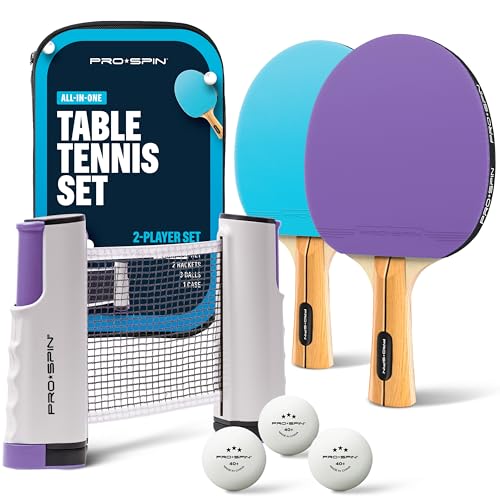
Ping Pong Paddles 101: The Basics
A ping pong paddle, also called a table tennis racket, has a wooden or wood and carbon blade covered on each side by a rubber sheet on top of a sponge layer. The rubber grips the ball to create spin, the sponge adds speed and the blade controls how the paddle feels and how much power it gives.
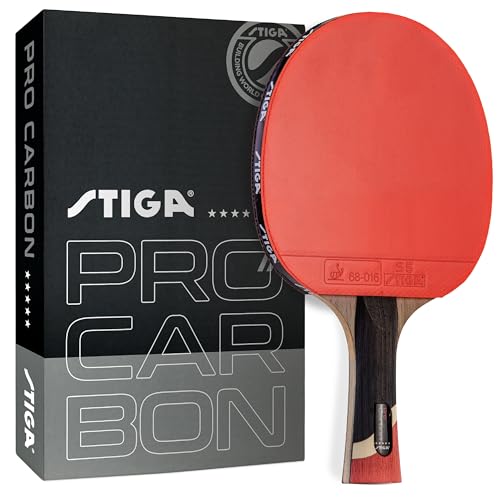
There are two main ways to buy. Pre made paddles, like the PRO-SPIN carbon paddle, JOOLA Carbon Pro and STIGA Pro Carbon, come ready to play. Custom rackets, used by advanced players, combine a separate blade and rubbers chosen to match a playing style. Beginners and most club players do well with a quality pre made paddle.
A few terms come up often. Plies are the layers in the blade.
ITTF approved rubber meets the rules of the International Table Tennis Federation for competition. Speed, spin and control ratings describe how a paddle behaves. Shakehand and penhold describe the two main ways to hold a paddle.
Rules require one side of a competition paddle to be red and the other black so opponents can see which rubber you use. Most pre made paddles follow this, which helps if you later join a club.
Key Specs for the Best Ping Pong Paddle, in Plain English
The specs that matter most are blade construction, rubber and sponge, performance ratings, handle shape, weight and whether you need a single paddle or a set.
Intended Use and Skill Level
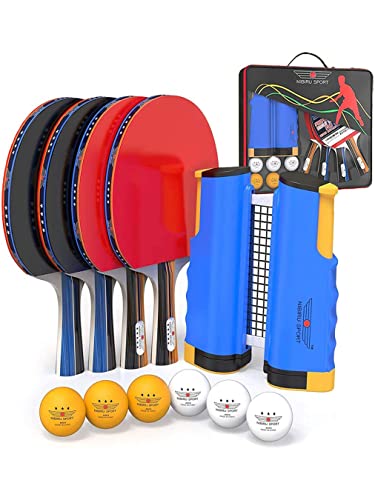
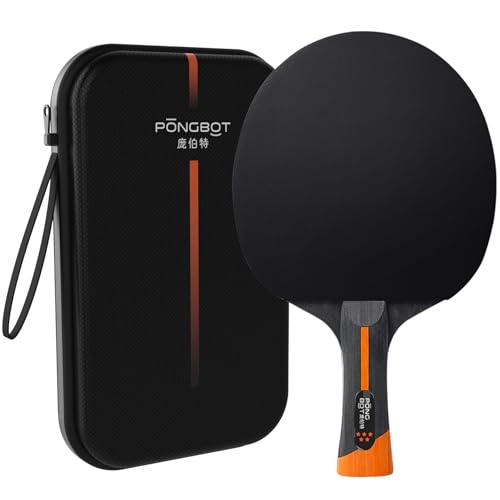
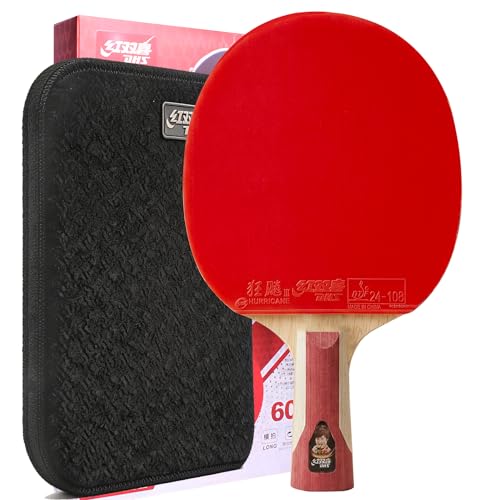
Casual family players need durable, forgiving paddles with medium speed; sets like the NIBIRU 4 paddle set and JP WinLook set suit backyard and garage tables. Improving players benefit from a carbon or 7 ply paddle with ITTF rubber, like the PRO-SPIN carbon paddle or PONGBOT Five-Star. Advanced players often choose faster rackets, like the JOOLA Carbon Pro, Killerspin Jet 800 or a DHS penhold racket with Hurricane 3 rubber.
If several family members share one table, a 4 paddle set plus one upgraded paddle for the most serious player is a smart, affordable mix.
Blade Construction: Wood vs Carbon
All wood blades, like the DHS 5 ply blade, give more feel and control. Carbon layers add stiffness and speed and enlarge the sweet spot. PRO-SPIN lists a 7 ply blade with carbon and premium wood layers and a concave handle with an inner carbon tube to reduce vibration, and JOOLA lists a carbon infused blade with Carbonwood technology. Beginners usually do better with slower, more controlled blades.
A slower blade helps you learn proper strokes, because mistakes are easier to correct when the ball does not fly off the paddle.
Rubber and Sponge Thickness
Tacky inverted rubber creates spin. Sponge thickness affects speed and control: PRO-SPIN uses a 2.0 mm sponge for control and spin, Idoraz lists ITTF approved 2.0 mm rubber and JOOLA uses 1.9 mm JOOLA 4 You rubber. Thicker sponges add speed but are harder to control. Choose ITTF approved rubber if you plan to play in leagues or tournaments.
Rubber wears out before the blade, so serious players replace rubber sheets while keeping the same blade.
Speed, Spin, and Control Ratings
Many makers publish ratings on a 0 to 100 scale. JOOLA lists speed 98, spin 92 and control 86 for the Carbon Pro, and Idoraz lists speed 99, spin 93 and control 90. Ratings are not standardized across brands, so compare paddles within the same brand and use them as a rough guide. Beginners should favor higher control.
Feel matters more than numbers, so read descriptions alongside ratings.
Handle Shape and Grip Style
Flared handles, like JP WinLook's and NIBIRU's, widen at the end and stay secure in the hand, which most players like. Straight and anatomic handles suit players who switch grips. Penhold rackets, like DHS's short handled model, suit the traditional penhold style used by many Asian players.
Try a few grips before buying if you can, since comfort affects consistency more than most specs.
Price vs Value
Around $30 to $45 buys a 4 paddle family set or a single carbon paddle; NIBIRU's set with net, balls and case costs around $30 and PRO-SPIN's carbon paddle around $33. Around $60 to $100 buys performance paddles like the DHS penhold at around $63, JOOLA Carbon Pro at around $67, STIGA Pro Carbon at around $80 and Idoraz at around $77. Killerspin's Jet 800 costs around $100.
Sets are the best value for families who need several paddles at once.
Case, Accessories, and Care
A case protects the rubber from dust and damage. PONGBOT includes a hard case, Idoraz includes a carrying case and JP WinLook includes a case with 8 three star ITTF approved balls. Sets with retractable nets, like NIBIRU's, let you play on any table up to about six feet wide.
A rubber cleaner and protective film keep tacky rubber grippy longer.
Rookie Mistakes to Avoid
- Buying the fastest paddle. Very fast paddles are hard to control for beginners.
- Choosing cheap, hard rubber. Slick rubber makes spin almost impossible to learn.
- Ignoring grip style. Penhold rackets feel very different from shakehand paddles.
- Leaving paddles in hot cars. Heat and sunlight damage rubber and glue.
- Using cheap balls. Low quality balls bounce unevenly; three star balls play much better.
Most of these come from buying for looks or speed rather than control.
Getting Started: Setup and First Use
Check the paddle's rubber for dents and make sure the edges are smooth. Wipe the rubber with a damp cloth or rubber cleaner to remove dust before playing. Learn a basic shakehand grip: hold the paddle like shaking hands, with your index finger along the back rubber.
Start with slow rallies to get used to the paddle's speed, then practice brushing the ball to add topspin. Store paddles in their case after each session, away from heat and direct sun. Clean the rubber regularly to keep it tacky.
A short lesson or online video on basic strokes helps beginners build good habits early.
FAQs
How much should I spend on a ping pong paddle?
Casual players can spend around $30 to $45 for a family set or a single carbon paddle. Improving players get good value around $60 to $100, where paddles like JOOLA's Carbon Pro, STIGA's Pro Carbon and Idoraz's offer ITTF rubber and better blades.
Are expensive ping pong paddles worth it?
For players who are improving, yes. Better rubber creates more spin and better blades give a bigger sweet spot. For occasional family games, a low cost set works fine.
Upgrade once your strokes feel consistent.
How do I maintain a ping pong paddle?
Wipe the rubber after play with a damp cloth or rubber cleaner, let it dry, then store the paddle in a case. Keep it away from heat, sunlight and humidity, and avoid touching the rubber surface with greasy fingers.
A case makes this easy.
What features matter most when buying ping pong paddles?
Control for your skill level, tacky rubber with a suitable sponge thickness, a comfortable handle and ITTF approval if you plan to compete matter most.
How long does a ping pong paddle last?
Casual players may use a paddle for years. Regular players often replace rubber every several months to a year as it loses tackiness, while the blade can last much longer.
Edge tape protects the blade from chips.
Shakehand or penhold: which should I learn?
Most beginners in the US start with shakehand, which offers balanced forehand and backhand strokes. Penhold suits players who prefer strong forehands and quick wrist play, and it needs a penhold racket like DHS's.
Pick one and stick with it.
What ping pong balls should I buy?
Choose 40 mm three star balls for the best bounce and durability; JP WinLook includes eight three star ITTF approved balls with its set, and NIBIRU includes six. Cheaper one star balls are fine for kids and casual games but crack and bounce less evenly.
Buy extras, since balls get lost.
Can I play ping pong outdoors with any paddle?
Yes, but sun, heat and moisture wear rubber faster. Use a durable set paddle outdoors, like NIBIRU's or JP WinLook's, and keep your best paddle for indoor play. Wind also affects light ping pong balls, so outdoor games are best on calm days.
Bring paddles inside after play.
The Bottom Line
The best ping pong paddle matches your skill level, gives you enough control to learn spin and feels comfortable in your hand. Choose a NIBIRU or JP WinLook set for family fun, a PRO-SPIN or PONGBOT carbon paddle as an upgrade and a JOOLA Carbon Pro, STIGA Pro Carbon or Killerspin Jet 800 for faster, competitive play.
For more game room guides, see the best dart board, the best cornhole bags, the best home gym machine and the best dumbbells sets. Then compare current prices in the product table above.


