
Best Home Gym Machine: Everything to Know Before Your First Purchase
Disclosure: We may earn a commission when you buy through links on this page, at no extra cost to you. As an Amazon Associate I earn from qualifying purchases. Learn more

A first time buyer's guide to the best home gym machine: resistance types, space, noise, warranty and setup.
A home gym machine lets you train your whole body without a membership, a commute or waiting for equipment. But first time buyers face a confusing mix of weight stack stations, Smith machines, cable trainers, bodyweight gliders and smart digital machines, with prices from around $300 to several thousand dollars. This guide to the best home gym machine walks you through the basics in plain language, explains the specs that matter and flags the rookie mistakes that lead to buyer's regret.
We go from the fundamentals to key specs, common mistakes, setup and answers to common questions. Every machine in the table above is sold new on Amazon US. Talk to your doctor before starting a new strength routine if you have heart, joint or back problems, learn proper form with light weights first and keep children away from cables and weight stacks.






Home Gym Machines 101: The Basics
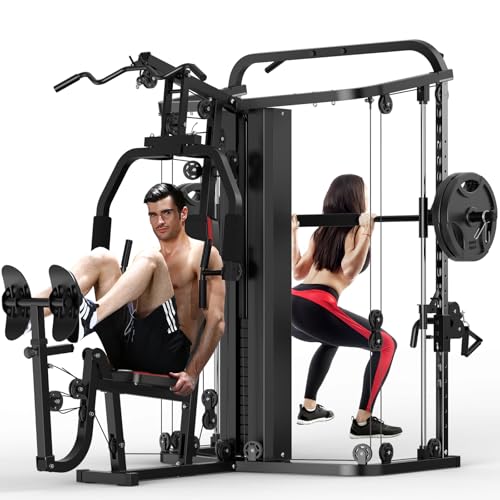
A home gym machine is a single frame that lets you do many strength exercises, such as chest presses, lat pulldowns, rows, leg extensions and curls, by moving handles, bars or a sliding seat against resistance. Instead of buying separate machines, you get one station that covers most muscle groups.
The main difference between machines is the type of resistance. Weight stack machines use a column of steel plates and a selector pin, like the Goplus Multifunction Home Gym with a 100 pound stack at around $300. Smith machines guide a barbell along fixed rails for safer solo squats and presses.
Cable trainers, like the Inspire Fitness FTX Functional Trainer with two 165 pound stacks, let you pull from any angle. Bodyweight machines, like Total Gym, use an incline glide board and your own weight. Power rod machines, like the BowFlex PR1000, use flexible rods that bend under load. Smart machines, like the Speediance Gym Monster, use motors to create digital resistance.
A few terms come up often. A station is one spot where you perform an exercise. A pulley ratio tells you how much of the stack weight you actually feel. Weight capacity is the maximum load the frame is built to hold.
Think of the machine as the core of your home gym. Many people add a mat, a bench or a set of dumbbells later, so leave room to grow.
Key Specs for the Best Home Gym Machine, in Plain English
The specs that matter most are the resistance type and amount, the footprint and ceiling height, adjustability and range of motion, noise, smart features and warranty.
What You Can Realistically Get at Each Price
Around $300 to $800 buys a compact weight stack station or a bodyweight machine. The Goplus station costs around $300, the Total Gym APEX G3 costs around $599 with 8 resistance levels and 70 plus exercises, the BowFlex PR1000 costs around $640 and the Marcy Multifunction Home Gym with a 100 to 200 pound stack costs around $766.
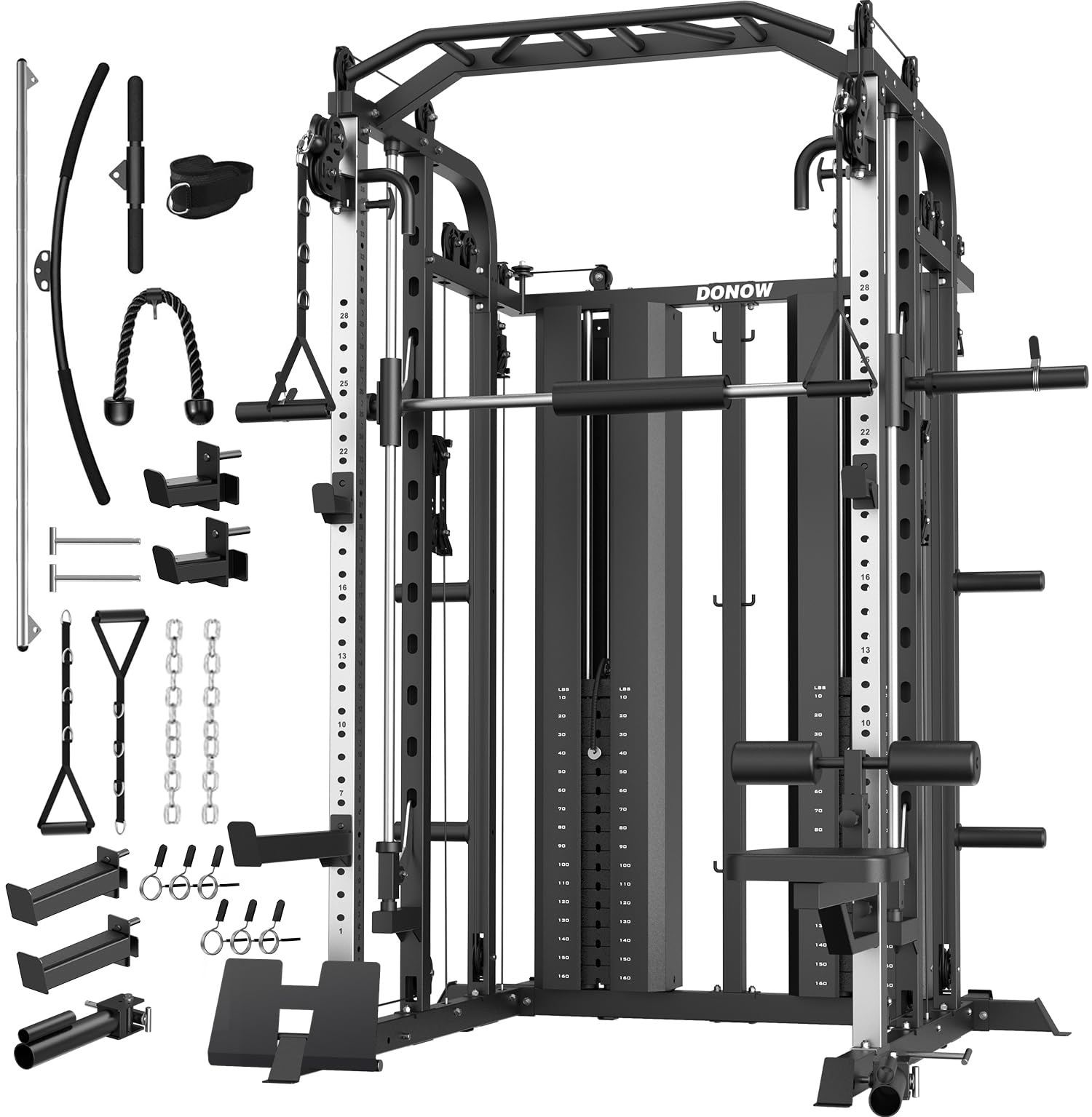
Around $900 to $1,600 buys bigger all in one systems. The SunHome Multifunction Home Gym, at around $900, adds a Smith machine, leg press and dual user stations, the Total Gym FIT costs around $999 with 12 resistance levels and 85 plus exercises, the Marcy Smith Cage costs around $1,300 and the DONOW Smith machine with weight stacks costs around $1,538.
Above around $2,000, you get premium functional trainers like the Inspire FTX at around $2,099 and smart machines like the Speediance Gym Monster at around $2,599.
Resistance Type and Maximum Weight
Match resistance to your goals. Beginners and people focused on general fitness do well with 100 to 150 pounds of stack weight or a bodyweight machine. Stronger lifters need heavier stacks, a Smith machine with plate loading or a cable trainer with two stacks. SunHome lists independent 138 pound stacks on each side, which lets two people train at different weights.
Check whether the listed weight is the true stack weight or the resistance you feel through pulleys, since some machines use pulley ratios that change the felt load.
Power rod resistance feels lighter at the start of a rep and heavier at the end, which differs from free weights. Bodyweight gliders scale with the incline, so very strong users may outgrow them. Weight stacks feel the most like gym machines and are the easiest way to track progress from week to week.
Space, Footprint, and Ceiling Height
Measure the floor area and the ceiling before you buy. Weight stack and Smith machines are tall and often need about 7 to 8 feet of ceiling height, plus room around the frame for bars, handles and your body. Total Gym models fold for storage, which helps in small rooms.
Add at least 2 to 3 feet of clearance on each side where you will move, and check doorway widths for delivery.
Lat pulldowns and overhead presses need extra height above the machine, and Smith squats need room for the bar on your shoulders. Draw the footprint on the floor with tape before ordering to see how it feels in the room.
Console, Programs, and App Connectivity
Most weight stack machines have no electronics at all. Smart machines, like the Speediance Gym Monster, use digital weight, guided programs and app tracking, but some features may need a paid membership. Check the subscription cost before you buy.
Digital resistance changes in small steps at the touch of a button, which suits people who want guided workouts and data. A plain weight stack offers none of that but has fewer parts that can fail.
Noise Level for Apartments
Weight stacks clank when plates drop, and Smith bars rattle on their hooks. Bodyweight and power rod machines are quieter. A thick rubber mat under the machine reduces noise and vibration, which matters in upstairs apartments.
Lower stacks slowly and with control to keep noise down and protect the cables.
Warranty (Frame, Parts, Labor)
Look for long frame warranties, separate coverage for cables, pulleys and upholstery and clear support for replacement parts. SunHome lists commercial grade 2 by 2 inch steel, a 2,000 pound capacity and lifetime 24/7 support. Read each maker's warranty terms, since coverage varies widely.
Range of Motion, Adjustability, and Ergonomics
Adjustable seats, pads and handles let the machine fit different heights. Taller and shorter users should check seat and pad ranges so joints line up with pivot points. Cable trainers offer the most natural range of motion, while fixed arm machines are simpler and more guided for beginners.
Rookie Mistakes to Avoid
- Not measuring the ceiling. Many buyers measure only the floor and discover the machine is too tall for a basement.
- Buying more weight than you need. Heavy stacks cost more and take more space; start with what fits your goals.
- Ignoring assembly. Large machines can take several hours and two people to build.
- Skipping the subscription check. Smart machines may lock features behind a membership.
- Forgetting the floor. Heavy machines can dent floors without a mat.
Most regret comes from size, assembly and hidden costs rather than from the machine itself, so plan those first.
Getting Started: Setup and First Use
Unpack every part, check the inventory against the manual and build the machine on a level floor. Use a mat to protect floors and reduce noise. Tighten every bolt, then recheck them after the first week of use, since frames settle.
Start with light weight and slow movements to learn each exercise. Adjust seats and pads so joints line up with the machine's pivot points. Wipe down after each workout to remove sweat that can damage upholstery and cables. Inspect cables and pulleys monthly for fraying.
Home Gym Machines: Your Questions Answered
Is a subscription required?
No, for most machines. Weight stack, Smith, cable and bodyweight machines work with no subscription at all. Smart machines, like Speediance, may offer guided programs and tracking through a paid membership, so check what works without one before you buy.
Is it quiet enough for an apartment?
It depends on the machine. Bodyweight machines like Total Gym and power rod machines like BowFlex are fairly quiet, while weight stacks and Smith bars clank. A thick rubber mat and controlled reps cut noise and vibration for neighbors below.
Train at reasonable hours and place the machine away from shared walls when possible.
How much space do I need?
Plan for the machine's footprint plus 2 to 3 feet of clearance on each working side. Most weight stack and Smith machines also need about 7 to 8 feet of ceiling height. Folding machines like Total Gym store in a smaller space when not in use.
How long does a home gym machine last?
A well built steel frame can last many years with care. Cables, pulleys and pads wear sooner and may need replacement every few years with heavy use. Regular inspection and bolt checks extend the machine's life.
Which home gym machine is better for beginners?
A compact weight stack station or a bodyweight machine is best for most beginners. Weight stacks make it simple to change resistance with a pin, and Total Gym lets you adjust difficulty by changing the incline. Both guide your movement and reduce the risk of dropping weights.
A trainer or physical therapist can show you safe form for each exercise in one or two sessions, which is a smart investment for new lifters.
Wrapping Up
The best home gym machine fits your space, your strength level and your budget. Measure your floor and ceiling first, choose the resistance type that suits your goals and check warranty and subscription costs. Beginners should start with a compact weight stack or bodyweight machine, while stronger lifters and couples can step up to Smith and dual stack systems.
For more fitness guides, see the best home power racks, the best incline treadmills, the best home treadmills for walking and the best compression leggings. Then compare current prices in the product table above.


